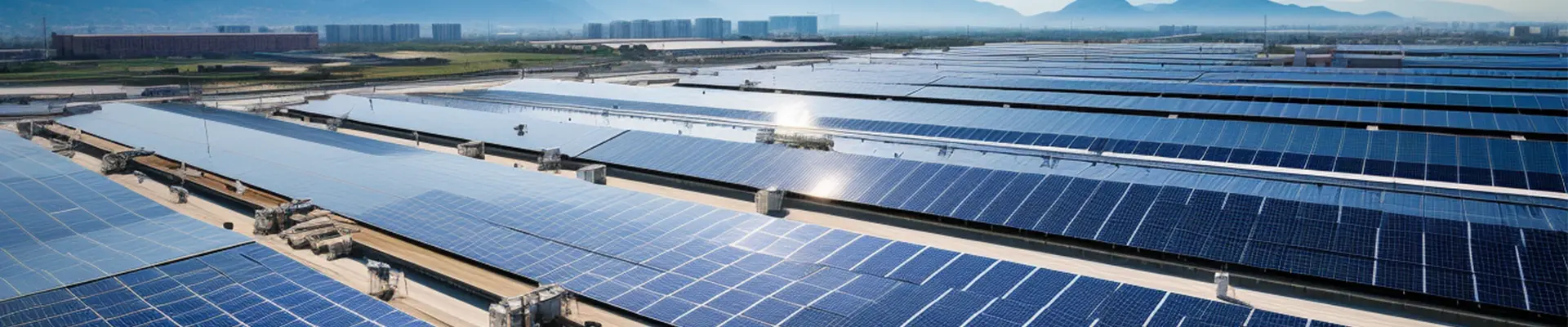
City Privacy Barrier Redefined: The Rise of Solar Privacy Fencing as a Smart Urban Solution
Why Solar Privacy Fencing Is Becoming a Key Urban PV Infrastructure Solution
Urban environments are undergoing a structural transformation driven by energy transition, space optimization, and stricter sustainability requirements. In this shift, solar privacy fencing is emerging as a new hybrid infrastructure that merges security, aesthetics, and renewable energy generation into a single engineered system. For EPC contractors, solar installers, and B2B distributors, this innovation is not just a product upgrade—it is a new category of photovoltaic application that extends solar technology beyond rooftops and ground-mounted systems into vertical urban space.
Unlike traditional fencing systems that only provide physical separation and visual shielding, solar privacy fencing introduces active energy generation into perimeter structures. This dual-function design is rapidly gaining attention in commercial, industrial, and residential developments where land efficiency, ESG compliance, and long-term operational savings are becoming critical decision factors.
This article provides a deep engineering and commercial analysis of solar privacy fencing, focusing on structural design, installation efficiency, material selection, certification requirements, and ROI performance. It is designed for professionals in the photovoltaic supply chain who require both technical accuracy and procurement-level decision insights.
Why Urban Privacy Barriers Are Evolving into Energy Assets
The demand for privacy barriers in cities has traditionally been addressed using wood, steel, aluminum composite panels, or concrete-based fencing systems. However, these solutions are increasingly considered inefficient in modern urban planning because they serve a single function while occupying valuable spatial assets. As cities transition toward net-zero targets, infrastructure must evolve from passive structures into active energy contributors.
In this context, solar privacy fencing represents a paradigm shift. Instead of acting solely as a boundary, it becomes a distributed energy generation system integrated directly into urban infrastructure. For EPC contractors, this opens a new opportunity to integrate photovoltaic technology into previously unused vertical surfaces.
Another key driver is the rapid expansion of distributed energy systems. Commercial facilities, logistics parks, and industrial campuses are under increasing pressure to reduce grid dependency and operational electricity costs. By deploying solar privacy fencing, these sites can generate electricity without requiring additional rooftop space or land acquisition.
From a procurement perspective, distributors and wholesalers are also recognizing the value of this product category due to its standardized modular design, scalable deployment, and compatibility with existing PV mounting ecosystems.
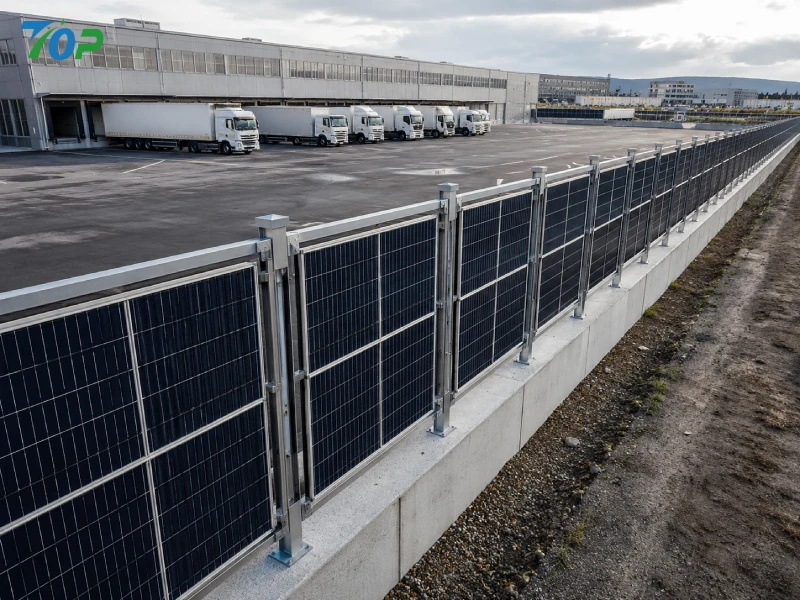
What Is a Solar Privacy Fence? A New Category of Building-Integrated PV
Definition and Core Concept of Photovoltaic Privacy Fencing
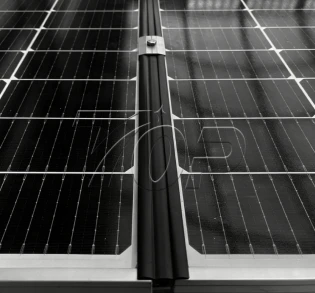
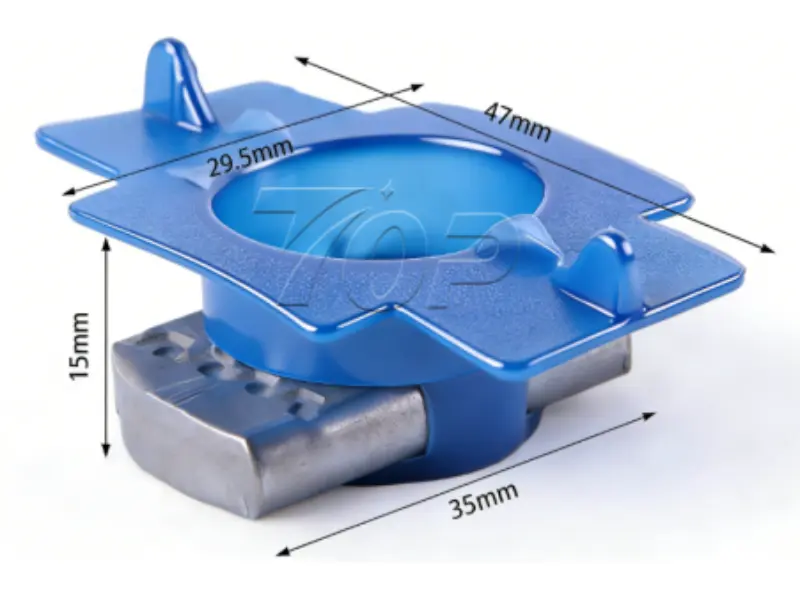
A solar privacy fence is a building-integrated photovoltaic (BIPV) system designed to function as both a physical perimeter barrier and a solar energy generation unit. It typically consists of vertically mounted photovoltaic modules supported by engineered aluminum alloy structures, stainless steel fasteners, and corrosion-resistant mounting systems.
Unlike conventional fencing systems, this solution transforms boundary structures into functional power assets. The PV modules are arranged in vertical or slightly tilted configurations to optimize both privacy coverage and solar exposure depending on geographic conditions.
Key Differences vs Traditional Fence Systems
Traditional fencing systems are designed purely for enclosure, privacy, or security. Materials such as wood or steel provide structural separation but offer no energy output. In contrast, solar privacy fencing integrates photovoltaic modules that actively convert solar radiation into electricity.
This fundamental difference changes the economic profile of fencing infrastructure. Instead of being a cost center, the system becomes a partially self-paying or revenue-generating asset over its lifecycle.
Typical Application Scenarios in Urban Projects
The deployment of solar privacy fencing is expanding across multiple sectors:
- Residential housing developments requiring aesthetic privacy combined with energy savings
- Commercial office parks seeking ESG-compliant infrastructure upgrades
- Industrial facilities integrating perimeter security with on-site power generation
- Logistics centers optimizing large boundary surfaces for distributed solar deployment
System Engineering Design of Solar Privacy Fence Structures
Load-Bearing Structure and Wind Resistance Engineering
One of the most critical engineering challenges in solar privacy fencing is managing vertical wind loads. Unlike rooftop PV systems that operate at low angles, fence-mounted PV systems are directly exposed to lateral wind pressure. This requires advanced structural design to ensure long-term stability.
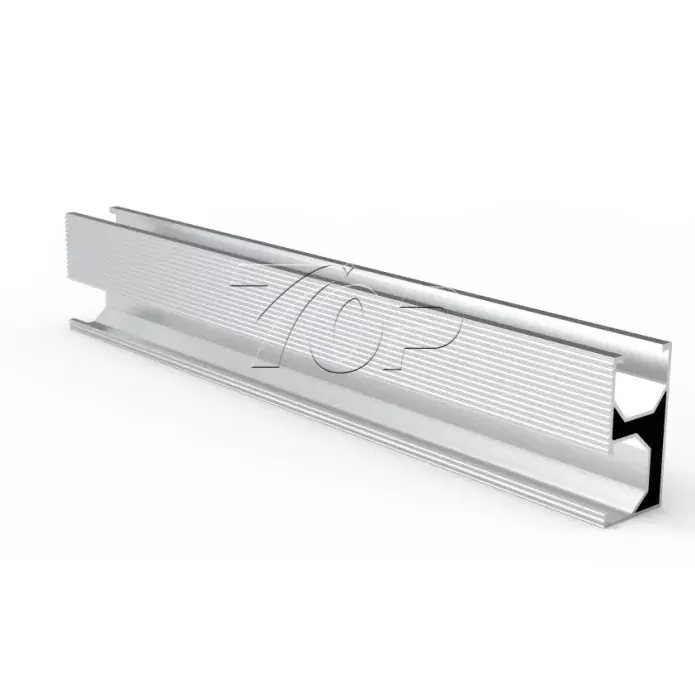
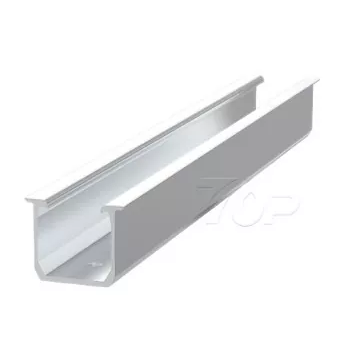
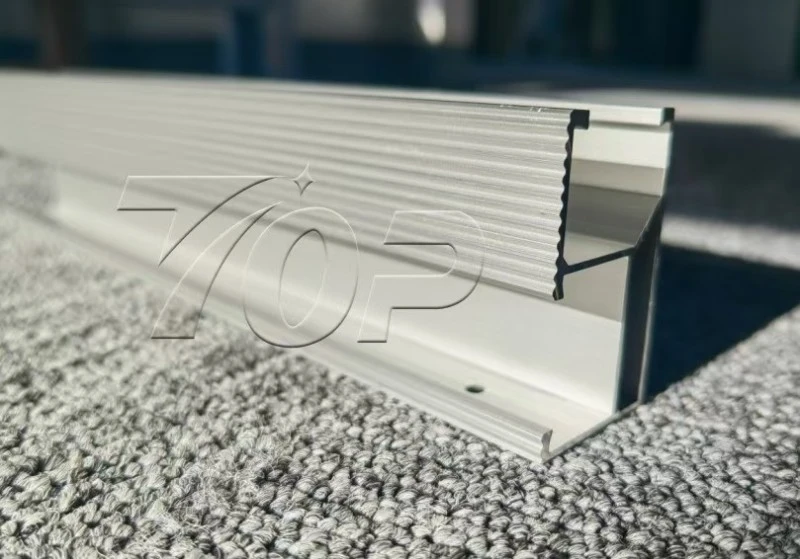
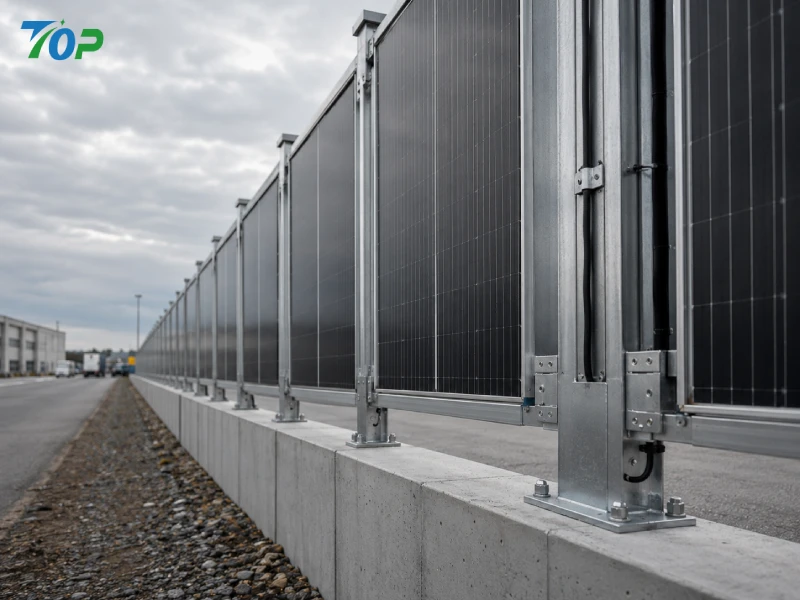
High-strength aluminum alloys such as AL6005-T5 are commonly used for support frames due to their excellent strength-to-weight ratio and corrosion resistance. Structural spacing must be calculated based on regional wind load standards, especially in coastal or high-rise urban environments where turbulence effects are stronger.
Material Selection for Long-Term Reliability
Material engineering is a key differentiator in high-quality solar privacy fencing systems. Stainless steel fasteners such as SUS304 or SUS316 are used to ensure corrosion resistance in humid or coastal environments. Anodized aluminum rails provide both structural rigidity and thermal expansion control, reducing long-term deformation risks.
Photovoltaic modules used in fence applications typically require reinforced tempered glass and UV-resistant backsheet materials to withstand vertical exposure conditions that differ significantly from rooftop installations.
Waterproofing and Outdoor Environmental Protection
Although vertical installation reduces water accumulation risks, solar privacy fencing systems still require robust waterproofing design. Junction boxes must meet IP65 or higher protection standards, and cable routing must be engineered to avoid direct exposure to rainwater channels.
Drainage paths should be integrated into the structural frame to prevent long-term moisture accumulation, particularly in tropical and high-humidity climates.
Installation Efficiency – Why EPC Contractors Prefer Modular PV Fence Systems
Pre-Assembled Modular Design for Fast Deployment
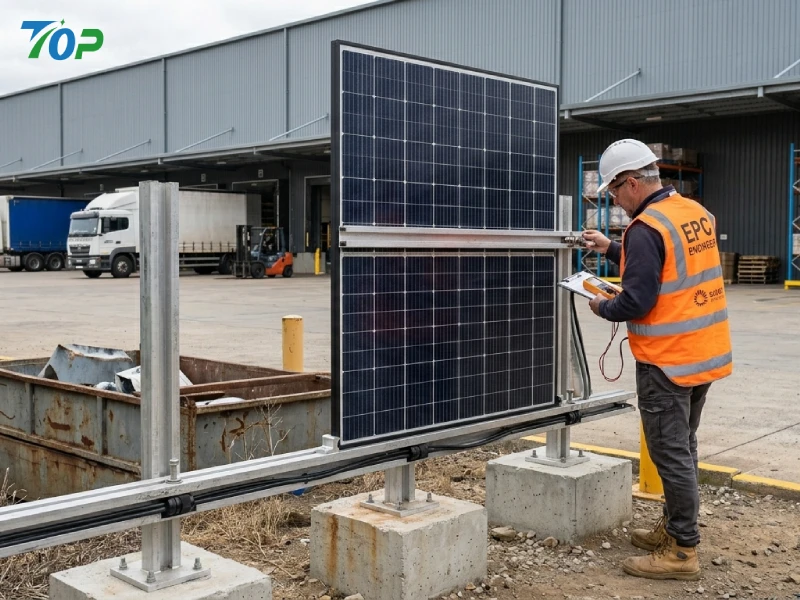
One of the strongest advantages of solar privacy fencing systems is their modular installation design. Pre-assembled brackets and standardized mounting interfaces significantly reduce on-site labor requirements.
For EPC contractors, this translates into shorter project timelines, lower labor costs, and reduced installation risk. Standardization also ensures consistent quality across large-scale deployments.
Reduced Installation Complexity Compared to Rooftop PV
Unlike rooftop PV systems that require roof penetration, waterproof sealing, and complex angle optimization, solar privacy fencing installations are ground-based and structurally independent from buildings.
This eliminates many common installation risks, including roof leakage, structural load uncertainty, and rooftop accessibility constraints. Cable management is also simplified due to ground-level routing options.
Common Installation Mistakes and Engineering Risks
Despite its simplicity, improper installation of solar privacy fencing systems can still lead to performance degradation. Common issues include incorrect foundation depth, insufficient wind load anchoring, and improper spacing between modules.
Cable exposure is another frequent problem in low-quality installations, where improper routing leads to long-term UV degradation and maintenance failures.
Energy Performance and ROI of Solar Privacy Fencing Systems
Energy Yield from Vertical PV Structures
The energy performance of solar privacy fencing differs structurally from traditional rooftop photovoltaic systems due to its vertical or near-vertical installation angle. While this orientation may reduce peak midday irradiance capture compared to optimally tilted rooftop arrays, it introduces unique performance advantages in real-world urban environments where shading, reflection, and space constraints significantly impact system design.
In dense urban and industrial zones, solar privacy fencing often benefits from bifacial irradiation conditions, where reflected light from concrete surfaces, light-colored ground materials, and nearby infrastructure contributes to additional energy generation. This partially offsets angular inefficiencies and creates more stable daily production curves, particularly during morning and afternoon hours.
For EPC designers, the key performance metric is not theoretical peak output, but long-term yield stability under partial shading conditions. In this context, solar privacy fencing can provide a predictable and distributed energy contribution that complements rooftop PV and ground-mounted systems rather than replacing them.
Dual Revenue Value – Security + Energy Generation
A major commercial advantage of solar privacy fencing is its ability to convert a mandatory infrastructure cost into a partially revenue-generating asset. Traditional fencing systems represent a pure capital expenditure with ongoing maintenance costs and no return on investment. In contrast, photovoltaic fencing introduces continuous electricity generation over its operational lifespan.
For commercial and industrial facilities, this dual-function structure creates a layered value model:
- Primary function: perimeter security and privacy control
- Secondary function: distributed solar electricity generation
- Tertiary function: ESG contribution and carbon reduction reporting
This structure is particularly valuable for logistics centers, manufacturing parks, and data-driven facilities where perimeter lengths are large and energy demand is constant. Over time, electricity savings can offset a significant portion of initial CAPEX, improving financial predictability for asset owners.
Payback Period Analysis for B2B Buyers
The payback period of solar privacy fencing systems depends on several engineering and financial variables, including installation scale, local electricity tariffs, solar irradiance levels, and system degradation rates. However, compared to traditional fencing systems, the financial logic is fundamentally different because the system generates operational savings rather than only lifecycle costs.
From an EPC procurement perspective, ROI evaluation should include both direct and indirect benefits:
- Direct energy savings from on-site electricity generation
- Reduced need for external fencing infrastructure upgrades
- Lower long-term maintenance compared to wood or coated steel fencing
- Potential incentives from renewable energy or green building programs
In many commercial scenarios, solar privacy fencing achieves faster effective payback when integrated into large perimeter systems due to economies of scale in mounting structure production and installation labor distribution.
Certification, Compliance, and Quality Standards for B2B Procurement
Key Material Certifications (SUS304, AL6005-T5, etc.)
For B2B buyers, particularly EPC contractors and distributors, material certification is a critical procurement factor when evaluating solar privacy fencing systems. Structural reliability depends heavily on the quality of aluminum alloys and stainless steel components used in mounting and fastening systems.
Common industry-standard materials include AL6005-T5 aluminum profiles, known for their strength and corrosion resistance, and SUS304 or SUS316 stainless steel fasteners, which provide long-term stability in outdoor environments. These materials are essential for ensuring structural integrity over 20–25 year lifecycle expectations.
International Solar Standards and Compliance
Compliance with international standards is essential for project approval and risk management. High-quality solar privacy fencing systems typically undergo mechanical load testing, corrosion resistance validation, and electrical safety certification.
TÜV certification is widely recognized as a benchmark for photovoltaic product safety and durability. In addition, IEC standards govern structural load resistance, electrical insulation performance, and environmental durability testing for PV mounting systems.
For EPC contractors, compliance is not only a technical requirement but also a commercial necessity when bidding for government or large-scale industrial projects.
Why Certification Matters for EPC Tender Success
In competitive EPC bidding environments, certified solar privacy fencing systems significantly reduce project approval risks and accelerate procurement cycles. Certification ensures that the system meets predefined engineering thresholds, reducing the need for additional third-party validation during project execution.
This directly impacts project timelines, especially in large-scale industrial or municipal developments where approval delays can lead to financial penalties or contract loss. As a result, certified systems are increasingly becoming a baseline requirement rather than a premium feature.
Solar Privacy Fence vs Traditional Fencing Systems
Cost Comparison Over 10-Year Lifecycle
When comparing solar privacy fencing with traditional fencing systems, the most important distinction lies in lifecycle cost structure. Traditional fences incur upfront installation costs followed by ongoing maintenance, repainting, corrosion repair, or replacement cycles.
In contrast, photovoltaic fencing systems introduce energy production that offsets operational costs. Over a 10-year period, this results in a fundamentally different financial profile where initial investment is partially recovered through electricity generation.
Functional Comparison
Traditional fencing provides only static physical separation. Its performance does not improve or evolve over time. By comparison, solar privacy fencing delivers multi-layered functionality:
- Physical boundary and security barrier
- Renewable energy generation system
- Urban architectural integration element
This transformation aligns with modern infrastructure trends where utility convergence is becoming a standard design principle in commercial and industrial planning.
Sustainability and ESG Advantages
Sustainability requirements are increasingly influencing procurement decisions across global supply chains. solar privacy fencing contributes directly to ESG targets by reducing carbon emissions through localized energy generation.
Unlike traditional fencing systems that require periodic material replacement and generate embodied carbon without operational benefit, photovoltaic fencing actively offsets grid electricity consumption. This makes it particularly valuable for companies pursuing green building certifications or corporate sustainability reporting frameworks.
Market Opportunities for Distributors and Wholesale Buyers
Growing Demand in Urban Renewable Infrastructure
The global shift toward decentralized renewable infrastructure is creating strong demand for solar privacy fencing across urban and industrial applications. Smart cities, commercial real estate developments, and logistics hubs are increasingly adopting multifunctional infrastructure solutions that optimize land use efficiency.
For distributors, this represents a new product category that bridges the gap between traditional fencing materials and photovoltaic systems, enabling access to both construction and renewable energy markets simultaneously.
Inventory Standardization Advantages
From a wholesale and distribution perspective, solar privacy fencing systems offer significant inventory advantages due to their modular design. Standardized components reduce SKU complexity and simplify logistics planning.
This standardization also improves cross-project compatibility, allowing distributors to maintain fewer inventory variations while supporting a broader range of project requirements.
Bulk Procurement Strategy for Maximum Margin
Large-scale procurement of solar privacy fencing systems benefits from factory-direct pricing structures and optimized container loading strategies. Because components are modular and stackable, shipping efficiency is significantly improved compared to irregular fencing materials.
For B2B buyers, this translates into lower logistics costs per unit and improved margin control in downstream distribution channels.
Why Choose a Specialized Manufacturer for Solar Privacy Fence Systems
Importance of Full-Range PV Mounting Manufacturer Capability
Selecting a qualified supplier for solar privacy fencing is not simply a procurement decision—it is an engineering risk control strategy. Unlike conventional fencing products, photovoltaic fencing integrates structural mechanics, electrical performance, corrosion engineering, and long-term outdoor durability into a single system.
For EPC contractors and distributors, working with a full-range photovoltaic mounting manufacturer ensures that all system components are designed under a unified engineering logic. This reduces compatibility risks between rails, clamps, fasteners, and PV modules, which is one of the most common failure points in fragmented supply chains.
A specialized manufacturer can also provide load calculation support, wind resistance validation, and installation guidance tailored to different regional standards. This engineering-level support is essential for large-scale deployment of solar privacy fencing in commercial and industrial environments.
Engineering Support for EPC Projects
High-performance solar privacy fencing systems require more than physical components—they require engineering validation throughout the project lifecycle. EPC contractors benefit significantly from manufacturers that provide structural simulation, foundation design recommendations, and installation documentation.
Engineering support typically includes wind load simulation based on local meteorological data, anchoring system recommendations for different soil conditions, and thermal expansion analysis for aluminum structures. These inputs directly influence long-term system stability and maintenance costs.
In large EPC tenders, the availability of pre-engineered system documentation often becomes a decisive factor in winning bids, especially in government-backed or industrial infrastructure projects.
Case Study Insights (Urban Deployment Examples)
In recent urban infrastructure projects, solar privacy fencing has been deployed across commercial logistics centers and industrial parks as a dual-purpose energy and security solution. These installations typically replace traditional steel perimeter fences with PV-integrated structures that generate on-site electricity while maintaining security compliance.
One common deployment scenario involves logistics hubs with long perimeter boundaries where rooftop PV capacity is already fully utilized. By installing photovoltaic fencing along the site boundary, additional generation capacity is achieved without expanding land footprint or modifying building structures.
Another example can be found in industrial manufacturing zones where ESG reporting requirements are strict. In these cases, solar privacy fencing contributes measurable carbon reduction data while simultaneously reducing electricity consumption from the grid, supporting corporate sustainability reporting frameworks.
Conclusion – The Future of Urban Infrastructure Is Dual-Function PV Design
The evolution of urban infrastructure is moving toward systems that deliver multiple functions within the same physical footprint. solar privacy fencing represents a clear example of this transformation, combining perimeter security, architectural integration, and renewable energy generation into a unified engineered solution.
For EPC contractors, this technology introduces a new project category that expands photovoltaic applications beyond rooftops and ground-mounted systems. It enables more flexible system design, faster installation cycles, and improved utilization of previously underused vertical space.
For distributors and wholesale buyers, solar privacy fencing opens a scalable product segment with standardized components, predictable logistics, and strong alignment with global sustainability trends. As urban environments continue to densify, demand for multifunctional infrastructure will only increase.
From an engineering perspective, the long-term value of solar privacy fencing lies in its ability to convert static infrastructure into active energy systems. This shift represents not just a product innovation, but a structural change in how cities integrate renewable energy into everyday environments.
As solar technology continues to evolve, perimeter-based photovoltaic systems will become a standard component of commercial and industrial site design, bridging the gap between energy generation and built environment functionality.
Final Takeaway for EPC Contractors and Distributors
The adoption of solar privacy fencing is not driven by aesthetic preference alone, but by clear engineering, financial, and operational advantages. EPC contractors gain faster installation cycles and expanded project scope, while distributors benefit from standardized modular systems that simplify inventory management and increase market reach.
In a competitive solar industry landscape, success increasingly depends on the ability to integrate multifunctional systems that deliver both structural and energy value. Solar fencing systems represent one of the most promising developments in this direction.
Solar Privacy Fencing Systems for Urban & Industrial PV Projects
Traditional perimeter fencing creates no long-term energy value and often increases maintenance costs in commercial and industrial environments. TOPFENCE provides engineered solar privacy fencing solutions that combine perimeter security, photovoltaic power generation, and modern architectural integration into one high-performance system. Our PV fence structures use AL6005-T5 anodized aluminum rails, SUS304/SUS316 stainless steel fasteners, and modular vertical mounting systems designed for high wind resistance, corrosion protection, and fast EPC installation. We support solar installers, distributors, and project developers with customized photovoltaic fence engineering, structural load optimization, and scalable bulk supply solutions for commercial, industrial, and urban infrastructure applications.
Request Solar Privacy Fence Solutions & Bulk Pricing
FAQ — Solar Privacy Fencing for EPC Contractors, Distributors & Commercial Projects
1. What are the main advantages of solar privacy fencing compared to traditional perimeter fences?
Unlike conventional fencing systems that only provide physical separation, solar privacy fencing combines perimeter security with photovoltaic energy generation. For commercial and industrial projects, this creates a dual-function infrastructure asset that improves land-use efficiency while reducing long-term electricity costs. EPC contractors also benefit from modular installation systems that reduce labor time and simplify project deployment.
2. Is vertical solar privacy fencing efficient enough for commercial power generation?
Although vertically mounted PV modules generally produce lower peak output than optimized rooftop tilt systems, solar privacy fencing performs well in urban and industrial environments where rooftop space is limited. Vertical systems can also provide more stable morning and afternoon energy generation while reducing dust accumulation and simplifying maintenance access. In large perimeter applications, the cumulative generation capacity can still provide meaningful operational savings.
3. What materials are recommended for long-term corrosion resistance in solar privacy fencing systems?
High-quality solar privacy fencing systems typically use AL6005-T5 anodized aluminum structures combined with SUS304 or SUS316 stainless steel fasteners. These materials provide excellent corrosion resistance in humid, coastal, and industrial environments. For projects located in high-salinity regions, SUS316 stainless steel is generally recommended for improved long-term durability.
4. How does wind load affect the structural design of solar privacy fencing?
Wind load is one of the most important engineering considerations for solar privacy fencing because vertical PV modules experience significant lateral pressure. Structural calculations must consider local wind speed standards, fence height, post spacing, and foundation depth. Professional systems use reinforced aluminum rails, embedded concrete foundations, and engineered anchoring systems to ensure long-term structural stability.
5. What installation methods are commonly used for commercial solar privacy fencing projects?
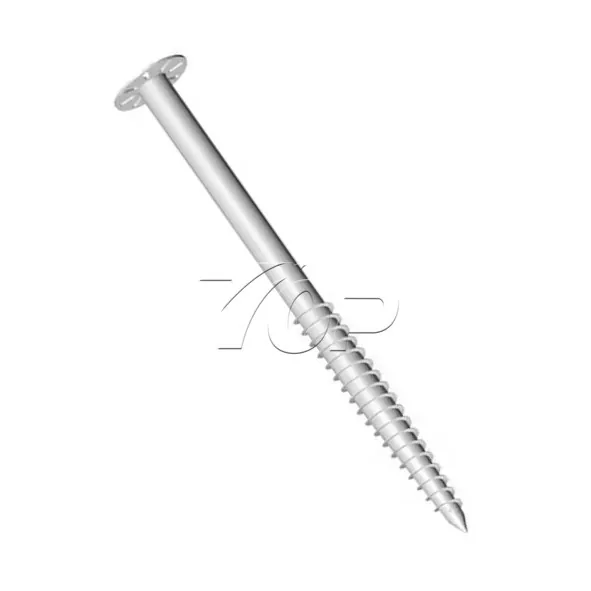
Most commercial solar privacy fencing systems use ground-embedded concrete foundations or bolted steel base plate anchoring systems. Modular pre-assembled mounting structures are commonly used to improve installation efficiency and reduce on-site labor costs. Proper cable routing and waterproof junction protection are also critical for long-term reliability.
6. Which certifications are important when sourcing solar privacy fencing for EPC projects?
EPC contractors and distributors should prioritize systems that comply with international standards such as TÜV certification and IEC structural testing requirements. Material certifications for aluminum alloys and stainless steel components are also important to ensure mechanical reliability and long-term outdoor durability. Certified systems help reduce tender approval risks and improve project bankability.
7. Can solar privacy fencing be integrated with existing commercial PV systems?
Yes. Solar privacy fencing can be integrated with rooftop photovoltaic systems, battery storage systems, and commercial energy management platforms. Many industrial facilities use perimeter PV fencing as a supplementary distributed energy source to maximize total on-site solar generation capacity without requiring additional roof modifications or land expansion.
8. Why are distributors and wholesalers increasingly interested in solar privacy fencing systems?
Distributors value solar privacy fencing because it combines the fast-growing renewable energy market with traditional construction infrastructure demand. Standardized modular components simplify inventory management, while large-scale commercial and industrial projects create strong bulk procurement opportunities. The product category also aligns well with global ESG trends and smart city infrastructure development.
Related News
- The Global EPC Sourcing Checklist: Managing Lead Times and Logistics for Solar Mounting Systems
- BIPV & Commercial Rooftops: Solving Waterproofing and Structural Integrity Challenges in Urban Solar
- Navigating Solar Certifications: Why UL 2703 and International Standards Matter for Project Bankability
- Maximizing Yield with Bifacial Modules: How to Select the Optimal Tracker for Enhanced Energy Output
- Wind Load and Coastal Engineering: Ensuring Your Ground-Mounted Solar Array Survives Extreme Weather
- Aluminum vs. Galvanized Steel: Choosing the Right Solar Mounting Structure for High-Corrosivity Environments
Leave me a message