Solar PV Mounting System Corrosion Resistance Ratings: From C3 to C5
As global solar deployment accelerates across coastal regions, industrial rooftops, agricultural facilities, and utility-scale photovoltaic farms, the importance of solar mounting system corrosion resistance has become impossible to ignore. For EPC contractors, solar installers, and photovoltaic distributors, selecting the wrong corrosion protection level can lead to premature structural degradation, water leakage, expensive maintenance, warranty disputes, and even complete system failure long before the intended 25-year lifecycle.
Today’s solar projects are no longer limited to dry inland environments. More installations are being deployed in harsh conditions exposed to salt spray, acid rain, industrial pollutants, ammonia emissions, tropical humidity, and extreme temperature fluctuations. Under these conditions, a poorly designed mounting structure may begin corroding within only a few years, directly impacting project ROI and long-term operational stability.
That is why understanding solar mounting system corrosion resistance ratings — especially the differences between C3, C4, and C5 classifications — has become essential for modern solar engineering. These corrosion categories, based on ISO 12944 international standards, help define how mounting structures should be designed, coated, and protected according to environmental severity.
For professional solar installers, choosing the correct anti-corrosion solar racking solution means:
- Faster and safer installation efficiency
- Reduced after-sales maintenance
- Improved waterproof reliability
- Longer structural lifespan
- Better resistance against coastal and industrial corrosion
- Higher customer satisfaction and warranty security
For PV wholesalers and distributors, corrosion-resistant mounting systems provide additional commercial advantages:
- Lower inventory risk through universal system compatibility
- Higher-value certified products
- Reduced replacement claims
- Better competitiveness in large-scale tenders
- Improved reputation with EPC clients
In this comprehensive guide, we will explore:
- The meaning of C3, C4, and C5 corrosion ratings
- How ISO 12944 applies to photovoltaic mounting systems
- The best anti-corrosion materials for solar structures
- Differences between galvanized steel and aluminum mounting systems
- How to select the correct corrosion protection level for your project
- Why corrosion resistance directly impacts installation reliability and ROI
Whether you are designing a commercial rooftop solar array, sourcing a galvanized solar mounting structure for coastal deployment, or evaluating marine-grade solar racking systems for utility-scale projects, this guide will help you make technically sound and financially sustainable decisions.
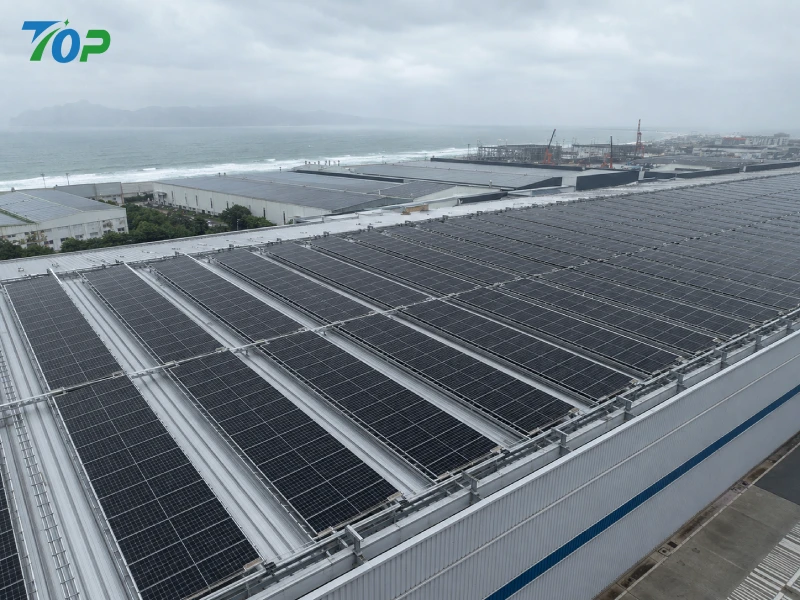
Why Corrosion Resistance Matters More Than Ever in Modern Solar Projects
The global photovoltaic market is rapidly expanding into high-risk environments:
- Coastal industrial parks
- Floating solar farms
- High-humidity tropical regions
- Agricultural PV installations with ammonia exposure
- Desert projects with aggressive UV radiation and sand abrasion
Under these conditions, standard low-grade mounting systems often fail to provide sufficient long-term protection. As a result, EPC contractors increasingly prioritize high-performance anti-corrosion solar mounting systems capable of maintaining structural reliability throughout the entire project lifecycle.
What Do C3, C4, and C5 Corrosion Ratings Mean in Solar Mounting Systems?
Corrosion classifications are used to define how aggressive an operating environment is toward metallic structures. In photovoltaic engineering, these classifications help determine which materials, coatings, fasteners, and structural treatments should be used in a solar mounting system.
The most widely recognized international standard for atmospheric corrosion is ISO 12944. This standard categorizes environments based on humidity, salinity, pollution, and industrial exposure levels.
Understanding ISO 12944 Corrosion Classification
ISO 12944 defines six major atmospheric corrosion categories:
| Corrosion Category | Environment Severity | Typical Conditions |
|---|---|---|
| C1 | Very Low | Indoor dry environments |
| C2 | Low | Rural areas with low humidity |
| C3 | Medium | Urban and light industrial areas |
| C4 | High | Coastal and chemical industrial zones |
| C5 | Very High | Marine offshore and highly corrosive industrial environments |
For photovoltaic applications, C3, C4, and C5 are the most relevant classifications because modern solar installations are commonly exposed to outdoor environmental stress for more than two decades.
Why Corrosion Classification Matters for Solar Projects
A solar power system may appear simple from the outside, but its long-term reliability depends heavily on the structural integrity of the mounting framework beneath the modules.
Corrosion affects:
- Rails and support beams
- Roof attachment points
- Ground screws and foundations
- Mid clamps and end clamps
- Bolts and fasteners
- Drainage channels
- Waterproof sealing interfaces
Once corrosion begins, the damage often accelerates rapidly due to moisture retention and electrochemical reactions between dissimilar metals. Over time, this may result in:
- Reduced structural load capacity
- Wind uplift instability
- Fastener failure
- Roof penetration leakage
- Module misalignment
- Increased O&M costs
- Premature system replacement
For EPC contractors, these failures create not only technical risks but also financial liabilities and reputational damage.
Typical Solar Installation Environments for C3 to C5
Selecting the correct corrosion resistance level requires understanding the actual environmental conditions surrounding the installation site.
| Corrosion Grade | Typical Environment | Recommended Solar Applications |
|---|---|---|
| C3 | Urban commercial areas, light industrial zones | Commercial rooftop solar systems |
| C4 | Coastal cities, fertilizer plants, high humidity zones | Industrial rooftop and agricultural PV systems |
| C5 | Offshore, marine coastlines, chemical facilities | Utility-scale coastal solar farms and marine PV projects |
For example, a rooftop solar project installed within 5 kilometers of the ocean typically requires at least C4-grade corrosion protection due to salt spray exposure. In more aggressive marine environments, only C5-rated mounting structures may provide sufficient long-term reliability.
Key Engineering Insight
Many solar project failures are not caused by photovoltaic modules or inverters — they are caused by structural corrosion. While modules may still generate electricity after 25 years, the mounting system underneath them must remain mechanically stable and waterproof throughout the same operational period.
This is why experienced EPC contractors increasingly specify:
- Marine-grade aluminum rails
- SUS304 or SUS316 stainless steel fasteners
- High-thickness anodized coatings
- Heavy-duty hot-dip galvanized steel structures
- Certified salt spray testing compliance
Why Corrosion Resistance Is Critical for Solar Mounting Systems
In photovoltaic engineering, corrosion resistance is not simply an optional product upgrade — it is a core structural requirement directly tied to safety, project lifespan, and return on investment.
Although solar modules often receive the most attention in PV system design, the mounting structure serves as the backbone of the entire installation. Without a durable and corrosion-resistant support system, even premium photovoltaic panels cannot maintain long-term operational stability.
This is especially true in environments with:
- High humidity
- Industrial air pollution
- Strong UV exposure
- Salt-rich marine air
- Acid rain conditions
- Agricultural ammonia exposure
Over time, these environmental factors aggressively attack exposed metal surfaces, gradually weakening the structural framework.
Structural Failure Risks Caused by Corrosion
Corrosion begins at the microscopic level, but its long-term impact on photovoltaic structures can be severe.
When protective coatings deteriorate or inferior materials are used, oxidation starts penetrating the metal substrate. This gradually reduces the load-bearing strength of the mounting system.
Common structural risks include:
- Rail deformation under wind load
- Bracket cracking and fatigue
- Bolt loosening due to rust expansion
- Clamp instability causing module displacement
- Foundation weakening in ground-mounted systems
In regions exposed to typhoons, hurricanes, or heavy snow loads, corrosion-related structural degradation significantly increases the risk of catastrophic failure.
For EPC contractors, this creates serious warranty and liability concerns because even minor corrosion can compromise the structural certification of the entire photovoltaic installation.
Corrosion and Roof Waterproofing Problems
One of the most overlooked consequences of corrosion is its impact on rooftop waterproofing performance.
Many commercial and industrial solar projects rely on penetrative roof attachment systems. When corrosion develops around fasteners, flashing interfaces, or sealing washers, water intrusion becomes increasingly likely.
Typical waterproofing failures include:
- Rust expansion breaking waterproof seals
- Oxidized fasteners creating micro gaps
- Standing water accelerating coating deterioration
- Galvanic corrosion between dissimilar metals
- Sealant degradation under UV exposure
Once leakage occurs, repair costs can escalate quickly because roofing systems, insulation layers, and electrical components may all be affected simultaneously.
This is why modern anti-corrosion solar racking systems increasingly integrate:
- Water diversion channel designs
- Non-penetrative roof clamps
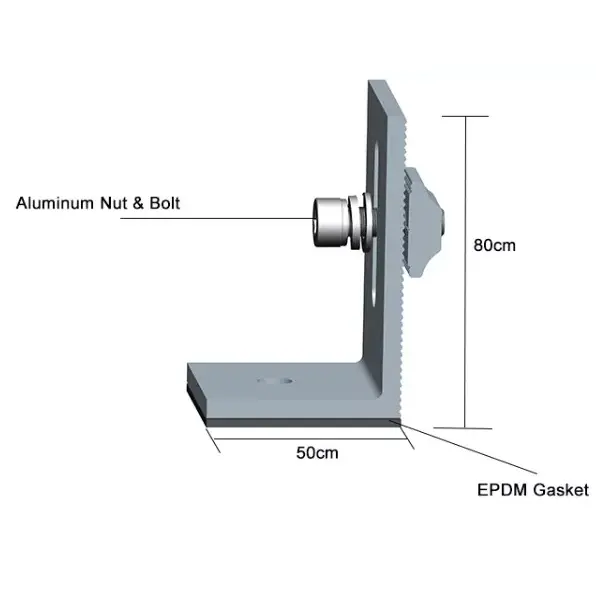
- High-performance EPDM sealing materials
- Anodized aluminum waterproof interfaces
- Corrosion-resistant stainless steel hardware
Increased Maintenance Costs and Reduced Solar Project ROI
Corrosion-related damage rarely appears immediately after installation. Instead, it develops gradually over time, making it one of the most dangerous hidden risks in photovoltaic infrastructure.
At the beginning of a project lifecycle, many low-cost mounting systems appear visually acceptable. However, after several years of exposure to humidity, UV radiation, industrial pollutants, and thermal cycling, corrosion often accelerates unexpectedly.
For solar asset owners and EPC contractors, this creates a serious long-term financial burden.
A poorly protected solar mounting structure may require:
- Frequent inspection and maintenance
- Replacement of rusted fasteners
- Reinforcement of weakened support beams
- Additional waterproofing repairs
- Module repositioning due to rail deformation
- Unexpected downtime during structural servicing
In utility-scale projects, even small structural maintenance issues can result in substantial operational expenses because access, labor, and equipment costs increase significantly over large installation areas.
Corrosion also affects long-term energy profitability in several indirect ways:
- Reduced structural alignment affecting module tilt angles
- Increased shading from structural deformation
- Downtime during repairs and inspections
- Insurance and warranty complications
- Lower resale value of solar assets
This is why experienced investors and professional EPC firms increasingly evaluate the total lifecycle cost of a solar mounting system rather than focusing solely on the initial procurement price.
Lifecycle Cost vs Initial Purchase Cost
A lower-priced mounting system with inadequate corrosion protection may save 5–10% during procurement, but over a 25-year project lifecycle, corrosion-related maintenance and replacement costs can exceed the original savings many times over.
For this reason, high-quality galvanized solar mounting structures and marine-grade aluminum racking systems are increasingly viewed as long-term financial investments rather than optional upgrades.
Common Anti-Corrosion Materials Used in Solar Mounting Systems
Material selection is the foundation of every high-performance solar mounting system corrosion resistance strategy.
Different materials provide different levels of mechanical strength, oxidation resistance, installation efficiency, and long-term durability. The correct material combination depends on:
- Environmental severity
- Project lifespan expectations
- Wind and snow load requirements
- Installation speed targets
- Maintenance accessibility
- Budget considerations
Modern photovoltaic mounting systems typically use a combination of:
- Hot-dip galvanized steel
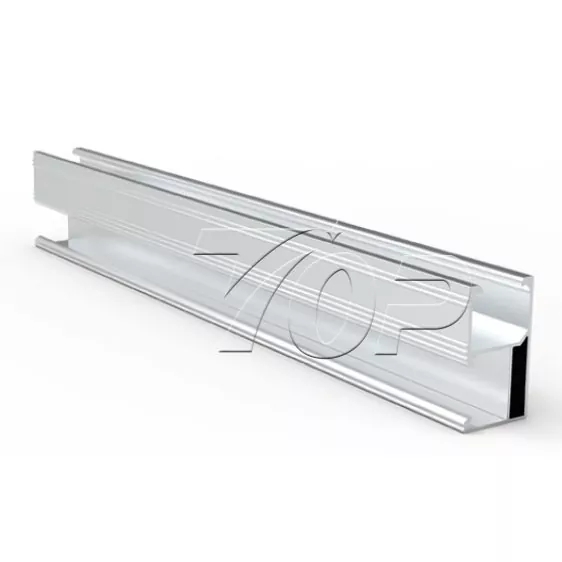
- Aluminum alloy extrusions
- Stainless steel fasteners
- Protective anodized coatings
- Anti-corrosion surface treatments
Understanding how these materials perform under different corrosion categories is critical for achieving long-term structural reliability.
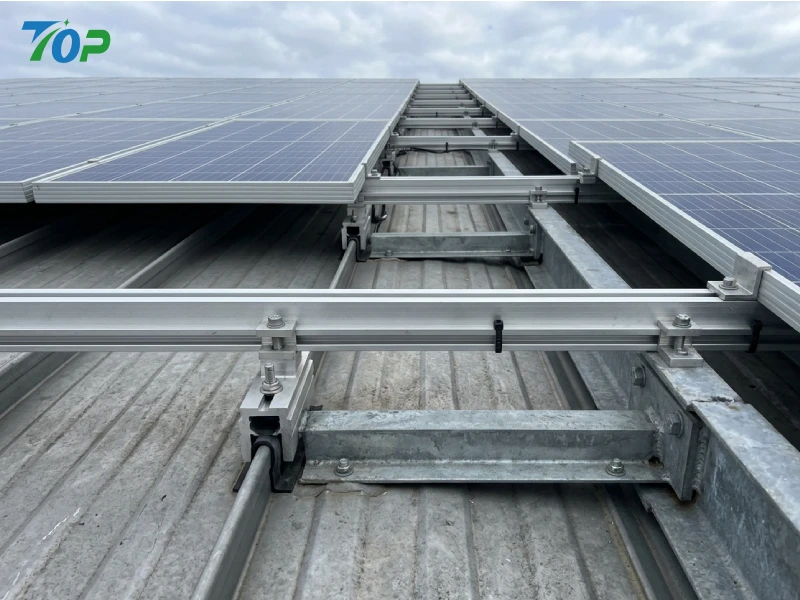
Hot-Dip Galvanized Steel Solar Mounting Structures
Hot-dip galvanized steel remains one of the most widely used materials in large-scale photovoltaic projects due to its excellent balance between strength, durability, and cost efficiency.
The galvanization process involves immersing steel components into molten zinc, forming a protective zinc coating over the steel surface. This coating acts as a sacrificial barrier that protects the underlying steel from oxidation.
Key advantages of galvanized steel solar mounting structures include:
- High structural strength
- Excellent load-bearing capacity
- Cost-effective material pricing
- Strong wind resistance performance
- Suitable for utility-scale ground-mounted systems
- Long operational lifespan when properly coated
For large photovoltaic farms exposed to high wind loads and mechanical stress, galvanized steel structures are often preferred because aluminum alone may not provide sufficient rigidity in heavy-duty applications.
Typical Zinc Coating Standards in Solar Applications
Not all galvanized steel provides the same level of corrosion resistance. The thickness and quality of the zinc layer directly determine long-term protection performance.
| Coating Standard | Approximate Thickness | Typical Application |
|---|---|---|
| Z275 | ~20 μm | Indoor or low-corrosion environments |
| HDG 65 μm | Medium-duty protection | Commercial rooftop solar systems |
| HDG 80 μm+ | Heavy-duty protection | Coastal and utility-scale solar projects |
For C4 and C5 environments, thicker galvanization layers are strongly recommended because thin coatings may degrade rapidly under aggressive salt spray exposure.
Aluminum Alloy Solar Mounting Systems
Aluminum has become one of the most important materials in modern photovoltaic mounting engineering due to its lightweight structure, natural oxidation resistance, and installation efficiency advantages.
Unlike ordinary steel, aluminum naturally forms a thin oxide layer when exposed to air. This protective oxide film helps prevent deeper corrosion penetration and significantly improves long-term durability.
The most commonly used aluminum grades in solar mounting systems include:
- AL6005-T5
- AL6063-T5
These alloys provide an excellent combination of:
- Mechanical strength
- Corrosion resistance
- Machinability
- Extrusion precision
- Weight reduction
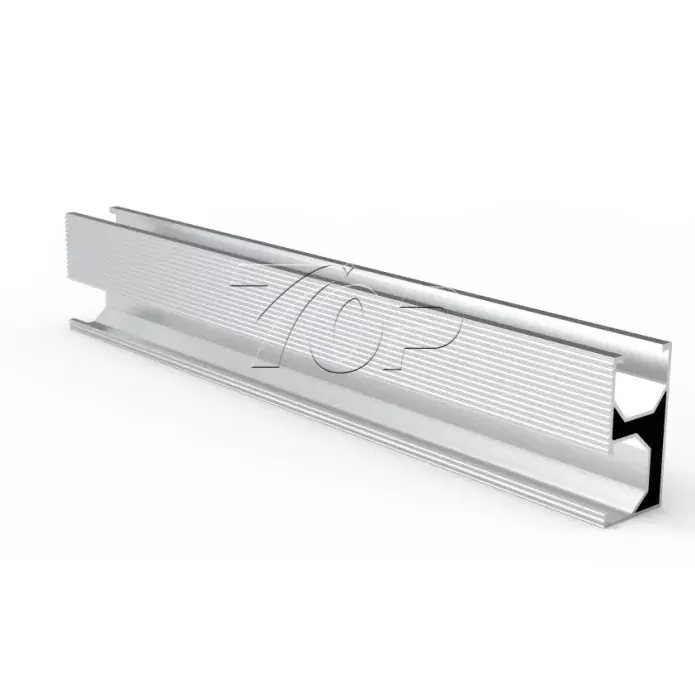
Compared with galvanized steel, aluminum solar mounting rails are significantly lighter, making them especially beneficial for rooftop installations where structural loading limitations are critical.
Advantages of Aluminum Solar Mounting Rails
| Advantage | Benefit for EPC Contractors |
|---|---|
| Lightweight Design | Faster rooftop installation and reduced labor costs |
| Natural Corrosion Resistance | Lower maintenance frequency |
| Precision Extrusion | Improved component compatibility and installation accuracy |
| High Recyclability | Better sustainability profile |
In high-humidity coastal projects, anodized aluminum mounting systems are often preferred because they combine strong corrosion resistance with efficient installation performance.
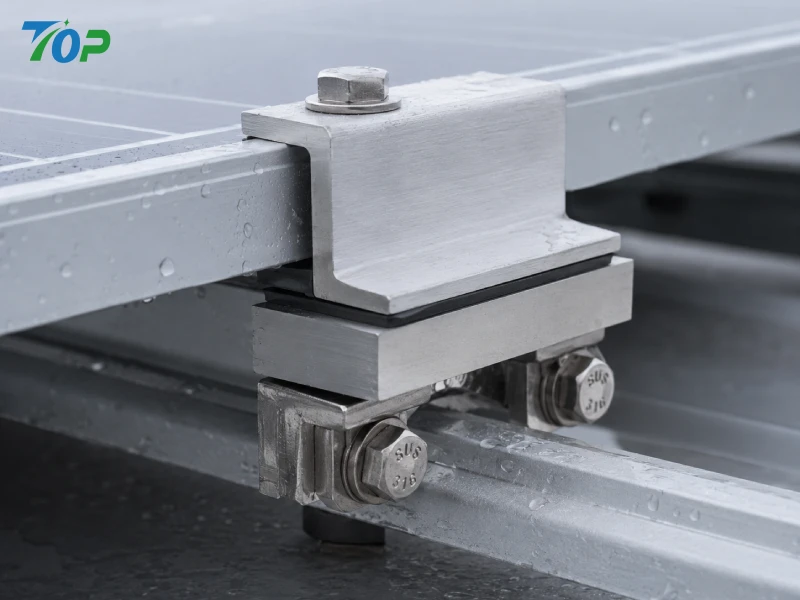
SUS304 vs SUS316 Stainless Steel Fasteners
Although fasteners are relatively small components within a photovoltaic mounting system, they are often the first point of corrosion failure.
Bolts, nuts, clamps, and washers are continuously exposed to:
- Rainwater infiltration
- Salt spray accumulation
- Temperature fluctuations
- Condensation cycles
- Mechanical vibration
If low-grade fasteners are used, corrosion may rapidly spread throughout the structural connection points.
For this reason, high-quality solar mounting systems increasingly use stainless steel hardware.
| Material | Corrosion Resistance | Recommended Environment |
|---|---|---|
| SUS304 | High | Urban and standard industrial environments |
| SUS316 | Very High | Marine and coastal environments |
SUS316 contains molybdenum, which significantly improves resistance against chloride corrosion caused by salt-rich environments. This makes SUS316 fasteners particularly important for C5-grade photovoltaic installations.
Why Fasteners Are Often the First Failure Point
Even when rails and support structures remain intact, poorly protected fasteners may fail much earlier because:
- Threads trap moisture and salt deposits
- Mechanical stress accelerates coating damage
- Electrochemical reactions occur between dissimilar metals
- Repeated thermal expansion loosens protective layers
Common fastener-related corrosion failures include:
- Thread seizure
- Bolt cracking
- Clamp loosening
- Galvanic corrosion around contact surfaces
- Difficulty during future maintenance removal
Professional EPC contractors therefore increasingly specify:
- SUS304 or SUS316 fasteners
- Anti-seize surface treatment
- Compatible metal pairings
- Precision torque installation
- Weather-resistant sealing washers
Engineering Recommendation for Coastal Solar Projects
For photovoltaic installations located near coastlines, ports, chemical facilities, or high-humidity tropical regions, combining anodized aluminum rails with SUS316 stainless steel fasteners typically delivers the best balance between corrosion resistance, installation efficiency, and long-term maintenance reduction.
This configuration is widely used in modern marine-grade solar racking systems designed for C4 and C5 environments.
Comparing C3 vs C4 vs C5 Solar Mounting Systems
Choosing the correct corrosion resistance level is one of the most important engineering decisions in photovoltaic system design.
While all mounting systems may appear visually similar during initial installation, their long-term performance can vary dramatically depending on environmental exposure conditions.
A mounting structure designed for a standard urban rooftop may perform well in a C3 environment but fail prematurely in a coastal C5 environment.
Understanding the differences between C3, C4, and C5 solar mounting systems helps EPC contractors, installers, and distributors select the most appropriate structural solution for each project.
C3 Solar Mounting Systems
C3 environments are classified as medium-corrosion conditions according to ISO 12944 standards.
These environments typically include:
- Urban commercial areas
- Light industrial districts
- Moderate humidity regions
- Low-pollution inland cities
In these conditions, standard anti-corrosion protection is generally sufficient for achieving long-term structural durability.
Recommended Materials for C3 Solar Projects
- Anodized aluminum rails
- SUS304 stainless steel fasteners
- Standard galvanized steel structures
- Moderate zinc coating thickness
C3-grade mounting systems are commonly used for:
- Commercial rooftop solar installations
- Warehouse photovoltaic systems
- Urban factory rooftops
- Residential solar arrays
Under proper maintenance conditions, C3 systems can typically achieve a service life exceeding 25 years.
C4 Solar Mounting Systems
C4 environments are classified as high-corrosion conditions and represent one of the fastest-growing application categories in the global photovoltaic market.
As solar deployment expands into coastal cities, industrial manufacturing zones, agricultural facilities, and tropical regions, demand for C4-grade anti-corrosion solar racking systems continues to increase rapidly.
Compared with C3 environments, C4 conditions involve significantly higher exposure to:
- Salt spray and chloride contamination
- Industrial chemical pollutants
- High atmospheric humidity
- Ammonia emissions from agricultural operations
- Persistent moisture retention
- Frequent temperature fluctuations
Under these conditions, ordinary galvanized steel or low-grade fasteners may deteriorate much faster than expected.
Recommended Applications for C4 Solar Mounting Systems
- Coastal industrial rooftops
- Food processing facilities
- Agricultural PV systems
- Livestock farm solar projects
- Tropical commercial buildings
- High-humidity logistics warehouses
Agricultural solar installations deserve particular attention because ammonia emissions from livestock and fertilizers can aggressively attack metallic structures. In many cases, agricultural corrosion is even more destructive than coastal salt spray.
Enhanced Protection Measures for C4 Environments
To achieve reliable long-term performance in C4 environments, photovoltaic mounting systems typically require upgraded material specifications and surface treatments.
| Component | Recommended C4 Protection Strategy |
|---|---|
| Rails | High-thickness anodized aluminum |
| Steel Structures | HDG 80 μm or higher zinc coating |
| Fasteners | SUS304 or partial SUS316 upgrade |
| Roof Attachments | Waterproof anti-corrosion sealing systems |
| Surface Treatment | Improved anodizing and anti-oxidation coatings |
For EPC contractors, selecting properly engineered C4 systems helps reduce long-term warranty claims and significantly improves project bankability.
C5 Solar Mounting Systems
C5 represents the highest atmospheric corrosion category commonly used in photovoltaic engineering.
These environments involve extremely aggressive corrosion exposure where standard solar mounting structures may fail rapidly without advanced protective measures.
Typical C5 environments include:
- Marine offshore regions
- Coastal areas with continuous salt spray
- Chemical industrial facilities
- Ports and shipping terminals
- Offshore floating solar systems
- Heavy industrial coastal plants
In C5 conditions, corrosion never fully stops because airborne salt particles and moisture continuously react with exposed metallic surfaces.
This makes material selection and engineering design absolutely critical.
Advanced Corrosion Protection Technologies for C5 Systems
High-performance C5 solar mounting systems typically combine multiple protective technologies simultaneously.
- Marine-grade anodized aluminum alloys
- SUS316 stainless steel fasteners
- Heavy-duty hot-dip galvanization
- Duplex coating systems
- Electrochemical isolation design
- Advanced drainage engineering
- Salt spray certified surface treatments
Many premium coastal solar mounting systems also incorporate:
- Hidden drainage channels
- Non-penetrative roof attachment systems
- Anti-moisture airflow optimization
- Reduced water retention geometry
- UV-resistant sealing interfaces
These engineering details significantly reduce the long-term accumulation of moisture and corrosive particles around structural connection points.
Why Marine-Grade Solar Racking Requires Higher Engineering Standards
Unlike standard commercial rooftops, marine and offshore environments create continuous exposure to chloride-rich airborne particles.
Salt spray settles on mounting structures and attracts moisture from the atmosphere, creating a persistent electrochemical corrosion process.
Even small scratches or coating defects may rapidly expand into serious structural corrosion problems if insufficient protection is provided.
This is why professional EPC contractors working on coastal utility-scale projects increasingly require:
- Third-party salt spray testing reports
- Material traceability certification
- SUS316 fastener verification
- High-thickness anodizing documentation
- TUV-certified structural performance validation
Practical Engineering Observation
In many coastal photovoltaic projects, structural corrosion begins around fasteners and cut edges first. Once protective coatings are compromised, corrosion spreads rapidly under humid marine conditions.
This is why premium C5 solar mounting systems prioritize not only high-quality materials, but also precision manufacturing, edge treatment quality, sealing performance, and drainage optimization.
Side-by-Side Comparison: C3 vs C4 vs C5 Solar Mounting Systems
| Feature | C3 | C4 | C5 |
|---|---|---|---|
| Environment | Urban & light industrial | Coastal & agricultural | Marine & chemical industrial |
| Humidity Exposure | Moderate | High | Very High |
| Salt Spray Exposure | Low | Medium | Extreme |
| Recommended Fasteners | SUS304 | SUS304 / SUS316 | SUS316 |
| Recommended Structure | Standard anodized aluminum | Enhanced anodized aluminum | Marine-grade aluminum + duplex coating |
| Maintenance Frequency | Low | Medium | High monitoring required |
| Typical Lifespan | 25+ years | 25+ years with enhanced protection | 25+ years with advanced engineering |
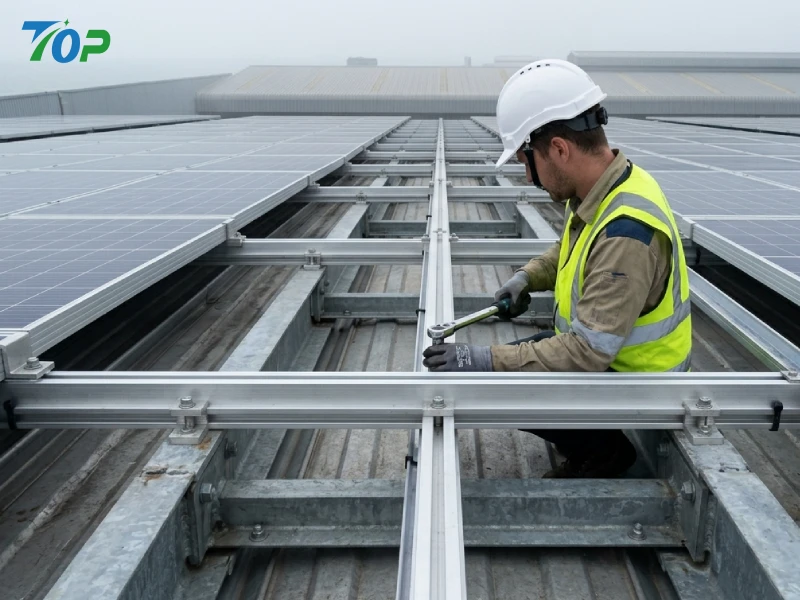
How to Choose the Right Corrosion Resistance Level for Your Solar Project
Selecting the correct corrosion protection level is not simply about choosing the highest available specification. Instead, it requires balancing environmental conditions, structural requirements, maintenance expectations, and project economics.
Over-specification may unnecessarily increase procurement costs, while under-specification can lead to severe long-term structural failures.
Professional solar engineering therefore requires a systematic evaluation process.
Evaluate Environmental Conditions Carefully
The first step is understanding the actual atmospheric exposure conditions surrounding the installation site.
Key environmental factors include:
- Distance from the coastline
- Average annual humidity levels
- Industrial pollution exposure
- Salt spray concentration
- Agricultural ammonia exposure
- Rainfall frequency
- UV radiation intensity
For example:
- Urban inland rooftops typically require C3 protection
- Coastal commercial facilities generally require C4 systems
- Marine and offshore projects often require C5 engineering standards
Consider Wind Loads and Structural Stress
Environmental corrosion is only one aspect of long-term structural reliability.
Photovoltaic mounting systems must also withstand:
- Typhoon wind loads
- Snow accumulation
- Thermal expansion cycles
- Mechanical vibration
- Dynamic uplift pressure
When corrosion combines with structural stress, degradation accelerates significantly.
This is why coastal regions with strong seasonal storms often require heavier-duty galvanized solar mounting structures and reinforced fastener systems.
Match Corrosion Protection with Project Lifecycle Goals
Modern photovoltaic projects are typically designed for:
- 25-year operational lifespans
- Long-term power purchase agreements
- Stable energy yield projections
- Low maintenance operation models
A mounting system that experiences major corrosion after only 8–10 years can severely damage the overall investment model.
Therefore, EPC contractors increasingly evaluate:
- Total lifecycle maintenance costs
- Future replacement accessibility
- Inspection complexity
- Long-term waterproof reliability
- Warranty risk exposure
Avoid the Most Common Procurement Mistake
One of the most common mistakes in solar procurement is selecting mounting systems based solely on upfront price competition.
Many low-cost suppliers reduce pricing by:
- Using thinner zinc coatings
- Reducing anodizing thickness
- Substituting low-grade fasteners
- Using uncertified steel materials
- Skipping salt spray testing validation
Although these cost reductions may appear attractive initially, they often create substantial long-term risks for EPC contractors and project investors.
Professional Procurement Recommendation
For high-value photovoltaic projects, corrosion resistance should be treated as a lifecycle investment rather than a procurement expense.
The best-performing solar mounting systems combine:
- Certified material traceability
- High-quality anti-corrosion engineering
- Reliable waterproof integration
- Long-term structural durability
- Installation efficiency optimization
This approach significantly reduces long-term operational risk while improving total project profitability.
Testing Standards and Certifications for Corrosion-Resistant Solar Mounting Systems
Testing and certification play a critical role in verifying whether a solar mounting system can truly withstand long-term environmental exposure.
Because corrosion damage develops gradually over many years, visual inspection alone is not enough to evaluate product quality.
Professional EPC contractors and photovoltaic distributors therefore rely heavily on internationally recognized testing standards and certification systems.
Salt Spray Testing Standards
Salt spray testing simulates long-term corrosion exposure in aggressive environments.
The most commonly used standards include:
- ASTM B117
- ISO 9227
These tests expose materials to continuous salt fog environments for hundreds or even thousands of hours.
The results help evaluate:
- Coating durability
- Oxidation resistance
- Surface degradation speed
- Structural protection performance
For C4 and C5 solar mounting systems, salt spray testing is especially important because marine environments create continuous chloride exposure.
Why Material Traceability Matters
High-quality solar mounting manufacturers provide complete material traceability documentation for:
- Steel composition
- Aluminum alloy grades
- Fastener material verification
- Coating thickness reports
- Mechanical strength certification
Without traceability, EPC contractors may unknowingly receive downgraded materials that fail prematurely in real-world operating conditions.
Conclusion
As photovoltaic projects continue expanding into coastal, industrial, agricultural, and marine environments, corrosion resistance has become one of the most important factors in long-term solar system reliability.
Understanding the differences between C3, C4, and C5 solar mounting systems allows EPC contractors, solar installers, and distributors to make better engineering decisions based on actual environmental conditions and lifecycle expectations.
A properly designed anti-corrosion solar mounting system delivers far more than structural support alone. It provides:
- Long-term waterproof reliability
- Reduced maintenance costs
- Improved installation safety
- Lower warranty risks
- Higher project profitability
- Enhanced customer satisfaction
For modern photovoltaic engineering, selecting the correct corrosion protection strategy is no longer optional — it is essential for achieving durable, bankable, and high-performance solar infrastructure.
Whether your project requires a C3 commercial rooftop system, a C4 agricultural solar structure, or a marine-grade C5 photovoltaic mounting solution, investing in certified materials, high-quality surface treatment, and advanced engineering design will always deliver stronger long-term value than choosing the lowest upfront price.
As a professional solar mounting manufacturer, TopFence Solar focuses on delivering high-performance corrosion-resistant photovoltaic mounting solutions engineered for demanding global environments.
Through advanced material selection, precision manufacturing, and strict quality control, TopFence Solar helps EPC contractors, distributors, and project developers build solar infrastructure designed for long-term structural reliability and maximum operational efficiency.
C3 vs C4 vs C5 Solar Mounting Systems — Choose the Right Corrosion Protection
Selecting the wrong solar mounting system corrosion resistance level can lead to premature rust, waterproofing failures, rising maintenance costs, and reduced project ROI — especially in coastal, industrial, and high-humidity environments. TOPFENCE provides engineered photovoltaic mounting solutions using anodized aluminum rails, hot-dip galvanized steel structures, and SUS304/SUS316 stainless steel fasteners designed for C3, C4, and C5 corrosion environments. We support EPC contractors, distributors, and solar developers with customized anti-corrosion mounting systems, structural engineering optimization, and project-specific technical support for long-term photovoltaic reliability.
Request Corrosion-Resistant PV Mounting Solutions & Bulk Pricing
FAQ: Solar Mounting System Corrosion Resistance for EPC Contractors & Distributors
1. How do EPC contractors determine whether a project requires C3, C4, or C5 corrosion protection?
The correct corrosion resistance level depends primarily on environmental exposure conditions. EPC contractors typically evaluate:
- Distance from coastal areas
- Humidity levels and rainfall frequency
- Industrial pollution exposure
- Salt spray concentration
- Agricultural ammonia exposure
- Project lifespan requirements
In general:
- C3 is suitable for urban and light industrial environments
- C4 is recommended for coastal and high-humidity industrial regions
- C5 is required for marine, offshore, and highly corrosive chemical environments
Conducting a site-specific environmental assessment before procurement helps avoid under-specification and long-term structural failures.
2. What is the difference between hot-dip galvanized steel and anodized aluminum in solar mounting systems?
Hot-dip galvanized steel and anodized aluminum each offer different engineering advantages depending on the project type.
- Hot-dip galvanized steel provides higher mechanical strength and is commonly used in utility-scale ground-mounted solar farms.
- Anodized aluminum offers lighter weight, faster installation, and superior natural corrosion resistance, making it ideal for rooftop photovoltaic systems.
In coastal environments, many EPC contractors combine aluminum rails with galvanized steel support structures to optimize both corrosion resistance and structural performance.
3. Why are SUS316 stainless steel fasteners recommended for coastal solar projects?
SUS316 stainless steel contains molybdenum, which significantly improves resistance to chloride-induced corrosion caused by marine salt spray.
Compared with SUS304, SUS316 provides:
- Better long-term anti-corrosion performance
- Improved resistance in high-humidity environments
- Reduced risk of fastener seizure and cracking
- Longer structural lifespan in C5 environments
Because fasteners are often the first components to fail in aggressive environments, upgrading to SUS316 hardware can substantially reduce future maintenance costs.
4. How important is salt spray testing for photovoltaic mounting systems?
Salt spray testing is critical for validating long-term corrosion resistance performance in coastal and industrial environments.
Common testing standards include:
- ASTM B117
- ISO 9227
These tests simulate long-term exposure to salt-rich atmospheric conditions and help evaluate:
- Coating durability
- Oxidation resistance
- Surface degradation speed
- Protective layer stability
For C4 and C5 solar projects, verified salt spray test reports are often essential during EPC procurement and technical evaluation.
5. Can corrosion affect rooftop waterproofing performance?
Yes. Corrosion is one of the leading causes of long-term rooftop waterproofing failure in photovoltaic systems.
Corroded fasteners and mounting interfaces may:
- Damage sealing materials
- Create micro gaps around penetrations
- Accelerate water intrusion
- Reduce waterproof membrane lifespan
To improve waterproof reliability, many modern mounting systems use:
- Standing seam roof clamps
- Non-penetrative installation methods
- EPDM waterproof sealing components
- Corrosion-resistant stainless steel hardware
6. What are the biggest procurement mistakes when sourcing corrosion-resistant solar mounting systems?
One of the most common procurement mistakes is focusing only on initial product price instead of lifecycle performance.
Low-cost suppliers may reduce quality by:
- Using thinner galvanization coatings
- Reducing anodizing thickness
- Using uncertified steel materials
- Substituting lower-grade fasteners
- Skipping third-party testing
These shortcuts often result in higher long-term maintenance costs, structural instability, and premature replacement risks.
7. How can distributors reduce inventory complexity while serving multiple corrosion environments?
Many photovoltaic distributors simplify inventory management by selecting modular mounting systems with interchangeable components.
Common strategies include:
- Using universal aluminum rail profiles
- Standardizing clamp compatibility
- Offering optional SUS304 and SUS316 fastener upgrades
- Using configurable coating specifications for different projects
This approach improves procurement flexibility while reducing warehouse complexity and stock risk.
8. What maintenance practices help extend the lifespan of corrosion-resistant solar mounting systems?
Even high-quality anti-corrosion solar racking systems benefit from regular inspection and preventive maintenance.
Recommended practices include:
- Annual fastener inspection
- Cleaning salt deposits in coastal regions
- Checking coating damage and scratches
- Inspecting drainage channels and waterproof interfaces
- Monitoring galvanic corrosion around mixed metals
Preventive maintenance significantly extends structural lifespan and helps maintain long-term photovoltaic system reliability.
Related News
- The Global EPC Sourcing Checklist: Managing Lead Times and Logistics for Solar Mounting Systems
- BIPV & Commercial Rooftops: Solving Waterproofing and Structural Integrity Challenges in Urban Solar
- Navigating Solar Certifications: Why UL 2703 and International Standards Matter for Project Bankability
- Maximizing Yield with Bifacial Modules: How to Select the Optimal Tracker for Enhanced Energy Output
- Wind Load and Coastal Engineering: Ensuring Your Ground-Mounted Solar Array Survives Extreme Weather
- Aluminum vs. Galvanized Steel: Choosing the Right Solar Mounting Structure for High-Corrosivity Environments
Leave me a message