The Global EPC Sourcing Checklist: Managing Lead Times and Logistics for Solar Mounting Systems
Why Solar Mounting System Sourcing Has Become a Critical EPC Priority
In today's solar industry, project success is no longer determined solely by module pricing or inverter selection. Across utility-scale, commercial rooftop, and distributed generation projects, procurement teams are increasingly discovering that the real schedule bottleneck often lies elsewhere: the solar mounting system.
A delayed shipment of mounting structures can postpone pile installation, disrupt labor schedules, delay module deployment, and ultimately affect project commissioning dates. For EPC contractors managing multiple projects simultaneously, even a few weeks of delay can create significant financial and operational consequences. As solar projects continue to scale in size and complexity, solar mounting system sourcing has become a critical discipline rather than a routine purchasing task.
The challenge is particularly evident in global supply chains. Steel price fluctuations, manufacturing capacity constraints, international freight disruptions, customs clearance issues, and evolving trade policies have all introduced new procurement risks that did not exist at the same level a decade ago. Procurement teams can no longer focus only on obtaining the lowest quotation; they must evaluate suppliers based on delivery reliability, engineering support, quality assurance systems, and logistics execution capabilities.
For EPC contractors, project developers, distributors, and procurement managers, the objective is simple: secure mounting systems that arrive on time, meet engineering requirements, support efficient installation, and contribute to long-term project performance.
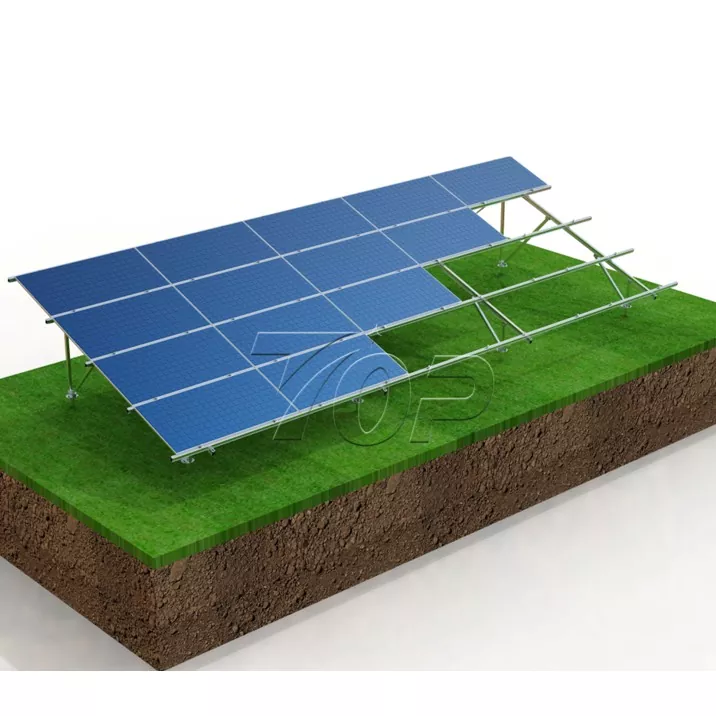
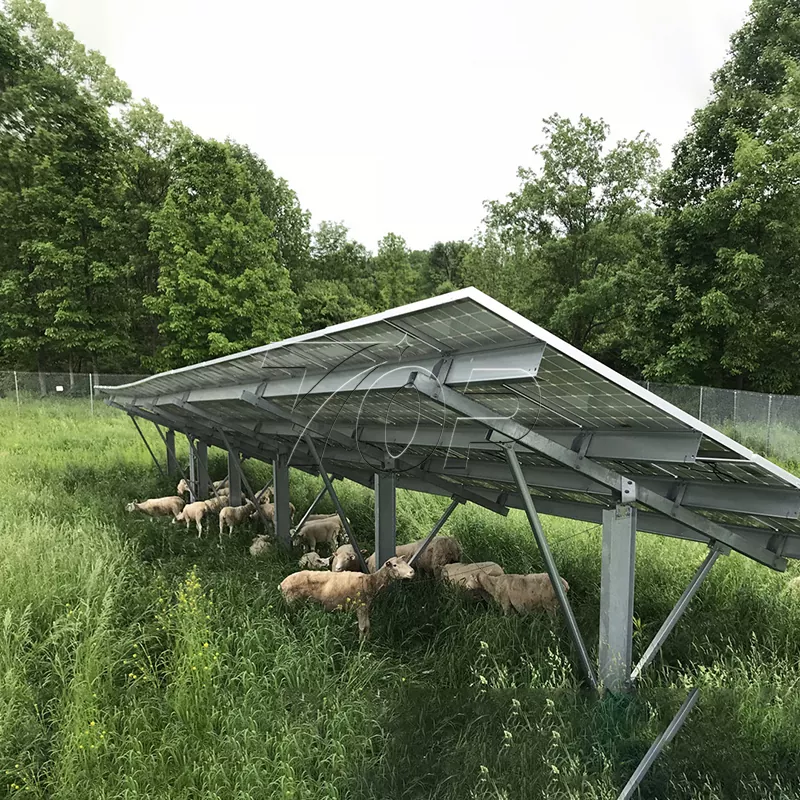
This guide provides a practical EPC-focused framework for managing global procurement, lead times, supplier selection, and logistics planning for solar mounting structures. Whether you are sourcing fixed-tilt ground mounting systems, commercial rooftop racking, or large utility-scale support structures, the principles discussed here can help reduce project risk and improve overall project profitability.

The Hidden Cost of Delayed Solar Mounting Deliveries
Most project stakeholders understand the impact of delayed solar modules. Far fewer fully appreciate the consequences of delayed mounting systems. In reality, support structures are often installed before modules arrive on-site, making them one of the earliest physical components required during construction.
When mounting structures fail to arrive according to schedule, the effects quickly spread throughout the entire project timeline.
What Happens When Racking Arrives Late?
A delayed delivery of solar mounting equipment can trigger a chain reaction of project disruptions:
- Installation crews remain idle while waiting for materials.
- Heavy equipment rental costs continue accumulating.
- Pile driving and foundation activities are interrupted.
- Module installation schedules must be adjusted.
- Grid connection milestones may be postponed.
- Liquidated damages (LDs) become a potential risk.
For EPC contractors operating under fixed-price contracts, these delays directly affect project margins. Even if the mounting supplier eventually delivers the materials, the financial impact of schedule disruption often remains with the EPC contractor.
Real EPC Cost Impact Example
Consider a hypothetical 100 MW utility-scale solar project.
The project employs approximately:
- 150 installation workers
- 10 supervisors
- Several pieces of heavy equipment
- Multiple subcontractor teams
Assuming labor and equipment costs total approximately USD $20,000–$35,000 per day, a two-week delay caused by late-arriving mounting structures could create hundreds of thousands of dollars in indirect project costs.
The financial consequences may include:
- Labor standby expenses
- Equipment rental extensions
- Site overhead costs
- Project management costs
- Delayed revenue generation
In many cases, these indirect costs exceed the savings originally achieved by selecting the lowest-priced supplier.
This is one of the most important lessons experienced EPC procurement teams learn over time: the cheapest supplier is not always the lowest-cost supplier.
Understanding Typical Lead Times for Solar Mounting Systems
One of the most common procurement mistakes is assuming that all solar mounting systems can be manufactured and delivered within a few weeks. Actual lead times vary significantly depending on project scale, design complexity, material availability, and manufacturing workload.
Understanding realistic lead time expectations is the foundation of successful solar mounting system sourcing.
Lead Time Benchmarks by Project Type
| Project Type | Typical Manufacturing Lead Time |
|---|---|
| Residential Rooftop | 2–4 Weeks |
| Commercial Rooftop | 4–8 Weeks |
| Industrial Rooftop | 4–10 Weeks |
| Ground Mount Fixed Tilt | 6–12 Weeks |
| Utility-Scale Projects | 8–16 Weeks |
| Tracker Systems | 10–20 Weeks |
These timelines represent manufacturing lead times only and do not include:
- Engineering review
- Drawing approval
- Container booking
- Ocean freight
- Customs clearance
- Domestic transportation
Many project delays occur because procurement teams underestimate the time required after manufacturing is complete.
Which Components Usually Create Bottlenecks?
Not all mounting system components share the same procurement risks.
Steel Structures
Steel remains the largest material category in most utility-scale mounting systems. Raw material shortages, galvanizing capacity limitations, and steel market volatility can significantly affect production schedules.
Large projects often require thousands of tons of structural steel. Suppliers without stable raw material procurement channels may struggle to maintain promised lead times during periods of market disruption.
Aluminum Rails
Commercial rooftop systems frequently rely on aluminum extrusion profiles.
Although aluminum is generally easier to process than steel, custom profile designs may require dedicated extrusion tooling and additional manufacturing time.
SUS304 Fasteners
Fasteners are often overlooked during procurement planning.
Yet shortages of stainless steel hardware can delay complete system deliveries. High-quality SUS304 and SUS410 fasteners typically require strict quality control and traceability procedures.
Experienced suppliers maintain inventory buffers specifically for critical fastening components.
Hot-Dip Galvanizing Capacity
For ground-mounted solar projects, hot-dip galvanization frequently becomes a production bottleneck.
Even if steel fabrication is completed on schedule, limited galvanizing capacity can delay final product delivery.
Procurement teams should always verify:
- Galvanizing partner availability
- Coating standards
- Expected processing times
Custom Components
Projects requiring customized brackets, unique foundation designs, or region-specific engineering adaptations generally experience longer lead times than standardized systems.
The more customization involved, the earlier procurement planning should begin.
Seasonal Procurement Risks That Many EPCs Overlook
Solar procurement is not only affected by manufacturing capacity. Seasonal factors also play an important role in determining actual delivery timelines.
Chinese New Year Production Disruptions
China remains one of the world's largest manufacturing hubs for solar mounting systems.
During the Chinese New Year holiday period, factories may close for several weeks. Production schedules before and after the holiday often become heavily congested due to increased order volumes.
Projects scheduled for Q1 installation should account for this seasonal effect well in advance.
European Summer Holidays
Many European engineering firms, logistics providers, and construction teams operate with reduced staffing during summer months.
This can slow:
- Design approvals
- Project reviews
- Transportation coordination
- Site mobilization activities
Year-End Construction Rush
In North America, Australia, Japan, and several European markets, developers often seek project completion before year-end financial deadlines.
This creates temporary spikes in demand for:
- Mounting systems
- Solar modules
- Freight services
- Construction labor
Lead times that appear manageable during slower periods may extend considerably during peak construction seasons.
EPC Procurement Timeline: When Should You Start Sourcing?
A common misconception is that mounting structures should be ordered after final module procurement decisions have been completed.
In practice, experienced EPC contractors often begin supplier engagement much earlier.
The reason is straightforward: mounting systems frequently represent a critical-path item.
Waiting too long to initiate supplier discussions can create schedule compression that becomes difficult to recover later.
Recommended Procurement Schedule for Utility-Scale Projects
| Project Activity | Recommended Timing Before Construction |
|---|---|
| Site Survey Completion | 9 Months |
| Geotechnical Investigation | 8–9 Months |
| Preliminary Structural Design | 8 Months |
| Supplier Evaluation | 7 Months |
| Technical Clarifications | 6–7 Months |
| Purchase Order Placement | 6 Months |
| Manufacturing | 5 Months |
| Ocean Freight | 3 Months |
| Customs Clearance | 1–2 Months |
| Site Delivery | Before Construction Start |
The exact timeline varies by project location and system type, but the principle remains consistent: procurement should begin earlier than many teams initially expect.
Common Scheduling Mistakes EPC Contractors Make
Several recurring mistakes continue to affect project schedules across global markets.
Waiting for Final Module Selection
Although module dimensions influence mounting design, preliminary supplier discussions can often begin before final module procurement is completed.
Delaying all mounting procurement activities until module contracts are finalized frequently wastes valuable schedule time.
Ignoring Engineering Review Periods
Engineering approval cycles often require several rounds of communication.
Topics may include:
- Wind load verification
- Snow load analysis
- Foundation calculations
- Material optimization
- Installation methodology
These reviews require time and should not be compressed unnecessarily.
Assuming Freight Capacity Is Always Available
Container shortages and freight market fluctuations have repeatedly affected global solar projects over recent years.
Shipping arrangements should be considered during procurement planning rather than after manufacturing has finished.
At this stage, successful EPC teams recognize that solar mounting system sourcing is not simply purchasing hardware. It is an integrated process involving engineering, manufacturing, logistics, risk management, and construction planning.
In Part 2, we will examine how EPC contractors evaluate suppliers, verify manufacturing capabilities, assess engineering support, and build a supplier qualification framework that reduces procurement risk before purchase orders are issued.
Supplier Qualification Checklist for EPC Procurement Teams
Selecting a solar mounting supplier is fundamentally different from purchasing a standardized commodity product. While price remains an important consideration, experienced EPC contractors understand that procurement decisions should be based on a broader evaluation framework that includes manufacturing capability, engineering expertise, quality management, supply-chain stability, and delivery performance.
A supplier that offers the lowest quotation may not necessarily provide the lowest total project cost. Delayed deliveries, inconsistent quality, engineering deficiencies, and inadequate technical support can quickly erase any initial purchasing savings.
For this reason, successful solar mounting system sourcing requires a structured supplier qualification process before contracts are signed.
Manufacturing Capacity Assessment
The first step is understanding whether a supplier can realistically deliver the required volume within the project schedule.
Many manufacturers advertise impressive annual production capacities, but actual project execution depends on numerous operational factors.
Annual Production Capacity
Procurement teams should verify:
- Total annual steel processing capacity
- Annual aluminum profile production volume
- Galvanizing throughput capacity
- Fastener inventory management systems
- Peak season production capability
For example, a supplier claiming a 200 MW annual production capacity may struggle if several large projects are already occupying manufacturing resources.
Capacity should therefore be evaluated relative to current order backlog rather than marketing materials alone.
Production Equipment and Automation
Modern solar mounting manufacturing increasingly relies on automated production systems.
Key equipment may include:
- Automatic roll-forming lines
- CNC punching machines
- Robotic welding systems
- Laser cutting equipment
- Automated packaging lines
Higher automation levels typically result in:
- Improved dimensional consistency
- Reduced manufacturing errors
- Faster production cycles
- Better quality traceability
While automation alone does not guarantee quality, it often indicates a manufacturer's ability to support large-scale international projects.
Factory Audit Considerations
For large utility-scale projects, many EPC firms conduct either physical or virtual factory audits.
Typical audit areas include:
- Raw material storage management
- Production workflow organization
- Quality control procedures
- Testing equipment availability
- Packaging and logistics operations
A well-organized factory environment often reflects broader operational discipline throughout the organization.
Quality Assurance Checklist
Mounting systems are structural products expected to perform for 25 years or more in harsh outdoor environments.
Unlike cosmetic manufacturing defects, structural quality issues can directly impact project safety and long-term reliability.
Therefore, quality assurance should receive the same level of scrutiny as pricing and delivery schedules.
ISO Management Systems
Most established international suppliers maintain recognized management certifications such as:
- ISO 9001 Quality Management
- ISO 14001 Environmental Management
- ISO 45001 Occupational Health and Safety
While certifications do not automatically guarantee product quality, they demonstrate structured operational processes and documented quality controls.
Material Certification Verification
Procurement teams should request traceable material documentation, including:
- Mill test certificates
- Chemical composition reports
- Mechanical property reports
- Galvanization inspection reports
- Fastener material certificates
Particular attention should be given to stainless steel fasteners.
For rooftop applications, genuine SUS304 stainless steel hardware is commonly specified due to its corrosion resistance and durability.
Material substitution can create significant long-term maintenance risks.
Galvanization Standards
For ground-mounted systems, corrosion protection remains one of the most important quality considerations.
Hot-dip galvanized steel structures are widely used because they offer:
- Long service life
- Mechanical durability
- Low maintenance requirements
However, coating thickness varies significantly between suppliers.
Procurement teams should verify:
- Applicable galvanization standards
- Average coating thickness
- Inspection procedures
- Corrosion resistance expectations
Failure to verify these details can result in premature corrosion, especially in coastal or industrial environments.
Structural Calculation Documentation
Every mounting system should be supported by documented engineering calculations.
Typical documents include:
- Wind load calculations
- Snow load calculations
- Deflection analysis
- Foundation calculations
- Connection strength verification
These documents are frequently required during permitting and investor due diligence processes.
Engineering Support Capabilities
One characteristic that often distinguishes high-performing suppliers from average suppliers is engineering support.
Modern EPC projects frequently require site-specific adaptations that extend beyond standard product catalogs.
Suppliers capable of providing engineering assistance can help optimize costs, accelerate approvals, and reduce installation challenges.
Preliminary Layout Design
During early project stages, engineering teams may assist with:
- Array layout optimization
- Row spacing recommendations
- Terrain adaptation strategies
- Foundation selection guidance
These inputs can improve project economics before procurement decisions are finalized.
Wind and Snow Load Analysis
Environmental loads vary significantly across regions.
A system designed for Southern Europe may require substantial modifications before being deployed in:
- Northern Europe
- Canada
- Japan
- Mountainous regions
Engineering teams should be capable of adapting structural designs according to local environmental requirements.
Foundation Recommendations
Ground-mounted projects commonly encounter varying soil conditions.
Potential foundation options include:
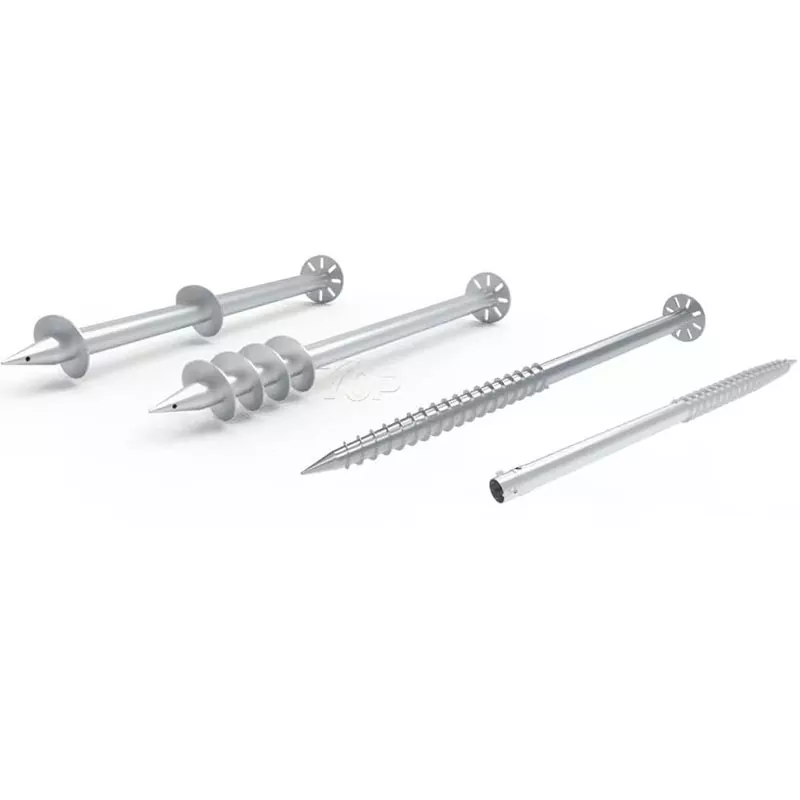
- Driven piles
- Ground screws
- Concrete foundations
- Ballasted systems
Experienced suppliers can provide recommendations based on geotechnical reports and project objectives.
Installation Documentation
Clear installation documentation directly affects labor productivity.
High-quality suppliers typically provide:
- Assembly drawings
- Installation manuals
- Torque specifications
- Component labeling systems
- Material lists
These documents help reduce field errors and improve construction efficiency.

How to Evaluate Overseas Solar Mounting Suppliers
Global sourcing has become increasingly common as solar markets continue expanding worldwide.
Many EPC contractors evaluate suppliers from multiple regions in order to improve competitiveness and secure manufacturing capacity.
However, international sourcing introduces additional variables that must be carefully assessed.
China vs Local Suppliers: A Practical Comparison
There is no universal answer regarding the best sourcing location. The optimal choice depends on project requirements, schedule constraints, and procurement priorities.
| Evaluation Criteria | Overseas Supplier | Local Supplier |
|---|---|---|
| Initial Product Cost | Often Lower | Often Higher |
| Freight Costs | Higher | Lower |
| Manufacturing Capacity | Typically Larger | Varies |
| Delivery Flexibility | Dependent on Shipping | Generally Faster |
| Engineering Support | Varies by Supplier | Often More Accessible |
| Inventory Availability | Project-Based Production | Sometimes Stocked |
The decision should focus on total project value rather than unit pricing alone.
Questions Every EPC Should Ask Before Ordering
Supplier interviews often reveal information that quotations cannot.
Before issuing a purchase order, procurement teams should consider asking:
- What is your current production utilization rate?
- Can you provide recent project references of similar size?
- What is your average on-time delivery performance?
- How do you manage steel price fluctuations?
- Do you maintain raw material inventory buffers?
- How many production lines are available?
- What quality inspections are performed before shipment?
- Can you support local engineering requirements?
- What contingency plans exist for logistics disruptions?
- How are warranty claims handled internationally?
- Can partial shipments be arranged if necessary?
- What packaging methods are used?
- How is project documentation managed?
- Do you provide installation support?
- Can production progress be monitored during manufacturing?
The responses often reveal far more about supplier reliability than pricing spreadsheets.
Managing Global Logistics for Solar Mounting Systems
Even the most reliable manufacturer cannot guarantee project success if logistics execution fails.
In international projects, shipping frequently represents one of the largest sources of uncertainty.
Effective logistics planning should begin during procurement discussions rather than after manufacturing is completed.
Choosing the Right Incoterms
Incoterms define responsibilities between buyers and sellers.
Misunderstanding these terms can create unexpected costs and delivery risks.
EXW (Ex Works)
The buyer assumes responsibility immediately after goods are made available at the supplier's facility.
This option offers maximum control but requires significant logistics expertise.
FOB (Free On Board)
The supplier delivers goods to the departure port and loads them onto the vessel.
Many EPC contractors prefer FOB because it balances supplier responsibility with buyer control over international freight.
CIF (Cost, Insurance and Freight)
The supplier arranges ocean transportation and insurance to the destination port.
This simplifies procurement but may reduce visibility into freight cost structures.
DDP (Delivered Duty Paid)
The supplier assumes responsibility for transportation, customs clearance, duties, and final delivery.
DDP can simplify project logistics but may increase overall procurement costs.
Ocean Freight vs Rail vs Truck Transportation
Transportation strategy depends heavily on project location and schedule requirements.
| Transportation Method | Cost | Speed | Typical Application |
|---|---|---|---|
| Ocean Freight | Lowest | Slowest | International Utility Projects |
| Rail Freight | Moderate | Moderate | Regional Distribution |
| Truck Transportation | Highest | Fastest | Final Delivery |
Ocean freight remains the dominant transportation method for large solar projects due to its cost efficiency.
Container Optimization Strategies
Shipping costs are strongly influenced by container utilization efficiency.
Well-designed packaging systems can significantly reduce logistics expenses.
Optimization techniques include:
- Nested structural components
- Modular packaging systems
- Custom pallet dimensions
- Weight-balanced loading plans
- Component bundling strategies
For utility-scale projects, even small improvements in container utilization can generate substantial cost savings across hundreds of containers.
By this stage of the procurement process, EPC teams should have established a qualified supplier shortlist, verified manufacturing capabilities, reviewed engineering support resources, and developed a preliminary logistics strategy.
In Part 3, we will examine supply chain risk mitigation, packaging strategies for installation efficiency, a real-world EPC procurement case study, and the complete procurement framework that leading solar developers use to minimize project delays and maximize ROI.
Common Supply Chain Risks and How EPCs Mitigate Them
Over the past five years, the solar industry has experienced some of the most significant supply chain disruptions in its history. Events ranging from raw material shortages and freight market volatility to geopolitical tensions and changing trade regulations have demonstrated that procurement risk management is no longer optional.
For EPC contractors, the goal is not simply finding a supplier capable of manufacturing mounting systems. The objective is building a procurement strategy capable of maintaining project schedules under uncertain market conditions.
The most successful procurement teams treat risk management as an integral component of solar mounting system sourcing rather than a separate activity.
Steel Price Volatility
Steel remains one of the largest cost components in ground-mounted solar structures.
While steel prices vary significantly by region and market conditions, historical trends show that sudden price increases can materially impact project budgets if procurement planning is delayed.
Factors affecting steel pricing may include:
- Global economic activity
- Energy costs
- Raw material availability
- Government policies
- Manufacturing demand cycles
Experienced EPC contractors often mitigate this risk by:
- Locking pricing through framework agreements
- Issuing purchase orders earlier in the development cycle
- Maintaining approved supplier networks
- Using standardized mounting designs where possible
Early supplier engagement frequently provides greater protection than attempting to predict future commodity markets.
Port Congestion and Freight Disruptions
International logistics networks have become increasingly complex.
Container shortages, labor disputes, weather events, and regional transportation bottlenecks can all affect delivery schedules.
Although conditions vary by region and year, shipping disruptions continue to represent a major procurement risk for utility-scale solar projects.
To reduce exposure, EPC teams commonly:
- Build schedule buffers into project timelines
- Diversify freight forwarding partners
- Monitor shipment progress actively
- Reserve vessel capacity earlier
- Use milestone-based logistics reviews
Waiting until production is completed before arranging transportation significantly increases delivery uncertainty.
Trade Policy Changes and Import Restrictions
Trade regulations can affect procurement decisions almost overnight.
Potential challenges include:
- Import duties
- Anti-dumping investigations
- Tariff adjustments
- Country-of-origin requirements
- Certification updates
These factors can influence not only project economics but also delivery schedules.
Procurement teams should maintain close communication with:
- Customs brokers
- Trade compliance specialists
- Freight partners
- Legal advisors
For multinational developers managing projects across multiple markets, regulatory awareness has become a strategic advantage.
Single-Supplier Dependency Risk
One of the most common procurement mistakes is relying entirely on a single supplier without contingency planning.
While consolidating purchases can simplify administration, it may also create significant vulnerability.
If a supplier encounters:
- Production delays
- Financial difficulties
- Raw material shortages
- Logistics disruptions
the entire project schedule may be affected.
Leading EPC organizations often implement:
- Dual-sourcing strategies
- Approved vendor lists
- Alternative design options
- Regional supplier diversification
The objective is not necessarily splitting every order but ensuring viable alternatives exist if conditions change.
Packaging and Delivery Planning for Faster Installation
Packaging is frequently viewed as a logistics detail. In reality, packaging strategy can directly influence installation productivity, labor efficiency, and project schedule performance.
Poor packaging often creates avoidable challenges during construction.
Examples include:
- Lost components
- Mixed material batches
- Extended unloading times
- Installation errors
- Site congestion
For large projects, these inefficiencies accumulate quickly.
Why Packaging Directly Impacts Installation Efficiency
Installation crews operate most effectively when materials arrive organized according to construction sequences.
When components are delivered randomly, workers spend additional time:
- Searching for parts
- Sorting hardware
- Relocating materials
- Verifying quantities
These non-productive activities increase labor costs without contributing to actual project progress.
Well-designed packaging systems help transform logistics operations into installation advantages.
Best Practices for Large Solar Projects
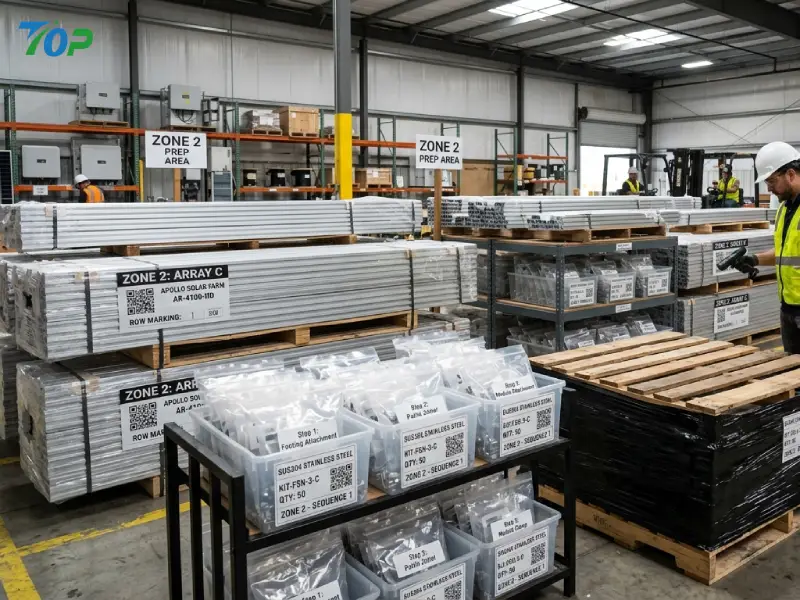
Zone-Based Packaging
Instead of shipping materials according to manufacturing batches, advanced suppliers organize deliveries according to installation zones.
This approach allows crews to:
- Unload materials directly into designated work areas
- Reduce internal transportation requirements
- Improve installation sequencing
Zone-based packaging becomes increasingly valuable as project size grows.
Installation Sequence Delivery
Construction schedules should influence delivery schedules.
Components required during early construction phases should arrive first.
This minimizes:
- Storage requirements
- Material handling
- Site congestion
Many experienced EPC contractors coordinate closely with suppliers to align deliveries with installation milestones.
QR-Code and Digital Tracking Systems
Digital labeling systems are becoming increasingly common in large-scale projects.
Benefits include:
- Material traceability
- Inventory management
- Installation verification
- Quality control documentation
Digital tracking can significantly improve visibility throughout the supply chain.
Kit-Based Fastener Packaging
Fasteners are among the most frequently misplaced components on solar construction sites.
Packaging hardware according to assembly requirements helps:
- Reduce installation errors
- Improve labor productivity
- Simplify inventory control
Although relatively simple, this packaging strategy can save considerable time during installation.
EPC Solar Mounting Procurement Checklist
Before issuing a purchase order, procurement teams should systematically review key project requirements.
The following checklist can help identify potential issues before they affect project execution.
Technical Review Checklist
- Site survey completed
- Geotechnical report reviewed
- Wind load requirements confirmed
- Snow load requirements confirmed
- Corrosion environment classified
- Module specifications finalized
- Structural calculations reviewed
- Foundation design verified
Supplier Qualification Checklist
- Factory capacity evaluated
- Production equipment reviewed
- ISO certifications verified
- Material certificates reviewed
- Project references checked
- Warranty terms evaluated
- Engineering capabilities assessed
Logistics Review Checklist
- Incoterms confirmed
- Freight strategy selected
- Packaging plan reviewed
- Customs requirements verified
- Shipping schedule approved
- Contingency transportation options identified
Risk Management Checklist
- Schedule buffers established
- Alternative suppliers identified
- Critical components tracked
- Material price risks evaluated
- Trade compliance reviewed
What Top EPC Contractors Look for in a Solar Mounting Partner
As projects become larger and more complex, leading EPC contractors increasingly evaluate suppliers as long-term project partners rather than simple product vendors.
The procurement decision extends beyond the mounting structure itself.
It encompasses manufacturing reliability, engineering support, documentation quality, and project execution capability.
Consistent Delivery Performance
Predictable delivery schedules often provide more value than marginal price reductions.
EPC contractors place significant emphasis on suppliers capable of:
- Meeting production commitments
- Providing schedule transparency
- Communicating proactively
- Managing logistics effectively
Engineering Support Beyond Product Supply
Complex projects rarely fit perfectly within standard product configurations.
Engineering support can help optimize:
- Material usage
- Installation efficiency
- Foundation costs
- Transportation requirements
This support often generates value exceeding the product cost difference between competing suppliers.
Global Project Experience
Suppliers with international project experience typically possess a stronger understanding of:
- Regional design standards
- Environmental requirements
- Documentation expectations
- Logistics challenges
Such experience can help reduce project execution risks, particularly for developers entering new markets.
Transparent Quality Documentation
Professional documentation supports:
- Permitting processes
- Investor reviews
- Lender due diligence
- Construction quality control
Suppliers capable of providing organized, traceable documentation often simplify project management considerably.
Long-Term Supply Stability
Utility-scale developers increasingly favor suppliers capable of supporting multi-project procurement strategies.
Long-term partnerships may provide:
- Production planning advantages
- Pricing stability
- Engineering continuity
- Improved supply chain visibility
For organizations managing gigawatt-scale development pipelines, supply stability becomes a strategic consideration.
Case Study: How Early Procurement Helped Avoid a 100 MW Project Delay
The following example reflects a typical procurement scenario frequently encountered in utility-scale solar development. Project details have been generalized to protect confidentiality.
Project Overview
- Project Size: 100 MW
- Project Type: Ground-Mounted Solar Farm
- Region: Asia-Pacific
- Mounting System: Fixed-Tilt Steel Structure
Initial Challenge
The project team identified potential schedule risks associated with:
- Long steel procurement cycles
- Peak-season manufacturing demand
- International shipping uncertainty
Without intervention, mounting system delivery could have become the project's critical path.
Procurement Strategy
The EPC contractor initiated supplier engagement approximately six months before construction.
Key actions included:
- Early engineering review
- Advance material reservations
- Production slot confirmation
- Freight planning before manufacturing completion
Project Outcome
- Manufacturing completed according to schedule
- Freight capacity secured in advance
- No significant delivery delays occurred
- Installation milestones were maintained
- Project commissioning remained on target
The lesson was straightforward: proactive procurement planning reduced schedule risk more effectively than reactive problem-solving.
Conclusion
The solar industry continues to evolve rapidly, but one reality remains unchanged: project profitability depends heavily on execution.
A mounting structure may represent only one component within a photovoltaic system, yet it often plays a decisive role in determining whether a project progresses smoothly or encounters costly delays.
Successful solar mounting system sourcing is no longer about identifying the lowest supplier quotation. It requires balancing engineering requirements, manufacturing capacity, quality assurance, logistics planning, and supply chain resilience.
For EPC contractors, developers, and distributors, the most valuable suppliers are those capable of supporting projects throughout the entire lifecycle—from preliminary design and procurement planning to delivery coordination and installation support.
Ultimately, the most competitive solar projects are not always those that purchase at the lowest cost. They are the projects that consistently achieve predictable schedules, efficient construction, reliable long-term performance, and lower overall project risk.
In an increasingly competitive global solar market, choosing the right mounting partner is not simply a procurement decision. It is a project risk management decision that can influence profitability for decades.
Frequently Asked Questions
Q1. How long does it typically take to manufacture solar mounting systems?
Lead times vary depending on project scale and system complexity. Commercial rooftop projects often require 4–8 weeks, while utility-scale projects may require 8–16 weeks or more, excluding transportation and customs clearance.
Q2. What are the most common causes of solar mounting delivery delays?
Common causes include raw material shortages, galvanizing bottlenecks, freight disruptions, customs issues, design revisions, and insufficient procurement planning.
Q3. When should EPC contractors place orders for mounting systems?
For utility-scale projects, supplier engagement often begins six to nine months before construction. Early procurement reduces schedule risk and improves manufacturing availability.
Q4. How can solar developers reduce procurement risk?
Developers can reduce risk through early planning, supplier qualification programs, dual sourcing strategies, schedule buffers, and proactive logistics management.
Q5. What certifications should a solar mounting supplier provide?
Typical certifications may include ISO 9001, ISO 14001, material certificates, structural calculation reports, and project-specific compliance documentation.
Q6. How important is engineering support during procurement?
Engineering support can significantly improve project outcomes by optimizing structural design, reducing material usage, accelerating approvals, and improving installation efficiency.
Q7. Is overseas sourcing still competitive for solar mounting systems?
In many markets, overseas sourcing remains competitive due to manufacturing scale and production capacity. However, freight costs, tariffs, and delivery schedules must be evaluated carefully.
Q8. Which Incoterm is most commonly used for EPC solar projects?
FOB is widely used because it balances supplier responsibility with buyer control over international freight arrangements.
Q9. How much schedule contingency should be added to mounting deliveries?
The appropriate buffer depends on project location and logistics complexity. Many EPC contractors incorporate several weeks of contingency into procurement schedules to account for unforeseen disruptions.
Q10. What should be included in a solar mounting procurement checklist?
A comprehensive checklist should cover technical requirements, supplier qualifications, logistics planning, quality documentation, schedule management, and supply chain risk mitigation measures.
Looking for a Reliable Solar Mounting Partner for Your EPC Projects?
Reduce procurement risks, avoid costly project delays, and improve installation efficiency with engineering-grade solar mounting solutions.
TopFence supports EPC contractors, project developers, distributors, and procurement teams with customized mounting systems for utility-scale and commercial solar projects worldwide.
From structural design optimization and load calculations to manufacturing, quality control, and global logistics coordination, we help ensure your mounting systems arrive on schedule and perform reliably throughout the project lifecycle.
Related News
- BIPV & Commercial Rooftops: Solving Waterproofing and Structural Integrity Challenges in Urban Solar
- Navigating Solar Certifications: Why UL 2703 and International Standards Matter for Project Bankability
- Maximizing Yield with Bifacial Modules: How to Select the Optimal Tracker for Enhanced Energy Output
- Wind Load and Coastal Engineering: Ensuring Your Ground-Mounted Solar Array Survives Extreme Weather
- Aluminum vs. Galvanized Steel: Choosing the Right Solar Mounting Structure for High-Corrosivity Environments
- The EPC’s Guide to Reducing Labor Costs: How Intelligent Solar Mounting Design Speeds Up Installation
Leave me a message