BIPV & Commercial Rooftops: Solving Waterproofing and Structural Integrity Challenges in Urban Solar
Why Waterproofing and Structural Integrity Matter in Commercial Rooftop Solar and BIPV
As cities continue to pursue decarbonization goals and businesses look for ways to reduce long-term energy costs, commercial rooftop solar and Building-Integrated Photovoltaics (BIPV) have become two of the fastest-growing segments of the solar industry. Unlike utility-scale solar farms built on open land, rooftop projects must coexist with existing buildings, roofing systems, structural limitations, tenant operations, and strict building regulations.
For EPC contractors, solar installers, developers, and facility owners, generating electricity is only one part of a successful project. The greater challenge is ensuring that the solar installation does not compromise the building itself. A system that performs well electrically but creates roof leaks, structural stress, or maintenance complications can quickly become a liability rather than an asset.
This is why waterproofing and structural integrity have emerged as the two most critical engineering considerations in modern rooftop PV design. Whether the project involves a standing seam metal roof, a reinforced concrete commercial building, a logistics warehouse, or a high-rise BIPV façade, proper engineering decisions made during the design phase can significantly reduce lifecycle costs, minimize warranty claims, and improve long-term return on investment.
In this guide, we examine the real engineering challenges behind urban solar projects, explain why rooftop failures occur, and explore proven solutions that EPC contractors use to deliver reliable, bankable rooftop solar systems.

Why Rooftop Solar and BIPV Are Becoming Essential in Urban Energy Infrastructure
Urban solar deployment has changed dramatically over the past decade. In many regions, suitable land for large ground-mounted photovoltaic plants is becoming increasingly scarce or expensive. At the same time, governments are encouraging distributed energy generation to improve grid resilience and reduce transmission losses.
Commercial and industrial buildings offer vast amounts of unused roof space that can be transformed into power-generating assets. Warehouses, manufacturing facilities, shopping centers, airports, data centers, and office buildings often have roof areas capable of supporting hundreds of kilowatts or even several megawatts of installed solar capacity.
Meanwhile, BIPV technologies are expanding the possibilities beyond traditional rooftops. Solar modules can now be integrated into building envelopes, façades, skylights, canopies, and curtain wall systems, allowing buildings to generate electricity without requiring additional land.
However, integrating solar technology into occupied buildings introduces engineering complexities that are fundamentally different from those encountered in ground-mounted solar projects.
Ground-mounted systems are typically designed on a clean site where engineers have full control over foundations, structural loads, drainage, and maintenance access. Commercial rooftops, on the other hand, are existing structures with their own design limitations, aging conditions, and operational requirements.
The building must continue performing its primary function while simultaneously supporting a solar power plant for the next 25 to 30 years.
The Hidden Risks Behind Successful Rooftop Solar Projects
Many project stakeholders assume that photovoltaic modules represent the most critical component of a solar installation. In reality, module failures account for only a small percentage of long-term project issues.
Field experience across thousands of commercial rooftop installations shows that the most expensive post-installation problems typically originate from:
- Water infiltration and roof leakage
- Structural overloading
- Wind uplift damage
- Improper attachment methods
- Corrosion-related failures
- Inadequate waterproofing details
These issues often remain hidden during commissioning and may not become visible until months or years after project completion.
A minor roof leak around a poorly sealed attachment point can eventually lead to insulation damage, mold growth, electrical hazards, and costly repairs. Similarly, an underestimated wind load may not reveal itself until a severe weather event places extreme stress on the mounting system.
For EPC contractors, these failures create more than technical problems. They generate warranty claims, increase maintenance expenses, damage client relationships, and negatively affect future project opportunities.
Therefore, successful rooftop solar engineering requires viewing the building and the PV system as a single integrated structure rather than two separate assets.
Understanding the Engineering Complexity of Commercial Rooftop Solar
Commercial Rooftops Are Existing Structures, Not Empty Construction Sites
One of the most common mistakes in rooftop solar planning is treating a building roof as though it were a blank construction site.
Every commercial building has unique characteristics that directly influence solar design:
- Building age
- Roof condition
- Original structural design criteria
- Existing mechanical equipment
- Drainage systems
- Maintenance access requirements
- Local weather conditions
Many industrial buildings currently receiving solar upgrades were originally constructed 15, 20, or even 30 years ago. Their roofs were not necessarily designed with future photovoltaic installations in mind.
As a result, engineers must carefully evaluate whether the structure can safely accommodate additional loads while maintaining compliance with current building standards.
This assessment becomes even more important when the building remains operational throughout construction. Distribution centers, manufacturing plants, hospitals, and data centers often cannot tolerate disruptions caused by structural modifications or roof failures.
Common Rooftop Types and Their Engineering Challenges
Standing Seam Metal Roofs
Standing seam roofs are among the most solar-friendly commercial roofing systems because they often allow PV mounting without roof penetrations.
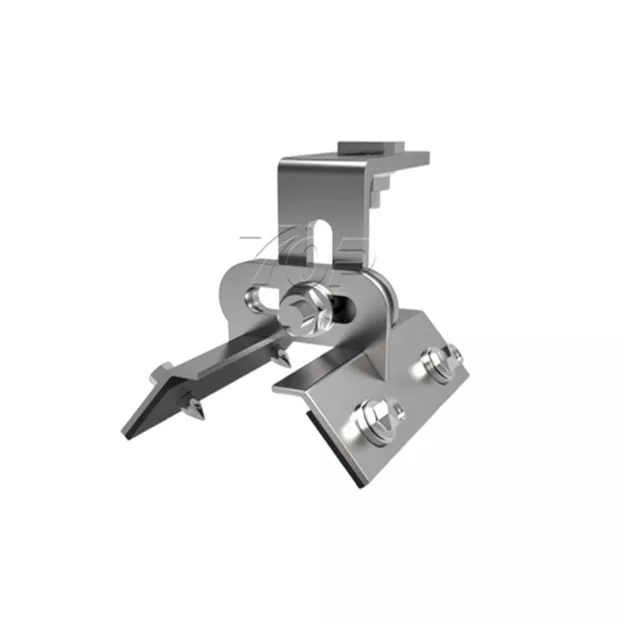
Specialized seam clamps can attach directly to the raised seams, eliminating the need for drilling and significantly reducing waterproofing risks.
However, engineers must still address thermal expansion. Metal roofing panels expand and contract continuously due to temperature fluctuations. If mounting systems restrict this movement, excessive stress can develop in both the roof and the solar structure.
Trapezoidal Metal Roofs
Trapezoidal metal roofs are widely used in warehouses and industrial facilities.
Unlike standing seam roofs, these systems often require mechanical fasteners that penetrate the roofing surface. Consequently, attachment design and waterproofing details become critical engineering priorities.
Improper fastener placement can weaken roof sheets, while inadequate sealing methods may create long-term leakage pathways.
Reinforced Concrete Roofs
Concrete roofs generally offer higher load-bearing capacity than lightweight metal roofs.
Nevertheless, solar installation on concrete structures introduces different challenges:
- Anchor pull-out strength verification
- Protection of waterproof membranes
- Crack management
- Long-term corrosion prevention
Ballasted mounting systems are frequently used on flat concrete roofs because they reduce the number of penetrations. Yet ballast weight itself must be carefully evaluated to avoid exceeding structural limits.
Sandwich Panel Roofs
Sandwich panel roofs have become increasingly common in modern industrial buildings due to their excellent thermal performance and lightweight construction.
Unfortunately, these same characteristics can create challenges for solar installations.
The thin outer steel layers and insulating core often provide limited structural reserve capacity. Engineers must verify attachment methods carefully to ensure loads are transferred safely into the building structure rather than concentrated on roofing panels alone.
BIPV Façades and Building Envelopes
BIPV applications introduce a much higher level of engineering complexity.
Unlike conventional rooftop systems that primarily function as energy generators, BIPV systems must simultaneously perform multiple building-envelope functions:
- Weather protection
- Wind resistance
- Thermal insulation
- Architectural integration
- Power generation
Any weakness in waterproofing or structural design can affect both energy production and building performance.
Why Rooftop Solar Failures Are More Expensive Than Ground-Mounted Failures
A damaged ground-mounted solar structure typically affects only the solar asset itself.
A damaged rooftop system can affect an entire building.
This distinction has major financial implications.
Consider a commercial warehouse with inventory stored beneath a solar installation. A small roof leak may appear insignificant initially, but water infiltration can damage products, disrupt operations, and create insurance claims far exceeding the cost of repairing the solar mounting system.
Similarly, if structural deficiencies require emergency reinforcement after installation, facility operations may need to be interrupted while repairs are completed.
For office buildings and commercial properties, even temporary closures can create significant revenue losses.
Because rooftop solar projects interact directly with valuable building assets, risk management must extend beyond the photovoltaic system itself.
Waterproofing Failures: The Leading Source of Rooftop Solar Warranty Claims
Among all post-installation issues reported in commercial rooftop solar projects, waterproofing failures consistently rank among the most common and expensive.
The reason is straightforward.
A roof is fundamentally designed to keep water out of a building. Any solar installation that interferes with this function introduces risk.
Even a well-engineered PV system can become problematic if waterproofing details are overlooked during installation.
Why Roof Leaks Occur After Solar Installation
Excessive Roof Penetrations
Every penetration through a roofing system creates a potential leakage point.
While penetrations are often unavoidable, unnecessary attachment points increase both installation complexity and future maintenance requirements.
Poor mounting system selection can result in hundreds or even thousands of additional penetrations across a large commercial roof.
Each penetration introduces another opportunity for water intrusion.
Improper Flashing Installation
Flashing serves as the primary defense against water entering roof penetrations.
Incorrect flashing installation can allow moisture to bypass seals even when high-quality materials are used.
Common installation mistakes include:
- Incorrect flashing orientation
- Insufficient overlap
- Poor fastening practices
- Incompatible roofing materials
Sealant Aging and UV Degradation
Many roofing sealants gradually deteriorate under prolonged exposure to sunlight, temperature cycles, and environmental contaminants.
A seal that appears effective during commissioning may lose elasticity years later, creating pathways for water infiltration.
This is one reason why relying solely on sealants without proper flashing assemblies is generally considered poor engineering practice.
Thermal Expansion Movement
Solar mounting systems, roofing materials, and structural components all expand and contract at different rates.
Over time, this movement can place stress on seals, fasteners, and attachment points.
Without accommodation for thermal movement, waterproofing systems may eventually fail even when initially installed correctly.
Blocked Roof Drainage Paths
Drainage is often overlooked during array layout design.
Solar equipment, cable trays, and mounting structures can inadvertently obstruct water flow, causing ponding around critical roof details.
Standing water accelerates membrane degradation and increases the likelihood of future leaks.
Effective drainage planning should therefore be integrated into the earliest stages of project design rather than addressed after installation.

Structural Design Best Practices for Commercial Rooftop Projects
Successful rooftop solar projects begin long before the first module is installed. By the time construction starts, most critical engineering decisions should already have been validated through structural analysis, site assessment, and system optimization.
The strongest projects are not necessarily those that use the most steel or the largest number of attachment points. Instead, they are projects where every component has been selected to balance structural safety, installation efficiency, long-term reliability, and lifecycle cost.
Conducting Structural Due Diligence Before Design
One of the most valuable investments during project development is a comprehensive structural review.
Unfortunately, some rooftop solar projects proceed directly into layout design without fully understanding the building's structural limitations. This often leads to costly redesigns later in the process.
Before selecting a mounting system, engineers should review:
- Original structural drawings
- Building design load criteria
- Roof framing layouts
- Previous building modifications
- Roof condition reports
- Local wind and snow requirements
Where documentation is unavailable, field investigations may be required to verify structural conditions.
Many commercial buildings have undergone multiple renovations during their service life. Structural assumptions based solely on age or appearance can therefore be misleading.
A proper due diligence process helps avoid unexpected structural constraints and improves confidence during project approval and financing.
Optimizing Mounting Systems for Lower Roof Loads
The mounting system plays a major role in determining how loads are transferred into the building structure.
A poorly optimized support structure may increase material usage, create unnecessary roof penetrations, and add avoidable weight to the building.
Modern rooftop solar engineering increasingly focuses on reducing structural demands while maintaining safety margins required by applicable codes.
Aluminum Structures
Aluminum remains one of the most widely used materials in commercial rooftop mounting systems.
Its primary advantages include:
- Low weight
- Excellent corrosion resistance
- Ease of installation
- Reduced transportation costs
For roofs with limited reserve capacity, lightweight aluminum systems can help maximize solar deployment without excessive structural reinforcement.
High-Strength Steel Systems
In applications requiring higher load capacity, high-strength steel often provides superior structural performance.
Advances in steel design have allowed manufacturers to reduce section sizes while maintaining strength requirements.
Hot-dip galvanized steel structures are particularly common in projects located in high-wind and high-snow regions where structural demands are more severe.
Mixed-Material Designs
Many modern mounting systems combine aluminum and steel components to optimize performance.
For example:
- Steel used for primary structural members
- Aluminum used for module rails
- SUS304 stainless steel used for fasteners and connectors
This approach can balance strength, durability, weight, and cost more effectively than relying on a single material throughout the entire system.
Wind-Resistant Mounting Design Techniques
As module efficiency increases and array sizes continue to grow, wind engineering has become increasingly important for rooftop solar projects.
Modern rooftop systems are often expected to withstand design wind speeds exceeding 40 m/s (approximately 90 mph) in many regions, while coastal and typhoon-prone areas may require substantially higher design criteria.
Aerodynamic Deflectors
Aerodynamic deflectors help control airflow around solar arrays.
By reducing turbulence beneath modules, deflectors can decrease uplift forces and reduce ballast requirements.
This not only improves structural performance but can also lower installation costs by reducing material usage.
Edge Zone Reinforcement
Building corners and perimeter areas experience the highest wind pressures.
Consequently, these regions often require enhanced attachment density or additional reinforcement.
Applying uniform attachment strategies across an entire roof may not provide optimal performance.
Engineering designs that account for varying wind zones typically achieve better safety and material efficiency.
Optimized Row Spacing
Array spacing affects more than energy production.
Improper spacing can alter wind flow patterns and increase loading on downstream rows.
Well-designed layouts balance:
- Energy yield
- Maintenance access
- Shading control
- Structural performance
This integrated approach often delivers better long-term results than designs focused exclusively on maximizing module density.
Mechanical Anchoring Strategies
In regions exposed to hurricanes, typhoons, or extreme wind events, mechanical anchoring frequently becomes necessary.
Anchor design should be based on verified structural capacity rather than generic assumptions.
Pull-out testing, attachment verification, and code-compliant calculations can significantly improve confidence in system performance during severe weather conditions.
Seismic Considerations for Urban Buildings
Although wind often dominates rooftop solar design, seismic loading cannot be overlooked in earthquake-prone regions.
Countries such as Japan, Chile, New Zealand, Türkiye, and parts of the United States require careful consideration of seismic forces.
Solar mounting systems should allow controlled movement without compromising:
- Structural stability
- Electrical safety
- Waterproofing performance
Flexible connections, properly designed attachment systems, and secure cable management all contribute to improved seismic resilience.
BIPV Structural and Waterproofing Requirements Beyond Traditional Solar
BIPV systems occupy a unique position within the construction and renewable energy industries.
Unlike conventional rooftop solar, BIPV components serve dual functions.
They generate electricity while simultaneously acting as part of the building envelope.
This dual-purpose role creates additional engineering requirements that must be addressed from the earliest design stages.
BIPV Must Function as Both an Energy System and a Building Envelope
Traditional rooftop solar systems are generally installed above an existing roof assembly.
If a module fails, the building envelope remains intact.
In a BIPV installation, however, photovoltaic components may form part of the weather barrier itself.
As a result, design teams must evaluate:
- Structural performance
- Water management
- Thermal behavior
- Fire safety
- Maintenance accessibility
- Long-term durability
Successful BIPV projects require collaboration among architects, structural engineers, façade consultants, and solar specialists.
Structural Design Considerations for Solar Façades
Solar façades are exposed to environmental forces that differ significantly from those acting on rooftop systems.
Vertical installations must resist:
- Positive wind pressure
- Negative wind suction
- Thermal expansion cycles
- Building movement
- Seismic displacement
In tall buildings, wind loads can become particularly significant.
As building height increases, façade systems often experience much greater design pressures than rooftop arrays installed on low-rise structures.
Attachment systems must therefore be designed to accommodate both strength requirements and movement tolerances.
Fire Safety and Regulatory Compliance
Fire performance has become a growing focus within the solar industry.
Building owners, insurers, and regulatory authorities increasingly require evidence that rooftop and BIPV systems comply with applicable fire safety standards.
Depending on project location, relevant standards may include:
- IEC standards
- UL standards
- National building codes
- Local fire regulations
Design considerations often include:
- Fire spread resistance
- Emergency access pathways
- Electrical isolation procedures
- Material combustibility ratings
Addressing these requirements early in project development can prevent costly redesigns during permitting.
Material Selection Directly Influences Project Longevity
Material selection affects far more than initial procurement cost.
Over a project lifespan of 25 years or longer, corrosion resistance, mechanical durability, and maintenance requirements can have a substantial impact on total ownership cost.
Choosing the right materials from the beginning often delivers greater value than pursuing the lowest upfront purchase price.
Why SUS304 Stainless Steel Remains an Industry Standard
Fasteners are among the smallest components within a solar mounting system, yet they play a disproportionately important role in long-term performance.
SUS304 stainless steel is widely used because of its excellent balance of:
- Corrosion resistance
- Mechanical strength
- Durability
- Availability
In rooftop environments exposed to rain, humidity, and temperature fluctuations, corrosion-resistant fasteners help maintain structural integrity throughout the life of the installation.
The cost difference between high-quality stainless steel fasteners and lower-grade alternatives is often insignificant compared with the potential cost of future maintenance or replacement.
Comparing Common Rooftop Solar Mounting Materials
| Material | Corrosion Resistance | Strength | Relative Cost |
|---|---|---|---|
| Aluminum | High | Medium | Medium |
| Hot-Dip Galvanized Steel | Medium-High | Very High | Medium |
| SUS304 Stainless Steel | Very High | High | Higher |
The optimal material selection depends on project-specific conditions, including environmental exposure, structural requirements, and lifecycle expectations.
Certifications EPC Contractors Should Verify
Product certifications provide an additional layer of confidence when evaluating mounting system suppliers.
Although certifications do not replace engineering analysis, they help demonstrate that products have undergone recognized testing and quality control processes.
Common certifications and management systems include:
- TÜV certification
- UL testing and compliance
- ISO 9001 quality management
- ISO 14001 environmental management
- CE compliance where applicable
EPC contractors should request supporting documentation rather than relying solely on marketing claims.

Real-World Commercial Rooftop Lessons Learned
Case Example 1: Standing Seam Warehouse Roof
A large logistics facility planned to install a multi-megawatt rooftop solar system on a standing seam metal roof.
Initial design concepts considered conventional roof penetrations. However, engineering review determined that clamp-based attachment systems could provide equivalent structural performance while eliminating hundreds of potential leakage points.
The final design reduced waterproofing complexity, shortened installation time, and simplified long-term maintenance planning.
Perhaps most importantly, the building owner gained confidence that roof warranty risks had been minimized.
Case Example 2: High-Wind Commercial Building
A coastal commercial project faced significant wind exposure due to its location and building geometry.
Wind analysis identified elevated uplift forces near roof edges and corners.
Rather than increasing attachment density uniformly across the entire roof, engineers implemented targeted reinforcement in critical zones.
This optimized approach improved structural reliability while reducing unnecessary material usage.
Case Example 3: BIPV Façade Application
A modern commercial building incorporated photovoltaic panels into its façade system.
Early design workshops identified thermal movement and water management as primary engineering concerns.
The project team adopted drainage cavities, pressure-equalized façade principles, and movement-tolerant attachment systems.
The resulting installation successfully balanced architectural goals with long-term building performance requirements.
Rooftop Solar Design Checklist for EPC Contractors
Before finalizing a commercial rooftop solar project, EPC teams should verify the following items:
- Roof age and condition assessed
- Structural drawings reviewed
- Load capacity verified
- Wind loads evaluated
- Snow loads evaluated where applicable
- Roof drainage pathways identified
- Attachment methods confirmed
- Waterproofing details reviewed
- Corrosion environment assessed
- Fire code requirements verified
- Maintenance access planned
- Electrical routing coordinated
- Certification requirements confirmed
- Building owner approvals obtained
- Long-term maintenance strategy documented
While simple in appearance, this checklist can prevent many of the most common design and installation issues encountered in rooftop solar projects.
How Better Engineering Improves Project ROI
Return on investment is often discussed in terms of energy production and module efficiency.
Yet many of the largest financial gains come from reducing risk rather than increasing generation.
Lower Installation Costs
Mounting systems designed for efficient installation can significantly reduce labor requirements.
Fewer components, simplified attachment methods, and standardized hardware often translate into shorter construction schedules.
Reduced Warranty Claims
Waterproofing failures and structural defects can generate expensive post-installation service calls.
Engineering-driven designs reduce the likelihood of future corrective work and improve client satisfaction.
Improved Asset Performance
Reliable structures help ensure that solar systems continue operating as intended throughout their design life.
Lower maintenance requirements contribute directly to improved project economics.
Better Project Bankability
Investors and lenders increasingly evaluate technical risk during project financing.
Projects supported by verified engineering calculations, certified components, and documented quality processes often present lower perceived risk profiles.
This can improve financing conditions and strengthen investor confidence.
How to Evaluate a Commercial Rooftop Mounting System Supplier
Selecting a mounting system supplier should involve more than comparing product prices.
The supplier's engineering capabilities can significantly influence project outcomes.
Questions EPC Contractors Should Ask
- Can project-specific structural calculations be provided?
- Are wind load reports available?
- What certifications support product performance?
- Can waterproofing details be customized for different roof types?
- What technical support is available during design and installation?
- What materials are used for critical structural components?
Engineering Support Matters
The difference between a commodity supplier and an engineering-focused supplier is often revealed during complex projects.
Suppliers capable of assisting with structural analysis, attachment optimization, wind-load verification, and waterproofing design frequently provide value that extends far beyond hardware delivery.
For EPC contractors managing large commercial portfolios, this support can help reduce risk, accelerate project execution, and improve overall profitability.
Conclusion: Reliable Rooftop Solar Projects Begin With Engineering, Not Hardware
The continued growth of commercial rooftop solar and BIPV is transforming urban buildings into valuable energy-producing assets. However, long-term project success depends on much more than photovoltaic module performance.
Waterproofing reliability determines whether a building remains protected from weather exposure. Structural integrity determines whether the solar installation can safely withstand decades of environmental loading.
Projects that prioritize engineering from the earliest planning stages consistently outperform those focused solely on equipment procurement.
By carefully evaluating roof conditions, understanding structural limitations, selecting appropriate mounting systems, and implementing proven waterproofing strategies, EPC contractors can significantly reduce lifecycle costs and improve project reliability.
In an increasingly competitive solar market, engineering excellence remains one of the most effective ways to deliver safer, more durable, and more profitable rooftop solar projects.

Frequently Asked Questions
Q1. What is the safest way to install solar panels on a commercial roof?
The safest approach depends on the roof type, structural capacity, and environmental conditions. Standing seam clamp systems and properly engineered attachment methods are often preferred because they minimize waterproofing risks while maintaining structural performance.
Q2. How can roof leaks be prevented during solar installation?
Leak prevention requires proper attachment design, high-quality flashing assemblies, compatible waterproofing materials, and installation practices that preserve roof drainage pathways.
Q3. Are non-penetrating mounting systems suitable for high-wind regions?
Not always. While ballasted systems reduce roof penetrations, high-wind locations may require hybrid or mechanically attached solutions to satisfy structural requirements.
Q4. How do engineers determine rooftop load capacity?
Engineers review structural drawings, building codes, field conditions, and load calculations to verify whether the roof can safely support the proposed solar installation.
Q5. What wind speeds should commercial rooftop solar systems be designed for?
Design wind speeds vary by region and applicable building codes. Local regulations and site-specific engineering analysis should always determine final design criteria.
Q6. What is the difference between BIPV and traditional rooftop solar?
Traditional rooftop solar is mounted onto an existing roof, while BIPV systems become part of the building envelope and serve both architectural and energy-generation functions.
Q7. Which roofing materials are best suited for solar installations?
Standing seam metal roofs are often considered highly suitable because they allow secure attachment with minimal waterproofing concerns. However, many roof types can support solar when properly engineered.
Q8. Why are SUS304 fasteners commonly recommended?
SUS304 stainless steel offers excellent corrosion resistance and long-term durability, helping maintain structural reliability in rooftop environments.
Q9. What certifications should commercial solar mounting systems have?
Commonly requested certifications include TÜV testing, UL compliance, ISO 9001 quality management, and other region-specific approvals.
Q10. How often should rooftop solar structures be inspected?
Most commercial systems benefit from periodic inspections, typically annually or following major weather events, to verify structural integrity and waterproofing performance.
Q11. What are the biggest risks in BIPV façade projects?
The primary challenges include water management, thermal movement, structural loading, fire compliance, and maintaining long-term building envelope performance.
Q12. How can EPC contractors reduce rooftop solar warranty claims?
The most effective strategy is to prioritize engineering quality during design. Proper structural analysis, waterproofing details, material selection, and installation quality control all contribute to lower warranty exposure.
Looking for Reliable Mounting Solutions for Commercial Rooftop Solar and BIPV Projects?
We help EPC contractors, solar installers, developers, and distributors deliver safer and more efficient rooftop solar projects with engineered mounting systems designed for long-term structural performance.
Our solutions feature wind-resistant designs, SUS304 stainless steel components, high-performance waterproofing details, and pre-engineered structures that help reduce roof leakage risks, improve installation efficiency, and lower lifetime maintenance costs.
From standing seam metal roofs and flat commercial rooftops to complex BIPV applications, our engineering team can provide mounting design support, structural calculations, OEM manufacturing, and supply solutions for utility-scale commercial projects worldwide.
Related News
- The Global EPC Sourcing Checklist: Managing Lead Times and Logistics for Solar Mounting Systems
- Navigating Solar Certifications: Why UL 2703 and International Standards Matter for Project Bankability
- Maximizing Yield with Bifacial Modules: How to Select the Optimal Tracker for Enhanced Energy Output
- Wind Load and Coastal Engineering: Ensuring Your Ground-Mounted Solar Array Survives Extreme Weather
- Aluminum vs. Galvanized Steel: Choosing the Right Solar Mounting Structure for High-Corrosivity Environments
- The EPC’s Guide to Reducing Labor Costs: How Intelligent Solar Mounting Design Speeds Up Installation
Leave me a message