The Importance of Solar Walkway Systems in Commercial and Industrial Roof Safety
The Importance of Solar Walkway Systems in Commercial and Industrial Roof Safety
As commercial and industrial (C&I) rooftop solar installations continue to expand globally, EPC contractors and solar installers are facing increasing pressure to balance installation efficiency, long-term system reliability, and return on investment (ROI). High-density module layouts maximize energy output, but they also create a critical challenge: safe and efficient rooftop access. Without a properly designed solar walkway, workers are forced to step on module frames or unstable surfaces, leading to safety risks, component damage, and rising maintenance costs. This article helps EPC contractors, solar installers, and distributors evaluate how solar walkway systems improve rooftop safety, reduce lifecycle costs, and enhance overall project profitability.
Problem – Why Rooftop PV Systems Lack Safe Access Without Solar Walkways
No Dedicated Solar Walkway Leads to Unsafe Movement
In many rooftop PV projects, especially cost-sensitive installations, safe access pathways are often overlooked during the design phase. Instead of integrating a dedicated solar walkway, workers rely on improvised movement across module arrays, rails, or roof surfaces. This creates a highly unstable working environment, particularly under conditions such as dust, moisture, or steep roof inclinations.
From an engineering standpoint, photovoltaic modules are not designed to withstand repeated point loads caused by human movement. Even when installers attempt to step on frame edges, uneven weight distribution can introduce micro-level stress. Over time, this leads to microcracks in solar cells—defects that are often invisible during installation but can significantly degrade performance over the system's lifecycle.
For EPC contractors, this translates into hidden risks:
- Increased likelihood of workplace accidents
- Higher probability of module damage during installation
- Reduced installation speed due to restricted movement
Maintenance Becomes Inefficient and Risky
The absence of a structured solar walkway system does not only affect installation—it becomes a long-term operational issue. During routine inspections, cleaning, or inverter maintenance, technicians must navigate through tightly packed module arrays without a defined path.
This leads to several operational inefficiencies:
- Longer maintenance time due to limited accessibility
- Increased labor costs for O&M teams
- Higher risk of accidental damage during inspections
In large-scale commercial rooftop systems, even a minor increase in maintenance time per visit can significantly impact annual operational expenditure (OPEX). Over a 20–25 year project lifecycle, these inefficiencies compound into substantial costs.
Roof Damage and Waterproofing Issues
One of the most overlooked consequences of not installing a rooftop solar walkway is damage to the building structure itself. Commercial roofs—whether metal, membrane, or concrete—are designed with specific load distribution and waterproofing systems. Random foot traffic disrupts these systems.
Common issues include:
- Degradation of waterproof membranes due to repeated pressure
- Deformation of metal roofing sheets
- Water leakage caused by micro-damage to protective layers
For building owners, this introduces a new layer of liability. Water ingress can damage insulation, electrical systems, and interior assets, leading to costly repairs and potential disputes between stakeholders.
Agitate – Hidden Costs of Not Installing a Solar Walkway System
Increased Labor Time and Installation Delays
From a project execution perspective, the absence of a solar walkway directly impacts installation efficiency. Workers must move cautiously, often taking indirect paths to avoid stepping on sensitive components. This slows down installation speed and increases labor hours per megawatt installed.
In competitive EPC bidding environments, where margins are already tight, even a 5–10% increase in labor time can erode profitability. Delays in installation also affect project timelines, potentially leading to penalties or delayed revenue generation.
Higher Risk of Component Damage and Energy Loss
Microcracks caused by improper foot traffic are a silent but serious issue in PV systems. These cracks disrupt the electrical continuity of solar cells, leading to localized hotspots and reduced energy output.
The consequences include:
- Lower overall system efficiency
- Accelerated module degradation
- Increased likelihood of warranty claims
From a financial perspective, even a small percentage drop in efficiency can significantly impact the levelized cost of electricity (LCOE) over the system's lifetime.
Long-Term O&M Cost Escalation
Without a defined rooftop solar walkway, maintenance teams face ongoing challenges accessing key system components. Tasks such as inverter inspection, cable checks, and module cleaning become more complex and time-consuming.
This results in:
- Higher recurring maintenance costs
- Increased safety risks during each service visit
- Reduced frequency of inspections due to difficulty of access
Inadequate maintenance can further accelerate system degradation, creating a negative feedback loop that reduces overall asset performance.
Reduced ROI for Commercial Solar Projects
At the investment level, the absence of a solar walkway system undermines the financial performance of the entire project. While skipping walkway installation may reduce initial capital expenditure (CAPEX), it significantly increases operational expenditure (OPEX) over time.
Key ROI impacts include:
- Higher maintenance costs over the system lifecycle
- Reduced energy generation due to component damage
- Increased risk of unexpected repair expenses
For investors and asset owners, this imbalance between CAPEX savings and OPEX growth leads to lower overall returns and longer payback periods.
Solution – How Solar Walkway Systems Improve Rooftop PV Safety and Efficiency
What Is a Solar Walkway System?
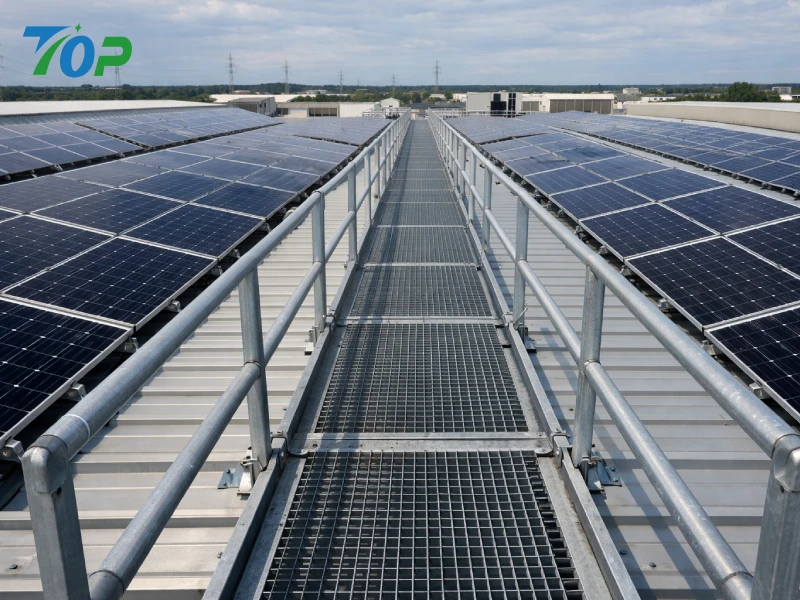
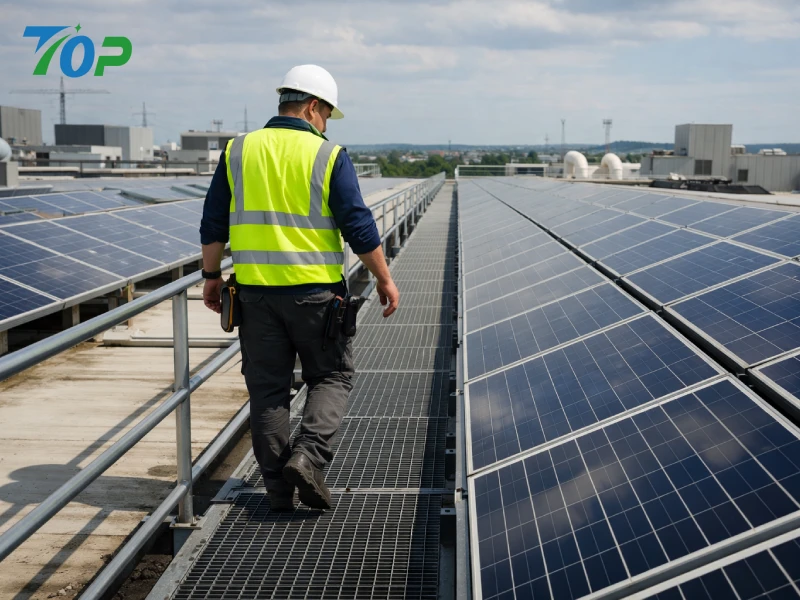
A solar walkway system is a purpose-engineered access solution designed specifically for photovoltaic rooftop installations. Unlike temporary or improvised access methods, it provides a stable, anti-slip, and load-bearing pathway that allows safe movement across solar arrays without compromising module integrity or roof structure.
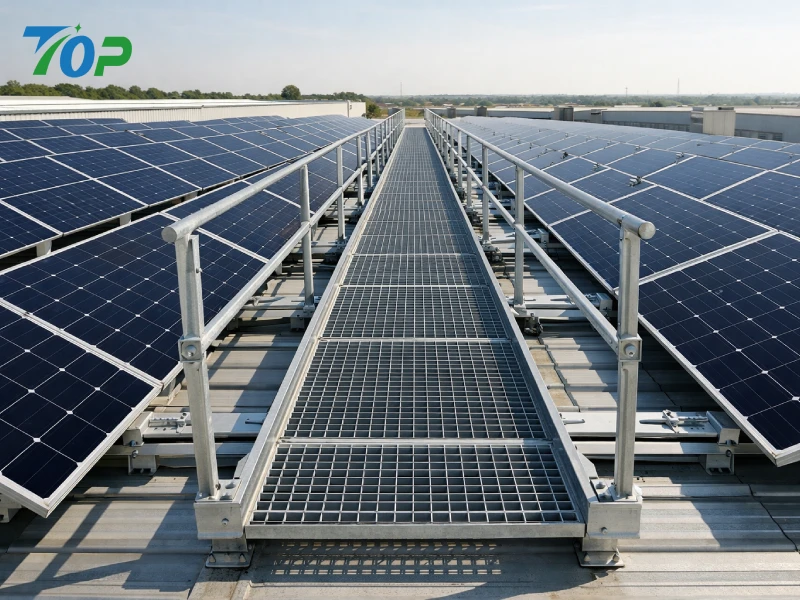
In most commercial applications, solar walkway systems are built using steel grating structures mounted on compatible support brackets. These systems are typically integrated alongside solar mounting structures during the design phase, ensuring seamless compatibility and eliminating the need for secondary modifications.
Core components of a typical system include:
- Steel grating panels (SUS304 or hot-dip galvanized steel)
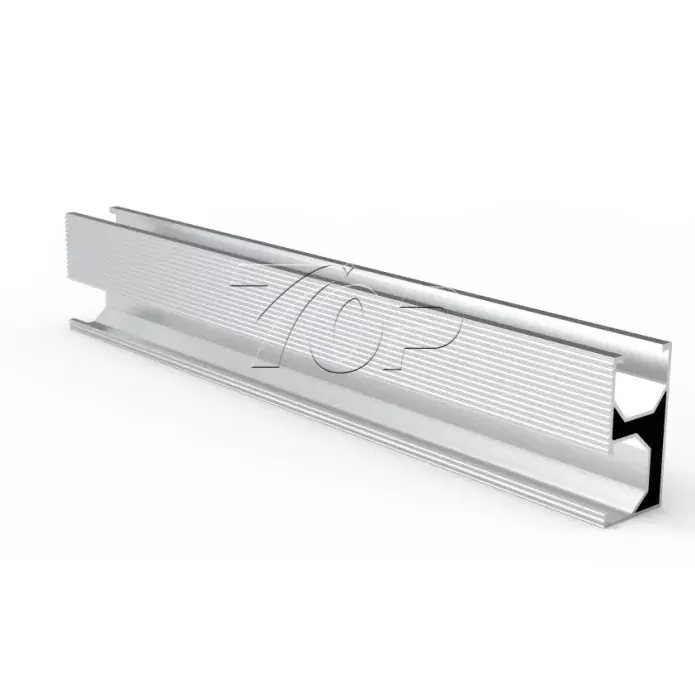
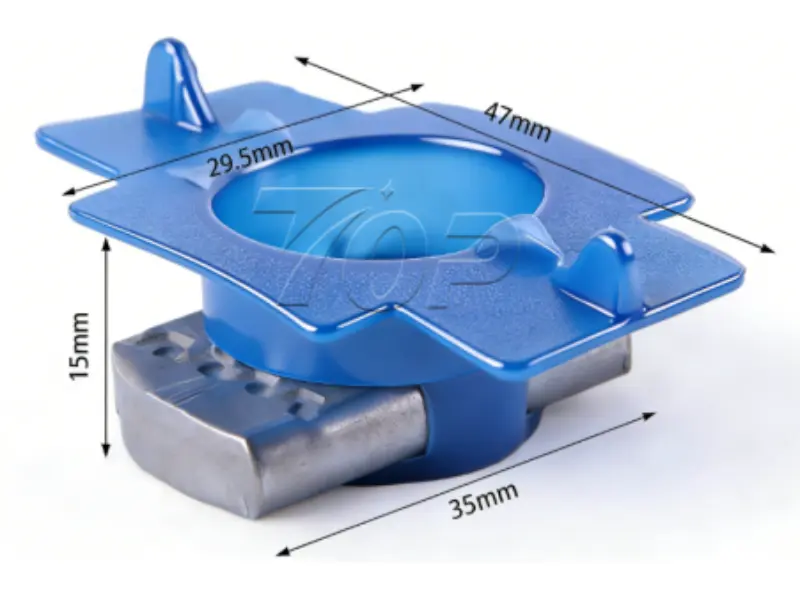
- Support brackets or clamps compatible with roof type
- Anti-slip surface design (serrated or perforated)
- Non-penetrating mounting interfaces (for waterproof protection)
By combining structural durability with safety-focused design, a rooftop solar walkway system transforms the PV installation from a difficult-to-access structure into a service-friendly energy asset.
Key Benefits of Solar Walkways for EPC Contractors
For EPC contractors, integrating a solar walkway into rooftop PV projects delivers immediate and long-term operational advantages. The most critical benefit is the ability to standardize worker movement, which directly improves installation efficiency.
Instead of navigating irregular paths between modules, installers can follow predefined walkways, reducing hesitation and improving workflow continuity. This leads to:
- Faster installation timelines
- Reduced labor fatigue and improved safety compliance
- Lower risk of accidental module damage
From a project management perspective, solar walkways also simplify coordination across teams. Electrical technicians, structural installers, and maintenance crews can operate independently without interfering with module areas, improving overall site productivity.
In addition, incorporating a solar walkway system at the design stage demonstrates a higher level of engineering professionalism, which can enhance credibility during project bidding and client evaluations.
Advantages for Distributors and Bulk Buyers
For distributors and bulk buyers, solar walkway products represent a highly standardized and scalable category within the solar balance-of-system (BOS) market. Compared to custom structural components, walkway systems offer strong advantages in terms of inventory management and procurement efficiency.
Key benefits include:
- High product standardization, enabling bulk stocking and faster turnover
- Material flexibility (SUS304 or HDG), allowing adaptation to different project environments
- Compatibility with multiple rooftop types, increasing market applicability
From a commercial perspective, adding solar walkway systems to a product portfolio enhances overall solution completeness. Instead of selling only mounting systems or modules, distributors can provide a more comprehensive rooftop safety solution, increasing average order value and customer retention.
Technical Specifications of Solar Walkway Systems (Engineering Focus)
Material Options – SUS304 vs Hot-Dip Galvanized Steel
Material selection is a critical factor in determining the durability and lifecycle performance of a solar walkway. The two most commonly used materials are SUS304 stainless steel and hot-dip galvanized steel (HDG), each offering distinct advantages depending on environmental conditions.
SUS304 stainless steel provides superior corrosion resistance, making it ideal for coastal regions, high-humidity environments, or chemically aggressive industrial zones. Its longer lifespan and minimal maintenance requirements make it a preferred choice for premium projects.
Hot-dip galvanized steel, on the other hand, offers a cost-effective alternative with strong mechanical properties. The zinc coating provides adequate corrosion protection for most inland environments, making it suitable for large-scale projects where cost control is a priority.
The choice between these materials should be based on a balance between environmental exposure, project lifespan expectations, and budget constraints.
Load-Bearing Capacity and Structural Safety
A well-designed solar walkway system must meet strict load-bearing requirements to ensure worker safety and structural stability. Typical industrial-grade walkway systems are engineered to support loads ranging from 300 to 500 kg/m², with appropriate safety factors applied.
Structural considerations include:
- Uniform load distribution across grating panels
- Deflection limits to prevent deformation under repeated use
- Secure anchoring to mounting structures or roof interfaces
For EPC contractors, selecting a walkway system with verified load performance is essential not only for safety compliance but also for long-term reliability under continuous maintenance operations.
Anti-Slip Performance for Rooftop Safety
Given the exposure of rooftop environments to rain, dust, and debris, anti-slip performance is a non-negotiable feature of any solar walkway. High-quality systems incorporate surface treatments designed to maximize traction under various conditions.
Common anti-slip solutions include:
- Serrated grating edges for enhanced grip
- Perforated surfaces that improve drainage and reduce water accumulation
- Surface coatings that increase friction coefficients
In professional applications, anti-slip ratings such as R11 or R12 are often used as benchmarks to ensure compliance with safety standards.
Compatibility with Different Roof Types
A versatile solar walkway system must be compatible with a wide range of commercial roofing structures. Different roof types present unique challenges in terms of load distribution, mounting methods, and waterproofing requirements.
Typical compatible roof types include:
- Standing seam metal roofs (using clamp-based, non-penetrating mounts)
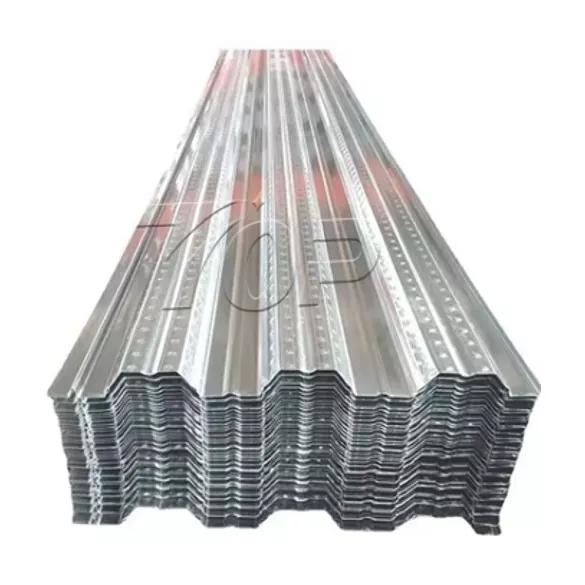
- Corrugated metal roofs (with adapted support brackets)
- Concrete roofs (with ballast or anchored systems)
Ensuring compatibility not only simplifies installation but also reduces the need for custom engineering, which can increase project costs and lead times.
Non-Penetrating Installation and Waterproof Protection
One of the most critical design considerations for rooftop systems is maintaining the integrity of the building’s waterproof layer. Advanced solar walkway solutions utilize non-penetrating installation methods that eliminate the need for drilling into the roof surface.
These systems typically rely on:
- Clamp-based mounting for metal roofs
- Ballasted support systems for flat roofs
- Integration with existing solar mounting structures
By avoiding roof penetration, these solutions significantly reduce the risk of water leakage and long-term structural damage, which is a major concern for building owners and facility managers.
Comparison – Solar Walkway vs Traditional Rooftop Access Methods
Performance Comparison Table
| Feature | Solar Walkway (Steel Grating) | No Walkway | Rubber Mats |
|---|---|---|---|
| Safety | High | Very Low | Medium |
| Durability | 15–25 years | N/A | 3–5 years |
| Waterproof Impact | Minimal | High Risk | Medium |
| Installation Efficiency | High | Low | Medium |
| Maintenance Access | Excellent | Poor | Limited |
Why Solar Walkways Deliver Better Long-Term ROI
While traditional approaches such as walking directly on roof surfaces or using temporary rubber mats may appear cost-effective in the short term, they fail to deliver sustainable value over the lifecycle of a PV system.
A professionally designed solar walkway system offers a clear economic advantage by:
- Reducing maintenance time and associated labor costs
- Minimizing the risk of module damage and performance loss
- Extending the lifespan of both the PV system and the roof structure
From a financial modeling perspective, these benefits translate into lower operational expenditure (OPEX), improved system uptime, and ultimately a higher return on investment (ROI).
For EPC contractors and project developers, this makes the inclusion of a solar walkway not just a safety enhancement, but a strategic investment decision that supports long-term asset performance and profitability.
Professional Installation Recommendations for Solar Walkways (EPC Guide)
Optimal Walkway Layout Design
A well-planned solar walkway layout is essential to maximize both safety and operational efficiency in rooftop PV systems. Rather than treating walkways as an afterthought, EPC contractors should integrate them into the initial system design phase.
Best practices for layout design include:
- Maintaining a standard walkway width of 600–800mm to ensure safe personnel movement
- Positioning walkways along key maintenance routes, such as inverter access points and cable pathways
- Ensuring continuous access from roof entry points to all critical system components
In high-density installations, strategic placement of solar walkway systems can significantly reduce travel time for maintenance crews while minimizing unnecessary contact with modules.
Integration with Solar Mounting Systems
To achieve optimal performance, solar walkway systems should be designed to integrate seamlessly with solar mounting structures. This approach eliminates the need for secondary modifications and ensures structural consistency across the installation.
Key integration considerations include:
- Aligning walkway supports with mounting rails to ensure load distribution
- Avoiding interference with module tilt angles and shading conditions
- Coordinating installation schedules to reduce redundant labor
By combining walkway and mounting system design, EPC contractors can streamline installation workflows and improve overall project efficiency.
Safety Compliance and Best Practices
Compliance with safety standards is a critical requirement for commercial rooftop projects. A properly installed solar walkway helps meet these requirements by providing a defined and secure access path for personnel.
Recommended safety practices include:
- Ensuring anti-slip performance meets recognized standards (e.g., R11/R12 ratings)
- Verifying load-bearing capacity aligns with expected operational loads
- Conducting regular inspections to maintain structural integrity
Incorporating these practices not only enhances worker safety but also improves project acceptance rates during inspections and audits.
How to Choose a Reliable Solar Walkway Supplier
Key Criteria for EPC Contractors
Selecting the right supplier for solar walkway systems is a critical decision that directly impacts project quality and long-term performance. EPC contractors should evaluate suppliers based on both technical capabilities and project experience.
Important criteria include:
- Proven engineering expertise in rooftop solar applications
- Ability to provide customized solutions for different roof types
- Experience with large-scale commercial and industrial projects
A reliable supplier should also be able to provide technical documentation, load calculations, and installation guidance to support project execution.
What Distributors Should Evaluate
For distributors, the focus shifts toward scalability, certification, and supply chain reliability. A high-quality solar walkway system should meet international standards and be suitable for bulk procurement.
Key evaluation factors include:
- Material certifications (e.g., SUS304, ISO standards)
- Consistent product quality across large production volumes
- Stable lead times and logistics capabilities
Distributors should also consider the versatility of the product range, ensuring compatibility with various rooftop configurations to maximize market reach.
Manufacturer Advantages (Engineering + Production Capability)
Working directly with an experienced manufacturer offers significant advantages in terms of cost control, customization, and technical support. Leading manufacturers of solar walkway systems typically provide end-to-end production capabilities, from raw material processing to final surface treatment.
Key advantages include:
- Full-process manufacturing ensuring consistent quality control
- OEM/ODM capabilities for customized project requirements
- Advanced production technology for precision fabrication
For B2B buyers, these capabilities translate into more reliable products, faster project turnaround times, and improved competitiveness in the market.
Request a Quote for Solar Walkway Systems
Get Engineering Support and Bulk Pricing
If you are planning a commercial or industrial rooftop PV project, integrating a professionally designed solar walkway system can significantly improve safety, efficiency, and long-term returns. Our engineering team provides comprehensive support to help you optimize your project from design to execution.
- Free rooftop layout and walkway design consultation
- Customized solutions based on roof type and project scale
- Competitive bulk pricing for large-volume orders
Contact Us
Tel: +8613365923720
WhatsApp: +8615980883501
Email:nancy@xmtopfence.com
Solar Walkways Are Essential for Safe and Profitable Rooftop PV Systems
As rooftop solar installations continue to scale, the importance of integrating a solar walkway system becomes increasingly clear. What may initially appear as an optional accessory is, in reality, a critical component of a safe, efficient, and high-performing PV system.
By addressing key challenges such as worker safety, installation efficiency, and long-term maintenance, solar walkway systems deliver measurable value across the entire project lifecycle. For EPC contractors, they enable faster project execution and reduced risk. For distributors, they offer scalable product opportunities. For investors, they contribute to improved ROI and asset reliability.
Ultimately, investing in a solar walkway is not just about compliance—it is about building a more resilient and profitable solar infrastructure.
FAQ: Solar Walkway Systems for Commercial & Industrial Rooftops
Q1: Is a solar walkway system mandatory for commercial rooftop PV projects?
In most regions, installing a solar walkway is not explicitly mandatory by law, but it is strongly recommended to meet workplace safety standards and facilitate safe maintenance access. For large-scale commercial and industrial projects, many EPC contractors include solar walkways as a best practice to comply with safety guidelines and reduce liability risks during operation and maintenance.
Q2: How do solar walkways improve installation efficiency for EPC contractors?
A well-designed solar walkway system provides clear and stable access paths across the rooftop, allowing installation teams to move efficiently without stepping on modules or structural components. This reduces hesitation, minimizes risk of damage, and can shorten installation time by improving workflow continuity—especially in high-density PV layouts.
Q3: What is the typical load capacity required for a solar walkway?
Industrial-grade solar walkway systems are typically designed to support loads between 300–500 kg/m², depending on project requirements and local safety standards. It is important to verify load calculations with the supplier to ensure compliance with expected maintenance loads and safety factors.
Q4: Which material is better for solar walkways—SUS304 or hot-dip galvanized steel?
The choice depends on the project environment. SUS304 stainless steel offers superior corrosion resistance and is ideal for coastal or high-humidity areas. Hot-dip galvanized steel (HDG) provides a more cost-effective solution for inland projects with moderate environmental exposure. Both materials are widely used in solar walkway systems, and selection should balance durability requirements and budget.
Q5: Will installing a solar walkway damage the roof or affect waterproofing?
Modern solar walkway systems are typically designed with non-penetrating mounting solutions, such as clamp-based systems for metal roofs or ballasted systems for flat roofs. When properly installed, they do not compromise the roof’s waterproof layer and can actually help protect it by reducing random foot traffic.
Q6: How should solar walkways be positioned within a PV system layout?
Walkways should be strategically placed to provide access to key components such as inverters, junction boxes, and cable routes. A typical recommendation is to maintain walkway widths of 600–800mm and ensure continuous access from roof entry points. Proper positioning of solar walkway systems can significantly improve maintenance efficiency and reduce operational risks.
Q7: Are solar walkways compatible with different roof types?
Yes, solar walkway systems are designed to be compatible with a wide range of roof structures, including standing seam metal roofs, corrugated metal roofs, and concrete flat roofs. The mounting method will vary depending on the roof type, so it is important to select a system with appropriate brackets or clamps for your specific application.
Q8: How do solar walkways impact the overall ROI of a PV project?
Although adding a solar walkway system increases initial capital expenditure (CAPEX), it significantly reduces long-term operational costs by improving maintenance efficiency, preventing module damage, and protecting the roof structure. Over the lifecycle of the project, this leads to lower OPEX, improved system uptime, and ultimately a higher return on investment (ROI).
Improve Rooftop Safety and ROI with Solar Walkway Systems
Planning a commercial or industrial rooftop PV project? Integrate a professional solar walkway system to enhance installation efficiency, reduce maintenance risks, and protect your roof structure.
Our engineering team provides customized steel grating solar walkways designed for different roof types—ensuring optimal layout, non-penetrating installation, and long-term durability to help you maximize system performance and project ROI.
Related News
- The Global EPC Sourcing Checklist: Managing Lead Times and Logistics for Solar Mounting Systems
- BIPV & Commercial Rooftops: Solving Waterproofing and Structural Integrity Challenges in Urban Solar
- Navigating Solar Certifications: Why UL 2703 and International Standards Matter for Project Bankability
- Maximizing Yield with Bifacial Modules: How to Select the Optimal Tracker for Enhanced Energy Output
- Wind Load and Coastal Engineering: Ensuring Your Ground-Mounted Solar Array Survives Extreme Weather
- Aluminum vs. Galvanized Steel: Choosing the Right Solar Mounting Structure for High-Corrosivity Environments
Leave me a message