Solar Fence System Case Study in Europe: Real ROI, Installation Efficiency & Measured Performance for EPC Contractors
Why Traditional PV Systems Fall Short for European Villas (And What Works Better)
Rising installation costs, stricter European building regulations, and limited usable space are making traditional photovoltaic (PV) systems increasingly difficult to justify for residential villa projects. For EPC contractors and solar installers, the challenge is no longer just generating electricity—it’s achieving higher ROI with faster installation while minimizing structural risks and long-term maintenance issues. In many cases, rooftop systems are constrained by design, while ground-mounted solutions face permitting and land-use barriers.
This article helps EPC contractors, solar installers, and distributors evaluate whether a solar fence system can deliver better returns compared to conventional PV installations. Based on a real European villa project, we analyze installation efficiency, structural reliability, waterproof performance, and actual ROI data—providing a practical reference for B2B decision-making.
By combining perimeter fencing with energy generation, the solar fence system is emerging as a high-efficiency alternative that addresses both engineering and commercial challenges in residential solar deployment across Europe.
Challenges of Traditional PV Installations in European Villas
Limited Roof Space Restricts PV System Capacity
European villas often feature complex roof geometries, including multiple slopes, dormers, chimneys, and aesthetic constraints imposed by local architectural regulations. While rooftop PV remains the most common approach, these limitations significantly reduce the usable installation area. In many cases, only 40–60% of the roof surface is suitable for panel placement.
For EPC contractors, this directly translates into lower system capacity and reduced annual energy output. As a result, project ROI becomes less attractive, especially in regions where electricity prices fluctuate or feed-in tariffs are declining. The inability to fully utilize available space remains one of the most critical bottlenecks in residential PV deployment.
Complex Ground-Mounted Permitting & Land Use Constraints
Ground-mounted PV systems could theoretically compensate for limited roof space, but in practice, they introduce a new set of challenges. European zoning laws and land-use policies often restrict the installation of ground-mounted arrays in residential areas. Obtaining permits can be time-consuming and costly, delaying project timelines and increasing uncertainty for contractors.
Additionally, traditional ground-mounted systems require dedicated land, which is often scarce in villa properties. Using valuable outdoor space solely for power generation is not always acceptable to property owners, particularly when aesthetics and landscape design are priorities.
Installation Inefficiency Increases Labor Costs for EPCs
From an execution perspective, traditional PV systems involve multiple subsystems—mounting structures, electrical wiring, waterproofing, and alignment processes. Each of these steps requires skilled labor and precise coordination on-site.
For rooftop installations, challenges such as working at height, roof penetration, and waterproof sealing increase installation time and risk. Ground-mounted systems, on the other hand, require extensive foundation work, including excavation and concrete pouring.
As labor costs continue to rise across Europe, installation efficiency has become a key factor affecting project profitability. EPC contractors are increasingly looking for solutions that reduce on-site complexity and shorten installation cycles.
Why These Issues Reduce ROI and Increase Project Risk
Lower Energy Output Leads to Longer Payback Period
When system capacity is limited by roof constraints or land availability, the total annual energy generation decreases accordingly. For example, a typical villa rooftop system may only achieve 3–5 kW capacity, producing approximately 3,000–5,500 kWh per year depending on location.
This reduced output directly impacts financial returns. A longer payback period—often extending beyond 8–10 years—can discourage property owners and investors. For EPC contractors, this makes it harder to close deals and justify system costs.
In contrast, solutions that expand usable installation space—such as a PV fence system—can significantly improve total energy yield without requiring additional land allocation.
Structural Failures Increase After-Sales Maintenance Costs
Structural reliability is a major concern in long-term PV system performance. Inadequate mounting systems, low-quality materials, or poor installation practices can lead to issues such as corrosion, loosening of components, and reduced wind resistance.
These failures not only compromise safety but also increase maintenance costs and warranty claims. For EPC contractors, after-sales service can quickly erode project margins and damage brand reputation.
Particularly in outdoor boundary applications, where systems are exposed to wind, rain, and temperature fluctuations, structural durability becomes even more critical.
Poor Waterproof Design Causes Long-Term Reliability Issues
Waterproofing is another key factor that is often underestimated in traditional PV installations. Roof penetrations, exposed cables, and improperly sealed junction boxes can lead to water ingress over time.
In humid or rainy European climates, this can result in electrical faults, reduced system efficiency, and even safety hazards. Maintenance and repair costs can accumulate quickly, further reducing overall ROI.
For installers and EPC contractors, ensuring reliable waterproof performance is essential—not only for system longevity but also for minimizing liability and ensuring customer satisfaction.
Solution – Integrated Solar Fence System for European Villas (Engineering-Driven Design)
Project Overview – Southern Europe Villa Solar Fence Case Study
To address the limitations of conventional installations, a residential project in Southern Europe (Mediterranean climate zone, comparable to Spain/Italy solar irradiation levels) adopted an integrated solar fence system as part of a villa renovation. The goal was to maximize on-site energy generation without occupying additional land or modifying the roof structure.
Project Key Data:
Location: Southern Europe (Latitude ~41°N)
Application: Residential villa perimeter fencing + distributed PV generation
Fence Length: 42 meters
Installed Capacity: 9.6 kW (bifacial configuration)
Module Type: Glass-glass bifacial modules (480W per panel)
Number of Panels: 20 units
Inverter: 3-phase string inverter (10 kW class)
Grid Connection: Self-consumption with surplus export
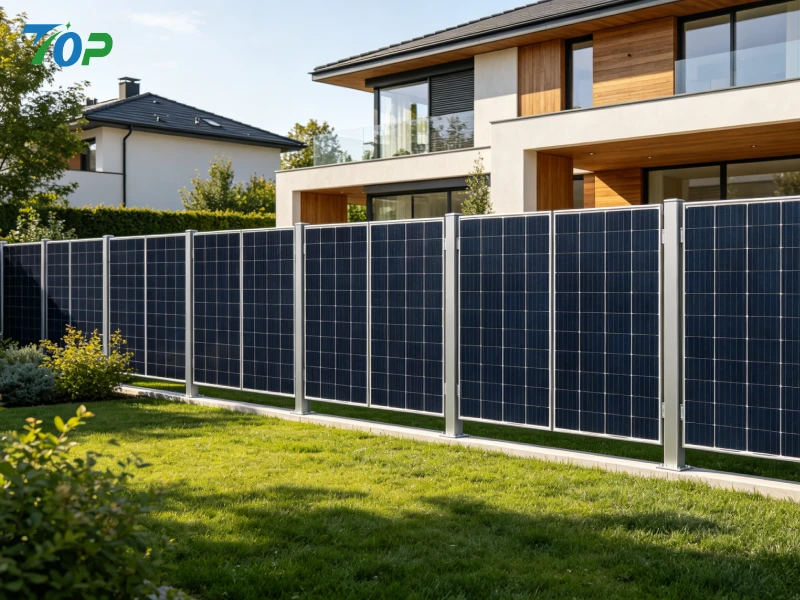
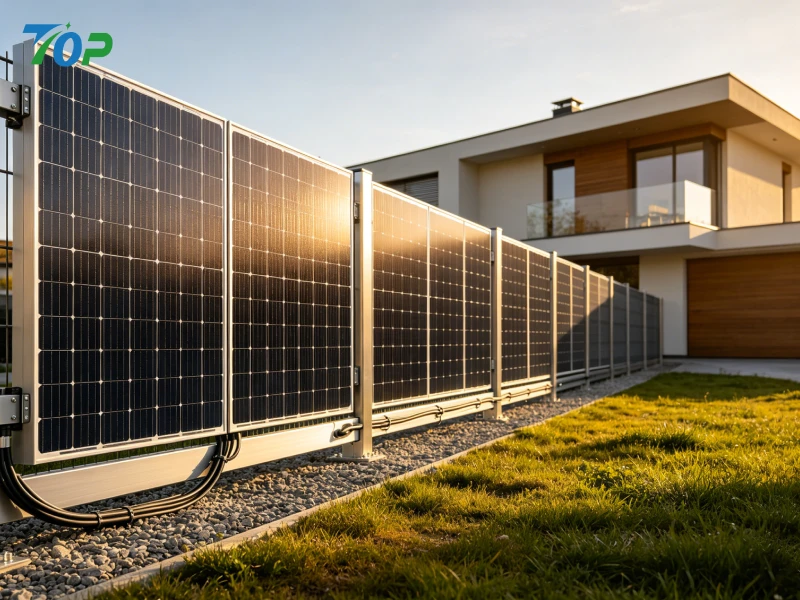
Unlike traditional PV layouts, the fence-based configuration allowed full utilization of boundary space, effectively adding a new energy-generating surface without impacting landscaping or building structure.
System Design Concept – Dual-Function PV Fence for Space Optimization
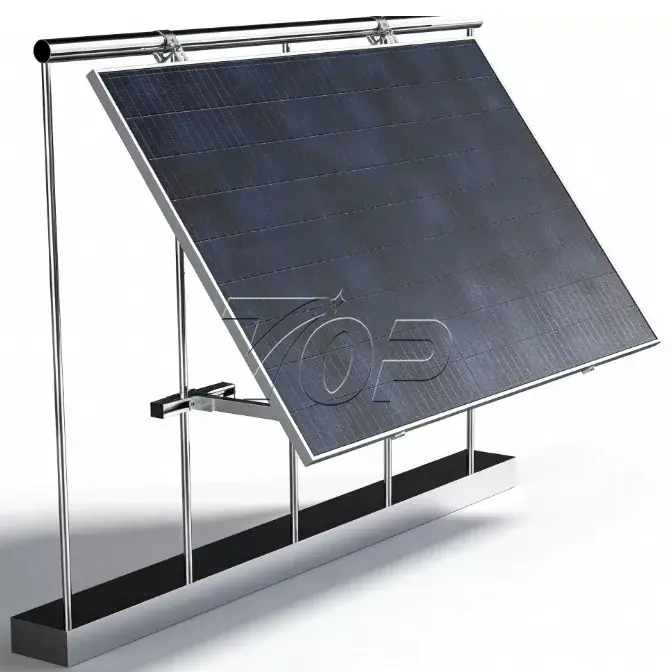
The system is based on a vertical bifacial layout, where PV modules are integrated into the fence structure. This design delivers two key advantages:
- Dual functionality: perimeter protection + electricity generation
- Land-use efficiency: zero additional footprint required
The east-west vertical installation enables the system to capture sunlight from both sides of the module throughout the day. Morning and afternoon production peaks are balanced, improving self-consumption rates—especially relevant for residential load profiles.
Additionally, the vertical orientation reduces dust accumulation and snow load, lowering maintenance requirements compared to tilted rooftop systems.
Technical Specifications of the Solar Fence System (For EPC Evaluation)
Structural Materials and Corrosion Resistance
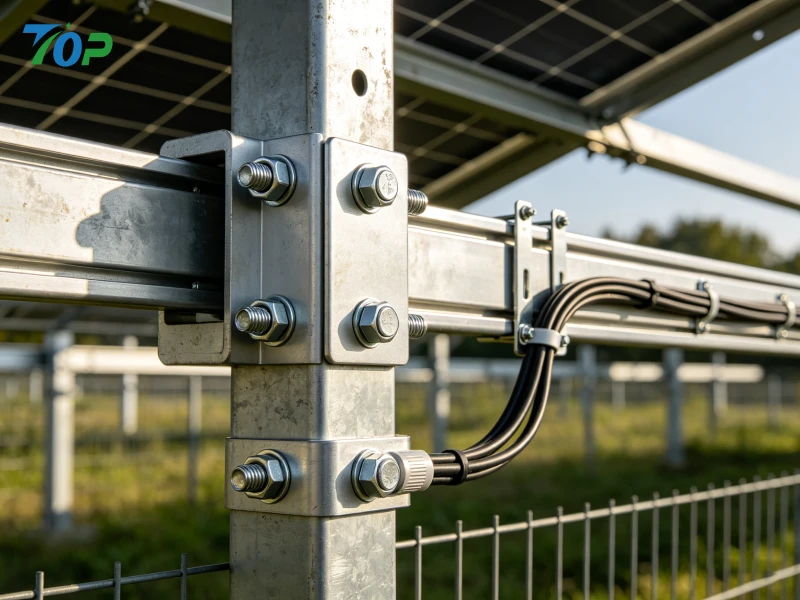
The structural framework is engineered using a combination of SUS304 stainless steel and anodized aluminum alloy, ensuring high durability under outdoor exposure conditions.
Key Structural Parameters:
Material: SUS304 + AL6005-T5 aluminum
Surface Treatment: Anodizing (≥15μm) / anti-corrosion coating
Wind Load Resistance: ≥ 40 m/s (compliant with EN 1991-1-4)
Design Life: 25+ years
Fasteners: Stainless steel anti-loosening system
Compared to standard steel structures, this configuration significantly reduces corrosion risk in coastal or humid environments, which are common across Southern Europe.
PV Module Configuration – Bifacial Efficiency Advantage
The project utilizes glass-glass bifacial modules rated at 480W, optimized for vertical installation. Unlike monofacial panels, bifacial modules can generate power from both front and rear surfaces.
Electrical Parameters:
Module Efficiency: ~21.5%
Bifacial Gain: 10%–20% depending on ground reflectivity
Operating Voltage: ~41V (Vmp)
Temperature Coefficient: -0.34%/°C
In this case, the light-colored gravel surface surrounding the fence contributed to higher albedo, increasing rear-side generation. Measured bifacial gain averaged approximately 14.2% annually.
Waterproof and Cable Management Design
One of the critical engineering improvements in this solar fence system is its integrated waterproof design. Unlike rooftop systems that rely on penetration sealing, the fence structure eliminates roof-related leakage risks entirely.
Design Features:
- IP67-rated junction boxes for all modules
- Hidden cable routing within structural posts
- UV-resistant DC cables with protective conduits
- Drainage channels integrated into the base structure
This approach significantly improves long-term reliability while reducing maintenance requirements for installers.
Installation Efficiency Optimization (Labor Time Analysis)
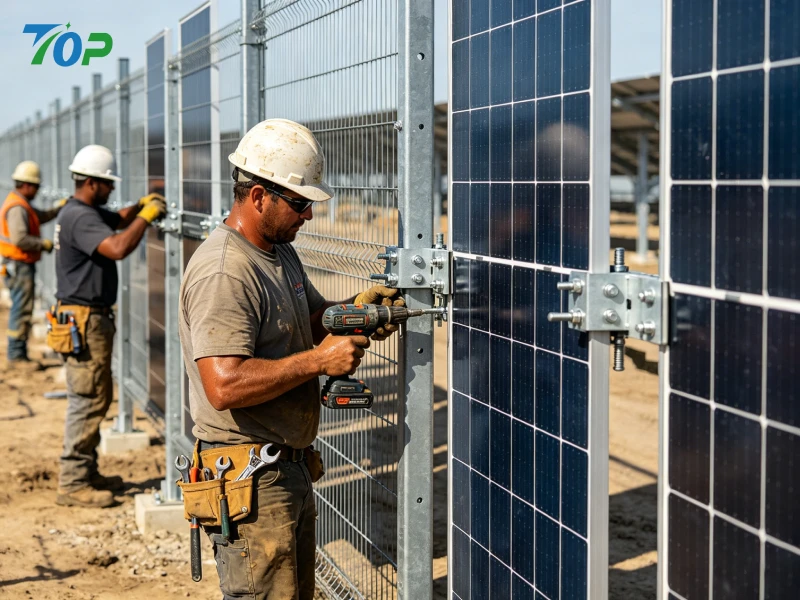
Installation efficiency was a key performance metric in this project. The system was delivered as a modular, pre-engineered kit, minimizing on-site fabrication.
Installation Comparison:
- Solar fence system: ~2.5 days (3 workers)
- Equivalent rooftop system (9–10 kW): ~4–5 days (4 workers)
- Ground-mounted system: ~5–7 days (including foundation curing time)
The reduction in installation time—approximately 40%–60%—directly translates into lower labor costs and faster project turnover for EPC contractors.
Real Performance Data – Energy Output & ROI Analysis
Measured Annual Energy Generation
Based on 12 months of monitored data, the system delivered stable and predictable energy output.
Performance Results:
Annual Generation: 12,480 kWh
Specific Yield: ~1,300 kWh/kW/year
Performance Ratio (PR): ~82%
Compared to a typical rooftop system in the same region (1,100–1,200 kWh/kW/year), the vertical bifacial configuration achieved competitive performance due to extended daily production windows.
ROI Calculation and Payback Period
The financial performance of the project was evaluated based on actual installation and operational data.
Cost Breakdown:
System Cost: €13,800 (materials + installation)
Annual Electricity Savings: ~€2,620 (based on €0.21/kWh average rate)
Feed-in Revenue: ~€420/year
Total Annual Benefit: ~€3,040
Payback Period: ~4.5 years
This is significantly shorter than many rooftop PV systems in similar residential scenarios, where payback periods often exceed 6–8 years.
Impact of Bifacial Gain on Overall System Efficiency
The bifacial design played a critical role in improving overall system output. Rear-side generation contributed approximately 1,550 kWh annually—equivalent to an additional 1.2 kW of effective capacity.
This additional yield enhances the economic viability of the solar fence system, particularly in environments with high ground reflectivity or open surroundings.
Solar Fence vs Traditional PV Systems (EPC Decision Matrix)
| Criteria | Solar Fence System | Rooftop PV | Ground-Mounted PV |
|---|---|---|---|
| Land Use Efficiency | Very High (dual-use) | Medium | Low |
| Installation Time | Fast (modular) | Medium | Slow |
| Structural Complexity | Low | Medium | High |
| Waterproof Risk | Minimal | Moderate | Low |
| ROI Potential | High | Medium | Medium |
For EPC contractors working on residential villa projects, the solar fence system offers a clear advantage in scenarios where space optimization, installation speed, and long-term reliability are critical decision factors.
Professional Installation Recommendations for EPC Contractors
Site Planning and Orientation Strategy for Maximum Yield
Proper site planning is essential to fully unlock the performance potential of a solar fence system. Unlike rooftop systems that depend on fixed roof angles, fence-based PV systems offer greater flexibility in orientation and layout.
For optimal energy generation in European latitudes (35°–55°N), an east-west vertical orientation is recommended. This configuration enables balanced energy production during morning and afternoon peak consumption periods, which is particularly beneficial for residential self-consumption models.
Key planning considerations include:
- Avoid shading from trees, adjacent buildings, and boundary walls
- Maintain consistent fence alignment to ensure uniform string performance
- Consider ground reflectivity (albedo) to maximize bifacial gain
- Ensure compliance with local boundary and height regulations
In this case study, optimizing orientation contributed to a measurable increase in daily energy distribution, improving overall system utilization and ROI.
Foundation and Structural Fixing Methods
The structural stability of a solar fence system directly impacts long-term reliability and safety. Selecting the appropriate foundation method depends on soil conditions, installation environment, and project timelines.
Common foundation solutions include:
- Concrete footings: Suitable for permanent installations requiring maximum stability; recommended for high wind zones
- Ground screw piles: Faster installation, no curing time, ideal for EPC projects requiring rapid deployment
- Precast base systems: Modular and suitable for standardized installations
In the featured project, ground screw piles were used to reduce installation time by approximately 30%, while still meeting wind load requirements of ≥40 m/s.
Electrical System Integration and String Design
Electrical design plays a crucial role in maximizing the performance of any PV system. For a PV fence system, careful string configuration ensures balanced voltage and efficient inverter operation.
Best practices include:
- Design strings based on consistent panel orientation to avoid mismatch losses
- Use high-efficiency 3-phase string inverters for residential applications above 6 kW
- Incorporate DC isolators and surge protection devices (SPD) for safety compliance
- Plan cable routing within structural posts to enhance protection and aesthetics
The integration of concealed wiring not only improves waterproof performance but also reduces installation errors, contributing to long-term system stability.
Why Solar Fence Systems Are a Scalable Product for Distributors and Wholesalers
Standardization and Inventory Efficiency
From a supply chain perspective, the solar fence system offers strong advantages in terms of standardization and repeatability. Unlike highly customized rooftop systems, fence-based PV solutions can be modularized into standardized components.
This allows distributors to:
- Maintain optimized inventory with fewer SKUs
- Simplify logistics and reduce warehousing costs
- Serve multiple project types with the same product configuration
The modular nature of the system makes it particularly suitable for bulk procurement and long-term B2B partnerships.
Certifications and Compliance for European Markets
Compliance with international standards is a key requirement for distributors operating in Europe. High-quality solar fence systems are designed to meet strict certification and material standards.
Key compliance features include:
- TÜV certification for structural and electrical safety
- Use of SUS304 stainless steel for corrosion resistance
- Compliance with EN structural load standards
- IP-rated electrical components for outdoor durability
These certifications not only ensure product reliability but also facilitate smoother market entry and project approval processes.
Bulk Procurement and Cost Advantages
Compared to traditional PV mounting systems, the integrated design of a solar fence system reduces the number of components required for installation. This leads to lower procurement and logistics costs.
Additional cost advantages include:
- Reduced packaging and transportation volume
- Lower labor costs due to simplified installation
- Higher project repeatability, enabling economies of scale
For distributors, this translates into improved margins and stronger competitiveness in the growing residential solar market.
A Proven High-ROI Solar Fence System for Residential Projects
This European villa case study demonstrates that a solar fence system is not just an alternative to traditional PV installations—it is a practical and high-performance solution tailored for modern residential energy needs.
By transforming unused boundary space into an energy-generating asset, the system delivers:
- Higher land-use efficiency without additional footprint
- Faster installation with reduced labor dependency
- Enhanced structural reliability and corrosion resistance
- Improved waterproof performance and reduced maintenance risks
- Shorter payback periods and stronger ROI outcomes
For EPC contractors, installers, and distributors, this represents a scalable and commercially viable solution in an increasingly competitive solar market.
Maximize ROI with a Solar Fence System for Your Next Project
Looking for a more efficient alternative to traditional PV installations? Our solar fence system helps EPC contractors and distributors increase energy yield, reduce installation time, and optimize land use—without complex permitting or roof modifications.
We provide engineering-driven PV fence solutions with modular design, reliable structure, and integrated waterproof cable management—ideal for residential villas and distributed energy projects. Get expert support, technical drawings, and competitive bulk pricing to accelerate your project success.
Frequently Asked Questions About Solar Fence Systems for EPC Contractors
Q1: What makes a solar fence system different from traditional rooftop PV systems?
A solar fence system integrates photovoltaic modules into perimeter fencing structures, allowing energy generation without using roof space or additional land. Compared to rooftop PV, it avoids roof penetration risks, reduces installation constraints, and improves land-use efficiency—making it especially suitable for European villa and residential projects where space and regulations are limited.
Q2: Is a solar fence system suitable for EPC contractors handling small residential projects?
Yes. Solar fence systems are particularly effective for villa-scale projects where rooftop capacity is limited and ground space is restricted. EPC contractors benefit from faster installation, standardized components, and reduced structural complexity, which helps improve project turnaround time and profitability.
Q3: How does a solar fence system impact installation efficiency compared to traditional PV systems?
Installation efficiency is significantly improved because solar fence systems use modular prefabricated structures. There is no need for roof drilling or large-scale ground excavation. In many cases, installation time can be reduced by 30–60%, depending on site conditions and project scale.
Q4: What is the expected ROI of a solar fence system in residential applications?
ROI depends on local electricity prices, solar irradiation, and system configuration. In European residential cases, payback periods typically range from 4 to 7 years. Bifacial modules and optimized orientation can further improve energy yield and shorten ROI compared to conventional rooftop systems.
Q5: How durable is a solar fence system in outdoor environments?
High-quality solar fence systems are designed for long-term outdoor use, typically with a service life of 20–25 years. Structures made from SUS304 stainless steel and anodized aluminum offer strong corrosion resistance, while engineered foundations ensure stability under wind loads up to 40 m/s or higher.
Q6: Does a solar fence system require complex maintenance?
No. Maintenance requirements are generally lower than rooftop systems. Vertical installation reduces dust accumulation, and cable management is integrated into the structure, minimizing exposure risks. Routine inspections and periodic cleaning are usually sufficient to maintain performance.
Q7: Can solar fence systems be customized for different project requirements?
Yes. Systems can be customized based on fence length, power capacity, structural height, and module type. EPC contractors can adjust configurations to match site conditions, including different soil types, wind zones, and architectural requirements for residential or commercial applications.
Q8: What should distributors and wholesalers consider before sourcing solar fence systems?
Key factors include product standardization, certification compliance (such as TÜV), material quality (e.g., SUS304 steel), and installation compatibility. Modular design and bulk procurement efficiency are also important, as they directly affect logistics cost, inventory management, and market scalability.
Related News
- The Global EPC Sourcing Checklist: Managing Lead Times and Logistics for Solar Mounting Systems
- BIPV & Commercial Rooftops: Solving Waterproofing and Structural Integrity Challenges in Urban Solar
- Navigating Solar Certifications: Why UL 2703 and International Standards Matter for Project Bankability
- Maximizing Yield with Bifacial Modules: How to Select the Optimal Tracker for Enhanced Energy Output
- Wind Load and Coastal Engineering: Ensuring Your Ground-Mounted Solar Array Survives Extreme Weather
- Aluminum vs. Galvanized Steel: Choosing the Right Solar Mounting Structure for High-Corrosivity Environments
Leave me a message