Best Balcony Solar Hooks 2026: Complete Buyer’s Guide for EPCs, Installers & Solar Distributors
Why Balcony Solar Hook Selection Matters for EPCs in 2026
Rising urban electricity prices, stricter carbon reduction policies, and growing demand for fast-payback distributed solar systems are accelerating the adoption of balcony photovoltaic installations across residential markets in Europe and Southeast Asia. For EPC contractors and solar installers, mounting reliability has become a critical factor affecting installation speed, waterproof performance, long-term safety, and after-sales maintenance costs.
In many apartment solar projects, low-quality mounting hooks can lead to corrosion, structural loosening, water leakage, and difficult installation workflows—especially in coastal or high-humidity environments. As a result, professional installers and procurement managers are placing greater emphasis on durable stainless steel mounting systems that improve installation efficiency while reducing long-term operational risks.
This guide is designed for solar EPC contractors, balcony PV installers, and photovoltaic distributors evaluating balcony mounting solutions for 2026 projects. It explores how to assess structural strength, corrosion resistance, waterproof design, compatibility with different balcony types, and supplier reliability from a practical engineering and procurement perspective.
We will also examine why SUS304 stainless steel has become the preferred material for balcony solar hooks, how universal mounting systems help reduce inventory complexity, and what factors buyers should evaluate when sourcing balcony photovoltaic hardware for large-scale residential deployment.
What Are Balcony Solar Hooks?
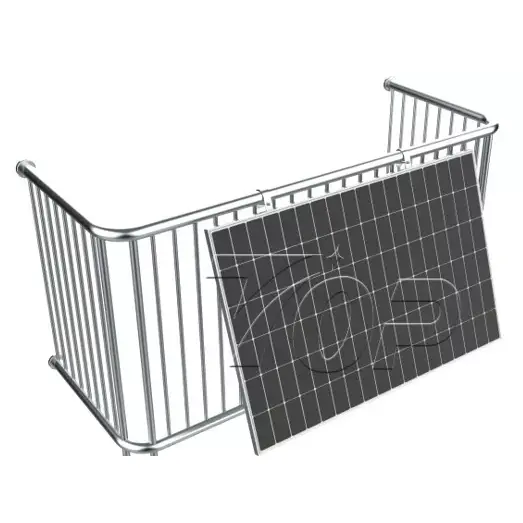
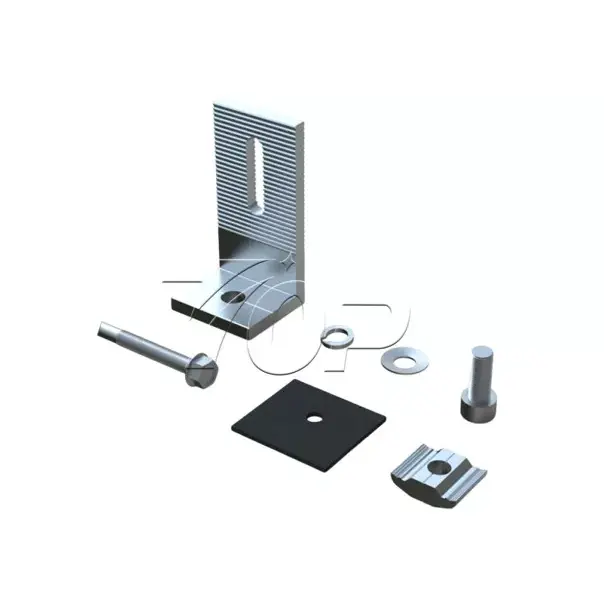
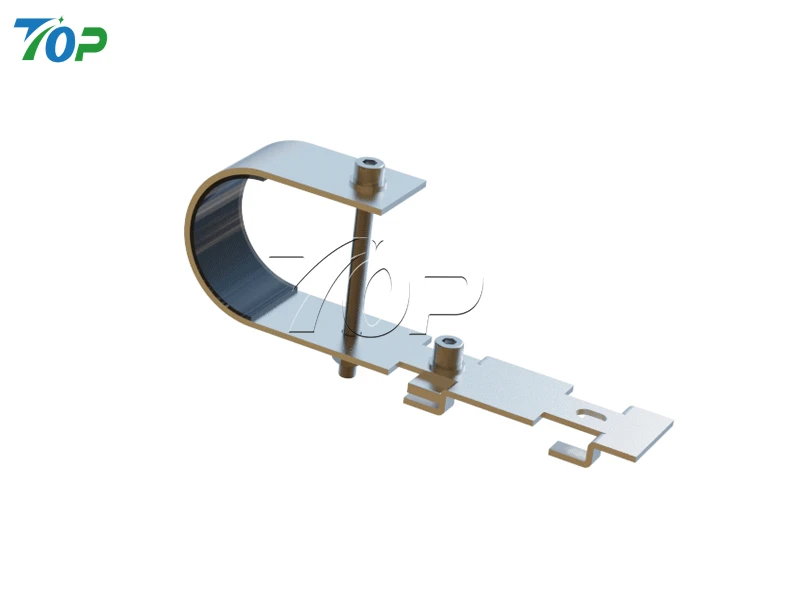
Balcony solar hooks are specialized mounting components used to securely attach photovoltaic panels to balcony railings, facade structures, apartment fences, or exterior building frameworks. They are a critical part of modern balcony solar mounting systems because they transfer mechanical loads from solar modules to the supporting structure while maintaining installation stability and waterproof integrity.
Unlike traditional rooftop solar brackets, balcony photovoltaic hooks are specifically engineered for compact urban spaces where installation flexibility, lightweight design, and structural adaptability are essential. In many apartment solar projects, balcony hooks allow installers to deploy solar modules without extensive roof penetration or heavy structural modification.
As distributed solar systems become increasingly popular in cities with limited roof access, balcony mounting solutions are becoming one of the fastest-growing segments within the global photovoltaic mounting industry.
Main Applications of Balcony Solar Hooks
Modern balcony solar mounting hooks are used in a wide range of residential and commercial photovoltaic scenarios, including:
- Apartment balcony solar systems
- Plug-and-play balcony PV kits
- Urban distributed solar projects
- Residential facade solar installations
- Commercial exterior wall PV systems
- Temporary or non-penetrating solar installations
- Microgrid residential energy systems
In Europe especially, balcony PV systems have become extremely popular due to rising electricity prices and supportive renewable energy policies. Germany, France, the Netherlands, and several Nordic countries are seeing rapid growth in apartment solar installations where balcony mounting systems play a central role.
Why Balcony Solar Hooks Matter More Than Many Buyers Realize
For many first-time buyers, balcony solar hooks may appear to be simple metal accessories. However, experienced EPC contractors understand that these components directly influence installation safety, operational reliability, and long-term maintenance costs.
Poor-quality solar hooks can create multiple project risks:
- Structural loosening under wind vibration
- Premature corrosion in humid environments
- Water leakage around mounting interfaces
- Module instability during typhoon conditions
- High after-sales maintenance costs
- Installation inefficiencies on-site
In contrast, professionally engineered balcony PV hooks improve:
- Installation speed
- Load-bearing reliability
- Corrosion resistance
- Waterproof performance
- Inventory standardization
- Project lifecycle ROI
For EPC contractors handling large-scale residential solar deployments, selecting the best balcony solar hooks 2026 can significantly reduce labor hours and minimize long-term warranty claims.
Why Balcony Solar Hooks Are Becoming Essential in 2026
The Rapid Expansion of Balcony Solar Markets
The global balcony photovoltaic market is entering a rapid growth phase in 2026. Several major industry drivers are accelerating demand:
- Increasing urban electricity costs
- Government renewable energy incentives
- Growing adoption of apartment solar systems
- Net-zero building regulations
- Energy independence concerns
- Rising interest in plug-and-play solar kits
In densely populated cities where rooftop access is limited, balconies represent one of the few available surfaces for residential solar deployment. As a result, balcony solar systems are no longer niche products—they are becoming mainstream distributed energy solutions.
This market expansion has dramatically increased demand for:
- Universal solar mounting hooks
- Fast-install bracket systems
- Corrosion-resistant stainless steel components
- Adjustable balcony PV structures
- Waterproof non-penetrating mounting solutions
Installation Efficiency Is Now a Core Profitability Factor
Labor costs continue rising globally, especially in Europe and developed Asian markets. For EPC companies, installation efficiency is becoming one of the most important profitability metrics in residential solar projects.
Traditional custom-fabricated mounting systems often create:
- Longer installation times
- Higher labor expenses
- More measurement errors
- Increased rework rates
- Complex inventory management
Modern balcony solar hooks solve many of these problems through:
- Pre-assembled structural designs
- Adjustable mounting slots
- Universal rail compatibility
- Simplified bolt systems
- Quick-lock installation structures
For professional solar installers, saving even 20–30 minutes per installation can significantly improve overall project margins across hundreds of apartment units.
Corrosion Resistance Is More Important Than Ever
One of the most underestimated risks in balcony solar systems is corrosion. Unlike rooftop systems installed on relatively protected surfaces, balcony photovoltaic hooks are often directly exposed to:
- Rainwater accumulation
- High humidity
- Coastal salt spray
- Urban pollution
- Temperature fluctuations
- Wind-driven moisture
Inferior materials such as low-grade steel or poorly galvanized components may begin corroding within only a few years. Once corrosion starts, structural stability declines rapidly, increasing safety risks and maintenance costs.
This is why professional EPC contractors increasingly prioritize:
- SUS304 stainless steel balcony hooks
- SUS316 solutions for coastal projects
- Passivated stainless steel surfaces
- Salt spray tested components
- TUV-certified mounting systems
The difference between high-quality and low-quality balcony solar hooks often becomes visible after only one rainy season in coastal environments.
Key Factors When Choosing the Best Balcony Solar Hooks
Material Selection: Why SUS304 Stainless Steel Dominates the Industry
Material quality is one of the most critical factors when evaluating balcony solar mounting hooks. Among all available materials, SUS304 stainless steel has become the industry standard for most professional photovoltaic mounting systems.
Compared with galvanized steel or low-cost metal alloys, SUS304 offers a superior balance between:
- Corrosion resistance
- Mechanical strength
- Long-term durability
- Structural reliability
- Cost efficiency
Professional solar installers prefer SUS304 because it significantly reduces the likelihood of:
- Rust formation
- Bolt seizure
- Structural fatigue
- Surface degradation
- Maintenance callbacks
SUS304 vs SUS201 Stainless Steel
Some low-cost suppliers use SUS201 stainless steel to reduce manufacturing expenses. However, experienced EPC buyers understand the long-term risks associated with inferior steel grades.
| Factor | SUS304 | SUS201 |
|---|---|---|
| Corrosion Resistance | Excellent | Moderate to Poor |
| Salt Spray Performance | High | Limited |
| Outdoor Lifespan | 15–25 Years | 3–8 Years |
| Structural Stability | High | Medium |
| Suitable for Coastal Areas | Yes | No |
Although SUS201 may reduce initial procurement costs, the increased risk of corrosion and replacement usually results in higher lifecycle expenses.
For professional EPC projects, choosing SUS304 balcony solar hooks is generally the safest long-term investment.
Why Some Coastal Projects Use SUS316
In extremely corrosive marine environments, some developers choose SUS316 stainless steel instead of SUS304. SUS316 contains molybdenum, which improves resistance to chloride-induced corrosion caused by seawater exposure.
SUS316 balcony hooks are especially suitable for:
- Coastal apartment projects
- Island solar installations
- Ports and marine facilities
- Tropical humid regions
- High-salt industrial zones
Although SUS316 is more expensive, it can provide significantly longer service life in harsh environments.
Structural Load Capacity: The Core of Balcony PV Safety
One of the most important engineering considerations in balcony photovoltaic systems is structural load performance. Balcony solar hooks must safely transfer loads generated by:
- Wind pressure
- Wind uplift
- Snow accumulation
- Module vibration
- Thermal expansion
- Dynamic structural movement
Unlike rooftop systems installed on large surfaces, balcony solar systems often experience concentrated stress points because of limited mounting areas. This makes engineering quality extremely important.
Wind Load Challenges in Balcony Installations
Balcony solar modules can experience severe wind pressure, especially in high-rise buildings where airflow velocity increases significantly. Poorly designed hooks may deform or loosen under repeated wind vibration cycles.
Professional balcony mounting systems are engineered using:
- Finite element structural analysis
- Dynamic load simulation
- Wind tunnel testing
- Mechanical fatigue testing
Experienced EPC contractors typically evaluate:
- Maximum static load capacity
- Dynamic fatigue resistance
- Connection point strength
- Bolt locking reliability
- Material deformation limits
The best balcony solar hooks 2026 are specifically engineered to maintain stability under long-term outdoor loading conditions while minimizing structural fatigue.
Importance of Safety Factors
Professional photovoltaic mounting systems are never designed only for expected loads. Engineers typically apply safety factors to account for unexpected environmental conditions.
Higher-quality balcony solar hooks generally offer:
- Higher yield strength margins
- Thicker structural profiles
- Reinforced connection points
- Enhanced anti-loosening systems
- Improved long-term fatigue performance
For EPC contractors, selecting structurally verified mounting components reduces liability risks and improves project bankability.
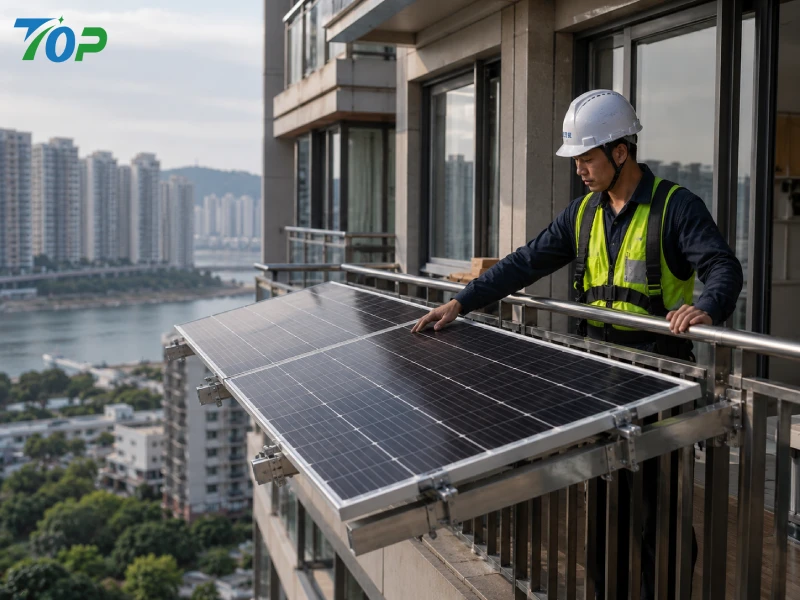
Waterproof Design: Why Leak Prevention Is a Critical EPC Concern
Waterproof performance is one of the most overlooked yet financially dangerous aspects of balcony photovoltaic installations. While many procurement teams focus primarily on price and structural strength, experienced EPC contractors understand that even minor waterproofing failures can lead to major long-term liabilities.
In apartment solar projects, water intrusion can damage:
- Exterior wall insulation systems
- Concrete balcony structures
- Building coatings and paint layers
- Indoor ceilings and walls
- Electrical wiring systems
- Property management infrastructure
Unlike industrial rooftop projects where maintenance access is easier, balcony systems are integrated directly into residential buildings. A single leakage complaint can create expensive legal disputes, repeated service visits, and long-term reputational damage for installers and EPC contractors.
This is why waterproof engineering has become a core purchasing consideration for professional buyers searching for the best balcony solar hooks 2026.
How Poor Mounting Design Causes Water Leakage
Many low-cost balcony solar hooks fail because manufacturers prioritize short-term material savings instead of long-term engineering reliability.
Common waterproofing failures include:
- Improper sealing around mounting interfaces
- Water accumulation near bolt positions
- Weak EPDM rubber quality
- Poor drainage design
- Excessive structural vibration loosening fasteners
- Thermal expansion gaps over time
When rainwater repeatedly penetrates mounting points, corrosion accelerates rapidly inside hidden structural areas. Over time, this can weaken both the solar mounting system and the building itself.
Why Non-Penetrating Balcony Solar Hooks Are Growing Rapidly
One of the biggest trends in modern balcony PV engineering is the adoption of non-penetrating mounting systems. These systems avoid drilling into waterproof layers or facade structures whenever possible.
Non-penetrating balcony solar hooks provide several major advantages:
- Reduced risk of water leakage
- Faster installation speed
- Lower labor complexity
- Minimal structural damage
- Easier building approval processes
- Better compatibility with rental apartments
For urban apartment solar markets, non-invasive mounting systems are becoming increasingly important because many property owners and building management companies prohibit facade penetration.
Professional EPC contractors increasingly prefer clamp-based or railing-mounted photovoltaic hook systems that preserve existing waterproof structures while maintaining high mechanical stability.
The Role of EPDM Rubber in Waterproof Protection
High-quality EPDM sealing components play a major role in waterproof balcony solar mounting systems.
Professional-grade EPDM rubber offers:
- UV resistance
- Temperature stability
- Long-term elasticity
- Weather resistance
- Excellent sealing performance
Cheap rubber materials often crack after prolonged UV exposure, especially in high-temperature climates. Once sealing materials fail, moisture intrusion becomes unavoidable.
For long-term balcony solar reliability, installers should evaluate:
- EPDM material quality
- Compression resistance
- UV aging performance
- Thermal expansion compatibility
- Outdoor lifecycle durability
Adjustable Balcony Solar Hooks: A Major Advantage for Installers
Installation flexibility is one of the biggest operational advantages of modern adjustable solar mounting hooks.
Traditional fixed mounting systems often create problems on real-world construction sites because balconies rarely have perfectly uniform dimensions or perfectly level structural surfaces.
Adjustable balcony solar hooks solve many common installation challenges by allowing:
- Height adjustment
- Angle compensation
- Rail alignment correction
- Structural tolerance management
- Faster module positioning
For professional installers, this flexibility dramatically improves installation efficiency while reducing rework rates.
Why Installation Time Directly Impacts EPC Profitability
Labor has become one of the largest cost components in distributed photovoltaic projects.
Even small improvements in installation efficiency can generate significant profitability gains across large projects.
For example:
- Saving 20 minutes per balcony installation across 500 apartment units can reduce labor costs substantially
- Reducing adjustment errors lowers return visits
- Universal adjustable systems simplify technician training
- Faster installation improves project turnover speed
As residential solar competition intensifies globally, installation efficiency is becoming a key differentiator for EPC contractors.
Universal Rail Compatibility Reduces Complexity
One major problem in photovoltaic inventory management is SKU complexity. Different mounting systems often require different:
- Rails
- Bolts
- Clamps
- Brackets
- Connectors
This increases:
- Warehouse costs
- Inventory management difficulty
- Procurement complexity
- Installation confusion
- Logistics inefficiency
Modern universal balcony solar hooks are designed to support multiple:
- Solar rail profiles
- PV module dimensions
- Balcony structures
- Fastener systems
This standardization allows distributors and EPC companies to simplify procurement while improving inventory turnover.
Compatibility With Different Balcony Structures
One of the biggest engineering challenges in balcony photovoltaic systems is structural diversity. Unlike standardized rooftop installations, balcony systems vary dramatically depending on:
- Building age
- Regional architecture
- Material type
- Construction standards
- Facade design
As a result, balcony solar hooks must support a wide range of installation environments.
Metal Railing Balcony Systems
Metal railings are among the most common balcony structures used in residential photovoltaic installations.
Advantages include:
- Easy clamping installation
- Minimal drilling requirements
- Fast mounting speed
- Good structural consistency
However, installers must still evaluate:
- Railing wall thickness
- Load-bearing capacity
- Corrosion compatibility
- Galvanic corrosion risk
Improper metal compatibility between balcony structures and mounting hooks can accelerate corrosion significantly.
Concrete Balcony Structures
Concrete balconies are common in older apartment buildings and commercial residential projects.
These installations often require:
- Expansion bolt systems
- Chemical anchoring solutions
- Heavy-duty hook structures
- Enhanced waterproof sealing
Concrete cracking risk must also be carefully evaluated during installation.
Professional EPC contractors usually conduct structural assessments before installing photovoltaic mounting systems on aging concrete balconies.
Glass Balcony Railings
Glass railing systems are increasingly popular in modern urban residential buildings. However, they create unique engineering challenges for balcony PV systems.
Direct pressure on glass structures may create:
- Stress concentration points
- Glass cracking risks
- Safety concerns
- Structural instability
For these projects, installers typically use:
- Frame-mounted support systems
- Non-contact hook structures
- Auxiliary support rails
- Distributed load engineering
Specialized balcony solar mounting systems are often required for frameless glass railing environments.
Certifications and Compliance: Why They Matter for Global Distribution
For photovoltaic distributors and EPC procurement managers, certifications are far more than marketing labels. They are critical indicators of manufacturing consistency, engineering reliability, and international project compatibility.
In many regions, uncertified mounting systems may fail:
- Government inspections
- Insurance requirements
- Project bidding processes
- Utility approval standards
- Building code compliance
This is why professional buyers prioritize certified balcony solar mounting components from reputable manufacturers.
TUV Certification
TUV certification is one of the most recognized quality standards in the global photovoltaic industry.
TUV-certified balcony solar hooks generally undergo:
- Structural load testing
- Material verification
- Corrosion resistance testing
- Mechanical durability analysis
- Safety evaluation procedures
For European EPC projects especially, TUV certification significantly improves procurement confidence.
ISO 9001 Manufacturing Standards
ISO 9001 certification indicates that a manufacturer maintains standardized quality management systems.
This helps ensure:
- Consistent product quality
- Controlled manufacturing processes
- Traceable material sourcing
- Stable production standards
- Lower defect rates
For large-scale procurement projects, manufacturing consistency is essential because inconsistent mounting components can create installation delays and structural mismatches.
Salt Spray Testing for Corrosion Resistance
Salt spray testing has become increasingly important for balcony photovoltaic systems because many installations are located in humid urban environments.
Professional corrosion testing helps evaluate:
- Surface durability
- Protective coating performance
- Long-term rust resistance
- Marine environment suitability
Distributors supplying coastal markets should prioritize balcony solar hooks with verified corrosion resistance performance.
Best Types of Balcony Solar Hooks in 2026
As balcony photovoltaic systems evolve, manufacturers are developing more specialized mounting solutions tailored to different installation environments and project requirements.
Understanding the strengths and limitations of each hook type is essential for EPC contractors and distributors seeking the most efficient mounting systems.
Fixed Balcony Solar Hooks
Fixed balcony solar hooks remain one of the most commonly used solutions in standard residential photovoltaic projects.
Their biggest advantages include:
- Simple structural design
- Lower manufacturing cost
- High mechanical stability
- Easy large-scale production
- Reliable long-term performance
Fixed hooks are especially suitable for:
- Standardized apartment projects
- Large-volume EPC deployments
- Budget-sensitive installations
- Uniform balcony structures
However, fixed hooks may offer limited flexibility when handling uneven or non-standard balcony dimensions.
Adjustable Balcony Solar Hooks
Adjustable mounting hooks are becoming increasingly popular because they significantly improve installation adaptability.
Their advantages include:
- Height adjustment capability
- Angle flexibility
- Better structural tolerance compensation
- Faster alignment correction
- Improved compatibility across projects
For EPC contractors handling multiple building types, adjustable balcony hooks reduce customization requirements and simplify installation workflows.
Many professional installers now consider adjustable systems among the best balcony solar hooks 2026 because of their ability to reduce labor costs while improving installation consistency.
Non-Penetrating Balcony Hooks
Non-penetrating systems are one of the fastest-growing product categories in urban residential photovoltaic markets.
Key benefits include:
- No waterproof layer damage
- Lower building liability risk
- Faster installation procedures
- Easier property approval
- Reduced structural modification
These systems are especially attractive for:
- Rental apartments
- Temporary installations
- Property-managed buildings
- Historic architecture projects
Heavy-Duty Balcony Solar Hooks
Heavy-duty mounting systems are designed for high-load or extreme-environment applications.
Typical project environments include:
- Coastal typhoon regions
- High-rise apartment buildings
- Commercial facade solar projects
- Snow-load intensive climates
- Large-format PV module systems
Heavy-duty hooks often feature:
- Thicker stainless steel profiles
- Reinforced support arms
- Enhanced bolt systems
- Higher wind load capacity
- Advanced anti-vibration engineering
Although more expensive, they significantly improve long-term reliability under harsh environmental conditions.
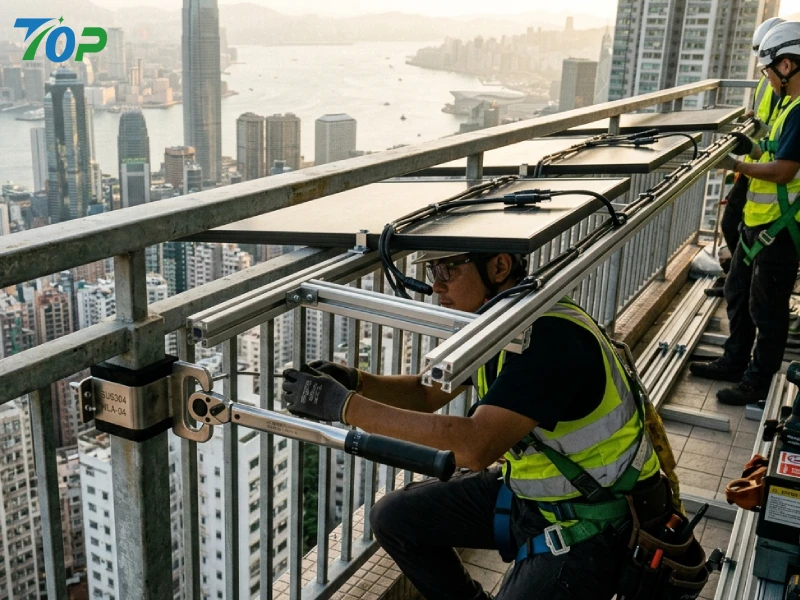
Common Installation Problems and How Professional Balcony Solar Hooks Solve Them
Even experienced EPC contractors encounter installation challenges when deploying balcony photovoltaic systems. Unlike traditional rooftop projects, balcony solar installations involve tighter working spaces, diverse building structures, and higher exposure to environmental stress.
Poor-quality mounting hooks often become the root cause of long-term system failures. While some issues may not appear immediately after installation, structural problems usually emerge after several months of outdoor exposure.
Understanding these common failure scenarios helps installers and distributors choose more reliable mounting solutions while reducing after-sales maintenance risks.
Loose Connections After Several Months
One of the most common issues in low-cost balcony solar systems is connection loosening over time.
This problem is usually caused by:
- Inferior stainless steel quality
- Weak bolt systems
- Poor anti-vibration engineering
- Thermal expansion movement
- Improper torque control during installation
Balcony solar modules are continuously exposed to wind-induced vibration. Over thousands of vibration cycles, weak mounting structures gradually loosen.
Professional balcony solar hooks solve this problem through:
- High-strength SUS304 fasteners
- Anti-loosening washer systems
- Precision CNC machining
- Improved structural geometry
- Torque-optimized connection engineering
For EPC contractors, reducing mechanical loosening directly lowers maintenance costs and improves customer satisfaction.
Rust and Corrosion in Coastal Areas
Corrosion remains one of the biggest threats to long-term photovoltaic mounting reliability.
Coastal environments are especially challenging because airborne salt particles accelerate metal degradation dramatically.
Common corrosion-related problems include:
- Surface rust formation
- Bolt seizure
- Structural weakening
- Galvanic corrosion between dissimilar metals
- Protective coating deterioration
Once corrosion penetrates structural components, load-bearing capacity declines significantly.
Professional-grade balcony solar mounting systems address this issue through:
- SUS304 or SUS316 stainless steel
- Surface passivation treatment
- Salt spray tested materials
- Anti-corrosion fastener engineering
- Improved drainage design
Distributors targeting coastal solar markets should prioritize corrosion-resistant balcony solar hooks to minimize warranty risks.
Water Leakage Around Mounting Interfaces
Waterproof failures are among the most expensive problems in residential photovoltaic installations.
In many cases, leaks occur because installers use:
- Low-quality sealing materials
- Improper drilling methods
- Weak waterproof interfaces
- Incorrect bolt torque
- Incompatible mounting structures
Professional waterproof balcony hook systems reduce leakage risks through:
- EPDM sealing components
- Non-penetrating installation designs
- Improved drainage channels
- Precision-machined sealing surfaces
- Stable anti-vibration engineering
For residential apartment projects, waterproof reliability is often more important than small differences in initial procurement cost.
Installation Delays Due to Poor Compatibility
Many installers underestimate how much time is lost because of incompatible mounting hardware.
Poorly designed balcony solar hooks often require:
- On-site cutting
- Additional drilling
- Manual adjustment
- Customized fabrication
- Repeated alignment correction
These inefficiencies increase:
- Labor expenses
- Installation time
- Project delays
- Error rates
- Technician fatigue
Professional universal mounting systems improve installation workflows through:
- Pre-assembled components
- Adjustable slot structures
- Universal rail compatibility
- Quick-lock fastening systems
- Simplified installation procedures
For large apartment solar projects, installation efficiency has become one of the most important factors influencing EPC profitability.
Balcony Solar Hooks vs Traditional PV Mounting Brackets
Many procurement teams still compare balcony solar hooks with conventional photovoltaic mounting brackets. However, these systems are designed for fundamentally different installation environments.
Traditional rooftop brackets prioritize large-area structural support, while balcony solar hooks are engineered for compact urban installations requiring flexibility, waterproofing, and rapid deployment.
| Comparison Factor | Balcony Solar Hooks | Traditional PV Brackets |
|---|---|---|
| Installation Speed | Fast | Moderate |
| Apartment Compatibility | Excellent | Limited |
| Structural Flexibility | High | Moderate |
| Waterproof Risk | Lower | Higher |
| Labor Cost | Lower | Higher |
| Urban Residential Suitability | Excellent | Limited |
| Non-Penetrating Options | Common | Less Common |
As urban solar deployment accelerates, balcony photovoltaic systems are becoming a specialized engineering category with unique structural and installation requirements.
How EPC Contractors Evaluate Balcony Solar Hook Suppliers
Choosing the right mounting supplier is just as important as selecting the correct hook design.
Professional EPC contractors evaluate suppliers based on far more than product pricing alone. In large photovoltaic projects, supplier reliability directly affects:
- Project timelines
- Installation efficiency
- Long-term maintenance costs
- Customer satisfaction
- Procurement stability
Manufacturing Capacity and Production Consistency
Large-scale solar projects require stable manufacturing capability.
Professional buyers usually evaluate:
- CNC machining precision
- Automated production systems
- Stainless steel processing quality
- Welding consistency
- Dimensional accuracy
- Production scalability
Inconsistent manufacturing quality can create serious installation problems, including:
- Misaligned mounting holes
- Rail incompatibility
- Uneven hook geometry
- Fastener mismatch
- Structural instability
Reliable manufacturers maintain strict quality control throughout the entire production process.
Engineering Support Capability
Modern EPC contractors increasingly expect technical engineering support from mounting system suppliers.
High-level manufacturers often provide:
- Structural calculations
- Wind load analysis
- Project-specific CAD drawings
- Installation guidance
- Custom bracket optimization
- Technical consultation services
For complex apartment solar projects, engineering collaboration can significantly reduce installation risks and improve deployment speed.
Quality Control and Testing Systems
Professional photovoltaic mounting suppliers typically perform extensive testing before product shipment.
Important testing procedures may include:
- Salt spray corrosion testing
- Static load testing
- Dynamic fatigue analysis
- Material composition verification
- Dimensional inspection
- Surface treatment evaluation
Traceable quality control systems help distributors and EPC contractors maintain procurement consistency across large projects.
Bulk Order Stability and Delivery Reliability
For distributors and project developers, delivery reliability is extremely important.
Delayed mounting hardware shipments can cause:
- Installation interruptions
- Labor scheduling conflicts
- Project penalties
- Cash flow pressure
- Customer dissatisfaction
Professional manufacturers usually provide:
- Stable raw material sourcing
- Predictable lead times
- Container loading optimization
- Global logistics coordination
- Large-volume production capability
Why More Installers Prefer Universal Balcony Solar Hook Systems
One of the biggest trends in photovoltaic mounting system design is standardization.
Universal balcony solar hook systems are becoming increasingly popular because they simplify:
- Inventory management
- Installation workflows
- Technician training
- Procurement planning
- Warehouse operations
Reduced SKU Complexity
Managing too many mounting component variations creates operational inefficiency for both distributors and EPC contractors.
Universal systems reduce the number of required:
- Bracket models
- Rail types
- Fastener sizes
- Connector variations
- Structural accessories
This improves procurement efficiency while lowering warehouse costs.
Faster Warehouse and Logistics Management
Standardized mounting systems simplify:
- Packing procedures
- Container optimization
- Inventory counting
- Order fulfillment
- Global shipping coordination
For distributors managing international photovoltaic supply chains, these efficiencies can significantly improve operational performance.
Easier Cross-Project Standardization
Using universal balcony solar hooks across multiple projects creates important long-term advantages:
- Simplified technician training
- Lower installation error rates
- More predictable installation times
- Reduced procurement complexity
- Improved maintenance consistency
Many large EPC companies now standardize mounting hardware across residential projects to improve operational scalability.
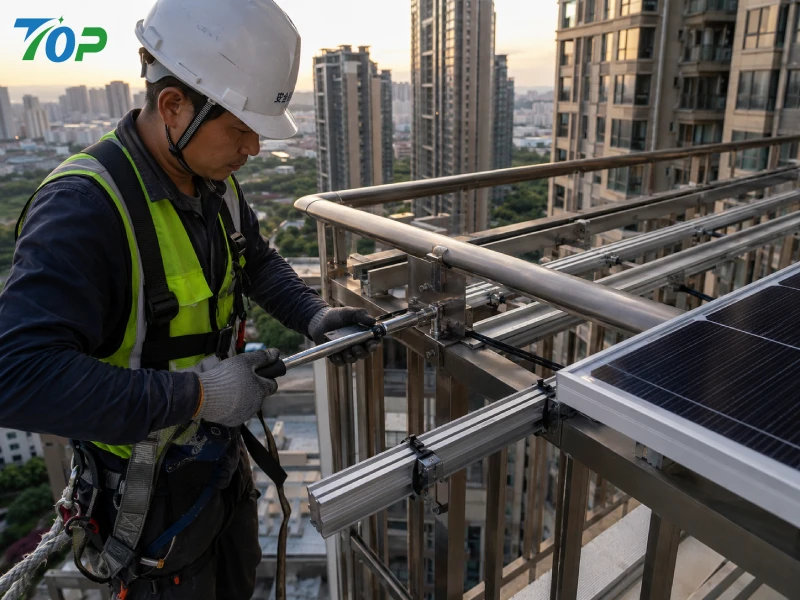
Best Balcony Solar Hook Materials Compared
| Material | Corrosion Resistance | Mechanical Strength | Cost Level | Recommended Applications |
|---|---|---|---|---|
| SUS304 Stainless Steel | Excellent | High | Medium | Most residential and commercial balcony PV systems |
| SUS316 Stainless Steel | Superior | High | High | Coastal and marine environments |
| Aluminum Alloy | Moderate | Moderate | Medium | Lightweight solar systems |
| Galvanized Steel | Moderate | High | Low | Budget-sensitive projects |
Among all materials, SUS304 continues to dominate the market because it offers the best balance between:
- Corrosion resistance
- Structural performance
- Manufacturing stability
- Cost efficiency
- Long-term reliability
For most professional buyers searching for the best balcony solar hooks 2026, SUS304 remains the preferred industry standard.
Future Trends in Balcony Solar Hook Design for 2026
The balcony photovoltaic industry is evolving rapidly as manufacturers focus on improving installation efficiency, corrosion resistance, and structural optimization.
Lightweight Structural Optimization
Manufacturers are increasingly using advanced structural engineering to reduce material usage while maintaining high load capacity.
Benefits include:
- Lower transportation costs
- Faster installation handling
- Reduced balcony load stress
- Improved logistics efficiency
Tool-Free Fast Installation Systems
Quick-install mounting technology is becoming a major innovation area.
Modern systems now focus on:
- Snap-lock structures
- Pre-assembled components
- Rapid alignment systems
- Simplified fastening mechanisms
These improvements significantly reduce labor requirements.
Integrated Waterproof Engineering
Future balcony solar hook systems are increasingly integrating waterproofing directly into structural design rather than relying solely on external sealing materials.
This trend improves:
- Long-term waterproof reliability
- Installation consistency
- Maintenance reduction
- Structural durability
Higher Demand for Pre-Assembled Mounting Kits
Pre-assembled balcony mounting systems are becoming more popular because they:
- Reduce installation errors
- Improve deployment speed
- Simplify technician training
- Lower labor costs
As labor shortages continue affecting the solar industry, installation simplification will become even more important.
How to Choose the Right Balcony Solar Hooks for Your Projects
For Residential EPC Projects
Prioritize:
- Fast installation capability
- Universal compatibility
- Reliable waterproofing
- SUS304 material quality
- Long-term structural stability
For Coastal Installations
Focus on:
- SUS316 or premium SUS304
- Salt spray certified components
- Enhanced anti-corrosion engineering
- Heavy-duty wind resistance
For Solar Distributors and Wholesalers
Evaluate:
- Inventory standardization
- Bulk procurement efficiency
- Certification compliance
- Global market compatibility
- Supplier production stability
Why Professional Manufacturers Matter More Than Ever
As balcony solar systems become more technically specialized, choosing the right manufacturing partner is increasingly important.
Professional photovoltaic mounting manufacturers provide:
- Stable stainless steel sourcing
- Advanced CNC processing
- Strict quality control
- Global certification support
- Engineering customization capability
- Reliable bulk production capacity
For long-term EPC success, mounting system reliability directly affects:
- Installation efficiency
- Maintenance costs
- Project profitability
- Customer trust
- Brand reputation
Why TopFence Solar Supports Global Balcony PV Projects
As a professional photovoltaic mounting system manufacturer, TopFence Solar focuses on delivering durable, installation-efficient, and corrosion-resistant mounting solutions for global balcony solar projects.
With growing demand for apartment photovoltaic systems worldwide, professional EPC contractors increasingly require mounting systems that combine:
- Structural reliability
- Fast installation capability
- Waterproof performance
- Universal compatibility
- Long-term corrosion resistance
TopFence Solar supports these requirements through:
- SUS304 and SUS316 stainless steel solutions
- Advanced CNC manufacturing
- Customized engineering support
- Strict quality control systems
- Global project experience
- Bulk order production stability
For EPC contractors, solar distributors, and renewable energy developers searching for the best balcony solar hooks 2026, selecting a technically experienced manufacturing partner is essential for long-term project success.
Conclusion
Balcony photovoltaic systems are rapidly transforming urban solar deployment worldwide. As apartment solar adoption continues growing across Europe, Southeast Asia, and other densely populated regions, the importance of reliable balcony mounting systems will only increase.
Choosing the right balcony solar hooks is no longer a minor procurement decision. It directly affects:
- Installation speed
- Project profitability
- Structural safety
- Waterproof reliability
- Long-term maintenance costs
- Customer satisfaction
For professional EPC contractors and photovoltaic distributors, the best solutions combine:
- SUS304 or SUS316 corrosion resistance
- Universal installation compatibility
- Fast deployment capability
- Certified structural performance
- Long-term outdoor durability
As the balcony solar market matures in 2026, high-quality mounting systems will become increasingly important for maintaining competitive installation efficiency and minimizing operational risks.
Whether you are managing residential EPC projects, expanding solar distribution channels, or sourcing mounting systems for coastal installations, investing in professionally engineered balcony solar hooks can significantly improve long-term project ROI.
Frequently Asked Questions
Q1. What is the best material for balcony solar hooks?
SUS304 stainless steel is considered the industry standard because it offers an excellent balance between corrosion resistance, mechanical strength, and long-term cost efficiency.
Q2. Are SUS304 balcony solar hooks suitable for coastal environments?
Yes. SUS304 performs well in most humid and coastal environments. However, extremely aggressive marine conditions may require SUS316 stainless steel for maximum corrosion resistance.
Q3. Do balcony solar hooks require roof penetration?
Not always. Many modern balcony photovoltaic systems use non-penetrating mounting designs that avoid damaging waterproof structures.
Q4. Why are adjustable balcony solar hooks becoming more popular?
Adjustable systems improve installation flexibility, reduce labor time, simplify alignment correction, and increase compatibility across different balcony structures.
Q5. How long do professional balcony solar hooks last?
High-quality SUS304 or SUS316 balcony solar hooks can typically last 15–25 years depending on environmental conditions and maintenance quality.
Q6. What certifications should professional solar hooks have?
Professional buyers often prioritize TUV certification, ISO 9001 manufacturing standards, CE compliance, and salt spray corrosion testing.
Q7. How do universal balcony mounting systems reduce costs?
Universal systems simplify inventory management, reduce SKU complexity, improve installation efficiency, and lower warehouse and procurement costs.
Q8. What makes the best balcony solar hooks 2026 different from older systems?
Modern systems focus more heavily on installation efficiency, waterproof engineering, corrosion resistance, universal compatibility, and pre-assembled fast-install structures.
Best Balcony Solar Hooks 2026 — Improve Installation Efficiency & Long-Term Reliability
Still comparing different balcony solar hooks for your residential PV projects? In high-rise apartment, coastal, and urban balcony solar installations, low-quality mounting hooks can lead to corrosion, waterproof failures, structural loosening, and costly maintenance issues. TOPFENCE provides engineered SUS304 and SUS316 balcony solar hook systems designed for faster installation, reliable wind-load performance, and long-term outdoor durability. Our universal mounting solutions help EPC contractors, solar installers, and distributors reduce labor costs, simplify inventory management, and improve project ROI across residential balcony photovoltaic systems.
Request Balcony PV Mounting Design, Samples & Bulk Pricing
Related News
- The Global EPC Sourcing Checklist: Managing Lead Times and Logistics for Solar Mounting Systems
- BIPV & Commercial Rooftops: Solving Waterproofing and Structural Integrity Challenges in Urban Solar
- Navigating Solar Certifications: Why UL 2703 and International Standards Matter for Project Bankability
- Maximizing Yield with Bifacial Modules: How to Select the Optimal Tracker for Enhanced Energy Output
- Wind Load and Coastal Engineering: Ensuring Your Ground-Mounted Solar Array Survives Extreme Weather
- Aluminum vs. Galvanized Steel: Choosing the Right Solar Mounting Structure for High-Corrosivity Environments
Leave me a message