How Vertical Solar Systems Reduce Farm Carbon Footprint
How Vertical Solar Systems for Farms Reduce Carbon Footprint and Improve Land Efficiency
As global agriculture faces rising pressure to reduce emissions, improve land efficiency, and lower operating costs, vertical solar systems for farms are rapidly emerging as one of the most practical renewable energy solutions for modern agricultural operations. From large-scale crop fields to livestock farms and greenhouse facilities, farmers and EPC contractors are increasingly adopting vertical solar systems for farms to achieve long-term sustainability goals without sacrificing valuable agricultural land.
Unlike traditional ground-mounted PV arrays that occupy large surface areas, vertical agrivoltaic systems allow solar energy generation while maintaining normal farming activities. This dual-use approach not only improves land productivity but also helps agricultural businesses reduce diesel dependency, lower electricity costs, and significantly decrease overall carbon emissions.
For professional solar installers, EPC contractors, and photovoltaic distributors, vertical PV systems also offer major engineering and commercial advantages. Faster installation speed, simplified waterproofing, high structural reliability, and reduced long-term maintenance make vertical solar mounting systems particularly attractive in agricultural environments where durability and efficiency are critical.
In this comprehensive guide, we will explore how vertical solar systems reduce farm carbon footprint, why bifacial vertical PV technology is gaining global momentum, and how EPC companies can optimize agricultural solar projects through smarter structural design, corrosion-resistant materials, and advanced mounting technologies.
What You Will Learn
- What vertical solar systems are and how they work in agriculture
- How agrivoltaic systems reduce agricultural carbon emissions
- Key engineering advantages for EPC contractors and installers
- Why bifacial vertical PV systems improve land efficiency
- How SUS304 and corrosion-resistant structures improve durability
- Best farm applications for vertical solar mounting systems
- Important design considerations for agricultural PV projects
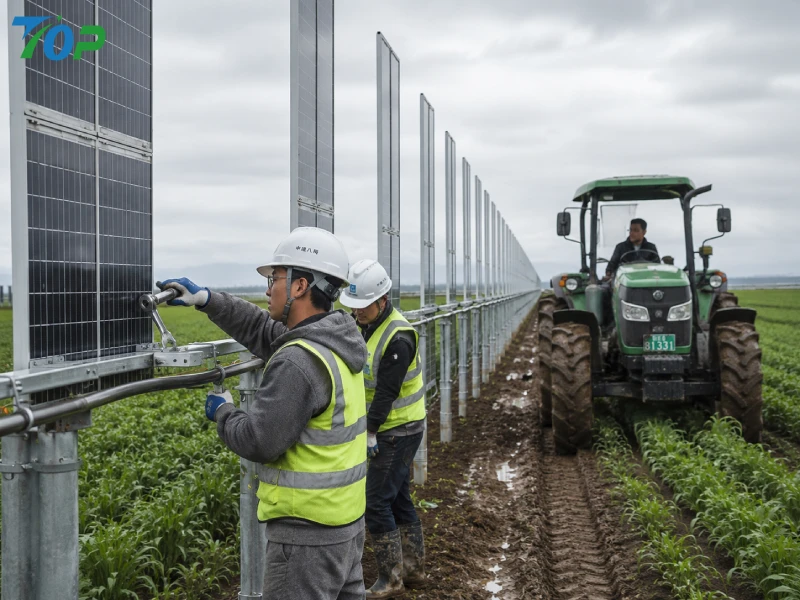
What Is a Vertical Solar System in Agriculture?
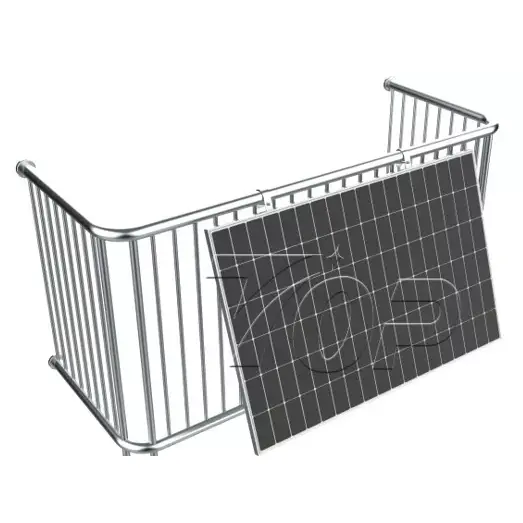
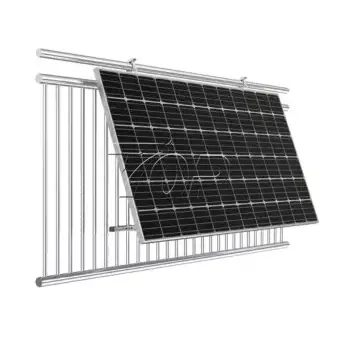
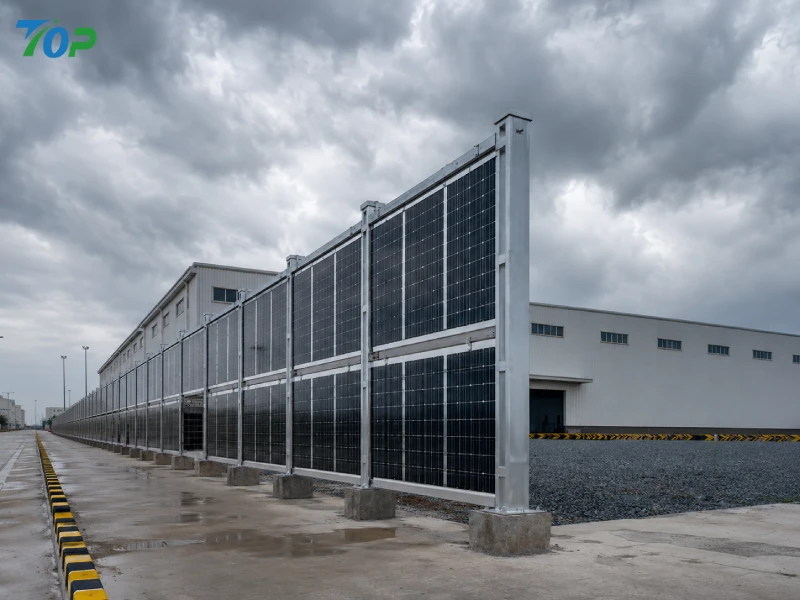
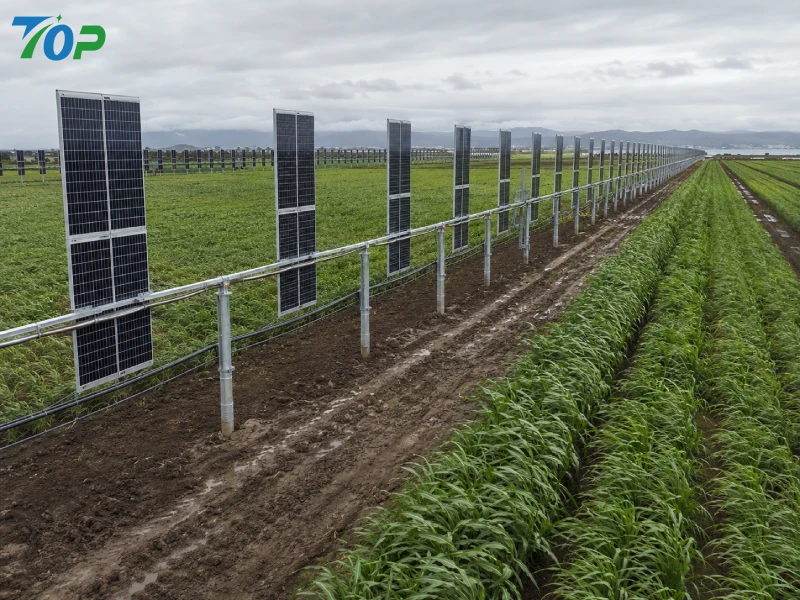
A vertical solar system is a specialized photovoltaic installation method where solar panels are mounted upright instead of being tilted at conventional angles. In agricultural applications, these systems are commonly installed between crop rows, along farm boundaries, or integrated into fencing infrastructure to create an efficient agrivoltaic solution.
The growing popularity of vertical solar systems for farms is largely driven by the need to maximize land utilization while reducing carbon emissions. Traditional solar farms often compete with agriculture for available land, but vertical agrivoltaics solve this problem by allowing simultaneous crop production and renewable energy generation.
For EPC contractors and agricultural developers, vertical PV systems represent a practical way to deliver renewable energy projects without negatively affecting farm productivity. This is especially important in regions where farmland availability is limited or where agricultural land values remain high.
How Vertical Agrivoltaic Systems Work
Most agricultural vertical PV systems use bifacial solar modules mounted in east-west orientations. Unlike conventional tilted panels that mainly capture direct sunlight from one direction, bifacial modules absorb reflected and diffused light from both sides.
This design creates several performance advantages:
- Improved morning and afternoon energy generation
- More stable daily power output curves
- Reduced dust accumulation due to vertical positioning
- Better airflow and module cooling efficiency
- Improved compatibility with farming activities
The vertical orientation also minimizes shading impact on crops while allowing agricultural machinery to continue operating normally between installation rows.
Main Components of a Vertical Solar Mounting System
A high-quality agricultural vertical PV system typically includes:
- Bifacial photovoltaic modules
- Corrosion-resistant mounting structures
- SUS304 stainless steel fasteners
- Ground screw or pile foundations
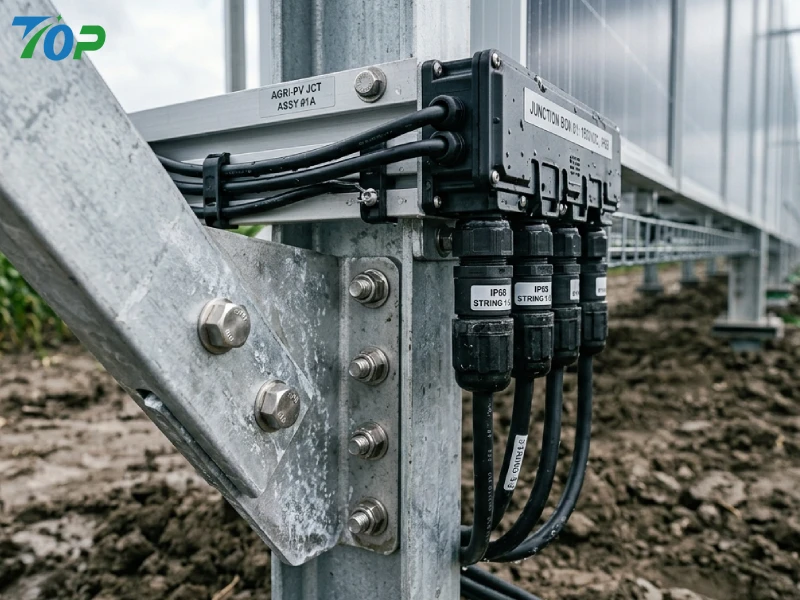
- Waterproof cable management systems
- Wind-resistant structural reinforcements
- Integrated grounding systems
Because agricultural environments are often exposed to moisture, fertilizer chemicals, ammonia, salt spray, and temperature fluctuations, selecting the right structural materials becomes extremely important for long-term system reliability.
Vertical Solar vs Traditional Ground-Mounted PV Systems
| Comparison Factor | Vertical Solar Systems | Traditional Ground-Mount PV |
|---|---|---|
| Land Usage | Dual-use agricultural land | Occupies large land area |
| Crop Compatibility | Excellent | Limited |
| Installation Speed | Fast | Moderate |
| Maintenance Accessibility | Easy access | Can be restricted |
| Water Drainage | Excellent | Potential water pooling |
| Dust Accumulation | Low | Higher |
How Vertical Solar Systems Help Reduce Farm Carbon Footprint
Agriculture remains one of the largest contributors to global greenhouse gas emissions. Diesel-powered irrigation, fossil-fuel electricity consumption, fertilizer-intensive farming, and inefficient land usage all contribute to increasing carbon output across the agricultural sector.
By integrating renewable energy directly into farming operations, vertical solar systems for farms help agricultural businesses transition toward low-carbon operations while maintaining economic productivity.
Replacing Fossil Fuel Electricity With Renewable Solar Energy
Many farms rely heavily on grid electricity generated from coal, natural gas, or diesel-powered backup generators. Vertical agrivoltaic systems allow farms to generate clean electricity directly on-site, reducing dependence on carbon-intensive energy sources.
Common agricultural applications powered by vertical PV systems include:
- Irrigation pumps
- Greenhouse climate control systems
- Livestock ventilation equipment
- Agricultural cold storage facilities
- Water purification systems
- Electric fencing infrastructure
- Smart farming sensors and automation systems
Over the lifespan of the project, this transition significantly lowers total farm emissions while reducing long-term electricity costs.
Reducing Diesel Consumption in Remote Agricultural Areas
Many remote farms still rely on diesel generators due to unstable grid infrastructure or complete lack of electricity access. Diesel systems not only generate high operational costs but also produce substantial CO₂ emissions and ongoing fuel transportation challenges.
Vertical solar systems combined with battery energy storage systems provide farms with a cleaner and more stable energy alternative. This hybrid approach enables:
- 24-hour renewable power availability
- Lower fuel transportation expenses
- Reduced maintenance requirements
- Improved operational reliability
- Lower agricultural carbon intensity
For large agricultural enterprises pursuing ESG targets, reducing diesel dependency has become a major sustainability priority.
Improving Land Efficiency Through Agrivoltaics
Traditional solar farms often create competition between renewable energy development and food production. Vertical agrivoltaic systems solve this issue by enabling dual land use.
Instead of dedicating farmland exclusively to solar energy generation, vertical installations allow crops, livestock, and agricultural activities to coexist with photovoltaic infrastructure.
This improves the total productivity of agricultural land by combining:
- Food production
- Renewable electricity generation
- Carbon reduction
- Land preservation
- Sustainable resource management
For governments and agricultural developers, this dual-use capability makes vertical solar one of the most attractive long-term renewable energy strategies for rural development.
Reducing Soil Disturbance and Environmental Impact
Traditional large-scale solar projects often require extensive excavation, concrete foundations, and land grading. These activities can damage soil structure, increase erosion risks, and negatively affect water drainage systems.
Modern vertical solar mounting systems typically use ground screw foundations or driven piles, which significantly reduce soil disturbance during installation.
Key environmental benefits include:
- Minimal excavation requirements
- Reduced concrete usage
- Better rainwater infiltration
- Lower risk of soil compaction
- Improved preservation of agricultural ecosystems
For environmentally sensitive agricultural projects, low-impact installation methods are becoming increasingly important during EPC project planning.
Supporting Net-Zero Agriculture Goals
Governments and food supply chains worldwide are implementing stricter sustainability requirements for agricultural operations. Many agricultural exporters and large farming enterprises are now required to demonstrate measurable carbon reduction progress.
Vertical solar systems help farms:
- Lower operational carbon emissions
- Improve sustainability reporting metrics
- Meet renewable energy compliance targets
- Enhance ESG performance
- Increase access to green financing opportunities
As carbon regulations continue tightening globally, renewable energy integration will become a core competitive advantage for modern agricultural businesses.
Why EPC Contractors Prefer Vertical Solar Systems for Agricultural Projects
Beyond environmental benefits, vertical solar systems also provide major engineering and installation advantages for EPC contractors, solar developers, and installation teams.
Compared with traditional utility-scale ground-mounted PV projects, agricultural vertical solar systems are often faster to deploy, easier to maintain, and more adaptable to complex farmland conditions.
Faster Installation and Reduced Labor Costs
One of the biggest advantages of vertical solar mounting systems is simplified installation workflow.
Traditional ground-mounted systems typically require:
- Large-scale earthworks
- Complex tilt angle structures
- Heavy foundation construction
- Extensive land leveling
In contrast, vertical PV systems use streamlined structural designs with fewer mounting components and simplified alignment processes.
This allows EPC teams to achieve:
- Faster project timelines
- Lower labor requirements
- Reduced equipment usage
- Lower transportation costs
- Improved installation efficiency
For large agricultural solar deployments, reduced installation time directly improves project profitability.
Advanced Engineering Advantages of Vertical Solar Systems in Agricultural Environments
Agricultural solar projects are fundamentally different from standard commercial rooftop or utility-scale photovoltaic installations. Farms expose PV structures to constant humidity, fertilizer chemicals, livestock-related corrosion, muddy terrain, irrigation systems, and highly variable environmental conditions.
Because of these challenges, EPC contractors increasingly favor vertical agrivoltaic systems that simplify construction, reduce maintenance risk, and improve long-term structural durability.
For professional solar installers, installation efficiency alone is not enough. The true profitability of an agricultural solar project depends on lifecycle reliability, reduced after-sales service, structural stability, and waterproof performance over 20–30 years of operation.
Superior Waterproof Performance in Agricultural PV Projects
Waterproofing failures remain one of the most common causes of long-term solar project maintenance costs. In agricultural environments, the challenge becomes even more severe due to irrigation systems, heavy rainfall, muddy terrain, and continuous humidity exposure.
Traditional low-clearance ground-mounted systems often experience:
- Water pooling around cable routes
- Connector moisture intrusion
- Mud accumulation beneath arrays
- Accelerated corrosion around mounting joints
- Drainage restrictions during rainy seasons
Vertical solar systems significantly reduce these risks through elevated structural layouts and simplified cable routing architecture.
Key waterproofing advantages include:
- Improved natural drainage beneath the array
- Reduced water retention around foundations
- Elevated cable management away from standing water
- Better ventilation around electrical components
- Reduced mud contamination on connectors
For EPC contractors, this translates directly into fewer service calls, reduced warranty claims, and lower long-term maintenance expenses.
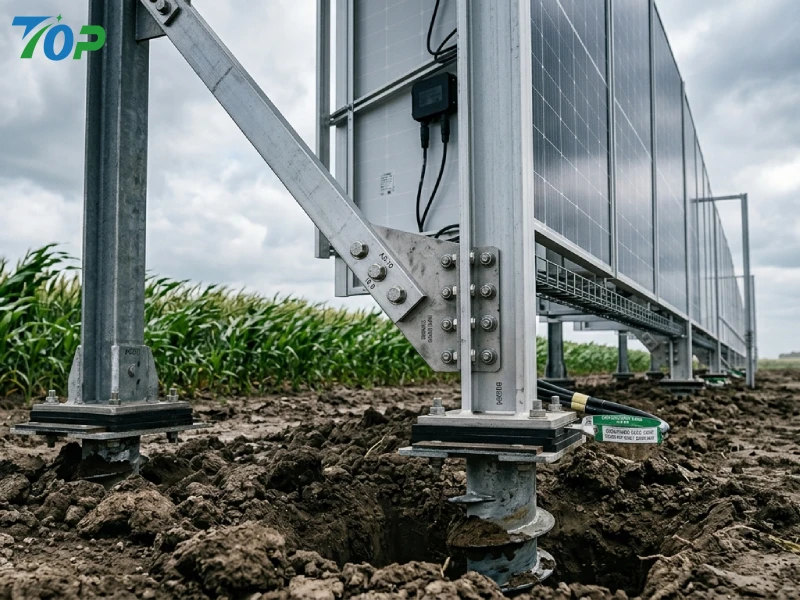
Improved Structural Reliability Under Harsh Agricultural Conditions
Agricultural PV systems must withstand some of the harshest environmental conditions in the renewable energy industry. High wind loads in open farmland, chemical exposure from fertilizers, and humidity from irrigation systems all accelerate structural degradation if inferior materials are used.
This is why material selection becomes a critical engineering decision in vertical solar projects.
High-quality vertical PV mounting systems are typically designed using:
- SUS304 stainless steel fasteners
- Hot-dip galvanized steel structures
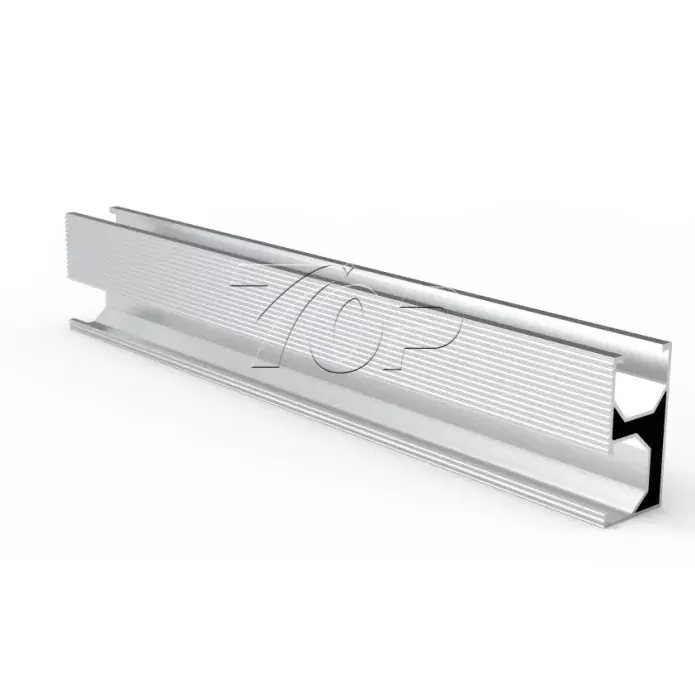
- Corrosion-resistant aluminum rails
- UV-resistant cable protection systems
- High-strength structural reinforcement components
Compared with low-cost untreated steel structures, corrosion-resistant systems provide dramatically longer service life in agricultural environments.
For livestock farms in particular, ammonia exposure can rapidly accelerate rust formation on low-quality materials. Similarly, coastal agricultural regions expose PV structures to continuous salt spray corrosion.
Using certified corrosion-resistant materials significantly reduces:
- Structural fatigue
- Bolt failure risks
- Long-term maintenance costs
- Premature component replacement
- System downtime
For EPC companies managing large agricultural portfolios, structural reliability directly impacts customer satisfaction and project reputation.
Why Bifacial Vertical PV Systems Deliver Better Agricultural Compatibility
Bifacial solar modules have become the preferred technology for vertical agrivoltaic installations because they maximize energy generation while minimizing farmland disruption.
Unlike monofacial panels that only capture sunlight from one side, bifacial modules absorb both direct and reflected light, making them highly efficient in vertical east-west configurations.
This design provides several important agricultural benefits:
- More even energy generation throughout the day
- Reduced midday power spikes
- Lower shading impact on crops
- Improved airflow between modules
- Better dust resistance
- Reduced snow accumulation in colder climates
The vertical orientation also allows sunlight to continue reaching surrounding farmland during most daylight hours, which is especially important for maintaining healthy crop growth.
For agrivoltaic developers, balancing energy output with agricultural productivity remains one of the most important project optimization goals.
Why Material Selection Matters in Agricultural Vertical Solar Systems
In agricultural photovoltaic projects, mounting structure quality directly affects project lifespan, operational reliability, and total lifecycle cost.
While some developers focus primarily on module efficiency, experienced EPC contractors understand that structural failures often create the most expensive long-term maintenance problems.
Selecting the correct materials for vertical solar systems for farms is essential for ensuring long-term project success.
Benefits of SUS304 Stainless Steel in Farm Solar Structures
SUS304 stainless steel is widely regarded as one of the best materials for agricultural solar mounting applications due to its exceptional corrosion resistance and structural durability.
Compared with ordinary carbon steel fasteners, SUS304 provides:
- Excellent rust resistance
- High mechanical strength
- Long-term structural stability
- Strong resistance to agricultural chemicals
- Reduced maintenance requirements
In humid farming environments where irrigation systems operate continuously, lower-grade fasteners often begin corroding within only a few years.
By contrast, SUS304 components maintain reliable performance for decades, making them highly suitable for:
- Livestock farms
- Coastal agricultural regions
- Greenhouse installations
- Tropical farming environments
- High-humidity crop production zones
For distributors and procurement managers, SUS304 compatibility also improves inventory standardization and simplifies product sourcing across multiple project types.
Hot-Dip Galvanized Steel vs SUS304 Stainless Steel
Both hot-dip galvanized steel and SUS304 stainless steel are commonly used in agricultural solar mounting systems, but each material offers different advantages depending on project conditions.
| Material Comparison | Hot-Dip Galvanized Steel | SUS304 Stainless Steel |
|---|---|---|
| Initial Cost | Lower | Higher |
| Corrosion Resistance | Good | Excellent |
| Coastal Environment Performance | Moderate | Excellent |
| Agricultural Chemical Resistance | Moderate | Excellent |
| Lifecycle Maintenance | Moderate | Low |
| Expected Lifespan | 15–25 years | 25–35+ years |
For many large-scale agricultural projects, EPC contractors often combine hot-dip galvanized structural beams with SUS304 fasteners to optimize both cost efficiency and corrosion protection.
Importance of TUV Certification and International Compliance
As agricultural solar investments continue growing globally, project owners increasingly prioritize certified mounting systems that meet international structural and safety standards.
TUV-certified vertical solar mounting systems provide several advantages:
- Verified structural load capacity
- Improved project bankability
- Easier regulatory approval
- Enhanced investor confidence
- Lower engineering risk
For EPC contractors bidding on commercial agricultural projects, certification can significantly improve competitiveness during procurement evaluation.
Distributors also benefit from standardized certified systems because they simplify international market expansion and reduce technical disputes during installation.
Universal Mounting Designs Improve Inventory Efficiency
Inventory management remains a major challenge for photovoltaic distributors and agricultural EPC companies handling multiple module brands and project types.
Universal vertical mounting systems help solve this problem by supporting:
- Multiple module dimensions
- Different bifacial panel thicknesses
- Flexible rail spacing
- Standardized clamp compatibility
- Simplified warehouse management
For distributors managing large-scale inventories, universal mounting structures reduce SKU complexity while improving bulk procurement flexibility.
This also helps EPC contractors accelerate installation timelines because field teams can work with standardized component systems across multiple projects.
Best Agricultural Applications for Vertical Solar Systems
The flexibility of vertical agrivoltaic systems makes them suitable for a wide variety of farming environments. As renewable energy adoption accelerates globally, more agricultural sectors are discovering the operational and environmental benefits of vertical solar integration.
Crop Farming and Agrivoltaic Integration
Crop farms represent one of the fastest-growing markets for vertical solar systems for farms because they offer excellent opportunities for dual land utilization.
Vertical PV systems can be installed:
- Between crop rows
- Along irrigation channels
- Around farm boundaries
- As windbreak structures
- As integrated fencing systems
Suitable crop applications include:
- Vegetable farms
- Berry plantations
- Vineyards
- Tea plantations
- Herb cultivation
- Specialty crops
Because vertical installations create relatively narrow shading profiles, crops continue receiving sufficient sunlight throughout the day while farms simultaneously generate renewable electricity.
Livestock Farms and Grazing Applications
Vertical solar systems are particularly well suited for livestock operations because they minimize interference with animal movement while offering additional functional benefits.
Applications include:
- Sheep grazing fields
- Dairy farms
- Poultry operations
- Cattle ranches
- Horse farms
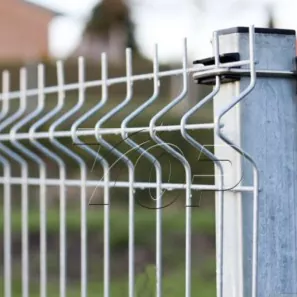
In many projects, vertical solar systems also function as fencing infrastructure, reducing the need for separate perimeter barriers.
For livestock operations, elevated vertical systems provide:
- Improved ventilation
- Reduced mud accumulation
- Minimal obstruction for animals
- Lower cleaning requirements
- Improved structural protection from livestock contact
Greenhouses and Controlled Agriculture Facilities
Greenhouse operators are increasingly integrating vertical PV systems to reduce electricity costs associated with climate control and environmental automation.
Agricultural facilities with high energy demand can use vertical solar installations to power:
- Ventilation systems
- Heating equipment
- Cooling systems
- Automated irrigation
- LED grow lighting
- Environmental monitoring systems
Compared with rooftop solar systems, vertical installations around greenhouse perimeters often provide easier maintenance access and reduced roof structural load concerns.
Off-Grid and Remote Agricultural Applications
Remote agricultural operations often face unstable power supply conditions or complete lack of grid infrastructure.
In these situations, vertical solar systems combined with battery energy storage systems can create highly reliable agricultural microgrids.
Benefits include:
- Reduced diesel generator dependency
- Stable irrigation system operation
- Improved agricultural automation reliability
- Lower fuel transportation costs
- Improved energy independence
As battery prices continue decreasing globally, off-grid agricultural solar systems are becoming increasingly attractive for rural farming development.
Critical Design Considerations for Agricultural Vertical Solar Projects
Designing a successful agricultural vertical photovoltaic project requires far more than simply installing bifacial panels on upright structures. EPC contractors must carefully evaluate environmental conditions, crop compatibility, soil stability, structural loading, waterproofing systems, and long-term operational efficiency.
Because farms operate under highly dynamic environmental conditions, poorly designed solar systems can create significant long-term maintenance costs, operational disruptions, and structural failures.
For professional solar developers, optimized engineering design is the key factor that determines whether a vertical agrivoltaic project achieves long-term profitability and reliability.
Wind Load and Structural Engineering Requirements
Open agricultural land is often exposed to strong and highly variable wind conditions. Unlike rooftop solar systems protected by surrounding buildings, vertical solar arrays installed in farmland must withstand direct wind pressure across large surface areas.
This makes structural engineering one of the most important considerations for agricultural PV projects.
Critical wind-resistance design factors include:
- Regional wind speed analysis
- Soil bearing capacity evaluation
- Foundation pull-out resistance calculations
- Structural reinforcement design
- Module spacing optimization
- Dynamic wind vibration analysis
Professional EPC contractors often use finite element structural simulations and regional meteorological data to optimize mounting structure performance under extreme weather conditions.
For typhoon-prone or hurricane-exposed regions, additional reinforcement strategies may include:
- Thicker steel profiles
- Additional diagonal bracing
- Deeper pile foundations
- Higher-strength fasteners
- Enhanced anchoring systems
Long-term structural reliability is especially important for agricultural solar projects because remote farm locations can make maintenance and repairs significantly more expensive than urban installations.
Ground Clearance and Agricultural Machinery Compatibility
One of the biggest advantages of vertical solar systems for farms is their ability to coexist with ongoing agricultural activities. However, achieving this compatibility requires careful planning of system layout and ground clearance dimensions.
Improper spacing can interfere with:
- Tractor movement
- Harvesting equipment
- Irrigation systems
- Livestock access
- Crop management operations
When designing agrivoltaic layouts, EPC teams must consider:
- Farm machinery width
- Turning radius requirements
- Crop growth height
- Seasonal maintenance access
- Future farming expansion plans
For large commercial farms, maintaining operational efficiency is critical. A poorly designed PV layout that slows agricultural workflow can reduce overall project value despite good energy generation performance.
Advanced vertical solar projects increasingly use customized row spacing configurations tailored to specific crop types and farming equipment.
Waterproof Cable Management and Drainage Optimization
Agricultural environments expose solar systems to constant moisture, mud, irrigation water, and seasonal flooding risks. As a result, waterproofing and drainage design become essential for ensuring long-term electrical reliability.
High-quality agricultural vertical PV systems typically incorporate:
- Elevated cable routing systems
- UV-resistant conduit protection
- IP-rated waterproof connectors
- Corrosion-resistant cable trays
- Optimized drainage channels
- Water-resistant junction box positioning
Unlike low-clearance ground-mounted systems where cables are often exposed to standing water, vertical solar installations naturally improve drainage efficiency by reducing ground-level congestion.
Proper cable management also improves:
- Electrical safety
- Inspection efficiency
- Maintenance accessibility
- Long-term insulation reliability
- Overall system lifespan
For EPC contractors, investing in superior waterproofing design significantly reduces future operational risks and warranty claims.
Corrosion Protection in Humid and Coastal Agricultural Environments
Corrosion is one of the most destructive long-term threats to agricultural solar infrastructure.
Farms expose photovoltaic structures to multiple corrosive factors simultaneously, including:
- High humidity
- Fertilizer chemicals
- Ammonia from livestock operations
- Salt spray in coastal regions
- Continuous irrigation moisture
- Organic decomposition gases
Without proper material selection and protective coatings, corrosion can rapidly compromise structural integrity and increase maintenance costs.
Best practices for corrosion protection include:
- Using SUS304 stainless steel fasteners
- Applying hot-dip galvanization
- Using anodized aluminum components
- Installing sealed waterproof connectors
- Performing regular inspection programs
- Reducing exposed cut edges during installation
For coastal agricultural projects, additional anti-corrosion engineering measures may be necessary due to continuous exposure to airborne salt particles.
Professional EPC contractors understand that investing in corrosion-resistant materials upfront often delivers far lower lifecycle costs over the operational lifespan of the project.
Choosing the Right Foundation System for Vertical PV Installations
Foundation selection plays a major role in determining installation speed, structural stability, environmental impact, and project cost.
The most common foundation options for agricultural vertical solar systems include:
- Ground screw foundations
- Driven pile foundations
- Concrete foundations
- Ballasted systems
Among these options, ground screw foundations have become increasingly popular because they provide:
- Fast installation speed
- Minimal soil disturbance
- Reduced concrete usage
- Excellent removability
- Strong environmental sustainability advantages
Ground screws are especially suitable for:
- Soft agricultural soils
- Temporary solar projects
- Environmentally sensitive farmland
- Remote installation sites
However, rocky terrain or extremely high wind regions may require deeper pile systems or reinforced concrete foundations depending on engineering requirements.
ROI and Economic Benefits of Vertical Solar Systems for Farms
Beyond sustainability benefits, one of the primary reasons agricultural developers invest in vertical solar systems is long-term economic performance.
Modern agrivoltaic systems help farms reduce operational costs, improve land productivity, stabilize energy expenses, and create additional long-term revenue streams.
For EPC contractors and distributors, understanding the financial value proposition of agricultural vertical solar systems is essential for improving project conversion rates and customer confidence.
Reducing Long-Term Farm Operating Costs
Electricity represents a major operating expense for modern agricultural businesses. Irrigation systems, greenhouse climate control, refrigeration, water treatment, and automation technologies all require reliable energy supply.
By generating renewable electricity directly on-site, farms can significantly reduce:
- Monthly utility expenses
- Diesel fuel costs
- Energy price volatility exposure
- Grid dependency risks
- Long-term operational uncertainty
As electricity prices continue rising globally, self-generated solar power becomes increasingly valuable for agricultural enterprises seeking predictable operating costs.
Dual Land Utilization Improves Total Farm Profitability
One of the strongest economic advantages of vertical agrivoltaic systems is the ability to generate both agricultural output and renewable electricity from the same land area.
Traditional ground-mounted PV systems often reduce available farmland, creating opportunity costs for agricultural businesses.
Vertical solar systems solve this issue by enabling:
- Continued crop cultivation
- Livestock grazing compatibility
- Integrated fencing functions
- Renewable electricity generation
- Long-term land value preservation
This dual-use model significantly improves land productivity metrics and creates stronger long-term financial returns compared with single-use land applications.
Government Incentives and Carbon Credit Opportunities
Many governments worldwide are accelerating renewable energy adoption through agricultural sustainability programs, tax incentives, and carbon reduction initiatives.
Depending on the project location, farms installing vertical solar systems may qualify for:
- Renewable energy subsidies
- Agricultural modernization grants
- Carbon offset programs
- Tax deductions
- Feed-in tariff programs
- Green financing incentives
For large agricultural enterprises, carbon reduction performance can also improve access to ESG investment programs and environmentally focused financing opportunities.
As global supply chains place increasing emphasis on sustainable sourcing, low-carbon agricultural operations may gain significant competitive advantages in export markets.
Increasing Agricultural Asset Value Through Renewable Infrastructure
Renewable energy infrastructure increasingly contributes to overall agricultural property value.
Modern farms equipped with advanced agrivoltaic systems often benefit from:
- Improved energy independence
- Lower operating risk
- More stable long-term profitability
- Enhanced sustainability credentials
- Higher investor attractiveness
For institutional agricultural investors, farms with integrated renewable energy systems are becoming increasingly attractive due to their resilience against rising energy costs and tightening environmental regulations.
Common Challenges in Vertical Agrivoltaic Projects and How to Solve Them
Although vertical solar systems offer major advantages for agricultural applications, successful implementation still requires careful project planning and engineering optimization.
Understanding common technical challenges allows EPC contractors to improve installation quality and reduce long-term project risks.
Managing Shading Between Vertical Solar Rows
Improper row spacing can create excessive shading losses between vertical bifacial arrays, reducing overall energy production efficiency.
To optimize performance, EPC teams must evaluate:
- Seasonal sun angles
- Regional solar irradiation data
- Crop height variations
- Panel orientation strategies
- Ground reflectivity conditions
Advanced solar simulation software is often used to optimize row spacing and maximize bifacial energy yield throughout the year.
Preventing Long-Term Structural Fatigue
Agricultural structures experience continuous environmental stress from wind vibration, thermal expansion, and moisture exposure.
Preventing structural fatigue requires:
- High-strength engineering design
- Proper fastener torque control
- Corrosion-resistant materials
- Routine inspection programs
- Accurate load calculations
Professional installation quality directly affects long-term structural reliability and overall project lifespan.
Balancing Energy Generation With Agricultural Productivity
One of the most important agrivoltaic design goals is maintaining strong agricultural productivity while maximizing solar energy generation.
Different crops respond differently to partial shading conditions, making site-specific agricultural analysis essential during project planning.
Successful agrivoltaic optimization often includes:
- Crop-specific layout design
- Customized row spacing
- Seasonal sunlight analysis
- Microclimate monitoring
- Adaptive farming strategies
When designed correctly, vertical agrivoltaic systems can improve both renewable energy output and long-term farm sustainability.
How to Choose the Right Vertical Solar Mounting System Supplier
The quality of the mounting system supplier directly affects project reliability, installation efficiency, and long-term operational performance.
For EPC contractors and photovoltaic distributors, selecting an experienced agricultural solar structure manufacturer is critical for minimizing project risk.
Evaluate Engineering and Structural Design Capabilities
Professional suppliers should provide:
- Wind load calculations
- Structural simulation reports
- Foundation recommendations
- Project-specific engineering support
- Installation guidance documentation
Experienced manufacturers can also optimize structural layouts based on local environmental conditions and agricultural requirements.
Verify Manufacturing Quality and Material Standards
High-quality agricultural mounting systems should use:
- SUS304 stainless steel fasteners
- Certified galvanized steel
- Precise structural tolerances
- Strict quality control systems
- Internationally recognized certifications
Reliable manufacturing quality reduces installation errors and improves long-term system performance.
Prioritize EPC-Friendly Product Design
Installation efficiency significantly affects total project profitability.
EPC-focused mounting systems should provide:
- Modular structural components
- Fast assembly processes
- Reduced on-site welding
- Universal clamp compatibility
- Simplified installation workflows
Efficient system design helps reduce labor costs and shorten construction timelines.
Assess Large-Scale Supply Capacity
For utility-scale agricultural solar projects, supply chain stability is essential.
Professional suppliers should demonstrate:
- Stable production capacity
- Reliable delivery schedules
- Bulk order management capability
- Global export experience
- Long-term partnership support
Distributors and EPC contractors increasingly prioritize manufacturers capable of supporting rapid project expansion across multiple markets.
Why Vertical Solar Systems Represent the Future of Sustainable Agriculture
As global agriculture moves toward carbon neutrality and renewable energy integration, vertical agrivoltaic systems are rapidly becoming one of the most important innovations in sustainable farming infrastructure.
Compared with traditional solar development models, vertical solar systems for farms provide a unique combination of:
- Carbon reduction
- Land-use optimization
- Agricultural compatibility
- Operational efficiency
- Long-term economic sustainability
For EPC contractors, photovoltaic distributors, and agricultural developers, vertical solar technology represents a rapidly expanding market with strong long-term growth potential.
As renewable energy policies continue strengthening worldwide, demand for high-quality agricultural solar mounting systems will likely accelerate significantly over the next decade.
Conclusion
The global agricultural industry is undergoing a major transformation driven by rising energy costs, tightening environmental regulations, and increasing demand for sustainable food production.
In this rapidly evolving landscape, vertical solar systems offer one of the most practical and scalable solutions for reducing farm carbon footprint while preserving valuable agricultural land.
By enabling dual land use, reducing fossil fuel dependency, improving operational efficiency, and supporting long-term sustainability goals, vertical agrivoltaic systems provide substantial value for modern agricultural operations.
For EPC contractors and solar installers, vertical PV systems also deliver important technical advantages including:
- Faster installation speed
- Improved waterproof performance
- Lower maintenance requirements
- Enhanced structural reliability
- Superior agricultural compatibility
Meanwhile, distributors and procurement managers benefit from standardized mounting systems, corrosion-resistant materials, and growing global market demand for agricultural renewable energy infrastructure.
As governments, investors, and food supply chains continue prioritizing carbon reduction and renewable energy adoption, vertical solar systems for farms are positioned to become a core component of future sustainable agriculture development worldwide.
Vertical Solar Systems for Farms — Optimize Land Use, Reduce Carbon Footprint & Improve EPC Efficiency
Looking for a reliable vertical solar mounting system for agricultural projects? In modern agrivoltaic applications, poor-quality structures can lead to wind-load failures, corrosion issues, waterproofing risks, and increased maintenance costs. TOPFENCE provides engineered vertical PV mounting solutions designed for farmland environments, supporting high wind resistance, SUS304 stainless steel durability, and fast EPC installation. Our agrivoltaic systems help EPC contractors, solar installers, and distributors reduce construction time, improve structural reliability, and maximize long-term ROI in agricultural solar projects while maintaining full farming operations underneath the system.
Request Agrivoltaic Design & Bulk Project Quotation →
Frequently Asked Questions About Vertical Solar Systems for Farms
1. What are the main advantages of vertical solar systems for agricultural projects?
Vertical solar systems for farms provide several major advantages compared with traditional tilted ground-mounted PV systems. The biggest benefit is dual land utilization, allowing farms to continue crop cultivation or livestock grazing while simultaneously generating renewable electricity.
For EPC contractors and agricultural developers, vertical agrivoltaic systems also offer:
- Reduced land occupation
- Improved compatibility with agricultural machinery
- Lower soil disturbance during installation
- Faster installation efficiency
- Better natural ventilation and drainage
- Reduced dust accumulation on bifacial modules
- Improved long-term maintenance accessibility
In addition, vertical bifacial PV systems can improve energy generation during morning and afternoon peak periods, helping farms optimize electricity usage profiles.
2. Are vertical solar systems suitable for high-wind agricultural environments?
Yes. Properly engineered vertical solar mounting systems are specifically designed to withstand strong wind conditions commonly found in open agricultural areas.
High-quality agrivoltaic structures typically include:
- Hot-dip galvanized steel support columns
- Diagonal reinforcement braces
- Ground screw or driven pile foundations
- SUS304 stainless steel fasteners
- Wind-load optimized structural layouts
For coastal regions or typhoon-prone environments, EPC contractors often perform structural simulations and local wind load calculations to ensure long-term system reliability.
Choosing certified mounting systems with verified engineering documentation is essential for minimizing structural risk in agricultural PV projects.
3. Why are bifacial solar modules commonly used in vertical agrivoltaic systems?
Bifacial solar modules are ideal for vertical agrivoltaic applications because they can generate electricity from both sides of the panel.
In east-west vertical installations, bifacial modules capture sunlight during both morning and afternoon periods while also utilizing reflected ground light.
Key benefits include:
- More balanced daily power generation curves
- Reduced midday overheating
- Improved energy production in diffuse light conditions
- Lower dust accumulation due to vertical orientation
- Better compatibility with crop growth
For agricultural solar developers, bifacial technology helps maximize land productivity without heavily shading farmland.
4. What foundation systems are best for vertical solar installations on farmland?
Ground screw foundations are currently one of the most popular solutions for agricultural vertical PV systems because they provide fast installation and minimal soil disturbance.
Compared with traditional concrete foundations, ground screws offer:
- Faster deployment speed
- Reduced excavation requirements
- Lower environmental impact
- Improved drainage performance
- Easier future system removal or relocation
However, foundation selection should always depend on:
- Soil bearing capacity
- Wind load requirements
- Groundwater conditions
- Regional climate factors
- Project scale
EPC contractors typically perform geotechnical analysis before selecting the final foundation solution.
5. How do vertical solar systems reduce long-term maintenance costs?
Vertical solar systems generally require less maintenance than traditional low-clearance ground-mounted PV arrays because their upright structure improves accessibility and natural cleaning performance.
Maintenance advantages include:
- Reduced dust and mud accumulation
- Improved airflow around modules
- Better drainage beneath the system
- Easier visual inspection access
- Simplified cable routing maintenance
Additionally, using corrosion-resistant materials such as SUS304 stainless steel fasteners and hot-dip galvanized structures significantly reduces long-term structural degradation in humid agricultural environments.
For B2B investors, lower maintenance requirements improve total project ROI over the system lifespan.
6. What crops are most compatible with vertical agrivoltaic systems?
Vertical agrivoltaic systems are compatible with a wide range of agricultural applications because they create relatively narrow shading profiles compared with traditional tilted PV arrays.
Common compatible crops include:
- Vegetables
- Berries
- Tea plantations
- Vineyards
- Herbs
- Pasture grass for livestock grazing
Crop compatibility depends on factors such as:
- Sunlight sensitivity
- Row spacing design
- Regional climate
- Panel orientation
- Machinery access requirements
Proper agrivoltaic design can help farms maintain strong agricultural productivity while adding renewable energy generation capacity.
7. Why is SUS304 stainless steel important in agricultural solar mounting systems?
Agricultural environments expose PV mounting systems to continuous moisture, fertilizer chemicals, livestock ammonia, and in some regions, coastal salt spray.
SUS304 stainless steel provides excellent corrosion resistance under these harsh environmental conditions.
Compared with standard carbon steel fasteners, SUS304 components offer:
- Longer service life
- Improved structural stability
- Lower maintenance frequency
- Reduced rust-related failures
- Better long-term appearance retention
For EPC contractors and distributors, using high-quality corrosion-resistant materials helps minimize warranty claims and improve customer satisfaction.
8. How should EPC contractors choose a reliable vertical solar mounting system supplier?
Choosing the right agricultural solar mounting supplier is critical for ensuring project quality, installation efficiency, and long-term reliability.
EPC contractors should evaluate suppliers based on:
- Structural engineering capability
- TUV or international certifications
- Corrosion-resistant material quality
- Large-scale manufacturing capacity
- OEM/ODM customization support
- Installation-friendly modular design
- Project engineering documentation
Reliable suppliers should also provide technical support for:
- Wind load calculations
- Foundation recommendations
- Agrivoltaic layout optimization
- Installation guidance
- Long-term after-sales service
For large agricultural PV projects, supply chain stability and engineering support are often just as important as product pricing.
Related News
- The Global EPC Sourcing Checklist: Managing Lead Times and Logistics for Solar Mounting Systems
- BIPV & Commercial Rooftops: Solving Waterproofing and Structural Integrity Challenges in Urban Solar
- Navigating Solar Certifications: Why UL 2703 and International Standards Matter for Project Bankability
- Maximizing Yield with Bifacial Modules: How to Select the Optimal Tracker for Enhanced Energy Output
- Wind Load and Coastal Engineering: Ensuring Your Ground-Mounted Solar Array Survives Extreme Weather
- Aluminum vs. Galvanized Steel: Choosing the Right Solar Mounting Structure for High-Corrosivity Environments
Leave me a message