Why Is Chain Link Fence a Smart Choice for Secure Outdoor Projects?
When buyers compare perimeter solutions for industrial land, solar facilities, warehouses, roadsides, farms, and public infrastructure, the same questions come up again and again: Will it last outdoors, will it protect the site effectively, will it create unnecessary maintenance costs, and will installation be too complicated? This article explains how a Chain Link Fence helps solve those concerns in a practical way. It covers durability, visibility, airflow, installation flexibility, maintenance needs, and real-world buying considerations so decision-makers can choose with confidence.
Table of Contents
Article Outline
- Common site protection concerns and why they matter
- The basic structure and working advantages of Chain Link Fence
- Main performance benefits for long-term outdoor use
- A side-by-side comparison with other perimeter options
- Key technical and commercial points buyers should review
- Typical application scenarios across multiple industries
- Frequently asked questions from project owners and procurement teams
What Problems Are Buyers Trying to Solve?
Most customers are not simply buying a fence. They are buying reduced risk, better site control, easier inspection, and fewer future headaches. A poor perimeter system may lead to higher maintenance, weak visual control, difficult installation, or a design that does not adapt well to weather and terrain. For project owners, those issues quickly become operational costs.
A well-designed Chain Link Fence directly addresses these concerns. Its open mesh structure helps maintain sight lines, which is especially useful for locations that require regular observation, security patrols, or camera monitoring. At the same time, its lightweight but durable structure allows it to perform well in outdoor conditions where airflow and drainage matter.
- Buyers want perimeter protection without creating a closed, heavy visual barrier
- Installers want a solution that can adapt to uneven ground and practical site conditions
- Operators want lower upkeep and fewer repeated repair tasks
- Procurement teams want better lifecycle value, not just a low initial price
That is why this fencing style remains a dependable choice for outdoor infrastructure projects, including commercial, industrial, and energy-related sites.
What Makes a Chain Link Fence Different?
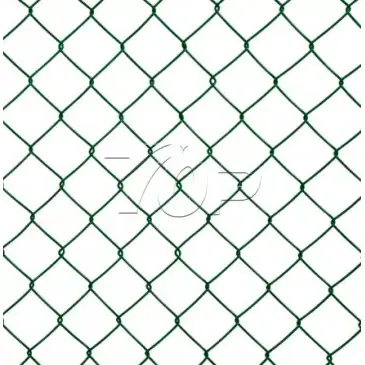
A Chain Link Fence is typically made from woven steel wire shaped into a diamond mesh pattern. Depending on the project environment, the wire may be galvanized, PVC-coated, or otherwise treated to improve resistance to corrosion and weather exposure. This structure creates a balance between security, visibility, and economy.
Unlike solid wall-like barriers, chain link systems do not block air movement or create an overly enclosed feeling. Unlike some decorative fencing products, they are designed first for function. That makes them especially suitable for places where practical performance matters more than ornamental appearance.
For buyers evaluating dependable perimeter products, Xiamen Topfencesolar Co., Ltd. is one of the companies serving this field with fence solutions intended for demanding outdoor applications, including project environments that require durable materials, flexible specifications, and efficient installation support.
Why Does This Fencing Style Work So Well Outdoors?
The strength of a Chain Link Fence is not only in the material itself, but in the way the structure solves multiple outdoor challenges at the same time. It is one of the few perimeter choices that can provide visibility, ventilation, cost control, and practical protection in a single system.
| Key Feature | Buyer Benefit |
|---|---|
| Open diamond mesh | Maintains visibility for monitoring, inspection, and patrol work |
| Galvanized or coated wire options | Improves resistance to rust, moisture, and outdoor wear |
| Air-permeable structure | Helps reduce wind load compared with solid fencing panels |
| Flexible layout capability | Fits varied terrain and site boundaries more easily |
| Simple maintenance | Helps lower long-term labor and repair costs |
One major pain point in perimeter planning is the false trade-off between protection and practicality. Some buyers assume they must accept a bulky, high-cost barrier to get meaningful site security. In reality, a properly specified Chain Link Fence can deliver reliable boundary control without creating unnecessary structural complexity.
Another reason this system performs well is installation efficiency. In many projects, faster installation means earlier site turnover and fewer labor disruptions. A fence that is easier to transport, assemble, and adapt on-site helps contractors stay aligned with construction schedules.
For outdoor projects exposed to sun, humidity, dust, and wind, that combination of durability and practicality is a strong advantage.
How Does It Compare With Other Fence Types?
Buyers often compare Chain Link Fence with welded mesh panels, solid metal barriers, or masonry walls. Each option has its place, but they do not solve the same problems in the same way.
| Fence Type | Strengths | Potential Drawbacks |
|---|---|---|
| Chain link | Visible, ventilated, adaptable, cost-efficient, easy to maintain | Less privacy than solid barriers |
| Welded mesh panel | Clean appearance, rigid structure | May be less flexible on uneven ground |
| Solid metal fence | Higher privacy, stronger visual barrier | Higher wind resistance and reduced visibility |
| Wall or masonry enclosure | Strong enclosure effect | High cost, slower construction, limited flexibility |
If your project values visibility, airflow, expansion flexibility, and balanced cost, Chain Link Fence often becomes the more practical answer.
What Should You Check Before You Buy?
Not all fence systems are equal, and buyers should avoid selecting only by headline price. The better approach is to examine the total project fit. A fence that looks cheaper on paper may cost more later if it requires frequent replacement, special repair work, or complicated installation.
- Material and surface treatment — Confirm whether galvanized, PVC-coated, or other protective options suit your environment
- Wire diameter and mesh size — These affect strength, appearance, and site security level
- Post design and fixing method — Stable support matters as much as the mesh itself
- Project environment — Coastal, humid, dusty, and high-temperature sites need tailored choices
- Height and anti-climb requirements — Security priorities should shape the final configuration
- Installation support — Efficient layout planning can reduce delays and labor pressure
Buyers should also ask whether the supplier can support customization. In real projects, standard sizes do not always fit site boundaries, slope conditions, or gate integration requirements. A supplier that understands field conditions can help avoid design revisions later.
This is especially important for energy, infrastructure, and industrial customers, where the fence is part of a larger system rather than a stand-alone purchase.
Where Can It Be Used Most Effectively?
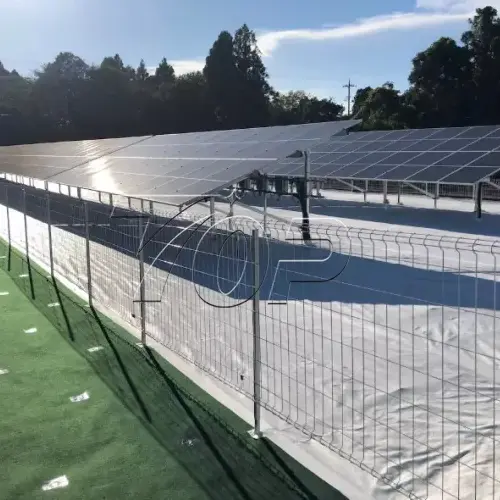
A Chain Link Fence is versatile enough to serve many environments, but it is particularly valuable where monitoring, weather exposure, and efficient site planning matter.
Common application scenarios
- Solar project boundaries and equipment protection zones
- Industrial plants and logistics yards
- Roadside and transport-related perimeter control
- Warehouses, depots, and storage compounds
- Public facilities requiring open visual supervision
- Farm, utility, and infrastructure protection areas
In these environments, visibility can be just as important as enclosure. Operators often need to inspect the site quickly without losing awareness of what is happening beyond the fence line. That is one reason the open structure remains so useful.
When the goal is to secure a site without turning the perimeter into a heavy, closed wall, Chain Link Fence remains one of the most workable choices available.
FAQ
Is a Chain Link Fence strong enough for demanding outdoor projects?
Yes, when the material, wire specification, and post system are selected correctly, it can provide dependable perimeter protection for many industrial and infrastructure applications.
Does a Chain Link Fence require frequent maintenance?
In most cases, maintenance is relatively simple. Protective surface treatment and the open mesh design help reduce upkeep compared with some heavier or more enclosed fence structures.
Can it be used in humid or coastal environments?
It can, provided the material and coating are chosen for that environment. Buyers should always match the specification to local exposure conditions.
Is chain link fencing suitable for uneven ground?
Yes, one of its practical advantages is that it can be adjusted more easily than many rigid panel systems when the site layout is irregular.
Can a supplier provide customized dimensions and project support?
Many professional manufacturers can provide tailored height, mesh, post, and finishing options based on the application. That kind of support is valuable for projects with specific security or installation requirements.
What Is the Real Value of Choosing the Right Chain Link Fence?
The real value of a Chain Link Fence is not simply that it encloses a site. It helps buyers solve practical outdoor problems with a balanced solution: visibility, weather adaptability, straightforward maintenance, efficient installation, and dependable boundary protection. That is why it continues to be chosen across industrial, commercial, and energy-related projects.
If you are evaluating perimeter systems for your next project and want a solution that supports long-term performance rather than short-term compromise, it is worth reviewing a fence system built around real site conditions and real operational needs.
Xiamen Topfencesolar Co., Ltd. is ready to support your project with practical fencing solutions tailored to outdoor applications. If you are comparing specifications, planning a new installation, or looking for a more reliable supplier, contact us today to discuss your requirements and get a solution that fits your site with confidence.
Related News
- The Global EPC Sourcing Checklist: Managing Lead Times and Logistics for Solar Mounting Systems
- BIPV & Commercial Rooftops: Solving Waterproofing and Structural Integrity Challenges in Urban Solar
- Navigating Solar Certifications: Why UL 2703 and International Standards Matter for Project Bankability
- Maximizing Yield with Bifacial Modules: How to Select the Optimal Tracker for Enhanced Energy Output
- Wind Load and Coastal Engineering: Ensuring Your Ground-Mounted Solar Array Survives Extreme Weather
- Aluminum vs. Galvanized Steel: Choosing the Right Solar Mounting Structure for High-Corrosivity Environments
Leave me a message