How to Design Aesthetic Solar Fencing for Public Infrastructure
The Growing Role of Solar Fencing in Sustainable Urban Development
As cities pursue carbon neutrality goals and smarter infrastructure development, traditional perimeter fencing is being reimagined as an energy-generating asset. Understanding how to design aesthetic solar fencing for urban public infrastructure has become increasingly important for EPC contractors, architects, municipal planners, and renewable energy developers seeking to maximize land utilization while maintaining attractive urban environments.
Unlike conventional steel or aluminum fences that serve only as physical barriers, modern photovoltaic fencing systems can simultaneously provide site security, generate renewable electricity, enhance public perception of sustainability initiatives, and contribute to a project's ESG objectives. However, achieving these benefits requires much more than simply attaching solar panels to a fence structure.
Successful urban solar fence projects must balance architecture, engineering, safety, maintenance accessibility, and long-term financial performance. A visually intrusive installation may face community opposition. An under-engineered structure may suffer premature failure under wind loading. An aesthetically pleasing design that neglects maintenance requirements can create operational challenges for decades.
This guide explores the engineering principles, architectural considerations, structural requirements, and real-world design strategies that help public infrastructure projects transform ordinary boundaries into attractive renewable energy assets.

Why Cities Are Turning Fences Into Energy Assets
Urban land is among the most valuable and constrained resources in modern infrastructure planning. Public agencies and developers are increasingly searching for ways to integrate renewable energy generation into existing built environments without consuming additional land area.
This challenge has accelerated interest in multifunctional infrastructure. Instead of viewing fences solely as security elements, municipalities are beginning to treat them as opportunities to create value.
Solar fencing represents one of the most practical examples of this trend because perimeter boundaries already exist in nearly every public facility, including:
- Public parks
- School campuses
- Government buildings
- Transportation corridors
- Water treatment facilities
- Airports
- Sports complexes
- Industrial parks
- Public parking facilities
For many of these sites, available rooftop space may be limited, heavily shaded, structurally constrained, or reserved for future expansion. Ground-mounted solar systems often compete with other land-use priorities. Solar fencing provides an alternative pathway to renewable energy deployment without significantly affecting existing site operations.
The Growing Influence of Net-Zero Urban Development
Many cities worldwide have established aggressive carbon reduction targets for public infrastructure. Government agencies increasingly require sustainability considerations during procurement and project development stages.
As a result, architects and EPC contractors are being asked to identify renewable energy opportunities earlier in the design process rather than treating solar power as an optional addition near project completion.
This shift has changed how perimeter infrastructure is evaluated. Instead of asking:
"How can we secure this facility?"
Stakeholders increasingly ask:
"How can this boundary contribute to sustainability objectives while maintaining visual quality?"
That question is driving rapid innovation in photovoltaic fence systems and integrated BIPV (Building-Integrated Photovoltaic) applications.
Why Aesthetic Design Matters More Than Ever in Urban Solar Projects
One of the most common mistakes in solar infrastructure planning is assuming that energy generation alone determines project success.
For urban public infrastructure projects, appearance often plays a surprisingly significant role in stakeholder acceptance.
Unlike utility-scale solar farms located in remote areas, public solar fencing exists in highly visible environments where thousands of people may interact with the installation every day.
A poorly designed system can become a source of criticism, even if its energy performance exceeds expectations.
Public Acceptance Can Make or Break a Project
Urban infrastructure projects rarely involve a single decision-maker.
Instead, approval processes frequently include multiple stakeholders:
- Municipal planning departments
- Urban design review boards
- Architectural consultants
- Community organizations
- Environmental agencies
- Public works departments
- Local residents
Each group may evaluate project success through a different lens.
Engineers focus on safety and performance.
Financial stakeholders focus on return on investment.
Urban planners focus on city image and visual integration.
Residents often focus on how the infrastructure affects their daily environment.
Solar fencing must satisfy all of these perspectives simultaneously.
Experience from numerous public infrastructure projects suggests that installations perceived as attractive and well-integrated tend to encounter fewer approval obstacles and generate stronger long-term community support.
The Hidden Cost of Poor Visual Design
The consequences of poor aesthetics are often underestimated during project budgeting.
A visually disruptive solar fence may trigger:
- Additional design revisions
- Extended approval timelines
- Community objections
- Higher consulting costs
- Project delays
- Negative public relations impacts
In some cases, the indirect cost of redesign and delayed approvals can exceed the savings achieved through lower-cost materials.
This is why leading EPC contractors increasingly involve architects and landscape designers during early-stage solar fence planning rather than waiting until structural engineering has been completed.
Solar Fencing Is Becoming Part of Urban Architecture
Another reason aesthetics matter is that solar fencing is gradually evolving beyond a simple security product.
Many modern installations function as visible architectural elements.
In public parks, solar fencing may define pedestrian pathways.
In schools, it can serve as both a security feature and an educational sustainability showcase.
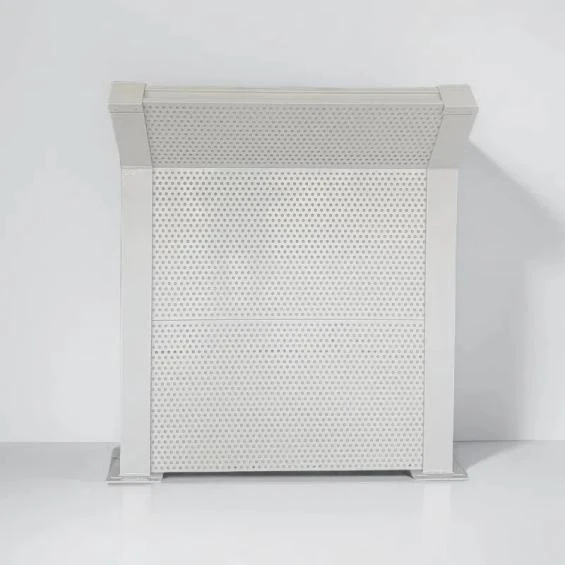
Along transportation corridors, photovoltaic barriers may contribute to noise reduction strategies while generating electricity.
These evolving applications require a design approach that considers architectural quality from the beginning.

Six Engineering Principles for Designing Attractive Solar Fencing
Professionally designed photovoltaic fencing systems share several characteristics regardless of project location or application type.
The following principles consistently appear in successful urban deployments.
Principle 1: Match the Local Architectural Language
The most visually successful solar fence projects rarely attempt to stand out.
Instead, they complement the surrounding built environment.
A design that performs well in a modern technology campus may look completely out of place in a historic district.
Context matters.
Commercial and Business Parks
Corporate developments typically favor:
- Black-frame photovoltaic modules
- Minimalist aluminum structures
- Hidden cable routing
- Clean geometric lines
- Uniform module spacing
These design elements support a modern, technology-oriented visual identity.
Educational Facilities
Schools often benefit from a more open and welcoming appearance.
Semi-transparent photovoltaic modules can reduce visual heaviness while still providing meaningful energy production.
Many educational institutions also appreciate visible sustainability features that can be incorporated into environmental education programs.
Public Parks and Recreational Areas
Parks generally require softer visual integration.
Designers often prioritize:
- Landscape compatibility
- Natural color finishes
- Reduced visual mass
- Greater transparency
The objective is to avoid creating the impression of a heavily fortified boundary.
Transportation Infrastructure
Rail corridors, transit stations, and transportation hubs typically prioritize durability and consistency.
Long fence runs demand highly repetitive and visually organized module layouts to prevent a fragmented appearance.
Principle 2: Select the Appropriate PV Module Technology
Module selection significantly influences both appearance and system performance.
Different technologies create very different visual effects.
| Module Type | Visual Appearance | Energy Performance | Typical Urban Application |
|---|---|---|---|
| Bifacial Glass-Glass | Modern and premium | Excellent | Parks, public facilities |
| Semi-Transparent | Light and open | Good | Schools, pedestrian areas |
| Colored PV Modules | Highly customized | Moderate | Civic and landmark projects |
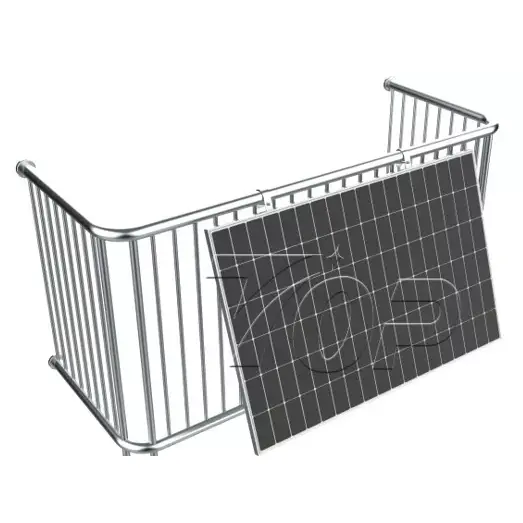
Bifacial technology has become particularly attractive for vertical solar fencing because reflected light from both sides can contribute to energy production.
In many urban environments, pavement, concrete surfaces, and surrounding structures increase rear-side irradiance, improving overall system yield.
Principle 3: Maintain Visual Symmetry
One surprisingly overlooked aspect of solar fence design is visual rhythm.
People instinctively recognize alignment and proportional consistency.
Even minor inconsistencies become noticeable when repeated across hundreds of meters of fencing.
Successful projects generally maintain:
- Consistent panel dimensions
- Uniform post spacing
- Aligned module edges
- Balanced structural proportions
- Predictable visual repetition
These factors often influence perceived quality more strongly than the specific module technology selected.
A well-proportioned fence constructed with standard components frequently appears more professional than an expensive system assembled without proper alignment standards.
Principle 4: Hide Cables and Electrical Hardware Whenever Possible
One of the fastest ways to undermine an otherwise attractive solar fencing project is poor cable management.
In many value-engineered projects, significant effort is invested in selecting premium photovoltaic modules and architectural finishes, yet exposed conduits, loosely routed cables, and oversized junction boxes remain visible throughout the installation. The result is a system that immediately appears industrial rather than integrated.
Urban public infrastructure projects operate under different expectations than utility-scale solar farms. Visitors, residents, and stakeholders generally expect a cleaner appearance because these installations exist within everyday public environments.
Experienced designers often treat electrical components the same way architects treat building services: visible only when absolutely necessary.
Best practices include:
- Routing DC cables inside aluminum posts whenever possible
- Integrating cable channels within structural profiles
- Using concealed junction box locations
- Locating combiner equipment outside primary sightlines
- Minimizing exposed conduit runs
- Grouping maintenance access points into designated service zones
The long-term benefits extend beyond appearance. Protected cable routing typically reduces UV exposure, accidental damage, vandalism risks, and maintenance requirements over the system's operational life.
For public infrastructure applications expected to remain in service for 25 years or more, concealed cable management often delivers lifecycle benefits that far outweigh the modest increase in initial design complexity.
Principle 5: Integrate Landscaping and Lighting Into the Design Strategy
Many solar fence projects are designed as isolated engineering systems. The most successful urban installations, however, are planned as part of the broader landscape architecture strategy.
This distinction is important.
A solar fence should not feel like an object placed into a public space. It should feel like an intentional component of the environment.
Landscaping can significantly influence public perception of photovoltaic infrastructure.
For example, carefully selected vegetation can:
- Soften structural lines
- Reduce perceived visual mass
- Improve integration with surrounding green spaces
- Create seasonal visual variation
- Enhance public acceptance
In urban parks, low-maintenance native plant species are often preferred because they reduce irrigation requirements and support biodiversity objectives.
Lighting integration offers another opportunity to increase infrastructure value.
Modern public facilities increasingly incorporate:
- LED pathway lighting
- Pedestrian safety lighting
- Security illumination
- Smart lighting controls
- Motion-responsive systems
Solar fencing can support these systems directly or indirectly, creating a stronger business case for project investment.
When lighting fixtures, structural supports, and photovoltaic modules are designed together rather than independently, the final result typically appears significantly more cohesive.
Principle 6: Design for Maintenance Accessibility From Day One
One of the most common design mistakes in public solar infrastructure is optimizing exclusively for installation rather than long-term operation.
A solar fence may remain in service for decades. During that period, maintenance personnel will require safe access for inspections, cleaning, repairs, vegetation management, and electrical testing.
Ignoring these requirements during design can create avoidable operational costs.
Maintenance-friendly solar fencing generally includes:
- Accessible inspection points
- Clear maintenance corridors
- Modular replacement capability
- Standardized hardware
- Accessible electrical isolation points
- Simplified component identification systems
In large public infrastructure projects, maintenance costs often exceed initial equipment costs over the full asset lifecycle.
Therefore, a slightly more expensive design that reduces future maintenance labor may actually provide a lower total cost of ownership.
Experienced EPC contractors increasingly evaluate solar fence systems using lifecycle performance metrics rather than procurement price alone.
Structural Engineering Requirements Behind Beautiful Solar Fencing
Aesthetic success means little if structural reliability is compromised.
Many visually attractive solar fence concepts never progress beyond the design stage because they cannot satisfy engineering requirements related to wind resistance, durability, public safety, and long-term structural performance.
The challenge is particularly significant for photovoltaic fencing because solar modules create relatively large surface areas exposed to environmental loads.
Unlike conventional chain-link or open-mesh fencing, photovoltaic panels behave more like solid wind barriers.
As a result, structural engineering considerations become central to project success.
Understanding the Unique Structural Challenges of Solar Fencing
Traditional fencing primarily resists localized forces and occasional impact loads.
Solar fencing must withstand those same loads while also supporting photovoltaic modules that continuously experience environmental exposure.
Key structural considerations include:
- Wind pressure
- Wind uplift
- Dynamic loading
- Thermal expansion
- Corrosion exposure
- Foundation settlement
- Vibration effects
- Maintenance loading
Because photovoltaic modules are relatively rigid components, excessive structural movement may also increase the risk of glass damage, frame stress, or long-term performance degradation.
This is why engineering-grade solar fencing requires significantly more analysis than conventional perimeter barriers.

Wind Load Design for Vertical PV Structures
Wind loading is arguably the most critical engineering consideration for solar fencing installed in public environments.
Unlike rooftop solar systems where aerodynamic effects may be partially moderated by building geometry, vertical solar fences are directly exposed to horizontal wind forces.
In some situations, they function similarly to freestanding walls.
Why Wind Loads Are More Severe Than Many Designers Expect
A photovoltaic fence creates a relatively large solid surface area that intercepts airflow.
As wind velocity increases, pressure acting on the structure rises rapidly.
Importantly, wind pressure does not increase in a linear relationship.
According to established structural engineering principles, wind pressure increases approximately with the square of wind speed.
This means a moderate increase in wind velocity can generate a disproportionately larger structural load.
For example:
| Wind Speed | Relative Pressure Increase |
|---|---|
| 20 m/s | Baseline |
| 30 m/s | Approximately 2.25× |
| 40 m/s | Approximately 4× |
This principle helps explain why structures that perform adequately under normal weather conditions may fail during severe storms if insufficient engineering margins are incorporated.
Urban Wind Effects Are Often Underestimated
Cities create complex airflow patterns.
Buildings, streets, open plazas, and infrastructure corridors can generate localized wind acceleration effects.
Common examples include:
- Wind tunnel effects between buildings
- Corner acceleration zones
- Rooftop downwash impacts
- Channelized airflow along transportation corridors
As a result, site-specific wind conditions may differ significantly from regional averages.
Professional structural analysis should always account for local exposure conditions rather than relying solely on generalized assumptions.
Engineering Strategies for Wind-Resistant Solar Fencing
Several design approaches can improve structural resilience.
- Optimized post spacing
- Higher-strength aluminum profiles
- Reinforced steel supports
- Improved foundation anchorage
- Strategic bracing systems
- Enhanced connection design
The goal is not simply increasing material usage.
Effective engineering focuses on creating efficient load paths that transfer forces safely from the photovoltaic module through the structural frame and ultimately into the foundation system.
Well-engineered load transfer often provides greater reliability than simply adding more material.
Foundation Design Options for Public Infrastructure Solar Fencing
Even the strongest fence structure will fail if foundation design is inadequate.
Foundations are responsible for transferring environmental loads into the supporting soil while limiting movement throughout the asset's service life.
Public infrastructure projects frequently encounter challenging site conditions that require careful foundation selection.
Option 1: Concrete Footings
Concrete foundations remain the most widely used solution for solar fencing applications.
Their popularity stems from several advantages:
- High load capacity
- Long-term durability
- Wide contractor familiarity
- Strong performance in diverse soil conditions
Concrete footings are particularly effective in locations exposed to high wind loads where substantial overturning resistance is required.
However, they also introduce certain limitations.
- Longer installation schedules
- Excavation requirements
- Concrete curing periods
- Higher site disturbance
For urban environments with underground utilities, excavation may also increase project complexity.
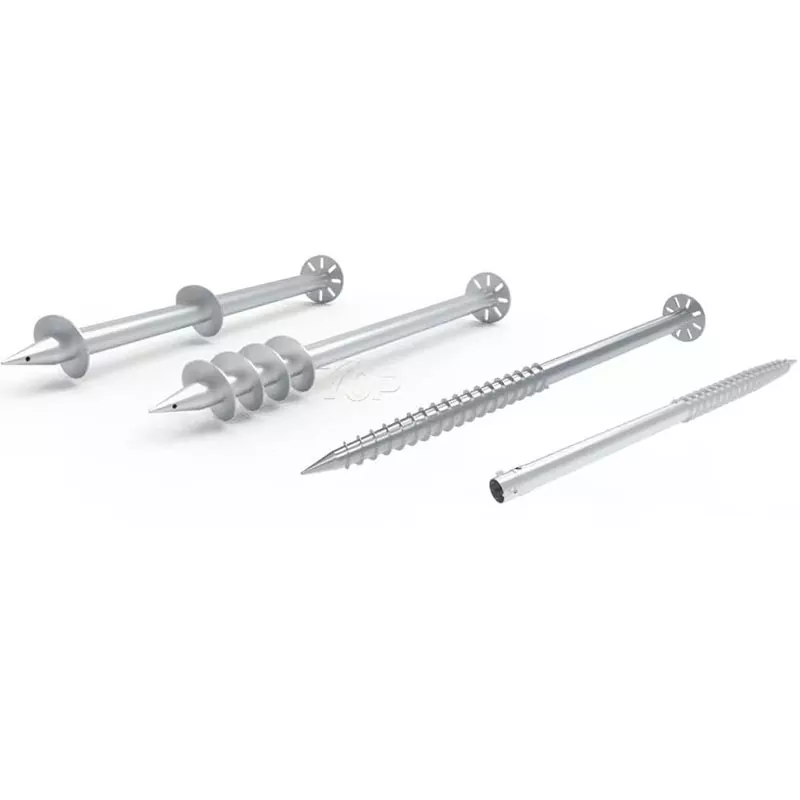
Option 2: Ground Screw Foundations
Ground screw systems have gained significant popularity in renewable energy applications during the past decade.
These systems use galvanized steel screw piles mechanically installed into the soil.
Key advantages include:
- Rapid installation
- Minimal excavation
- Reduced environmental disturbance
- Immediate structural loading capability
- Easier removal at end of life
For many public projects, installation speed alone can create substantial cost savings.
Ground screw systems are particularly attractive where project schedules are constrained or where minimizing disruption to existing facilities is a priority.
Nevertheless, suitability depends heavily on site-specific geotechnical conditions.
Comprehensive soil investigation remains essential.
Option 3: Micro-Pile Systems
Some urban locations present unusually difficult foundation challenges.
Examples include:
- Weak soils
- Restricted work areas
- High structural loads
- Underground infrastructure conflicts
In these situations, micro-pile foundations may provide an effective solution.
Although typically more expensive than conventional approaches, they can enable deployment in locations where other foundation methods are impractical.
The Importance of Geotechnical Investigation
No foundation type should be selected based solely on assumptions.
Even sites located within the same city can exhibit dramatically different soil conditions.
Variables affecting foundation performance include:
- Soil density
- Groundwater levels
- Bearing capacity
- Settlement potential
- Frost susceptibility
- Corrosive soil chemistry
A relatively small investment in geotechnical investigation can prevent costly redesigns and structural issues later in the project lifecycle.
Corrosion Protection for Long-Term Urban Installations
Public infrastructure owners typically expect service lives measured in decades rather than years.
Consequently, corrosion protection deserves the same level of attention as structural analysis.
Premature corrosion not only affects appearance but can also compromise structural performance and increase maintenance costs.
Material Selection Matters
Leading solar fence manufacturers commonly utilize a combination of corrosion-resistant materials.
| Material | Typical Application | Advantages |
|---|---|---|
| Aluminum 6005-T5/T6 | Rails and structural members | Lightweight and corrosion resistant |
| Hot-Dip Galvanized Steel | Posts and foundations | High structural strength |
| SUS304 Stainless Steel | Fasteners | Excellent durability |
| SUS316 Stainless Steel | Coastal environments | Superior salt corrosion resistance |
Selecting the correct material combination depends on environmental exposure, project budget, maintenance strategy, and expected service life.
Urban Corrosion Sources Are Often Overlooked
Many people associate corrosion exclusively with coastal environments.
However, urban locations can also create aggressive exposure conditions.
Potential corrosion contributors include:
- Air pollution
- Industrial emissions
- Road de-icing salts
- Humidity cycles
- Acidic atmospheric conditions
As infrastructure owners increasingly target 25- to 30-year asset lifespans, corrosion-resistant design becomes a major contributor to lifecycle ROI.
Electrical Safety Requirements for Public Solar Fencing Installations
While aesthetics and structural integrity are often the most visible aspects of a solar fence project, electrical safety ultimately determines whether a system can operate reliably in a public environment.
Unlike rooftop solar arrays that are generally inaccessible to the public, photovoltaic fencing is frequently installed in locations where pedestrians, students, visitors, maintenance personnel, and municipal workers may be present every day.
This creates a fundamentally different risk profile.
As a result, public infrastructure solar fencing should always be designed according to applicable electrical codes, local regulations, utility requirements, and project-specific safety standards.
Designing for Public Contact Protection
One of the primary objectives is preventing unintended public interaction with energized electrical components.
Best-practice design strategies include:
- Concealed cable routing within structural members
- Lockable electrical equipment enclosures
- Tamper-resistant fasteners
- Restricted access inverter locations
- Physical separation of maintenance areas
- Appropriate warning signage where required
Even minor design decisions can significantly influence long-term safety performance.
For example, exposed connectors located near pedestrian pathways may create avoidable risks and increase maintenance concerns.
Thoughtful component placement during the design phase is typically far less expensive than retrofitting safety improvements after installation.
Grounding and Bonding Considerations
Proper grounding remains one of the most important aspects of photovoltaic system safety.
A comprehensive grounding strategy helps:
- Reduce shock hazards
- Improve fault current management
- Support equipment protection
- Enhance long-term system reliability
Because solar fences often extend over considerable distances, grounding continuity should be carefully verified throughout the entire structure.
Connections exposed to outdoor conditions must also be designed to maintain performance despite thermal cycling, moisture exposure, and environmental aging.
Rapid Shutdown and Emergency Response Planning
Many jurisdictions increasingly require rapid shutdown capabilities for photovoltaic systems.
Although exact requirements vary by region, the underlying objective is consistent: reducing electrical hazards during emergency situations.
Emergency responders should be able to identify:
- System isolation points
- Emergency shutdown procedures
- Electrical equipment locations
- Access routes for intervention
For public infrastructure projects, incorporating emergency planning during the design stage demonstrates a higher level of engineering maturity and risk management.

Real Urban Solar Fence Applications and Lessons Learned
Understanding how to design aesthetic solar fencing for urban public infrastructure becomes easier when examining real-world deployment scenarios.
Although every project presents unique challenges, certain lessons consistently emerge across successful installations.
The following examples illustrate how engineering, architecture, and operational requirements can be balanced effectively.
Case Scenario 1: Solar Fencing for a Public Park
A municipal park requires perimeter security while pursuing sustainability objectives outlined in its environmental development strategy.
The project team faces several competing requirements:
- Maintain an open and welcoming atmosphere
- Preserve sightlines across recreational areas
- Generate renewable electricity
- Minimize maintenance requirements
- Protect public safety
In this scenario, bifacial glass-glass modules installed in a vertical configuration often provide an effective solution.
Compared with opaque traditional barriers, the visual appearance is lighter and more contemporary.
The use of durable glass-glass technology can also improve long-term reliability while maintaining a premium architectural appearance.
A key lesson from many park installations is that landscaping integration significantly influences public perception.
Projects that combine solar fencing with carefully planned vegetation generally achieve stronger visual acceptance than projects treating the fence as a standalone engineering structure.
Case Scenario 2: School Campus Solar Fence
Educational facilities often present a unique opportunity because solar infrastructure can serve both functional and educational purposes.
A typical school project may seek:
- Campus security
- Renewable energy generation
- STEM education support
- Long-term operating cost reduction
Semi-transparent photovoltaic modules are increasingly considered for these environments because they reduce the visual heaviness commonly associated with solid barriers.
Students and visitors can often maintain a stronger visual connection with surrounding spaces while the system continues generating electricity.
Some institutions also incorporate monitoring displays that allow students to observe real-time energy production data.
This transforms the fence from a passive security feature into an active educational resource.
Case Scenario 3: Transportation Infrastructure Solar Barrier
Transportation corridors represent one of the most promising future applications for solar fencing technology.
Highways, railways, and transit facilities often require extensive boundary systems and noise mitigation measures.
Integrating photovoltaic functionality into these structures can create additional value from infrastructure that would otherwise serve a single purpose.
The primary engineering challenge typically involves wind loading and long-term durability.
Transportation environments frequently expose structures to:
- Higher wind speeds
- Vibration effects
- Pollution exposure
- Extended maintenance intervals
Successful projects generally prioritize structural robustness and standardized component design to simplify long-term asset management.
Cost, Energy Yield, and ROI Analysis
For EPC contractors, project developers, and public infrastructure owners, aesthetics alone rarely justify investment decisions.
Financial performance remains a critical consideration.
The most successful solar fencing projects are those that simultaneously satisfy engineering, architectural, and economic objectives.
Understanding Solar Fence Project Costs
The total installed cost of a solar fence system depends on multiple variables:
- Module technology selection
- Structural design requirements
- Foundation type
- Site conditions
- Electrical system configuration
- Labor costs
- Local regulatory requirements
Unlike conventional fencing, photovoltaic systems introduce additional components that influence project economics.
Typical cost categories include:
| Cost Category | Primary Components |
|---|---|
| PV Modules | Bifacial, glass-glass, or customized modules |
| Structural System | Posts, rails, brackets, fasteners |
| Foundations | Concrete, screw piles, micro-piles |
| Electrical Equipment | Inverters, protection devices, monitoring |
| Installation Labor | Civil and electrical construction |
Because every project differs significantly, accurate financial evaluation should always be based on project-specific engineering and site analysis rather than generalized assumptions.
Energy Production Potential
One of the most common questions from infrastructure owners is whether vertical solar fencing can generate meaningful amounts of electricity.
The answer depends heavily on geographic location, system orientation, shading conditions, and module technology.
Although vertical systems generally produce less annual energy than optimally tilted solar arrays, they offer advantages that are often overlooked.
These may include:
- Dual-use land utilization
- Reduced snow accumulation in some climates
- Lower soiling rates
- Improved morning and afternoon generation profiles
- Enhanced bifacial performance opportunities
For many public infrastructure projects, the value proposition extends beyond energy generation alone.
The system simultaneously replaces a conventional fence that would otherwise represent a pure expense rather than an income-producing asset.
Evaluating Payback Periods
Payback periods vary considerably across regions due to differences in:
- Electricity prices
- Solar resource availability
- Incentive programs
- Project scale
- Installation costs
However, experienced developers increasingly evaluate solar fencing through a broader lifecycle perspective rather than focusing exclusively on simple payback calculations.
Important considerations include:
- Avoided electricity purchases
- Carbon reduction value
- ESG benefits
- Public sustainability objectives
- Infrastructure multifunctionality
- Long-term asset utilization
This approach often provides a more realistic assessment of overall project value.
Common Mistakes EPC Contractors Should Avoid
Despite growing interest in photovoltaic fencing, certain design and procurement mistakes continue to appear across the industry.
Avoiding these issues can significantly improve project outcomes.
Mistake 1: Prioritizing Appearance Over Engineering
A visually appealing concept rendering does not guarantee long-term performance.
Every aesthetic decision must remain compatible with structural, electrical, and maintenance requirements.
Projects that emphasize appearance while neglecting engineering fundamentals often experience increased lifecycle costs.
Mistake 2: Underestimating Wind Loads
Wind-related failures remain one of the most significant risks for vertical photovoltaic structures.
Insufficient structural analysis may result in:
- Post deformation
- Foundation movement
- Module damage
- Connection failures
Professional engineering verification should always precede procurement decisions.
Mistake 3: Ignoring Drainage and Water Management
Water ingress is a common contributor to long-term reliability issues.
Designers should carefully evaluate:
- Drainage paths
- Cable entry points
- Junction box placement
- Foundation water exposure
Preventing moisture accumulation is generally easier and less expensive than repairing water-related failures later.
Mistake 4: Choosing Non-Standard Components
Highly customized systems may appear attractive during procurement but can create operational challenges over time.
Replacement parts, maintenance procedures, and inventory management become more complex when non-standard components are used extensively.
Whenever possible, projects should balance customization with maintainability.
Mistake 5: Focusing Only on Initial Cost
The lowest bid does not always deliver the lowest lifecycle cost.
Materials, corrosion protection, engineering quality, and installation efficiency can significantly influence long-term financial performance.
Experienced asset owners increasingly evaluate total ownership cost rather than procurement price alone.
How to Select a Solar Fence Manufacturer for Public Infrastructure Projects
Choosing the right manufacturing partner can substantially influence project success.
For EPC contractors, supplier selection should extend beyond product pricing.
Engineering Support Capability
A qualified solar fence manufacturer should be able to provide:
- Structural calculations
- Wind load assessments
- Foundation recommendations
- Project-specific engineering support
- Installation guidance
These services often reduce design risk and improve project execution efficiency.
Material and Quality Standards
Public infrastructure projects typically require high-quality materials capable of supporting long service lives.
Common evaluation criteria include:
- SUS304 stainless steel fasteners
- High-strength aluminum profiles
- Corrosion-resistant coatings
- Quality control procedures
- Traceable manufacturing systems
Certification and Compliance
Depending on project requirements, relevant certifications may include:
- TÜV certification
- CE compliance
- ISO 9001 quality management
- Material test reports
- Third-party inspection documentation
Verification of certification status should always be performed directly rather than assumed.
Manufacturing Capacity and Supply Reliability
Large public infrastructure projects frequently require dependable supply chains.
Manufacturing capability should be evaluated based on:
- Production capacity
- Lead times
- Inventory management
- Export experience
- Project delivery history
Supply disruptions can create significant scheduling and cost impacts for EPC contractors.
Why More EPC Contractors Are Choosing Integrated Solar Fence Systems
The market is gradually shifting away from fragmented procurement approaches where modules, structures, and mounting components are sourced separately.
Many EPC firms now prefer integrated solar fence solutions engineered as complete systems.
This trend is driven by several practical considerations.
- Faster installation
- Reduced engineering conflicts
- Simplified procurement
- Improved quality control
- Lower warranty risk
- More predictable project outcomes
For large-scale public infrastructure deployments, these advantages can translate into meaningful reductions in project risk and labor requirements.
Manufacturers capable of providing engineering support, structural optimization, and installation guidance are increasingly viewed as strategic project partners rather than simple component suppliers.
Future Trends in Urban Solar Fencing
The solar fencing sector continues to evolve rapidly as cities pursue smarter and more sustainable infrastructure strategies.
Expansion of BIPV Concepts
Building-integrated photovoltaics are moving beyond rooftops and façades.
Future urban developments are likely to incorporate photovoltaic functionality into a wider range of infrastructure elements, including fencing, barriers, shelters, and public amenities.
Growth of Vertical Bifacial Solar Systems
Advancements in bifacial module technology continue improving the performance potential of vertical installations.
As module efficiency increases, solar fencing becomes more attractive from both engineering and economic perspectives.
Smart Infrastructure Integration
Future solar fence systems may increasingly integrate:
- IoT monitoring
- Smart lighting
- Security systems
- Environmental sensors
- Energy management platforms
This evolution aligns closely with broader smart-city development objectives.
Net-Zero Public Facilities
As governments continue pursuing net-zero targets, every available surface capable of generating renewable energy will receive greater attention.
Perimeter infrastructure represents a substantial yet often underutilized opportunity.
Solar fencing is well-positioned to play a growing role in this transition.
Conclusion: A Successful Solar Fence Is More Than a Fence
Understanding how to design aesthetic solar fencing for urban public infrastructure requires balancing far more than energy production alone.
The most successful projects combine architectural integration, structural reliability, electrical safety, operational practicality, and long-term economic value into a single coordinated solution.
For EPC contractors, developers, and public infrastructure owners, the objective should not simply be installing photovoltaic modules along a boundary line.
The real goal is creating infrastructure that contributes simultaneously to security, sustainability, public acceptance, and lifecycle performance.
As cities continue investing in smart infrastructure and carbon reduction initiatives, solar fencing will increasingly evolve from a niche application into a mainstream design strategy.
Organizations that approach these projects from an engineering-first perspective—prioritizing structural integrity, material quality, maintainability, and thoughtful architectural integration—will be best positioned to deliver long-term value.
Ultimately, a well-designed solar fence is not merely a fence that generates electricity. It is a multifunctional infrastructure asset capable of supporting urban sustainability goals while enhancing the built environment for decades to come.
The concept aligns particularly well with modern smart-city initiatives where infrastructure is expected to deliver multiple functions simultaneously. A solar fence can provide security, visual screening, renewable electricity production, and architectural enhancement within a single system.
Frequently Asked Questions (FAQ)
Q1. Are solar fencing systems structurally strong enough for high-wind urban environments?
Yes. Engineering-grade solar fencing systems can be designed to withstand high wind loads when supported by proper structural calculations, foundation engineering, and site-specific wind analysis. For urban public infrastructure projects, factors such as local design wind speed, terrain exposure, building-induced wind tunnel effects, post spacing, and foundation capacity must all be evaluated. Most EPC contractors should require wind load verification and structural calculations before procurement to ensure long-term reliability and regulatory compliance.
Q2. What is the most suitable foundation type for public infrastructure solar fencing?
There is no universal foundation solution. The optimal choice depends on soil conditions, project schedule, structural loading requirements, and site constraints. Concrete footings are commonly selected for maximum stability in high-load applications. Ground screw foundations are increasingly preferred for faster installation and minimal site disturbance. Micro-pile systems may be required in areas with poor soil conditions or limited excavation access. A geotechnical investigation is recommended before final foundation selection.
Q3. How does a vertical bifacial solar fence compare with conventional rooftop solar systems in energy production?
A vertical bifacial solar fence typically produces less annual energy per installed kilowatt than an optimally tilted rooftop system. However, it offers unique advantages, including dual-use land utilization, reduced soiling accumulation, easier maintenance access, and the ability to generate electricity from existing perimeter infrastructure. For many public infrastructure projects, the value comes from combining security and renewable energy generation within a single asset rather than maximizing energy yield alone.
Q4. What certifications should EPC contractors verify before selecting a solar fence supplier?
Certification requirements vary by market and project specification, but commonly requested documentation includes TÜV certification, CE compliance, ISO 9001 quality management certification, material test reports, corrosion resistance test results, and third-party structural verification. EPC contractors should also verify the traceability of aluminum profiles, stainless steel fasteners, and photovoltaic modules to ensure long-term project reliability.
Q5. How can solar fencing improve ROI for municipal and public infrastructure projects?
Solar fencing can improve return on investment by transforming a mandatory infrastructure expense into a revenue-generating asset. In addition to electricity production, project owners may benefit from reduced grid energy consumption, carbon reduction targets, ESG reporting improvements, sustainability branding, and better utilization of existing site boundaries. Evaluating ROI should include both direct energy savings and broader infrastructure value over the asset's lifecycle.
Q6. What maintenance considerations should be included during the design phase?
Maintenance accessibility should be incorporated from the earliest design stages. Key considerations include dedicated maintenance corridors, concealed but accessible cable routing, modular panel replacement capability, standardized fasteners, lockable electrical equipment, and clearly defined isolation points. Systems designed for efficient maintenance typically experience lower operational costs and reduced downtime throughout their service life.
Q7. What materials are recommended for long-term corrosion resistance in urban and coastal environments?
For most public infrastructure projects, high-strength aluminum alloys such as 6005-T5 or 6005-T6 are commonly used for structural members due to their corrosion resistance and lightweight properties. SUS304 stainless steel fasteners are suitable for many urban environments, while SUS316 stainless steel is generally recommended for coastal or high-salinity locations. Material selection should be based on environmental exposure conditions and the expected service life of the installation.
Q8. What should EPC contractors look for when choosing a solar fence manufacturer?
Beyond product pricing, EPC contractors should evaluate a manufacturer's engineering support capabilities, structural design expertise, certification portfolio, production capacity, quality control procedures, project references, and supply chain reliability. Suppliers that provide complete system solutions—including structural calculations, installation guidance, and project-specific technical support—can significantly reduce engineering risk and improve project delivery efficiency.
Design Engineering-Grade Solar Fencing for Public Infrastructure Projects
Planning a solar fencing system for parks, schools, transportation corridors, government facilities, or commercial developments? Successful projects require more than photovoltaic modules—they demand reliable wind-load engineering, corrosion-resistant materials, optimized foundations, concealed cable management, and long-term maintenance accessibility. TOPFENCE provides complete vertical bifacial solar fencing solutions engineered for public infrastructure applications, including structural calculations, foundation recommendations, project-specific layouts, and EPC technical support. Improve installation efficiency, reduce lifecycle costs, and deliver visually integrated solar fencing systems that meet both sustainability goals and engineering requirements.
Request Solar Fence Design, Structural Calculations & EPC PricingRelated News
- The Global EPC Sourcing Checklist: Managing Lead Times and Logistics for Solar Mounting Systems
- BIPV & Commercial Rooftops: Solving Waterproofing and Structural Integrity Challenges in Urban Solar
- Navigating Solar Certifications: Why UL 2703 and International Standards Matter for Project Bankability
- Maximizing Yield with Bifacial Modules: How to Select the Optimal Tracker for Enhanced Energy Output
- Wind Load and Coastal Engineering: Ensuring Your Ground-Mounted Solar Array Survives Extreme Weather
- Aluminum vs. Galvanized Steel: Choosing the Right Solar Mounting Structure for High-Corrosivity Environments
Leave me a message