Overcoming Challenging Terrains: Why Ground Screws Are Outperforming Concrete Foundations in Utility-Scale Solar Projects
The Growing Challenge of Solar Foundation Design in Utility-Scale Projects
As utility-scale solar development continues expanding across the world, project developers are increasingly being forced to build on land that would have been considered unsuitable only a decade ago. Flat, easily accessible sites with ideal soil conditions are becoming harder to secure, while competition for land, environmental restrictions, and grid-access considerations push solar projects toward more challenging environments.
Rocky terrain, sloped landscapes, agricultural fields, brownfield sites, high groundwater areas, and remote desert locations are now common project environments. While photovoltaic technology continues to improve, one critical challenge remains largely unchanged: foundation design.
For EPC contractors, developers, and installation companies, selecting the right ground screw solar foundation system can significantly influence project schedules, construction costs, installation risks, and long-term structural reliability. Traditionally, concrete foundations dominated utility-scale solar construction. Today, however, ground screw systems are rapidly gaining market share as developers seek faster, more adaptable, and more cost-effective alternatives.
The shift is not simply about reducing construction costs. It is about minimizing project risk, accelerating commissioning schedules, improving return on investment, and overcoming terrain conditions that often make conventional concrete foundations difficult, expensive, or impractical.
This article explores why ground screw foundations are increasingly outperforming traditional concrete solutions in utility-scale solar projects and why many EPC firms now view them as a strategic engineering decision rather than merely an alternative foundation option.

The New Reality of Utility-Scale Solar Development
The global solar industry has entered a new phase of growth. Early utility-scale projects were often built on ideal parcels of land located near transmission infrastructure, featuring relatively flat topography and predictable soil conditions.
That situation has changed considerably.
According to multiple industry reports, utility-scale solar deployment is accelerating faster than available premium land resources. Developers increasingly encounter projects located in areas with:
- Rocky subsurface conditions
- Undulating or sloped terrain
- Expansive clay soils
- Flood-prone regions
- Agricultural land preservation requirements
- Environmentally sensitive locations
- Remote sites with limited infrastructure access
These conditions create challenges not only for mounting systems but also for foundation construction. In many cases, foundation installation becomes one of the most time-consuming phases of an entire solar project.
For EPC contractors working under increasingly aggressive schedules, every day lost during foundation construction can affect project economics. Delayed commissioning often means delayed power generation, postponed revenue, and potential contractual penalties.
This is one reason why foundation selection has become a strategic consideration rather than simply a structural engineering exercise.
Why Foundation Selection Has Become a Strategic EPC Decision
When evaluating utility-scale photovoltaic projects, many stakeholders naturally focus on solar modules, inverters, trackers, and grid connection infrastructure. However, experienced EPC professionals understand that foundation systems can have a surprisingly large impact on overall project performance.
A foundation affects virtually every stage of construction:
- Site preparation requirements
- Equipment mobilization
- Labor demand
- Construction sequencing
- Schedule certainty
- Environmental compliance
- Long-term maintenance requirements
More importantly, foundation choices directly influence project risk.
Concrete foundations generally require excavation, formwork, reinforcement placement, concrete delivery, pouring operations, curing periods, and quality inspections. Each step introduces potential delays and dependencies.
By contrast, modern screw pile foundation systems eliminate many of these variables. Once installed and verified, they can immediately support solar mounting structures without waiting for curing or additional site preparation.
For utility-scale projects measured in tens or hundreds of megawatts, these differences become increasingly significant.
The Hidden Costs of Concrete Foundations in Modern Solar Farms
Concrete remains a widely used foundation solution across the construction industry. It offers familiarity, well-established design methodologies, and strong compressive performance.
However, utility-scale solar projects operate under a unique set of economic and logistical constraints. What works effectively for commercial buildings may not always represent the most efficient approach for solar farms spread across hundreds or even thousands of acres.
Many project teams focus primarily on the material cost of concrete while overlooking numerous indirect costs associated with installation.
Excavation Challenges
Concrete foundations almost always require excavation.
While excavation may appear straightforward on paper, actual site conditions often tell a different story.
Rock fragments, buried obstructions, inconsistent soil layers, and groundwater intrusion can all slow excavation activities. In rocky terrain, excavation costs can escalate rapidly due to specialized equipment requirements and reduced productivity.
Even moderate rock content may significantly increase installation time.
In utility-scale projects containing thousands of foundations, small delays multiplied across the site can create substantial schedule impacts.
Additional challenges include:
- Rock breaking operations
- Material disposal requirements
- Trench stabilization
- Safety management during excavation
- Equipment wear and maintenance costs
These hidden factors often receive less attention during preliminary budgeting but frequently emerge during construction.
Concrete Supply Chain Risks
Concrete foundations rely heavily on logistics.
Every cubic meter of concrete must be produced, transported, delivered, and poured within strict time limitations.
For projects located near urban centers, this may not present a major issue. Utility-scale solar farms, however, are often situated far from ready-mix production facilities.
Remote locations introduce additional complications:
- Long transportation distances
- Traffic restrictions
- Road weight limitations
- Fuel cost fluctuations
- Concrete delivery scheduling conflicts
If a concrete truck is delayed or weather conditions deteriorate unexpectedly, the entire installation sequence may require adjustment.
Large-scale projects may involve hundreds of truck movements, creating significant logistical complexity.
Ground screw systems largely eliminate these issues because components are transported as finished steel products rather than perishable construction materials.
Weather-Related Delays
Weather remains one of the most common causes of construction schedule disruptions.
Concrete foundations are particularly sensitive to environmental conditions.
Heavy rainfall may flood excavations. Excess moisture can compromise concrete placement. Low temperatures may require additional curing precautions. Extremely high temperatures can affect concrete hydration behavior and finishing quality.
In certain regions, weather-related delays can extend project schedules by weeks.
Ground screw installation offers a distinct advantage in this regard. Because no curing process is required, installation activities are generally less dependent on weather windows.
Although severe weather can still affect construction operations, the overall sensitivity is typically much lower than concrete-based foundation systems.
The Carbon Footprint of Cement Production
Sustainability has become a major consideration for renewable energy projects.
Ironically, one of the largest environmental impacts associated with solar farm construction often comes from the foundation itself.
Cement manufacturing is widely recognized as one of the most carbon-intensive industrial processes globally. Industry organizations including the International Energy Agency (IEA) and other international research institutions have reported that cement production accounts for approximately 7% to 8% of global carbon dioxide emissions.
For developers pursuing ESG objectives, embodied carbon is receiving increased scrutiny throughout project procurement processes.
Concrete foundations contribute to:
- High embodied carbon
- Water consumption during production
- Transportation emissions
- Permanent site alteration
By comparison, galvanized steel ground screw systems generally require significantly less material volume and can often be removed and recycled at the end of a project's service life.
Ground Screw Foundations Explained: Engineering Principles Behind Their Growing Adoption
To understand why ground screws are gaining popularity, it is important to examine how these systems function from an engineering perspective.
A modern ground screw solar foundation is not simply a large screw inserted into the soil. It is a carefully engineered structural component designed to transfer multiple load types safely into supporting soil layers.
When properly designed and installed, ground screw systems can provide predictable load-bearing performance while dramatically simplifying construction activities.
Anatomy of a Solar Ground Screw
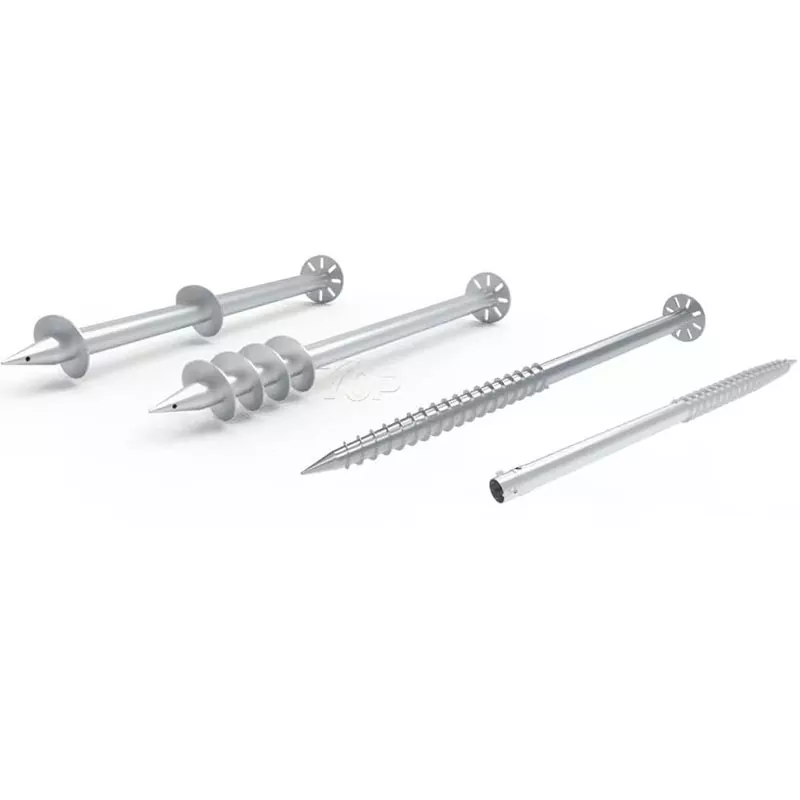
Although configurations vary between manufacturers and project requirements, most utility-scale solar ground screws include several common components:
- High-strength steel shaft
- Helical bearing plates
- Connection flange or bracket
- Protective galvanization coating
- Structural interface for mounting systems
The helical plates play a critical role. Rather than relying solely on friction, they create bearing surfaces within the soil that help resist compression, uplift, and lateral forces.
This design allows ground screws to achieve impressive load capacities while minimizing excavation requirements.
How Ground Screws Transfer Structural Loads
Every solar foundation must safely transfer loads generated by the photovoltaic structure into the ground.
These loads typically include:
- Dead loads from modules and mounting systems
- Wind uplift forces
- Snow loads
- Lateral loads caused by wind pressure
- Tracker-induced dynamic forces
The load path generally follows this sequence:
Solar Module → Mounting Rail → Support Post → Ground Screw → Soil Bearing Layer
Unlike shallow concrete foundations that may depend heavily on excavation geometry, ground screws develop resistance through both shaft friction and bearing action created by their helical plates.
This combination provides strong performance across a wide range of soil conditions.
The Relationship Between Installation Torque and Bearing Capacity
One reason many engineers appreciate ground screw technology is the ability to verify installation quality during construction.
During installation, specialized equipment records driving torque.
Torque values often correlate with soil resistance and foundation capacity. While site-specific engineering verification is always required, torque monitoring provides immediate field feedback that can help validate installation quality.
This is fundamentally different from concrete foundations, where many performance characteristics remain hidden after placement.
For large utility-scale projects, torque verification offers several advantages:
- Real-time quality control
- Installation consistency monitoring
- Reduced uncertainty
- Documented construction records
- Improved engineering confidence
In addition to torque measurements, pull-out testing is commonly used to confirm foundation performance under expected loading conditions.
These testing methods have contributed significantly to growing acceptance of ground screw foundations among EPC contractors, structural engineers, and project owners.

Ground Screws vs Concrete Foundations: Which Performs Better for Utility-Scale Solar?
For decades, concrete foundations were considered the default solution for supporting solar mounting structures. Many engineers were trained using concrete-based design principles, and most construction teams are familiar with concrete installation procedures.
However, familiarity does not necessarily equal efficiency.
As utility-scale solar projects become larger, more geographically diverse, and increasingly cost-sensitive, developers are reevaluating every component of the construction process. Foundation systems are now being examined not only from a structural perspective but also through the lens of project economics, risk management, labor availability, and deployment speed.
The comparison between concrete and ground screw systems is no longer simply a technical debate. It has become a strategic decision that can influence project profitability.
Installation Speed Comparison
Time is one of the most valuable resources in utility-scale solar development.
Every day a project remains under construction is a day it is not generating electricity or producing revenue. For developers working with power purchase agreements (PPAs), interconnection deadlines, or financing milestones, construction delays can have direct financial consequences.
Concrete foundations involve a sequence of activities:
- Surveying and layout
- Excavation
- Rebar placement
- Formwork installation
- Concrete pouring
- Curing period
- Inspection and approval
- Mounting system installation
Each step depends on successful completion of the previous step.
Ground screw foundations simplify the workflow considerably:
- Surveying and layout
- Ground screw installation
- Verification testing
- Immediate mounting installation
Because no excavation or curing is required under normal conditions, construction crews can proceed directly to structural installation once foundation installation is complete.
On large projects containing several thousand foundation points, eliminating curing periods alone can reduce construction schedules significantly. In practical field conditions, schedule improvements of several weeks are not uncommon, particularly in regions with challenging weather conditions.
Labor Requirements and Workforce Challenges
Labor shortages continue to affect construction industries throughout North America, Europe, Australia, and many emerging solar markets.
Utility-scale solar projects often compete with infrastructure, commercial construction, and industrial developments for skilled workers.
Concrete foundation construction typically requires multiple specialized crews:
- Excavation operators
- Survey teams
- Rebar installers
- Formwork crews
- Concrete placement personnel
- Quality inspectors
Coordinating these resources becomes increasingly difficult as project size grows.
Ground screw installation generally requires fewer personnel and fewer construction stages. Modern hydraulic installation equipment allows relatively small crews to install large numbers of foundations efficiently while maintaining quality control standards.
For EPC contractors facing labor constraints, this reduction in workforce complexity can be just as valuable as material cost savings.
Equipment and Logistics Considerations
Transportation logistics often represent one of the least visible but most expensive aspects of solar construction.
Concrete projects require:
- Excavators
- Concrete delivery trucks
- Water supply arrangements
- Rebar transportation
- Formwork materials
- Concrete pumping equipment
In remote locations, transporting these resources can create substantial costs.
Ground screw systems offer a different logistical profile.
Since foundations arrive as prefabricated steel components, transportation and storage are generally more straightforward. Ground screws can often be delivered in large quantities with minimal site preparation and stored efficiently until installation.
This advantage becomes particularly important for projects located in deserts, mountainous regions, agricultural zones, or other areas with limited infrastructure access.
Weather Sensitivity and Construction Risk
Weather-related delays remain one of the most common causes of schedule overruns in solar construction.
Rain can flood excavations. Snow and freezing temperatures can complicate concrete placement. High temperatures may require additional curing controls.
Ground screw installations are not immune to weather challenges, but they typically experience fewer weather-related restrictions than concrete foundations.
This flexibility provides EPC contractors with greater schedule certainty, especially when working within narrow construction windows.
For utility-scale developments, schedule predictability can be almost as important as schedule speed.
Ground Screws vs Driven Piles: A Comparison EPC Contractors Often Overlook
While discussions frequently focus on concrete versus ground screws, another comparison deserves attention: ground screws versus driven piles.
Driven steel piles are widely used in utility-scale solar projects and remain an effective solution under many conditions. However, they are not universally suitable.
Site-specific conditions often determine which technology offers the best overall performance.
Installation Flexibility
Driven piles generally perform best in relatively uniform soil conditions where consistent penetration depths can be achieved.
Ground screws offer greater adaptability because their helical design allows them to engage soil layers differently than straight piles.
This can provide advantages when encountering variable subsurface conditions, mixed soils, or moderate obstructions.
In projects with complex geotechnical profiles, installation flexibility can reduce rework and improve construction efficiency.
Noise and Vibration Considerations
Pile driving operations generate noise and vibration.
In remote utility-scale projects this may not be a major concern. However, projects located near residential areas, industrial facilities, agricultural operations, or environmentally sensitive regions may face additional restrictions.
Ground screw installation generally produces significantly lower vibration levels, making it suitable for projects where environmental impact or community concerns require careful management.
Performance in Rocky Terrain
One of the most challenging situations for any solar foundation system is rocky subsurface conditions.
Large boulders, fractured bedrock, and highly variable geological formations can create difficulties for driven piles.
Ground screw systems often provide more installation options because engineers can combine:
- Pre-drilling techniques
- Modified screw geometries
- Alternative embedment depths
- Site-specific installation strategies
Although no foundation system is ideal for every geological condition, ground screws frequently offer greater adaptability when projects encounter unexpected subsurface obstacles.
End-of-Life Site Restoration
As sustainability standards continue evolving, developers increasingly consider what happens after a solar project's operational life ends.
Ground screws provide a notable advantage because they can often be removed with relatively limited site disturbance.
This can simplify land restoration, agricultural reuse, and decommissioning activities.
For agrivoltaic projects and environmentally sensitive developments, future land recovery is becoming an increasingly important design consideration.
Why Ground Screws Excel in Challenging Terrain Conditions
The greatest strength of ground screw technology may not be its speed or labor efficiency. Its greatest advantage is adaptability.
As solar developers expand into more difficult project environments, foundation systems must accommodate terrain conditions that traditional construction methods often struggle to address economically.
Rocky Soil Conditions
Rocky terrain is one of the most common challenges encountered during utility-scale solar development.
Many regions with excellent solar irradiation also contain significant rock content beneath the surface.
Examples include:
- The Southwestern United States
- Parts of Australia
- Southern Europe
- The Middle East
- Numerous mountainous regions worldwide
Concrete foundations in rocky environments frequently require:
- Rock excavation
- Blasting operations
- Additional equipment mobilization
- Extended construction schedules
Ground screw systems can often reduce these challenges through targeted installation approaches.
Where obstructions are encountered, engineers may use pre-drilling techniques to facilitate installation while maintaining foundation performance requirements.
This flexibility can significantly improve constructability on difficult sites.
Sloped Terrain and Uneven Landscapes
Large areas of undeveloped land suitable for solar projects contain natural slopes.
Traditional construction approaches frequently require grading operations to create uniform installation surfaces.
Extensive grading increases:
- Earthwork costs
- Soil disturbance
- Erosion risks
- Environmental impacts
Ground screws can accommodate varying elevations more easily because foundation lengths and mounting configurations can be adjusted to follow site contours.
This approach often allows developers to preserve existing terrain while reducing earthmoving requirements.
Less grading generally means lower costs and reduced environmental impact.
High Groundwater and Wet Soil Conditions
Sites with elevated groundwater levels present unique construction challenges.
Excavations may require dewatering operations, and maintaining dry conditions for concrete placement can become difficult.
Ground screws minimize many of these concerns because installation typically requires little or no excavation.
The reduced disturbance of soil layers can also help preserve existing drainage characteristics across the site.
For projects located in coastal regions, flood-prone areas, or locations with seasonal groundwater fluctuations, this can provide meaningful construction advantages.
Cold Climate and Frost-Heave Regions
Solar development continues expanding into northern climates where frost action must be considered carefully.
When water within soil freezes and expands, foundations can experience upward forces known as frost heave.
Properly designed ground screw systems can be installed below frost penetration depths, helping resist frost-related movement.
This characteristic has contributed to their growing use in regions such as:
- Canada
- Northern United States
- Scandinavia
- Northern Europe
As with any foundation system, site-specific geotechnical analysis remains essential, but ground screws offer a proven solution in many cold-climate applications.
Environmentally Sensitive Sites
Many modern solar developments are designed with dual land-use objectives.
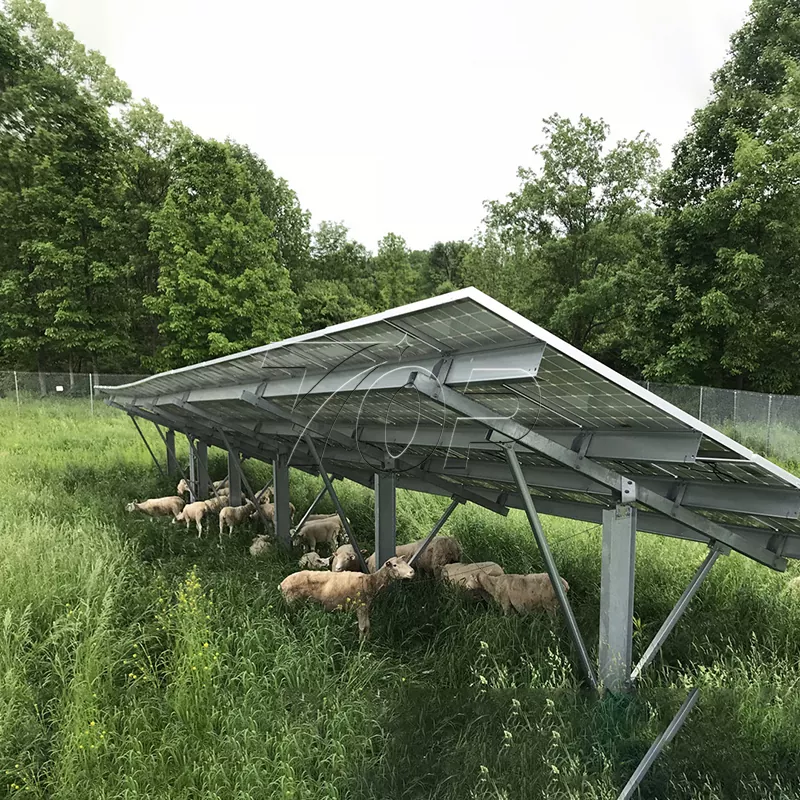
Agrivoltaics, grazing solar projects, and environmentally sensitive developments often require minimal disturbance to existing ecosystems.
Ground screw foundations support these objectives by reducing:
- Excavation volumes
- Soil displacement
- Vegetation removal
- Permanent site alteration
This lower-impact construction approach can help developers meet permitting requirements while maintaining positive relationships with local stakeholders.

Real Utility-Scale Solar Projects Using Ground Screw Foundations
The growing adoption of ground screw technology is not merely theoretical. Around the world, utility-scale solar projects increasingly utilize helical foundation systems where challenging terrain, aggressive schedules, or environmental considerations favor alternatives to concrete.
Utility-Scale Projects in Rocky Regions
Several large solar developments across Europe and North America have adopted screw pile and helical foundation technologies to address rocky subsurface conditions.
In these projects, minimizing excavation reduced construction complexity while helping maintain project schedules.
Developers reported that foundation installation could continue in areas where traditional excavation-based approaches would have required substantially greater site preparation.
Agrivoltaic Solar Installations
Agrivoltaics is becoming one of the fastest-growing segments of the solar industry.
These projects combine solar energy production with agricultural activity on the same land.
Because preserving soil quality is essential, developers often seek foundation systems that minimize long-term ground disturbance.
Ground screw foundations align well with these goals by allowing installation with relatively limited excavation while supporting future land restoration if required.
Remote Solar Developments
Remote utility-scale projects frequently face logistical constraints associated with material transportation and construction resources.
In desert environments and isolated project locations, transporting concrete can become expensive and operationally challenging.
Ground screw systems reduce dependency on continuous concrete deliveries, helping simplify logistics and improve project efficiency.
For developers managing projects in geographically demanding regions, this logistical advantage can translate directly into lower construction risk and improved schedule control.
Geotechnical Considerations Before Selecting Ground Screw Foundations
One of the most common misconceptions in the solar industry is that ground screws can simply be installed anywhere without engineering evaluation.
In reality, successful utility-scale projects rely on proper geotechnical investigation regardless of the foundation technology selected.
Ground screw systems provide flexibility and installation efficiency, but their performance ultimately depends on understanding the interaction between the foundation and the supporting soil.
Experienced EPC contractors know that the most successful projects begin with accurate site characterization rather than assumptions.
Soil Investigation Requirements
Before foundation selection, engineers typically perform geotechnical assessments to determine subsurface conditions.
Depending on project size and local regulations, investigations may include:
- Soil borings
- Cone Penetration Testing (CPT)
- Standard Penetration Testing (SPT)
- Laboratory soil classification
- Groundwater evaluation
- Corrosion potential assessment
These investigations help identify:
- Soil bearing capacity
- Layer consistency
- Rock depth
- Groundwater conditions
- Potential settlement risks
- Frost susceptibility
For utility-scale solar farms containing tens of thousands of foundation points, even small variations in soil properties can influence foundation design decisions.
The goal is not simply to determine whether ground screws can be used. The goal is to optimize foundation geometry, embedment depth, and installation procedures for the specific site.
Pull-Out Testing and Load Verification
Wind uplift is one of the primary design considerations for solar mounting structures.
Unlike conventional buildings, photovoltaic arrays present large surface areas that can generate significant uplift forces during high-wind events.
For this reason, pull-out testing plays a critical role in validating foundation performance.
Field testing provides actual site-specific performance data rather than relying solely on theoretical calculations.
Typical testing programs may evaluate:
- Axial compression capacity
- Uplift resistance
- Lateral load resistance
- Installation consistency
- Safety factor verification
These tests provide valuable confidence for developers, investors, lenders, and independent engineers reviewing project designs.
Corrosion Assessment and Service Life Expectations
Foundation durability is particularly important because utility-scale solar projects are expected to operate for 25 to 35 years or longer.
In some cases, repowering strategies may extend project life beyond the original design horizon.
Engineers therefore evaluate:
- Soil pH
- Moisture content
- Electrical resistivity
- Chloride concentrations
- Sulfate levels
These parameters influence corrosion rates and protective coating requirements.
Most utility-scale ground screw foundations utilize hot-dip galvanized steel to provide long-term protection against environmental exposure.
Proper coating thickness, manufacturing quality, and site-specific corrosion analysis are all essential components of a durable foundation system.
Seismic Considerations
In earthquake-prone regions such as Japan, California, Chile, Turkey, and parts of Southeast Asia, seismic design becomes an important factor in foundation selection.
Ground screw systems can perform effectively in seismic environments when properly engineered and integrated into the overall structural design.
Their ability to transfer loads through both shaft friction and bearing mechanisms can provide advantages under dynamic loading conditions.
As always, local building codes and project-specific engineering requirements govern final design decisions.
How Ground Screws Improve Solar Project ROI
For project developers, foundation selection is not simply a construction decision.
It is ultimately an investment decision.
The most technically sophisticated foundation is not necessarily the best choice if it increases project costs without creating corresponding value.
This is why financial metrics such as ROI, IRR, NPV, and LCOE increasingly influence foundation selection strategies.
Faster Commissioning Means Earlier Revenue Generation
Solar projects only begin generating revenue once they are connected to the grid and producing electricity.
Every day saved during construction has potential economic value.
Consider a utility-scale project in the range of 100 MW.
Even modest improvements in construction schedules can allow earlier energy production and earlier revenue realization.
While actual project economics vary depending on electricity prices, irradiation levels, and financing structures, reducing construction timelines by several weeks may create meaningful financial benefits throughout the project lifecycle.
For developers operating multiple projects simultaneously, schedule efficiency can have compounding advantages.
Reduced Construction Risk
Construction risk is often underestimated during project planning.
Budget overruns rarely result from a single major problem.
More commonly, they arise from numerous smaller issues:
- Weather delays
- Labor shortages
- Material delivery disruptions
- Equipment downtime
- Rework requirements
- Unexpected site conditions
Ground screw systems help reduce exposure to several of these risks by simplifying construction processes and reducing dependency on concrete supply chains.
Lower risk generally translates into greater budget predictability.
Lower Lifecycle Maintenance Requirements
Long-term maintenance costs also contribute to project economics.
Foundation movement, cracking, settlement, or drainage-related issues can create operational challenges throughout a solar farm's service life.
Properly engineered ground screw foundations provide predictable structural performance while minimizing many of the issues associated with excavation-intensive construction methods.
Although all infrastructure requires periodic inspection, reduced maintenance demands contribute positively to long-term asset performance.
Impact on LCOE and Project Competitiveness
The Levelized Cost of Energy (LCOE) remains one of the most important performance metrics in utility-scale solar development.
LCOE represents the average cost of generating electricity over the lifetime of a project.
Reducing construction costs, accelerating commissioning, and minimizing operational risks all contribute to improved project economics.
While foundation systems represent only one component of total project cost, their influence extends beyond material expenses into schedule performance, risk management, and operational reliability.
For this reason, foundation optimization has become an increasingly important area of focus among leading solar developers.
Sustainability Benefits Beyond Carbon Reduction
Because solar energy is inherently associated with sustainability, stakeholders increasingly examine the environmental impacts of the construction process itself.
Developers, investors, and regulatory agencies now evaluate projects using broader ESG criteria rather than focusing exclusively on electricity generation.
Lower Embodied Carbon
Concrete production remains one of the most carbon-intensive industrial activities worldwide.
Reducing reliance on concrete can contribute to lower embodied carbon within solar infrastructure projects.
Although exact reductions depend on project size and foundation design, ground screw systems often require substantially less material volume than concrete-based alternatives.
This contributes to a smaller overall environmental footprint.
Reduced Water Consumption
Water availability is becoming an increasingly important issue in many regions.
Large-scale concrete production requires significant water resources for mixing, curing, and cleaning operations.
Ground screw installation largely eliminates these requirements.
For projects located in arid regions, drought-prone areas, or locations with water-use restrictions, this benefit can be particularly valuable.
Minimized Soil Disturbance
Soil preservation has become an important objective for many solar developments.
This is especially true for:
- Agrivoltaic systems
- Grazing solar projects
- Brownfield redevelopment
- Environmentally sensitive sites
Because ground screw systems require limited excavation, they help preserve natural soil structure and reduce construction impacts.
Simplified End-of-Life Restoration
Decommissioning considerations are receiving increased attention throughout the solar industry.
Landowners and regulators often seek assurance that sites can be restored efficiently after project completion.
Ground screws can frequently be removed with minimal disturbance, allowing land to return to agricultural, commercial, or natural use more easily than some permanent foundation alternatives.
What EPC Contractors Should Look for in a Ground Screw Supplier
Not all foundation suppliers offer the same level of engineering support, manufacturing quality, or project experience.
Selecting the right supplier is often just as important as selecting the right foundation technology.
Engineering Support Capabilities
Utility-scale projects rarely fit standardized templates.
Every site presents unique combinations of:
- Wind loads
- Snow loads
- Soil conditions
- Topography
- Seismic requirements
- Mounting configurations
Suppliers should be capable of supporting:
- Foundation optimization
- Structural calculations
- Site-specific recommendations
- Installation guidance
- Load verification programs
Engineering support becomes particularly valuable during large utility-scale deployments where small design improvements can generate significant cost savings.
Manufacturing Capacity and Supply Reliability
A supplier may offer an excellent product but still struggle to meet utility-scale project demands.
Developers should evaluate:
- Production capacity
- Lead times
- Quality control systems
- Supply chain stability
- Global shipping capabilities
Reliable delivery schedules are critical because foundation delays can affect every subsequent phase of construction.
Quality Assurance and Material Traceability
Foundation systems are expected to perform for decades under varying environmental conditions.
Quality assurance should therefore extend beyond visual inspection.
Key considerations include:
- Raw material verification
- Galvanization quality control
- Dimensional accuracy inspections
- Mechanical property testing
- Manufacturing documentation
Comprehensive quality systems help ensure consistent performance across large projects containing thousands of foundation units.
Proven Utility-Scale Experience
Experience matters.
A supplier with demonstrated utility-scale project experience is generally better positioned to anticipate installation challenges, optimize foundation layouts, and support complex project requirements.
Past project performance often provides valuable insight into future project success.

Why EPC Contractors Partner with TopFence Solar
For utility-scale solar projects, foundation systems must deliver more than structural capacity alone. They must support project efficiency, schedule certainty, and long-term reliability.
This is where engineering expertise and manufacturing capability become equally important.
Engineering-Driven Foundation Solutions
TopFence Solar approaches foundation design from an engineering perspective rather than a product-only perspective.
Project requirements vary significantly depending on:
- Terrain conditions
- Geotechnical characteristics
- Wind and snow loads
- Mounting configurations
- Regional design standards
Supporting EPC contractors with site-specific solutions helps optimize both performance and project economics.
Utility-Scale Manufacturing Capability
Large solar developments require dependable manufacturing capacity and consistent product quality.
Scalable production capabilities support project schedules while helping developers avoid supply-related delays.
As utility-scale projects continue increasing in size, supplier reliability becomes an increasingly important competitive advantage.
Commitment to Quality Control
Long-term performance begins with manufacturing quality.
Material sourcing, dimensional accuracy, galvanization quality, and inspection procedures all contribute to foundation durability.
A disciplined quality-control process helps ensure that every foundation installed on site performs as intended throughout the project lifecycle.
Support Throughout the Project Lifecycle
Successful utility-scale projects require coordination across multiple disciplines.
From initial site evaluation through final installation, technical support can help reduce risk and improve project outcomes.
This collaborative approach is increasingly valued by EPC contractors seeking efficient and reliable project execution.
Future Outlook: Are Ground Screws Becoming the New Standard for Utility-Scale Solar?
Several long-term industry trends suggest that demand for ground screw foundations will continue growing.
First, labor shortages remain a persistent challenge across many construction markets.
Second, developers face increasing pressure to accelerate project deployment timelines.
Third, sustainability objectives are driving interest in lower-carbon construction methods.
Finally, the expansion of solar development into more challenging terrain naturally favors foundation systems capable of adapting to diverse site conditions.
While concrete and driven piles will continue serving important roles within the industry, ground screw foundations are increasingly moving from alternative status toward mainstream adoption.
For many utility-scale projects, they now represent one of the most practical ways to balance construction efficiency, engineering reliability, environmental responsibility, and project economics.
Conclusion
The rapid growth of utility-scale solar development is changing the way foundation systems are evaluated.
Projects are increasingly located on rocky terrain, sloped landscapes, environmentally sensitive land, and remote sites where traditional construction methods can become costly and difficult to execute.
In this environment, the ground screw solar foundation has emerged as a highly effective alternative to conventional concrete foundations.
By reducing installation time, simplifying logistics, minimizing environmental impact, and supporting reliable structural performance, ground screw systems address many of the challenges facing modern EPC contractors and solar developers.
Most importantly, they help improve project economics by reducing construction risk and accelerating deployment schedules.
As utility-scale solar continues expanding worldwide, foundation technologies that deliver adaptability, efficiency, and long-term value will play an increasingly important role in project success.
For developers seeking to overcome challenging terrain while maintaining schedule certainty and engineering confidence, ground screw foundations are no longer simply an alternative solution—they are rapidly becoming a preferred choice.
Frequently Asked Questions
Q1. Are ground screws suitable for utility-scale solar farms above 100 MW?
Yes. Ground screw systems are widely used in large-scale solar projects and can be engineered to support fixed-tilt and tracker-based installations when designed according to site-specific geotechnical conditions.
Q2. How long can ground screw foundations last?
Service life depends on soil conditions, coating specifications, and environmental exposure. Properly designed hot-dip galvanized systems are commonly engineered for multi-decade operation consistent with solar project lifespans.
Q3. Can ground screws be installed in rocky soil?
In many cases, yes. Installation methods such as pre-drilling and site-specific foundation design can improve constructability in rocky environments.
Q4. Are ground screws less expensive than concrete foundations?
The answer depends on project conditions. While material costs vary, many projects achieve savings through reduced labor, faster installation, simplified logistics, and lower construction risk.
Q5. Do ground screws require geotechnical testing?
Yes. Professional geotechnical evaluation remains an important step for determining foundation design parameters and verifying long-term performance.
Q6. Can ground screws be used with single-axis trackers?
Yes. Many tracker manufacturers and EPC contractors utilize ground screw foundations in tracker applications, provided structural and geotechnical requirements are satisfied.
Q7. How is pull-out resistance verified?
Engineers typically use field testing programs that may include pull-out tests, torque monitoring, and site-specific load verification procedures.
Q8. What certifications should EPC buyers evaluate?
Common considerations include quality-management certifications, material traceability systems, galvanization standards, and documented manufacturing quality-control procedures.
Q9. How do ground screw foundations affect project ROI?
By reducing construction timelines, lowering installation complexity, minimizing risk, and supporting efficient deployment, ground screw foundations can contribute positively to overall project economics and long-term asset performance.
Reduce Foundation Costs and Accelerate Utility-Scale Solar Deployment
Building a solar farm on rocky terrain, sloped landscapes, high groundwater sites, or remote project locations? Traditional concrete foundations can increase excavation costs, construction complexity, and project delays. TOPFENCE provides engineered ground screw solar foundation systems designed for utility-scale PV projects, helping EPC contractors and developers reduce installation time, minimize earthwork, improve terrain adaptability, and enhance long-term structural reliability. From geotechnical evaluation support and pull-out testing recommendations to customized foundation design and large-scale manufacturing, our team helps optimize both project performance and ROI.
Request Ground Screw Design, Load Calculations & EPC PricingRelated News
- The Global EPC Sourcing Checklist: Managing Lead Times and Logistics for Solar Mounting Systems
- BIPV & Commercial Rooftops: Solving Waterproofing and Structural Integrity Challenges in Urban Solar
- Navigating Solar Certifications: Why UL 2703 and International Standards Matter for Project Bankability
- Maximizing Yield with Bifacial Modules: How to Select the Optimal Tracker for Enhanced Energy Output
- Wind Load and Coastal Engineering: Ensuring Your Ground-Mounted Solar Array Survives Extreme Weather
- Aluminum vs. Galvanized Steel: Choosing the Right Solar Mounting Structure for High-Corrosivity Environments
Leave me a message