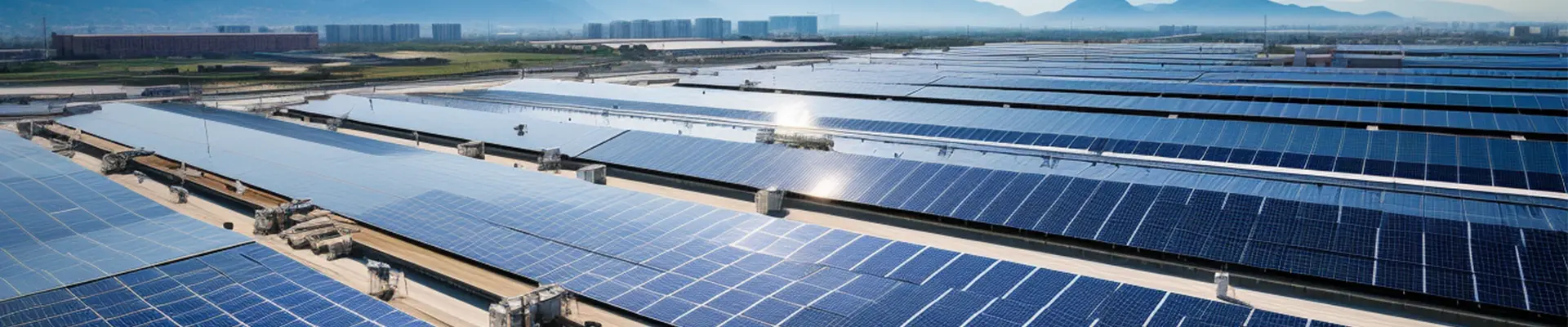
Vertical PV vs Horizontal Solar Installation: Power Generation Curve Comparison, ROI Analysis, and Engineering Applications
Why More Solar Developers Are Evaluating Vertical PV Systems
For many years, photovoltaic project design followed a relatively simple principle: maximize annual energy production. Developers optimized tilt angles, module spacing, and orientation to capture as much solar irradiation as possible throughout the year. In most markets, this approach still makes sense. However, the rapid growth of bifacial modules, time-of-use electricity pricing, grid congestion issues, and agrivoltaic projects has started to change how solar professionals evaluate system performance.
Today, the discussion around Vertical PV vs Horizontal Solar Installation is no longer limited to annual kilowatt-hour output. Increasingly, EPC contractors, project developers, and investors are asking a different question:
When is electricity generated, and how much is that electricity actually worth?
This shift is particularly important in regions where solar penetration is already high. In many utility markets, electricity produced during midday hours may be worth less than electricity generated in the morning or late afternoon. As a result, a solar system with slightly lower annual energy production can sometimes achieve comparable or even superior economic performance.
Vertical photovoltaic systems have emerged as one of the most discussed alternatives to conventional fixed-tilt solar installations. Their unique generation profile, especially when combined with bifacial modules, creates a power curve that differs significantly from traditional solar farms.
In this article, we examine the differences between vertical and horizontal solar installations from an engineering perspective, focusing on generation curves, energy yield characteristics, operational implications, and project suitability. Rather than relying on theoretical assumptions alone, the analysis emphasizes real-world factors that influence system design and project economics.
Why More Solar Developers Are Evaluating Vertical PV Systems
Several market trends have accelerated interest in vertical photovoltaic systems over the last few years.
The first is the widespread adoption of bifacial solar modules. Unlike conventional monofacial panels, bifacial modules can collect energy from both sides of the module. This characteristic significantly improves the viability of vertical installations because east-facing and west-facing surfaces can harvest sunlight at different times of the day.
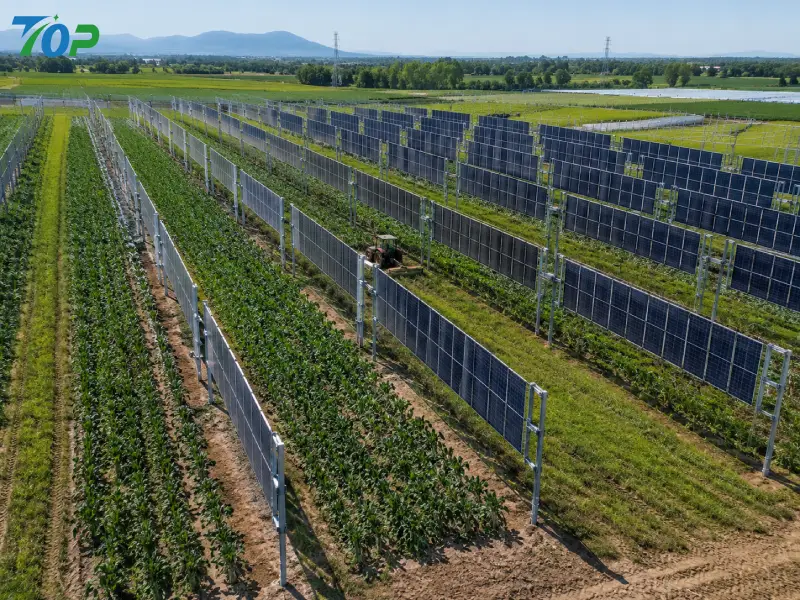
The second driver is land utilization. In many countries, available land for utility-scale solar development is becoming increasingly limited. Agricultural land, transportation corridors, industrial boundaries, and livestock farms are now being considered for solar deployment. Vertical systems often integrate more effectively into these environments than traditional ground-mounted arrays.
Another important factor is electricity market structure. As solar capacity grows, many regions experience excess generation around solar noon. This phenomenon creates lower electricity prices during midday hours while increasing the value of electricity supplied during morning and evening demand periods.
Consequently, project evaluation is gradually shifting from a simple energy-maximization strategy toward a value-maximization strategy.
This does not mean that conventional fixed-tilt systems are becoming obsolete. Far from it. Horizontal solar installations continue to dominate utility-scale development due to their proven performance and high annual energy yield. The objective is not to identify a universal winner but rather to understand which configuration delivers better results under specific project conditions.
Understanding Solar Power Generation Curves
Before comparing installation methods, it is important to understand what a solar generation curve actually represents.
What Is a Solar Generation Curve?
A solar generation curve illustrates how a photovoltaic system produces electricity throughout the day. Instead of showing annual output, it visualizes the relationship between time and instantaneous power production.
A typical curve begins shortly after sunrise, increases as solar irradiance rises, reaches a maximum value during the strongest sunlight period, and then gradually declines toward sunset.
For EPC contractors and system designers, generation curves reveal much more than daily energy production.
They help evaluate:
- Peak power output
- Production timing
- Grid interaction characteristics
- Battery storage requirements
- Load matching potential
- Revenue generation opportunities
Two systems may produce nearly identical annual energy output while displaying completely different generation curves. Those differences can substantially influence project economics.
Key Metrics EPC Contractors Should Analyze
When reviewing generation curves, experienced engineers typically focus on several performance indicators rather than a single production number.
Peak Output Power
Peak output refers to the highest instantaneous power level achieved during the day. Conventional fixed-tilt systems usually exhibit higher peak output because modules are optimized to receive maximum solar irradiation around noon.
Energy Distribution
Energy distribution measures how electricity production is spread across the day. Some systems concentrate most generation into a narrow time window, while others distribute energy more evenly.
Production Window
The production window describes how long meaningful power generation continues throughout the day. A broader generation window can improve alignment with actual electricity demand.
Ramp Rate
Ramp rate refers to how quickly power output increases after sunrise and decreases before sunset. Grid operators increasingly pay attention to ramp behavior because sudden generation changes can affect grid stability.
Why Generation Timing Matters More Than Ever
Historically, electricity markets treated every kilowatt-hour equally. Under that model, maximizing annual production naturally became the primary objective.
Today's electricity markets are considerably more complex.
Large-scale solar deployment has created situations where midday electricity supply significantly exceeds demand. In some regions, wholesale electricity prices during solar noon can fall sharply, and occasionally even become negative.
At the same time, electricity demand often remains strong during early morning and late afternoon periods when solar generation begins to decline.
This mismatch has become widely known as the "duck curve" challenge.
The duck curve describes the growing gap between solar production and electricity demand throughout the day. Utilities must compensate for this imbalance by rapidly increasing generation from other sources during evening hours.
As a result, project developers increasingly evaluate:
- Energy value instead of energy volume alone
- Revenue per kilowatt-hour
- Grid compatibility
- Curtailment risk
- Storage integration potential
These considerations have helped bring vertical photovoltaic systems into mainstream engineering discussions.
Vertical PV vs Horizontal PV: Daily Generation Curve Analysis
The most significant difference between vertical and conventional solar installations appears in their daily generation profiles.
Understanding these differences is essential before evaluating annual yield, ROI, or project suitability.
Conventional Fixed-Tilt Solar Generation Curve
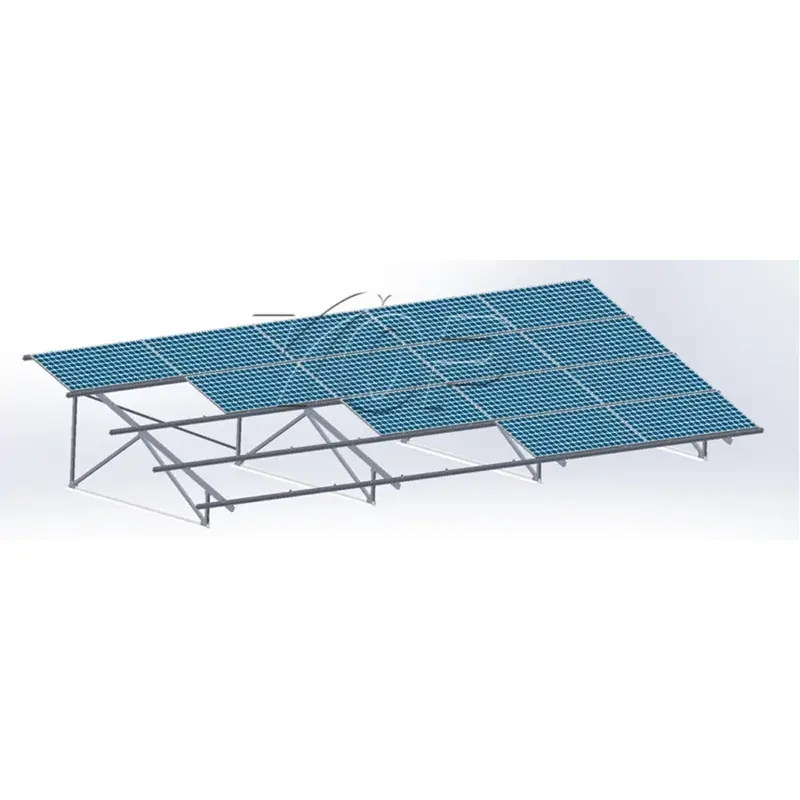
Traditional utility-scale solar farms typically use south-facing fixed-tilt structures in the Northern Hemisphere. Module tilt angles are selected to maximize annual irradiation capture based on geographic latitude and local climate conditions.
Because module orientation is optimized for midday sunlight, power production generally follows a bell-shaped pattern.
Shortly after sunrise, output gradually increases. As the sun rises higher in the sky, irradiation levels increase and module incidence angles improve. Production accelerates toward solar noon.
Around midday, the system reaches maximum power output.
After noon, generation gradually declines as solar elevation decreases until production eventually stops at sunset.
Characteristics of a Horizontal Solar Generation Curve
- Single daily production peak
- Highest instantaneous power output
- Strong midday concentration
- Narrower production window
- Maximum annual energy yield potential
This design philosophy has dominated utility-scale solar development for decades because it captures the greatest amount of solar irradiation over an entire year.
In regions with flat electricity pricing structures and abundant grid capacity, conventional fixed-tilt systems remain extremely effective.
Advantages of Horizontal Solar Installations
The primary advantage is annual production.
For many project developers, maximizing yearly energy generation directly improves project economics. Horizontal systems also benefit from decades of engineering experience, mature supply chains, and well-established design standards.
Installation practices are widely understood, permitting processes are familiar, and performance expectations are generally predictable.
Challenges Associated With Midday Production Concentration
Despite their strengths, conventional systems face growing challenges in markets with high solar penetration.
Because large numbers of solar projects generate electricity simultaneously, grid congestion frequently occurs during midday hours.
Common consequences include:
- Energy curtailment
- Lower electricity prices
- Negative wholesale pricing events
- Increased storage requirements
These issues do not eliminate the advantages of traditional solar systems, but they have encouraged engineers to investigate alternative generation profiles.
Vertical East-West Bifacial Solar Generation Curve
Vertical photovoltaic systems operate according to a fundamentally different principle.
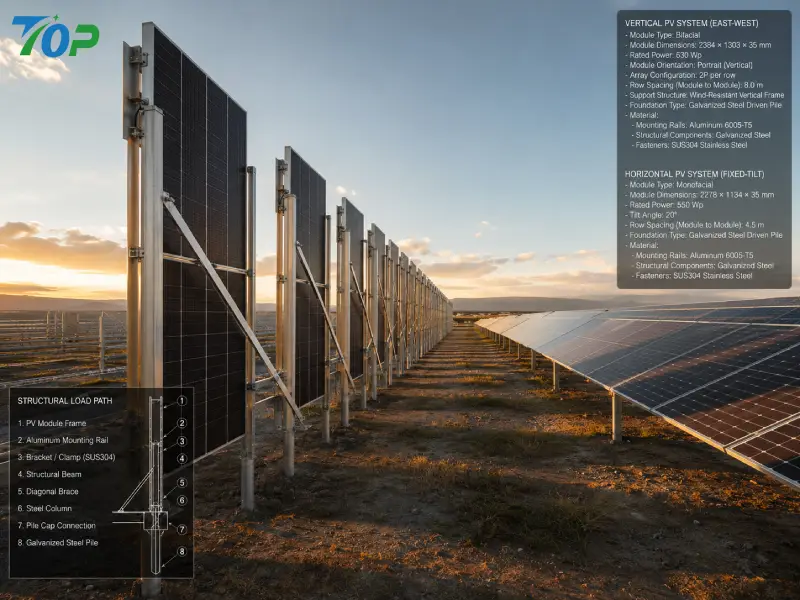
Instead of maximizing solar capture around noon, most vertical arrays position bifacial modules in an east-west orientation. One side of the module faces east while the opposite side faces west.
This configuration dramatically changes how electricity is generated throughout the day.
During the morning, the east-facing side receives direct sunlight and begins producing significant power relatively early.
As the sun approaches its highest position, both module surfaces experience less favorable incidence angles compared with traditional fixed-tilt arrays.
Consequently, midday production is reduced.
Later in the afternoon, the west-facing side becomes increasingly active and generates a second production peak.
Instead of a single bell-shaped curve, the result is a double-peak generation profile.
Characteristics of a Vertical Solar Generation Curve
- Morning production peak
- Reduced noon generation
- Afternoon production peak
- Extended daily generation window
- More balanced power distribution
This behavior is the primary reason why discussions surrounding Vertical PV vs Horizontal Solar Installation have expanded beyond simple annual yield comparisons.
The two configurations are effectively optimized for different objectives.
One prioritizes maximum energy volume.
The other prioritizes generation timing and production distribution.
For developers operating in markets with significant time-of-use pricing differences, that distinction can become extremely important.
Annual Energy Yield Comparison
One of the most common questions raised during project feasibility studies is straightforward:
Does a vertical photovoltaic system produce less electricity than a conventional fixed-tilt solar installation?
In most cases, the answer is yes. However, the answer is also incomplete.
Focusing solely on annual energy production can lead to misleading conclusions because annual yield represents only one dimension of system performance. The timing of generation, market electricity prices, curtailment exposure, and land-use constraints may be equally important depending on project objectives.
This is why experienced solar developers rarely evaluate a project using annual kilowatt-hours alone.
Why Horizontal Systems Usually Produce More Annual Energy
Traditional fixed-tilt systems are specifically engineered to maximize incident solar radiation over the course of a year.
The modules are positioned at tilt angles optimized for local latitude and solar geometry. Throughout most daylight hours, sunlight strikes the module surface at relatively favorable angles, resulting in high irradiance capture.
Because of this design strategy, conventional systems generally achieve the highest annual energy yield among fixed-structure photovoltaic configurations.
In contrast, vertical modules intentionally sacrifice part of their midday production potential. When the sun reaches its highest elevation angle, solar rays strike the module surfaces at less favorable angles compared with tilted arrays.
This geometric limitation naturally reduces total yearly irradiation capture.
The extent of the difference varies significantly according to:
- Latitude
- Ground reflectivity (albedo)
- Bifacial module performance
- Row spacing design
- Climate conditions
- Seasonal cloud patterns
For this reason, experienced engineers avoid making universal claims such as "vertical systems always produce 20% less energy." Real-world projects often demonstrate much wider variation depending on site conditions.
Latitude Has a Significant Impact
Latitude influences the sun's annual path and therefore affects the relative performance of both installation methods.
Near the equator, where solar elevation remains relatively high throughout the year, conventional tilted systems typically maintain a stronger annual production advantage.
At higher latitudes, however, the difference can narrow.
Lower winter sun angles increase the effectiveness of vertical module surfaces during certain periods of the year. As a result, vertical arrays may recover part of the energy deficit experienced during summer months.
This phenomenon is particularly noticeable in northern Europe, northern Japan, parts of Canada, and several northern U.S. states.
The Importance of Bifacial Gain
Another factor frequently overlooked during preliminary comparisons is bifacial gain.
Most commercial vertical solar projects utilize glass-glass bifacial modules rather than conventional monofacial panels.
These modules generate electricity from both sides of the panel.
As reflected light reaches the rear surface, additional energy is harvested that would otherwise be unavailable in a monofacial design.
The magnitude of bifacial gain depends on multiple site-specific variables:
- Ground reflectivity
- Module height above ground
- Vegetation conditions
- Snow cover duration
- Array spacing
- Module bifaciality coefficient
Projects located in environments with highly reflective surfaces often achieve significantly stronger bifacial performance than early-stage simulations may suggest.
Annual Yield Should Not Be Evaluated in Isolation
A common mistake during project assessment is assuming that the system with the highest annual generation automatically produces the highest financial return.
That assumption may have been largely valid fifteen years ago.
It is becoming less reliable today.
Modern electricity markets increasingly reward generation delivered during periods of higher demand and higher market value.
Consequently, annual yield remains important, but it should be evaluated alongside revenue generation potential rather than as a standalone metric.
Why Lower Annual Yield Does Not Always Mean Lower Revenue
The distinction between energy production and energy value is one of the most important concepts in contemporary solar project development.
A megawatt-hour generated at noon is not necessarily worth the same as a megawatt-hour generated at 8:00 AM or 5:00 PM.
In many markets, the difference can be substantial.
The Growing Influence of Time-of-Use Pricing
Utilities around the world increasingly implement time-of-use (TOU) tariff structures.
Under these pricing models, electricity prices vary throughout the day according to demand patterns and grid conditions.
Periods with abundant solar generation often experience lower prices, while periods with higher demand and lower renewable generation command higher prices.
This creates a situation where electricity generated during shoulder periods may produce greater economic value than electricity generated during solar noon.
Because vertical arrays naturally shift part of their generation toward morning and afternoon hours, their production profile may align more effectively with certain TOU structures.
Reducing Curtailment Risk
Curtailment has become a growing concern in regions with high renewable energy penetration.
When electricity supply exceeds grid demand or transmission capacity, system operators may require renewable generators to reduce output.
From a project owner's perspective, curtailed energy represents lost revenue.
Since conventional solar farms tend to concentrate production during midday hours, they are often exposed to the same congestion periods affecting other nearby projects.
Vertical systems distribute generation more broadly across the day, potentially reducing exposure to heavily congested time windows.
The actual benefit depends on local grid conditions, but it is increasingly becoming part of project-level economic modeling.
Revenue per Kilowatt-Hour Is Becoming a More Useful Metric
Historically, developers often focused on:
- Total annual production
- Performance ratio (PR)
- Specific yield
Today, sophisticated project evaluations frequently incorporate additional metrics such as:
- Revenue per kWh
- Market value factor
- Capture price
- Curtailment-adjusted generation
- Storage integration value
This evolution is one of the primary reasons why the discussion surrounding Vertical PV vs Horizontal Solar Installation continues to gain attention among utility developers and EPC contractors.
Seasonal Performance Comparison
Annual production numbers provide a useful overview, but seasonal behavior often reveals important operational differences between installation methods.
The relative performance of vertical and horizontal systems can vary considerably throughout the year.
Understanding these seasonal characteristics helps engineers design systems that better match project objectives and local environmental conditions.
Summer Generation Characteristics
Summer is typically the period when conventional fixed-tilt systems demonstrate their strongest advantage.
High solar elevation angles create ideal conditions for tilted photovoltaic modules.
The sun remains above the horizon for longer periods, irradiation levels are strong, and fixed-tilt arrays can maintain favorable incidence angles throughout much of the day.
As a result, summer often contributes a disproportionately large share of annual production.
Horizontal System Performance During Summer
- Highest daily energy output
- Strong midday production peak
- Excellent irradiation capture
- Maximum instantaneous power generation
These characteristics explain why utility-scale developers continue to favor conventional fixed-tilt systems when maximizing annual production is the primary objective.
Vertical System Performance During Summer
Vertical systems behave differently.
When the sun reaches high elevation angles, the module surfaces receive sunlight at less favorable incidence angles compared with tilted arrays.
This reduces midday production and lowers total daily generation.
However, vertical systems continue to benefit from:
- Morning generation enhancement
- Afternoon generation enhancement
- Balanced production distribution
- Improved alignment with demand peaks
Consequently, evaluating summer performance solely through total energy output may not fully capture the economic implications of the generation profile.
Winter Performance Advantages of Vertical PV
Winter conditions often present a much more favorable environment for vertical photovoltaic systems than many people initially expect.
Several physical mechanisms contribute to this effect.
Lower Solar Elevation Angles
During winter months, the sun follows a lower trajectory across the sky.
Because of this geometry, sunlight approaches vertical surfaces at more favorable angles than during summer.
The performance gap between vertical and conventional systems therefore tends to narrow.
Reduced Snow Accumulation
Snow can significantly reduce photovoltaic output by blocking incoming solar radiation.
One practical advantage of vertical arrays is that snow rarely remains on module surfaces for extended periods.
Gravity naturally prevents accumulation, allowing modules to remain exposed even after significant snowfall events.
Conventional tilted systems, by contrast, may experience temporary production losses until snow slides from the module surface.
The effect becomes increasingly important in regions with frequent snowfall.
Enhanced Snow Reflection
Snow-covered ground can substantially increase surface reflectivity.
Fresh snow is among the most reflective natural surfaces commonly encountered in solar projects.
This reflected light can significantly enhance rear-side irradiance received by bifacial modules.
Under suitable conditions, snow reflection may become a meaningful contributor to winter energy production.
Vertical Solar in Snow Regions
Because of the combined effects of snow shedding and bifacial reflection, vertical photovoltaic systems have attracted growing interest in northern climates.
Applications are increasingly being evaluated in:
- Hokkaido
- Northern Europe
- Canada
- Scandinavian countries
- Northern United States
It is important to emphasize that snow-region suitability depends on project-specific design factors rather than installation angle alone.
Wind loads, frost conditions, foundation design, and maintenance access must all be evaluated during engineering development.
Spring and Autumn Performance Behavior
The transition seasons often reveal some of the most interesting characteristics of vertical photovoltaic systems.
During spring and autumn, solar elevation angles are lower than summer but higher than winter.
These conditions frequently create a more balanced comparison between vertical and conventional installations.
Morning and afternoon production advantages remain significant, while midday penalties become less severe than during peak summer months.
For regions where electricity demand peaks occur outside solar noon, these shoulder seasons can contribute meaningful economic value.
The Role of Bifacial Modules in Vertical PV Systems
Although vertical solar installations can technically utilize monofacial modules, the overwhelming majority of modern projects rely on bifacial technology.
Without bifacial modules, much of the potential value associated with vertical configurations would be lost.
Why Most Vertical Solar Projects Use Bifacial Panels
The east-facing side of a vertical module captures direct solar radiation during morning hours.
The west-facing side performs a similar function during afternoon hours.
In addition to direct sunlight, both surfaces can collect reflected irradiance from surrounding ground surfaces.
This dual-sided energy harvesting capability fundamentally changes system behavior and helps compensate for reduced midday production.
As bifacial module costs have declined over recent years, their adoption within vertical photovoltaic projects has accelerated significantly.
Understanding Rear-Side Energy Gain
Rear-side generation is often misunderstood.
Some assume that reflected light contributes only a negligible amount of energy.
In reality, rear-side performance can become an important component of total system output when site conditions are favorable.
Several sources contribute to reflected irradiance:
- Grass-covered surfaces
- Light-colored gravel
- Concrete areas
- White roofing membranes
- Agricultural land
- Snow-covered terrain
The actual contribution depends on both environmental conditions and array geometry.
Module height, row spacing, and ground characteristics all influence how much reflected light reaches the rear surface.
Typical Bifacial Gain Under Different Surface Conditions
While project-specific modeling is always recommended, general industry experience suggests the following relative trends:
| Ground Surface | Typical Bifacial Gain Range |
|---|---|
| Natural grass | 5%–10% |
| Gravel surfaces | 10%–15% |
| Light-colored aggregate | 10%–20% |
| White membrane surfaces | 15%–25% |
| Snow-covered ground | 20%–40% |
These values should be interpreted as indicative ranges rather than guaranteed project outcomes. Actual performance depends heavily on site conditions, system geometry, and seasonal weather patterns.
Nevertheless, the table illustrates why bifacial technology has become a central component of modern vertical photovoltaic design.
In many cases, understanding bifacial gain is just as important as understanding module orientation itself.
The next stage of evaluation involves the engineering realities behind these systems: wind loading, structural design, foundation selection, corrosion resistance, and long-term reliability. Those factors ultimately determine whether a vertical solar project can be deployed safely and economically at commercial scale.
Engineering Design Considerations
While generation curves and energy yield often dominate discussions about vertical solar systems, successful project execution ultimately depends on engineering design.
From an EPC perspective, a photovoltaic system must satisfy far more requirements than simply producing electricity. Structural integrity, long-term durability, installation efficiency, maintenance accessibility, and compliance with local standards all play critical roles in determining project success.
This is particularly true for vertical photovoltaic systems because their geometry creates loading conditions that differ substantially from conventional fixed-tilt arrays.
Wind Load Analysis for Vertical Solar Structures
Wind loading is often the first engineering topic evaluated during vertical solar project development.
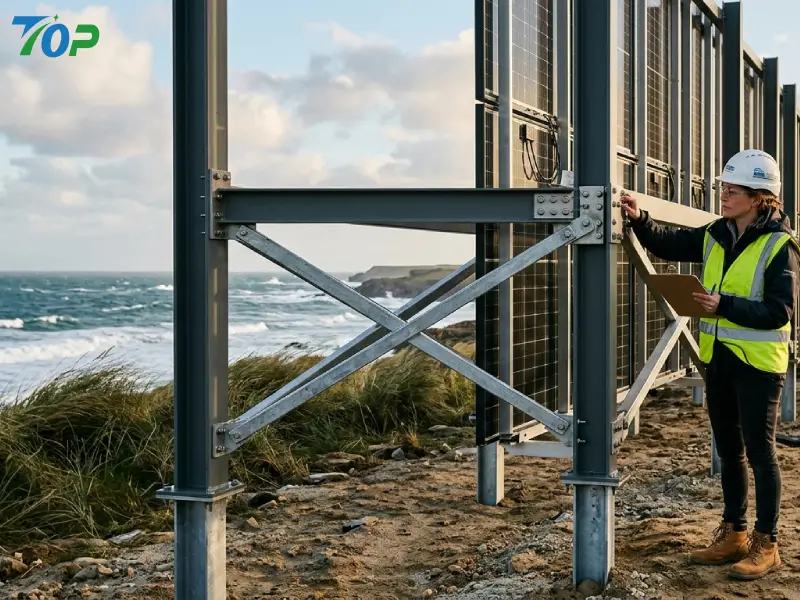
Unlike traditional tilted arrays, vertical modules present a larger exposed surface area to prevailing winds from multiple directions.
As a result, wind-induced forces frequently become a governing design factor.
Engineers must consider:
- Positive pressure loading
- Negative pressure loading
- Uplift forces
- Dynamic gust effects
- Terrain exposure conditions
- Local extreme weather events
The challenge becomes even more significant in coastal regions, typhoon-prone zones, and open agricultural areas where wind speeds can increase considerably due to limited surface obstruction.
In many projects, structural optimization focuses not on average wind conditions but on extreme events that may occur only once during the system's design life.
This is why professional structural calculations should never rely on generic assumptions or copied designs from unrelated projects.
Why Site-Specific Wind Analysis Matters
Two sites separated by only a few kilometers can experience very different wind loading conditions due to terrain characteristics.
Factors such as:
- Coastal exposure
- Mountain valleys
- Open farmland
- Industrial development
- Elevation changes
may significantly influence design loads.
For commercial and utility-scale projects, site-specific engineering analysis typically provides a more reliable basis for structural optimization than conservative overdesign.
Proper engineering can often reduce unnecessary material usage while maintaining required safety margins.
Foundation Selection
The foundation system serves as the primary load transfer path between the photovoltaic structure and the ground.
Choosing the appropriate foundation type depends on geotechnical conditions, environmental constraints, construction schedules, and project economics.
Ground Screw Foundations
Ground screws have become increasingly popular for both vertical and conventional solar installations.
Advantages include:
- Fast installation
- Minimal site disturbance
- No concrete curing period
- Easy removal at project end-of-life
- Reduced environmental impact
Ground screw systems are often attractive for agricultural applications where preserving soil quality is important.
However, pull-out capacity and lateral resistance must be verified through geotechnical evaluation rather than assumed from catalog values.
Driven Pile Foundations
Driven steel piles remain one of the most widely used foundation solutions for utility-scale solar projects.
Their popularity stems from:
- Proven structural performance
- High installation efficiency
- Scalability for large projects
- Competitive installation cost
Driven piles are commonly selected when soil conditions allow efficient pile driving without excessive refusal risk.
Concrete Foundations
Concrete foundations continue to play an important role in projects where:
- Soil conditions are challenging
- Corrosion exposure is severe
- Special structural requirements exist
- Local regulations require concrete solutions
Although concrete foundations typically involve higher labor requirements and longer construction schedules, they may provide practical advantages under certain site conditions.
The optimal choice should always be determined through a combination of structural and geotechnical analysis rather than habit or historical preference.
Corrosion Protection Requirements
Long-term durability remains a major concern for solar asset owners because photovoltaic systems are expected to operate for decades with limited maintenance.
Corrosion protection therefore becomes a critical design consideration, particularly in coastal and industrial environments.
Aluminum Structural Components
High-strength aluminum alloys are widely used in photovoltaic mounting systems because they provide:
- Excellent corrosion resistance
- Low weight
- Good structural performance
- Ease of installation
Among commonly used materials, aluminum 6005-T5 remains a popular choice for solar mounting structures due to its balance of strength and corrosion resistance.
Stainless Steel Fasteners
Fasteners often represent one of the most overlooked components in solar structures.
Despite their relatively low cost contribution, fastener reliability directly affects structural integrity.
Commercial projects frequently specify:
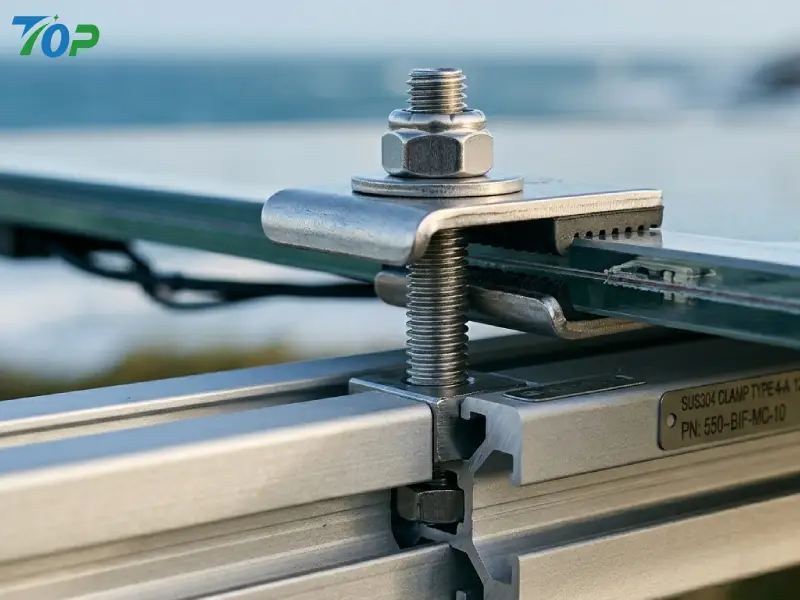
- SUS304 stainless steel fasteners
- SUS316 stainless steel fasteners
For highly corrosive coastal environments, SUS316 generally provides superior resistance against chloride-induced corrosion.
Structural Design Standards Commonly Referenced
Although regulatory requirements vary by country, photovoltaic structures are typically designed with reference to recognized engineering standards.
Depending on project location, engineers may consider frameworks such as:
- ASCE standards
- Eurocode standards
- Local building codes
- Regional wind load standards
- Regional seismic requirements
Compliance with recognized engineering standards contributes not only to structural safety but also to project bankability and investor confidence.
Land Use Efficiency Comparison
One of the strongest arguments supporting vertical photovoltaic systems relates to land utilization.
In many regions, suitable land has become one of the most valuable resources affecting project feasibility.
As competition for land increases, developers are exploring solutions that enable energy production without completely displacing existing land use activities.
Agrivoltaic Applications
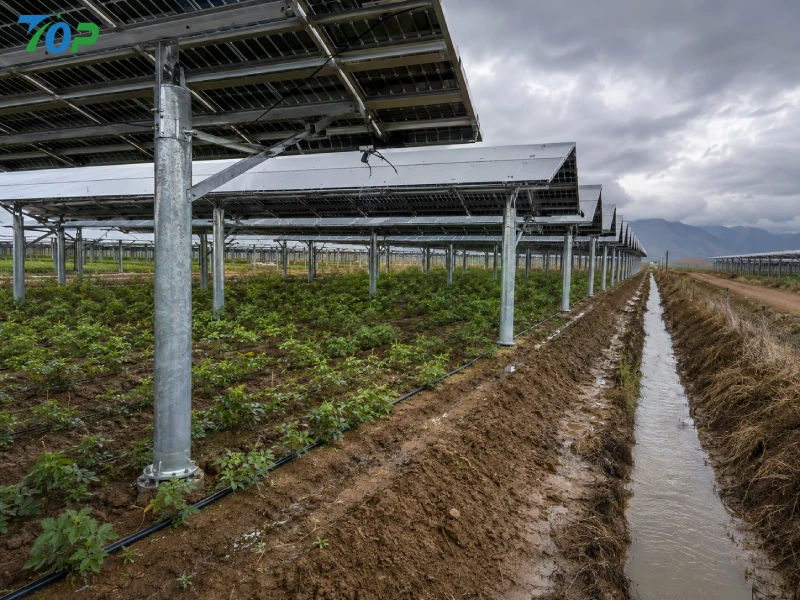
Agrivoltaics combines agricultural production with solar energy generation on the same land area.
This concept has attracted growing interest because it addresses two critical challenges simultaneously:
- Food production
- Renewable energy generation
Traditional solar farms can limit agricultural operations by creating extensive shaded areas.
Vertical photovoltaic systems offer an alternative approach.
Because modules occupy relatively narrow footprints, farming activities can often continue between installation rows.
Potential applications include:
- Crop cultivation
- Livestock grazing
- Vineyards
- Orchards
- Specialty agriculture
The suitability of a specific crop depends on local growing conditions and project design, but vertical arrays generally create fewer shading conflicts than conventional ground-mounted systems.
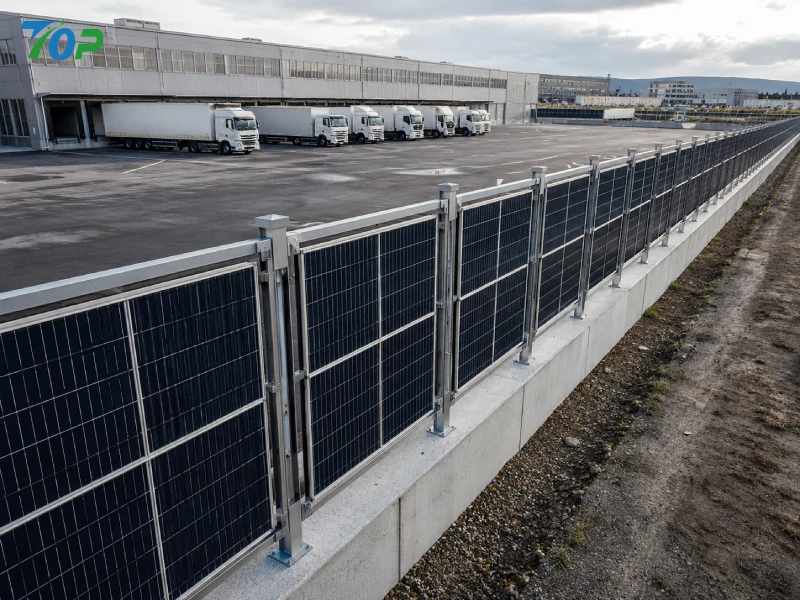
Solar Fence Applications
Another rapidly emerging application is the solar fence concept.
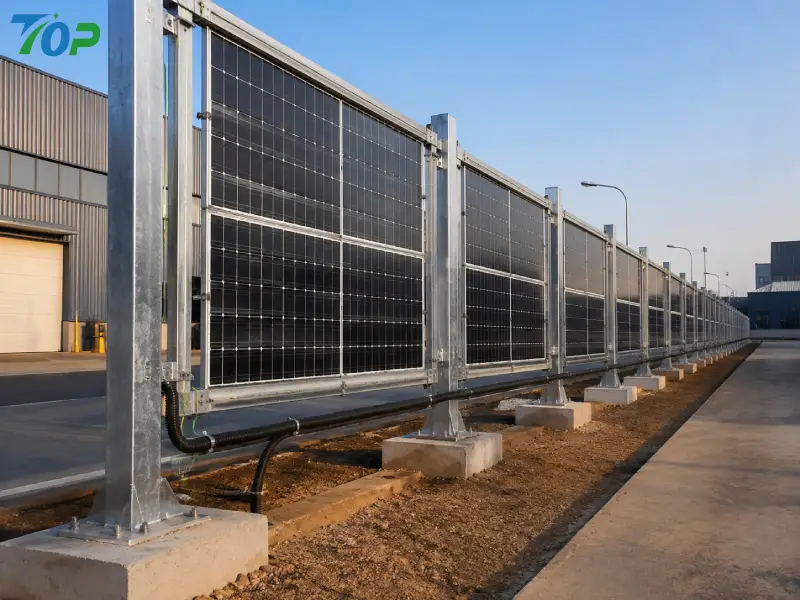
Rather than dedicating new land exclusively to energy production, photovoltaic modules are integrated into existing perimeter boundaries.
Examples include:
- Industrial facilities
- Logistics centers
- Warehouses
- Agricultural properties
- Infrastructure corridors
This approach transforms otherwise underutilized boundary space into productive energy-generating assets.
For land-constrained facilities, solar fencing can provide meaningful generation capacity without affecting core site operations.
Highway and Railway Applications
Transportation infrastructure represents another area where vertical photovoltaic deployment is attracting attention.
Potential installation locations include:
- Noise barriers
- Roadside boundaries
- Railway corridors
- Infrastructure protection fences
These applications benefit from the narrow footprint and dual-purpose nature of vertical solar structures.
As governments continue expanding renewable energy targets, infrastructure-integrated solar projects may become increasingly important.
ROI Analysis: Which Configuration Creates More Value?
Ultimately, investors and project developers evaluate photovoltaic systems according to financial performance.
The objective is not merely generating electricity but generating attractive long-term returns.
This is where discussions regarding Vertical PV vs Horizontal Solar Installation become particularly nuanced.
Neither configuration universally outperforms the other across all project conditions.
CAPEX Comparison
Capital expenditure varies depending on project scale, site conditions, structural design requirements, and local labor costs.
Key cost categories include:
- Modules
- Mounting structures
- Foundations
- Electrical systems
- Installation labor
Vertical systems may require additional structural considerations because of increased wind loading exposure.
At the same time, certain projects can offset costs through simplified land utilization or dual-use applications.
Consequently, broad cost comparisons without site-specific analysis often produce misleading conclusions.
OPEX Comparison
Operational expenditures influence lifetime project economics just as significantly as initial capital costs.
Relevant factors include:
- Cleaning requirements
- Vegetation management
- Snow removal
- Inspection accessibility
- Component replacement
Vertical systems often experience lower dust accumulation compared with low-tilt arrays because rainfall naturally cleans the module surfaces more effectively.
In snowy regions, reduced snow accumulation may further decrease maintenance requirements.
Actual operational savings vary by site, but these considerations should be included in long-term financial models.
Revenue Comparison
Revenue analysis should incorporate more than annual energy production.
Important variables include:
- Total generation
- Electricity pricing structure
- Curtailment exposure
- Demand patterns
- Energy storage integration
Projects operating under dynamic electricity pricing may derive additional value from the broader generation profile associated with vertical systems.
Conversely, projects prioritizing maximum annual energy output may continue to favor conventional fixed-tilt configurations.
Decision Matrix for EPC Contractors and Investors
| Project Objective | Generally Preferred Option |
|---|---|
| Maximum Annual Energy Yield | Horizontal Fixed-Tilt |
| Agrivoltaic Integration | Vertical PV |
| Snow-Prone Regions | Vertical PV |
| Limited Land Availability | Vertical PV |
| Flat Electricity Pricing | Horizontal Fixed-Tilt |
| Strong Time-of-Use Pricing | Project-Specific Evaluation Required |
Real-World Applications of Vertical PV Systems
The growing adoption of vertical photovoltaic systems is driven not by theory alone but by practical applications where traditional designs face limitations.
Agrivoltaic Projects
Agricultural operations increasingly seek solutions that preserve productive land while supporting renewable energy development.
Vertical arrays provide one pathway toward achieving both objectives simultaneously.
Utility-Scale Bifacial Projects
Large-scale bifacial installations continue to evaluate vertical configurations as developers seek new approaches to generation profile optimization.
While project suitability varies by region, interest continues to grow as electricity markets evolve.
Industrial Perimeter Installations
Factories, logistics centers, warehouses, and industrial parks often possess extensive perimeter boundaries.
These areas can provide opportunities for solar deployment without affecting operational activities inside the facility.
Common Misconceptions About Vertical Solar Systems
Myth 1: Vertical PV Always Produces Less Revenue
Lower annual energy production does not automatically translate into lower revenue.
Electricity pricing, curtailment exposure, and demand profiles can significantly influence project economics.
Myth 2: Vertical Solar Is Only Suitable for Agriculture
Agrivoltaics represents only one application.
Industrial facilities, transportation infrastructure, commercial developments, and utility-scale projects may also benefit from vertical configurations.
Myth 3: Vertical Structures Cannot Survive High-Wind Areas
Structural survivability depends on engineering quality rather than installation orientation alone.
Properly designed systems can be engineered for demanding wind environments through appropriate structural calculations and foundation design.
Myth 4: Bifacial Gain Is Insignificant
Under favorable site conditions, rear-side generation can become a meaningful contributor to total energy production.
Ignoring bifacial performance may lead to inaccurate project modeling.
How to Choose the Right Solar Mounting Configuration
Selecting the optimal photovoltaic configuration requires balancing technical, economic, and operational considerations.
Before proceeding with detailed design, EPC contractors and project developers should evaluate several key questions:
- Is maximum annual yield the primary objective?
- Does the site experience significant snowfall?
- Are there land-use constraints?
- Is agrivoltaic integration required?
- How does local electricity pricing vary throughout the day?
- What are the site's wind loading conditions?
- Will future battery storage be integrated?
The answers to these questions often provide clearer guidance than comparing annual energy production alone.
How TopFence Supports Vertical and Fixed-Tilt Solar Projects
For EPC contractors and solar developers, mounting systems are more than structural hardware. They influence installation efficiency, long-term reliability, maintenance requirements, and overall project economics.
TopFence supports commercial and utility-scale solar projects through engineering-focused mounting solutions designed for diverse site conditions.
Engineering Support
- Site-specific structural evaluation
- Wind load assessment support
- Foundation selection recommendations
- Project-specific mounting design
Mounting System Solutions
- Ground-mounted solar structures
- Fixed-tilt mounting systems
- Vertical photovoltaic support structures
- Agrivoltaic mounting solutions
- Custom-engineered configurations
Material Options
- Aluminum alloy structural components
- SUS304 fasteners
- SUS316 fasteners for coastal environments
- Corrosion-resistant system designs
OEM and ODM Manufacturing Support
For distributors, EPC contractors, and project developers, manufacturing flexibility can be as important as engineering capability.
Customized solutions may help address project-specific requirements involving wind conditions, site constraints, and installation preferences.
Conclusion
The debate surrounding Vertical PV vs Horizontal Solar Installation cannot be reduced to a simple comparison of annual energy production.
Conventional fixed-tilt systems remain highly effective for maximizing yearly electricity generation and continue to dominate utility-scale deployment worldwide.
At the same time, vertical photovoltaic systems offer distinct advantages that become increasingly valuable under specific project conditions.
Their broader generation profile, compatibility with bifacial technology, potential agrivoltaic benefits, reduced snow accumulation, and ability to utilize constrained land resources make them an increasingly important option within the modern solar industry.
There is no universal winner.
The most effective solution depends on project objectives, site characteristics, electricity market structure, land availability, environmental conditions, and long-term investment goals.
For EPC contractors and developers, successful project outcomes are rarely achieved by following industry trends alone. They are achieved through careful engineering analysis, realistic financial modeling, and selecting the mounting configuration that best aligns with the specific requirements of the project.
Frequently Asked Questions
Q1. Does vertical PV generate less electricity than horizontal solar systems?
In most locations, vertical photovoltaic systems produce less annual energy than optimized fixed-tilt installations. However, differences vary significantly according to latitude, bifacial gain, ground reflectivity, and project design.
Q2. Why do vertical solar systems produce two daily power peaks?
Most vertical systems use east-west bifacial module orientations. The east-facing side generates more electricity during the morning, while the west-facing side contributes more production during the afternoon, creating a double-peak generation profile.
Q3. Are bifacial modules required for vertical solar projects?
They are not strictly required, but bifacial modules are used in most commercial vertical photovoltaic systems because they significantly improve energy harvesting from reflected light.
Q4. Is vertical PV suitable for high-wind regions?
Yes, provided that the system is properly engineered. Wind loading analysis, foundation design, and structural calculations are essential components of project development in high-wind environments.
Q5. Do vertical solar systems perform better in snowy climates?
Vertical modules often experience less snow accumulation and can benefit from increased reflected irradiance from snow-covered ground, making them attractive for certain cold-climate applications.
Q6. Can vertical PV systems be used in agrivoltaic projects?
Yes. Their narrow footprint and reduced shading characteristics can allow agricultural activities to continue between installation rows.
Q7. Which system offers better ROI?
The answer depends on project-specific conditions including energy pricing, land costs, maintenance requirements, curtailment risk, and electricity demand patterns.
Q8. How should EPC contractors choose between vertical and horizontal installations?
The decision should be based on a combination of technical, economic, environmental, and operational factors rather than annual energy production alone. Comprehensive engineering and financial analysis remains the most reliable approach.
Choosing Between Vertical PV and Fixed-Tilt Solar? Get Project-Specific Engineering Support
The best photovoltaic configuration depends on far more than annual energy yield. Factors such as wind load conditions, land availability, bifacial module performance, foundation selection, TOU electricity pricing, and project ROI objectives all influence whether a vertical or horizontal solar installation delivers greater long-term value. TOPFENCE provides engineering-grade vertical PV mounting systems, fixed-tilt solar structures, agrivoltaic support systems, and utility-scale mounting solutions designed for EPC contractors, developers, and distributors. Receive project-specific structural recommendations, wind load analysis support, and optimized mounting configurations for your site conditions.
Request Structural Design Support & EPC PricingRelated News
- Technical White Paper: Wind Tunnel Testing and Structural Stability Analysis of Solar Fence Systems
- Industrial Perimeter Protection: The Dual Investment Value of Solar Fencing
- Vertical Bifacial Modules in Solar Fence Systems: A Study of Light-Guiding Performance and Energy Yield Optimization
- Why Agrivoltaics Is the Best Solution to Land-Use Conflicts
- Integrated Solar Fencing: The Perfect Combination of Aesthetics, Security, and Renewable Energy
- Customized Solar Mounting Services for Extreme Climate Conditions: Engineering PV Structures for Wind, Snow, Corrosion and Terrain Challenges
Leave me a message