Agricultural Solar Mounting Systems and Their Impact on Soil Moisture: Engineering Insights for Agrivoltaic Projects
How Agricultural Solar Mounting Systems Influence Soil Moisture and Agrivoltaic Performance
As global agriculture faces increasing pressure from climate change, water scarcity, and rising energy costs, agrivoltaic systems are rapidly becoming one of the most promising solutions for sustainable land utilization. In recent years, the agricultural solar mounting system has evolved far beyond a simple photovoltaic support structure. Today, it plays a critical role in regulating farmland microclimates, optimizing irrigation efficiency, improving soil moisture retention, and supporting long-term agricultural productivity.
For EPC contractors, solar developers, and agrivoltaic investors, understanding how an agricultural solar mounting system influences soil moisture is no longer optional. Soil water dynamics directly affect crop yield stability, operational costs, drainage system design, and long-term project ROI. Poorly designed agrivoltaic mounting structures can create uneven rainwater distribution, localized erosion, excessive moisture accumulation, or long-term soil degradation. By contrast, a well-engineered agrivoltaic solar mounting structure can significantly improve water retention, reduce evaporation losses, and enhance climate resilience in modern farming environments.
Compared with traditional ground-mounted photovoltaic projects, agricultural PV systems require a much deeper integration between structural engineering and environmental management. Factors such as mounting height, panel tilt angle, row spacing, foundation type, and drainage design all influence how water moves through farmland beneath solar arrays. For utility-scale agrivoltaic projects, these engineering variables directly impact installation efficiency, maintenance costs, agricultural compatibility, and long-term system reliability.
In this article, we will explore the engineering relationship between agrivoltaic mounting systems and soil moisture behavior from both scientific and commercial perspectives. We will analyze how agricultural solar structures affect evaporation rates, rainfall redistribution, airflow, and root-zone moisture retention while also examining the best engineering practices for EPC contractors seeking to optimize agrivoltaic performance.
More importantly, this guide will help solar developers, distributors, and procurement managers understand how choosing the right agricultural solar mounting supplier can improve project durability, reduce installation risks, and maximize long-term agricultural and photovoltaic returns.
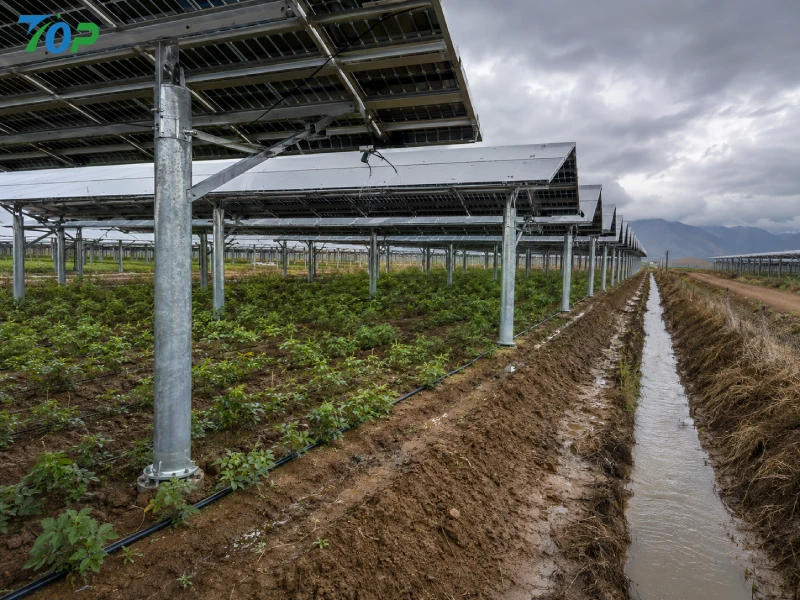
Why Soil Moisture Management Matters in Commercial Agrivoltaic Projects
In conventional solar farms, the primary engineering focus is usually centered on structural stability, energy generation efficiency, and electrical safety. However, agrivoltaic projects introduce a far more complex challenge: balancing photovoltaic performance with agricultural sustainability. Among all environmental factors, soil moisture management has emerged as one of the most critical variables influencing the success of commercial agrivoltaic developments.
Soil moisture affects crop health, nutrient transport, microbial activity, irrigation frequency, and long-term farmland productivity. Because photovoltaic modules alter sunlight exposure, rainfall distribution, airflow, and surface temperature, the installation of an agrivoltaic solar mounting system inevitably changes the hydrological behavior of farmland beneath the arrays.
For EPC contractors and agricultural solar developers, understanding these moisture dynamics is essential not only for agricultural productivity but also for engineering optimization, compliance management, and project profitability.
Soil Moisture Directly Affects Agrivoltaic ROI
One of the most overlooked realities in agrivoltaic engineering is that soil moisture directly impacts long-term financial returns. In many agricultural regions, irrigation costs represent a substantial portion of annual farm operating expenses. A properly engineered agricultural PV mounting structure can reduce soil evaporation and improve water retention, lowering irrigation demand and reducing operational expenditures.
In hot and arid climates, shading from elevated solar arrays can significantly reduce surface temperature fluctuations. Lower soil temperatures help preserve water within the root zone, allowing crops to maintain hydration for longer periods during dry seasons. This moisture retention effect can improve crop resilience during heat waves and reduce the frequency of supplemental irrigation.
From an EPC perspective, projects that demonstrate measurable water-saving performance often gain stronger support from agricultural stakeholders, government sustainability programs, and institutional investors focused on ESG targets.
Water Retention Challenges in Large-Scale Solar Farms
Although agrivoltaic systems can improve moisture retention, poor engineering design may create serious water management issues. One of the most common problems in large-scale agricultural solar projects is uneven rainfall distribution beneath photovoltaic panels.
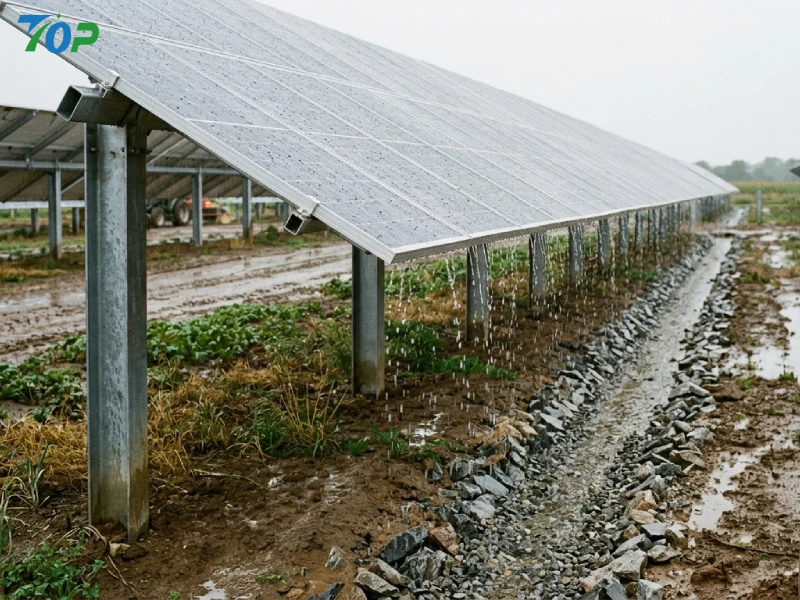
Solar modules naturally concentrate rainwater runoff along drip lines at the lower edges of panels. Without optimized row spacing and drainage planning, this concentrated runoff can lead to:
- Localized soil erosion
- Excessive moisture accumulation
- Root-zone oversaturation
- Drainage channel instability
- Crop growth inconsistency
In humid agricultural regions, excessive moisture beneath densely packed solar arrays may also increase fungal disease risks and negatively impact soil oxygen levels. These issues highlight why agrivoltaic projects require engineering-grade mounting system design rather than simply adapting conventional ground-mounted PV structures.
Why EPC Contractors Must Consider Microclimate Engineering
Modern agrivoltaic engineering is no longer limited to structural mechanics alone. Today’s utility-scale agricultural solar mounting systems must function as integrated environmental control platforms capable of supporting both energy generation and sustainable farming operations.
Photovoltaic arrays modify the farmland microclimate in several important ways:
- Reducing direct solar radiation on soil surfaces
- Lowering daytime soil temperatures
- Changing airflow patterns beneath arrays
- Reducing evapotranspiration rates
- Redistributing rainfall runoff
These environmental changes can either improve or damage agricultural performance depending on the quality of the mounting system design. EPC contractors who understand these interactions are better positioned to deliver high-performance agrivoltaic projects with stronger long-term operational reliability.
This is especially important for projects located in regions with:
- Extreme summer temperatures
- Seasonal drought conditions
- Heavy rainfall variability
- Water conservation regulations
- Sensitive agricultural ecosystems
How Mounting Design Impacts Long-Term Agricultural Productivity
The structural configuration of an agricultural solar mounting system directly influences how effectively farmland can maintain healthy moisture balance over time. Factors such as module height, tilt angle, row spacing, and foundation type all determine how water moves across and through the soil profile.
Elevated agrivoltaic structures generally provide better airflow and more uniform light distribution compared with low-clearance solar arrays. Higher mounting systems also improve machinery access for irrigation equipment, tractors, and crop maintenance operations.
Ground coverage ratio (GCR) is another critical engineering factor. Excessively dense module layouts may maximize energy generation per hectare, but they can also create excessive shading and uneven moisture patterns that reduce agricultural productivity.
Successful agrivoltaic projects require a balanced engineering approach that considers:
- Photovoltaic efficiency
- Crop compatibility
- Soil moisture behavior
- Drainage performance
- Long-term land sustainability
As agrivoltaic adoption accelerates globally, developers increasingly recognize that the mounting structure itself is not merely a support component but a critical environmental engineering system influencing the long-term success of the entire project.
What Is an Agricultural Solar Mounting System?
An agricultural solar mounting system, also known as an agrivoltaic mounting structure, is a specialized photovoltaic support framework designed to enable simultaneous agricultural production and solar energy generation on the same land area. Unlike traditional ground-mounted solar farms, agrivoltaic systems must accommodate crop growth, irrigation systems, farming equipment, livestock activity, and long-term soil health while maintaining structural reliability under varying environmental conditions.
In recent years, agrivoltaic infrastructure has become increasingly important as governments, developers, and agricultural operators seek to maximize land-use efficiency without sacrificing food production capacity. This dual-use approach allows farmland to generate renewable electricity while continuing agricultural operations beneath or between photovoltaic arrays.
Definition of Agrivoltaic Mounting Structures
Agrivoltaic mounting structures are engineered support systems specifically designed for agricultural photovoltaic applications. These systems elevate solar modules above farmland to create usable agricultural space underneath the solar array.
Compared with conventional utility-scale ground-mounted systems, agricultural PV mounting structures typically feature:
- Higher ground clearance
- Wider row spacing
- Enhanced corrosion resistance
- Improved drainage compatibility
- Adaptability to uneven terrain
- Crop-friendly structural layouts
Depending on project requirements, agrivoltaic mounting systems may support:
- Vegetable cultivation
- Fruit farming
- Livestock grazing
- Greenhouse integration
- Water-saving agricultural practices
Because these systems operate in highly variable environmental conditions, engineering reliability becomes critically important. Agricultural environments often expose mounting systems to:
- High humidity
- Fertilizer corrosion
- Seasonal flooding
- Soil movement
- Dust accumulation
- Strong wind loads
As a result, leading agrivoltaic mounting manufacturers increasingly utilize hot-dip galvanized steel, AL6005-T5 aluminum rails, and SUS304 stainless steel fasteners to ensure long-term durability and low maintenance costs.
Main Types of Agricultural Solar Mounting Systems
Agrivoltaic projects utilize several different mounting configurations depending on crop type, climate conditions, land topography, and energy generation goals.
Fixed-Tilt Agricultural Solar Mounting Systems
Fixed-tilt systems remain the most widely used agricultural PV structure due to their lower installation cost and simplified maintenance requirements. These systems position solar modules at a fixed angle optimized for local solar irradiation conditions.
Advantages include:
- Lower structural complexity
- Faster installation speed
- Reduced maintenance requirements
- Strong long-term reliability
- Lower EPC construction costs
Fixed-tilt agrivoltaic systems are particularly suitable for large-scale farming applications where structural simplicity and cost control are priorities.
Elevated Agrivoltaic Mounting Structures
Elevated solar mounting systems are specifically designed to provide sufficient clearance for agricultural operations beneath the solar arrays. These systems are commonly used in projects involving:
- Crop cultivation
- Agricultural machinery access
- Livestock grazing
- Greenhouse integration
Higher mounting clearance improves:
- Air circulation
- Light uniformity
- Moisture distribution
- Worker accessibility
However, elevated systems also require stronger structural engineering to withstand increased wind loads and dynamic environmental stress.
Adjustable-Tilt Agricultural Solar Structures
Adjustable agrivoltaic systems allow operators to modify module tilt angles seasonally or according to crop requirements. This flexibility enables better control of:
- Shading intensity
- Rainwater runoff patterns
- Crop sunlight exposure
- Energy generation optimization
Although adjustable systems offer improved environmental adaptability, they generally involve:
- Higher structural costs
- More complex maintenance
- Additional mechanical components
Solar Tracking Systems for Agriculture
Some advanced agrivoltaic projects utilize single-axis or dual-axis solar tracking systems to maximize photovoltaic output while dynamically managing crop shading.
Tracking systems can:
- Improve annual energy yield
- Optimize sunlight distribution
- Reduce heat stress on crops
- Enhance microclimate regulation
However, these systems require highly reliable engineering design, especially in agricultural environments exposed to dust, moisture, and variable terrain conditions.
Core Structural Materials Used in Agricultural PV Mounting
Material selection is one of the most important factors affecting the durability and long-term reliability of agricultural solar mounting systems.
Agrivoltaic environments are significantly more corrosive than many standard utility-scale PV installations due to exposure to:
- Moisture-rich soil conditions
- Fertilizer chemicals
- Livestock waste
- Seasonal humidity fluctuations
For this reason, engineering-grade agrivoltaic mounting manufacturers typically utilize:
- Hot-dip galvanized steel for primary support columns
- AL6005-T5 anodized aluminum rails for lightweight corrosion resistance
- SUS304 stainless steel fasteners for high-moisture environments
High-quality corrosion-resistant materials help reduce:
- Structural degradation
- Maintenance frequency
- Fastener failure risks
- Long-term replacement costs
For EPC contractors managing utility-scale agrivoltaic developments, selecting durable materials is essential for minimizing lifecycle costs and maintaining long-term system performance.
Engineering Analysis of Soil Moisture Behavior Under Solar Arrays
Understanding soil moisture behavior beneath photovoltaic structures is one of the most important aspects of modern agrivoltaic engineering. While many discussions about agrivoltaics focus primarily on energy generation and land-use efficiency, the long-term agricultural success of a project often depends on how effectively the solar mounting structure regulates water distribution within the soil environment.
A properly engineered agricultural solar mounting system changes multiple environmental variables simultaneously, including solar radiation intensity, evaporation rates, rainfall infiltration, airflow patterns, and root-zone temperature. These combined effects create a unique microclimate beneath photovoltaic arrays that differs significantly from conventional open-field agriculture.
For EPC contractors and agrivoltaic project developers, understanding these interactions is critical for optimizing crop performance, reducing irrigation costs, minimizing soil degradation risks, and improving long-term project profitability.
Reduction of Direct Solar Radiation on Soil Surfaces
One of the most immediate effects of agrivoltaic structures is the reduction of direct sunlight reaching the soil surface. Photovoltaic modules intercept a portion of incoming solar radiation, creating shaded zones beneath the array. This shading significantly influences soil temperature and moisture retention.
In traditional farmland exposed to continuous direct sunlight, surface soil layers experience rapid moisture loss due to high evaporation rates. During hot seasons, especially in arid and semi-arid regions, evaporation can become one of the primary causes of irrigation inefficiency.
Agrivoltaic shading helps mitigate this issue by:
- Reducing soil surface temperature fluctuations
- Lowering direct heat exposure
- Slowing water evaporation from upper soil layers
- Improving moisture retention near crop root zones
Studies conducted in various agrivoltaic pilot projects have shown that shaded soil beneath photovoltaic modules often retains moisture for longer periods compared with adjacent open-field areas. This effect becomes particularly beneficial during drought conditions or in regions facing water scarcity challenges.
However, the degree of shading must be carefully optimized. Excessive shading may reduce photosynthetic activity for certain crops and create overly damp soil conditions. Therefore, successful agrivoltaic engineering requires a balance between photovoltaic density and agricultural compatibility.
Rainfall Redistribution Caused by Solar Panels
While shading improves moisture retention, photovoltaic panels also fundamentally alter how rainwater reaches the soil surface. In open farmland, rainfall distribution is relatively uniform. Under agrivoltaic systems, however, rainwater becomes concentrated along specific runoff pathways determined by panel geometry and mounting configuration.
Rainwater striking solar modules flows toward panel edges and drips onto concentrated areas below the array. This creates uneven moisture patterns across the farmland surface.
Depending on system design, concentrated runoff may produce:
- Localized high-moisture zones
- Dry areas between drip lines
- Surface erosion beneath panel edges
- Uneven nutrient transport
- Variable crop growth patterns
The impact of rainfall redistribution becomes more severe in large-scale agrivoltaic projects where repetitive panel arrangements amplify water concentration effects across extensive farmland areas.
Engineering optimization strategies commonly include:
- Adjusting panel tilt angles
- Increasing row spacing
- Installing controlled drainage channels
- Using vegetation buffers beneath drip zones
- Designing runoff diffusion systems
Advanced agrivoltaic mounting manufacturers increasingly integrate water management considerations directly into structural design to reduce long-term soil erosion risks and improve agricultural sustainability.
Wind Speed Reduction Beneath Agrivoltaic Arrays
Wind behavior beneath photovoltaic arrays is another important factor influencing soil moisture dynamics. Solar modules act as physical barriers that modify airflow patterns across farmland surfaces.
Reduced wind speed beneath agrivoltaic arrays decreases evapotranspiration rates, allowing soil moisture to remain stable for longer periods. Lower wind exposure can be particularly beneficial in dry climates where strong winds accelerate water loss from both soil and plant surfaces.
Benefits of moderated airflow include:
- Reduced soil drying
- Lower crop water stress
- Improved root-zone stability
- Enhanced irrigation efficiency
- Reduced heat stress on crops
However, insufficient ventilation can also create challenges. In humid environments, limited airflow may increase:
- Fungal disease risks
- Humidity accumulation
- Condensation issues
- Microbial imbalance
This is why mounting height and row spacing become critical engineering variables in agricultural solar mounting systems. Elevated structures with optimized ventilation pathways generally provide more balanced microclimate regulation than low-clearance arrays.
Seasonal Variations in Soil Moisture Under Solar Arrays
Soil moisture behavior beneath agrivoltaic systems changes significantly throughout the year due to seasonal shifts in temperature, rainfall intensity, solar angle, and crop growth cycles.
During hot summer periods, agrivoltaic shading often produces the greatest moisture retention benefits by reducing evaporation under extreme heat conditions. This can help crops survive prolonged drought periods with reduced irrigation input.
In rainy seasons, however, moisture accumulation may become excessive in poorly drained systems. Concentrated runoff beneath photovoltaic panels can saturate localized areas and create waterlogging problems if drainage infrastructure is insufficient.
Winter conditions introduce additional variables. Reduced evaporation combined with lower plant water uptake can increase long-term soil saturation risks beneath dense solar arrays.
Successful agrivoltaic engineering therefore requires year-round environmental analysis rather than focusing only on peak solar production seasons.
Root-Zone Moisture Retention and Crop Health
The root zone is the most critical area for evaluating agrivoltaic moisture performance because it directly influences crop growth, nutrient absorption, and drought resistance.
Well-designed agrivoltaic systems can improve root-zone moisture stability by reducing rapid drying cycles commonly observed in conventional open-field agriculture.
Stable moisture conditions provide several agricultural advantages:
- Improved nutrient transport efficiency
- Reduced plant stress during heat waves
- Enhanced root development
- Better microbial activity balance
- Lower irrigation frequency requirements
However, excessive root-zone saturation can become harmful if structural design fails to maintain proper drainage and airflow.
EPC contractors must therefore coordinate closely with agricultural specialists during agrivoltaic system planning to ensure that moisture regulation supports the specific crop species being cultivated beneath the arrays.
Field Experience From Real Agrivoltaic Installations
While laboratory studies and simulation models provide valuable insights into soil moisture dynamics, real-world agrivoltaic installations often reveal additional engineering challenges that are difficult to predict during the design phase. Environmental variability, terrain conditions, crop diversity, irrigation practices, and local climate behavior all influence how agricultural photovoltaic systems perform in practice.
For EPC contractors and solar developers, field experience is one of the most important sources of engineering knowledge because it exposes the operational realities of long-term agrivoltaic deployment.
Soil Moisture Changes Observed in Elevated PV Farms
In many elevated agrivoltaic installations, engineers have observed measurable improvements in soil moisture retention beneath photovoltaic arrays compared with nearby open-field farmland.
The combination of reduced direct solar exposure and moderated airflow often creates a more stable moisture environment within upper soil layers. In several semi-arid agricultural projects, farmland beneath elevated arrays maintained usable moisture content for significantly longer periods after rainfall events.
These conditions can:
- Reduce irrigation frequency
- Improve drought resilience
- Lower agricultural operating costs
- Enhance crop survival during extreme heat periods
However, field performance varies substantially depending on structural layout. Elevated systems with optimized row spacing generally produce more uniform moisture distribution than densely packed arrays with limited airflow.
Common Drainage Mistakes in Agricultural Solar Projects
One of the most frequent engineering mistakes in agrivoltaic construction is underestimating the importance of drainage planning.
Many early-stage agricultural PV projects adopted conventional utility-scale solar layouts without considering how concentrated rainwater runoff would affect farmland conditions. As a result, some installations experienced:
- Severe localized erosion beneath panel edges
- Waterlogging around support foundations
- Mud accumulation near maintenance pathways
- Drainage channel instability
- Crop damage caused by excessive runoff concentration
In some cases, repeated runoff patterns created long-term soil degradation beneath photovoltaic drip lines, reducing agricultural productivity over time.
Modern engineering practices now emphasize integrated drainage system design as a core component of agrivoltaic infrastructure planning. This includes:
- Controlled runoff distribution
- Slope optimization
- Vegetation stabilization
- Subsurface drainage support
- Erosion-resistant water pathways
Lessons Learned From Humid Climate Installations
Agrivoltaic projects located in tropical and high-humidity regions face a unique set of engineering challenges related to moisture accumulation and corrosion resistance.
In these environments, reduced evaporation beneath solar arrays can sometimes produce excessive soil saturation if ventilation and drainage are insufficient. High humidity may also accelerate:
- Fungal disease development
- Metal corrosion
- Fastener degradation
- Soil compaction issues
Experienced agrivoltaic mounting manufacturers increasingly recommend:
- Higher ground clearance
- Wider row spacing
- SUS304 stainless steel fasteners
- Hot-dip galvanized structural steel
- Enhanced drainage infrastructure
These engineering upgrades improve long-term structural durability while maintaining healthier soil moisture balance in high-rainfall agricultural environments.
Performance Differences Between Ground Screw and Concrete Foundations
Foundation selection plays a major role in preserving farmland integrity and maintaining healthy soil water movement beneath agrivoltaic systems.
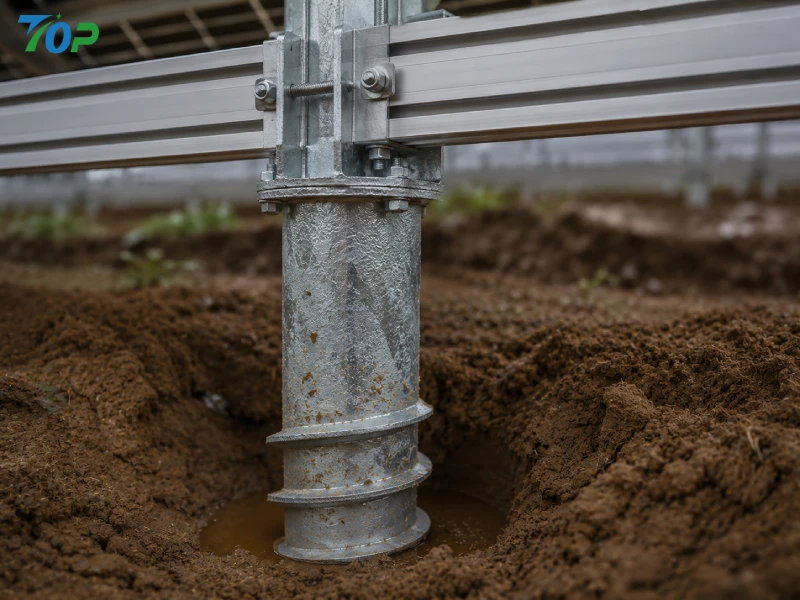
Ground screw foundations have become increasingly popular in agricultural photovoltaic projects because they minimize soil disturbance during installation. Compared with traditional concrete foundations, ground screws offer several moisture-related advantages:
- Reduced soil compaction
- Improved natural drainage
- Lower installation impact on root systems
- Faster EPC construction timelines
- Reduced long-term farmland disruption
Concrete foundations, while structurally robust, may create impermeable zones that alter natural water movement within the soil profile. Large-scale concrete usage can also complicate future agricultural restoration efforts.
As sustainability requirements continue to increase globally, many EPC contractors now prioritize minimally invasive foundation systems that preserve both soil health and long-term agricultural usability.
How to Design Agricultural Solar Mounting Systems for Optimal Soil Moisture Control
Designing an effective agrivoltaic system requires far more than simply installing photovoltaic panels above farmland. Successful projects depend on the ability to create a balanced environmental system that supports both renewable energy generation and long-term agricultural productivity.
Because soil moisture directly affects crop growth, irrigation efficiency, erosion risk, and overall farm sustainability, modern agrivoltaic engineering increasingly focuses on moisture-aware structural design.
A properly optimized agricultural solar mounting system can improve water retention while avoiding the common problems associated with excessive runoff concentration, soil saturation, or poor ventilation.
Recommended Mounting Heights for Different Crop Types
Mounting height is one of the most important design variables influencing moisture distribution beneath photovoltaic arrays.
Higher structures generally improve:
- Air circulation
- Humidity control
- Temperature stability
- Rainfall dispersion
- Machinery accessibility
Elevated arrays also help reduce excessive moisture accumulation by allowing better ventilation beneath the modules.
Different agricultural applications require different clearance levels:
- Vegetable farming typically requires moderate clearance
- Livestock grazing systems often require higher elevations
- Orchards may require customized structural spacing
- Mechanized farmland needs sufficient equipment access
EPC contractors must carefully balance structural cost, wind resistance, and agricultural functionality when determining optimal mounting height.
Optimal Row Spacing for Water Distribution
Row spacing directly affects how sunlight, airflow, and rainwater are distributed across agricultural land.
Narrow row spacing increases photovoltaic density and energy generation capacity but may also create:
- Excessive shading
- Uneven rainfall distribution
- Localized moisture accumulation
- Reduced ventilation efficiency
Wider spacing improves environmental balance by allowing:
- More uniform rainfall infiltration
- Better airflow circulation
- Healthier soil drying cycles
- Improved crop sunlight exposure
Advanced agrivoltaic engineering increasingly uses computational modeling and terrain analysis to optimize row spacing according to local climate conditions and crop requirements.
Best Tilt Angles for Rainwater Management
Solar panel tilt angle is often optimized primarily for photovoltaic energy generation. However, in agrivoltaic engineering, tilt angle also plays a major role in controlling rainwater runoff behavior and soil moisture distribution beneath the array.
When rainwater strikes photovoltaic modules, the angle of the panel determines:
- The speed of runoff flow
- The concentration intensity at drip edges
- The spatial distribution of soil moisture
- The risk of localized erosion
- The infiltration characteristics of rainfall
Steeper tilt angles generally accelerate runoff velocity, increasing the likelihood of concentrated water accumulation along panel edges. In heavy rainfall regions, this can create severe erosion problems if drainage systems are poorly designed.
Conversely, lower tilt angles may help diffuse rainfall more evenly but can reduce self-cleaning efficiency and increase dust accumulation on module surfaces.
Engineering-grade agrivoltaic projects therefore require a balanced optimization strategy that considers:
- Annual solar irradiation
- Regional rainfall intensity
- Crop water sensitivity
- Terrain slope conditions
- Drainage infrastructure capacity
In many commercial agricultural PV projects, EPC contractors increasingly integrate runoff control features such as:
- Runoff diffusion channels
- Vegetation stabilization strips
- Subsurface drainage systems
- Controlled water collection pathways
These solutions help prevent long-term soil degradation while improving overall moisture regulation beneath photovoltaic structures.
Ground Screw Foundations vs Concrete Foundations
Foundation engineering directly affects not only structural stability but also the long-term hydrological behavior of farmland beneath agrivoltaic systems.
In recent years, ground screw foundations have become increasingly popular for agricultural solar mounting applications because they minimize soil disturbance while preserving natural water infiltration pathways.
Compared with traditional concrete foundations, ground screws offer several environmental and engineering advantages:
- Reduced soil compaction
- Lower excavation requirements
- Minimal disruption to root-zone structures
- Improved water permeability
- Faster installation speed
- Lower environmental impact
Concrete foundations, while highly stable in certain terrain conditions, may create impermeable zones that alter natural drainage patterns. In large-scale agrivoltaic systems, excessive concrete usage can reduce soil permeability and increase water accumulation risks around structural bases.
Ground screw systems are particularly advantageous for EPC contractors because they:
- Reduce installation labor time
- Improve project scheduling efficiency
- Lower transportation costs
- Minimize farmland restoration requirements
- Support easier future system removal or modification
As sustainability standards continue to evolve globally, minimally invasive foundation systems are becoming increasingly important in commercial agrivoltaic development.
Drainage Channel Design Best Practices
Effective drainage design is one of the most critical yet underestimated aspects of agrivoltaic engineering. Even well-designed photovoltaic structures can experience severe agricultural performance problems if water movement beneath the arrays is not properly managed.
High-performance drainage systems should address:
- Concentrated runoff dispersion
- Surface erosion prevention
- Waterlogging mitigation
- Long-term soil stability
- Maintenance accessibility
Modern agricultural solar mounting projects increasingly incorporate integrated drainage infrastructure during the earliest design stages rather than treating drainage as a secondary consideration.
Best engineering practices often include:
- Vegetated drainage corridors
- Permeable runoff pathways
- Subsurface water redirection systems
- Erosion-resistant channel reinforcement
- Rainwater harvesting integration
In some advanced agrivoltaic systems, collected rainwater is redirected into controlled irrigation systems to improve water use efficiency and reduce dependence on external water sources.
EPC contractors who prioritize integrated water management during system planning typically achieve:
- Lower long-term maintenance costs
- Improved agricultural productivity
- Reduced erosion-related repairs
- Greater environmental sustainability
Traditional Ground-Mounted Solar vs Agrivoltaic Mounting Systems
Although traditional utility-scale solar farms and agrivoltaic projects both utilize photovoltaic technology, their engineering objectives differ significantly. Conventional solar farms prioritize energy density and electrical output, while agrivoltaic systems must simultaneously support agricultural productivity, environmental sustainability, and long-term soil health.
These differing priorities create major differences in mounting system design, land-use strategy, and soil moisture behavior.
Differences in Soil Evaporation
In conventional ground-mounted solar farms, panels are typically installed closer to the ground with tighter row spacing optimized for maximum energy generation.
This configuration often produces:
- Restricted airflow
- Higher localized heat accumulation
- Uneven moisture retention patterns
- Limited agricultural usability
Agrivoltaic systems, by contrast, are engineered to create a more balanced environmental microclimate. Elevated structures and optimized spacing help reduce excessive evaporation while maintaining sufficient airflow for healthy soil conditions.
This balance is especially important in regions facing:
- Water scarcity
- Extreme summer temperatures
- Drought-related crop stress
Water Runoff Behavior Comparison
Rainwater distribution differs substantially between traditional and agricultural photovoltaic systems.
Conventional utility-scale projects often focus primarily on protecting electrical infrastructure from water accumulation, while agrivoltaic systems must also protect crop health and farmland integrity.
Agrivoltaic engineering therefore requires more advanced runoff management strategies to prevent:
- Localized erosion
- Root-zone oversaturation
- Crop damage
- Drainage instability
Compared with standard solar farms, modern agrivoltaic mounting systems increasingly incorporate:
- Controlled runoff pathways
- Vegetation stabilization zones
- Integrated irrigation compatibility
- Water redistribution optimization
Agricultural Productivity Comparison
Traditional solar farms generally remove land from agricultural production entirely. Agrivoltaic systems, however, are designed to maintain dual-use functionality by enabling simultaneous farming and electricity generation.
Properly engineered agrivoltaic environments can improve agricultural resilience by:
- Reducing heat stress on crops
- Improving soil moisture retention
- Reducing irrigation demand
- Protecting sensitive crops from extreme weather
Some crop varieties even demonstrate improved productivity under partial shading conditions created by photovoltaic arrays.
However, successful agricultural performance depends heavily on:
- Structural design quality
- Crop compatibility analysis
- Drainage engineering
- Microclimate optimization
Long-Term Land Utilization Efficiency
Land-use efficiency is one of the strongest arguments supporting agrivoltaic adoption worldwide.
By integrating renewable energy production with active agriculture, agrivoltaic projects help:
- Reduce land-use conflicts
- Improve economic productivity per hectare
- Support sustainable farming practices
- Increase rural energy independence
For governments and institutional investors focused on sustainability goals, agrivoltaic systems increasingly represent a strategic infrastructure solution capable of supporting both food security and renewable energy expansion simultaneously.
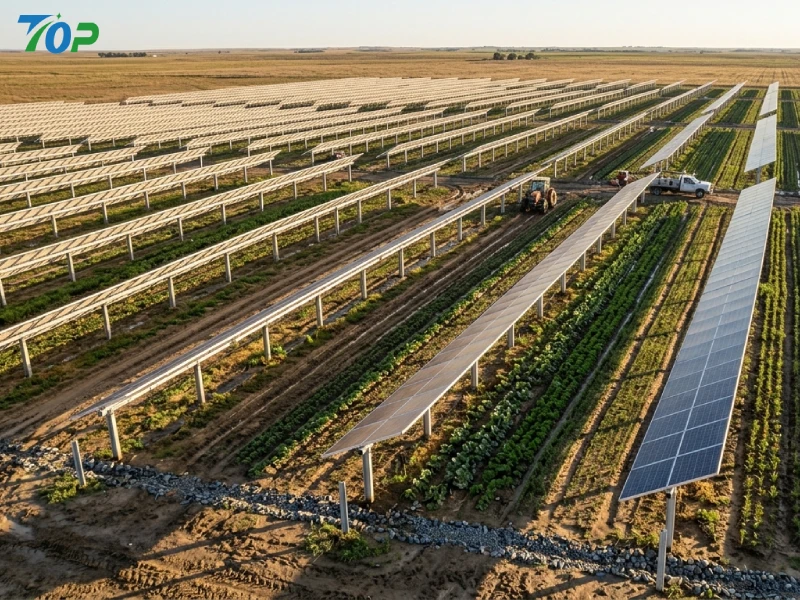
How EPC Contractors Can Optimize Agrivoltaic ROI Through Soil Moisture Management
For EPC contractors, the financial performance of agrivoltaic projects depends on much more than photovoltaic output alone. Long-term project profitability is increasingly influenced by agricultural productivity, water efficiency, operational stability, and lifecycle maintenance costs.
Soil moisture management sits at the center of all these factors. A properly engineered agricultural solar mounting system can improve water retention, reduce environmental stress, minimize farmland degradation, and enhance long-term operational sustainability.
Lower Irrigation Infrastructure Costs
In many agricultural regions, irrigation infrastructure represents a major capital and operational expense. Agrivoltaic systems that improve natural soil moisture retention can significantly reduce irrigation demand.
Reduced irrigation frequency offers several advantages:
- Lower water consumption
- Reduced pumping energy costs
- Lower infrastructure maintenance expenses
- Improved drought resilience
For commercial farming operations, these savings can substantially improve long-term agrivoltaic ROI.
Reduced Maintenance and Soil Erosion Risks
Poor runoff management can create severe maintenance problems over time, including:
- Erosion beneath panel edges
- Foundation instability
- Drainage channel damage
- Access road deterioration
Engineering-grade agrivoltaic design minimizes these risks through optimized:
- Panel spacing
- Drainage pathways
- Structural elevation
- Foundation selection
Lower maintenance requirements directly improve lifecycle project economics for both EPC contractors and asset owners.
Improved Land Utilization Efficiency
One of the most attractive advantages of agrivoltaics is the ability to generate multiple revenue streams from the same land area.
Properly optimized systems allow farmland to simultaneously support:
- Renewable electricity production
- Crop cultivation
- Livestock operations
- Water conservation initiatives
This dual-use model improves economic productivity while reducing land-use conflicts between agriculture and renewable energy development.
Importance of Selecting Reliable Agricultural Solar Mounting Suppliers
The performance of an agrivoltaic project depends heavily on the engineering quality of the mounting structure itself.
Experienced agrivoltaic mounting manufacturers typically provide:
- Structural load analysis support
- Terrain adaptability engineering
- Drainage-aware system optimization
- Corrosion-resistant material solutions
- Utility-scale production capability
High-quality mounting systems commonly utilize:
- Hot-dip galvanized steel
- AL6005-T5 anodized aluminum rails
- SUS304 stainless steel fasteners
These materials improve long-term structural durability in humid agricultural environments while reducing maintenance risks associated with corrosion and environmental exposure.
For EPC contractors managing large-scale agrivoltaic developments, partnering with an engineering-focused mounting manufacturer can significantly reduce installation risk and improve long-term project reliability.
How to Choose a Reliable Agricultural Solar Mounting Manufacturer
As agrivoltaic deployment expands globally, the quality of the mounting supplier increasingly determines long-term project success. Agricultural environments place unique mechanical and environmental demands on photovoltaic support structures, making supplier selection far more critical than in conventional solar applications.
EPC contractors, developers, and distributors should evaluate mounting manufacturers not only on pricing but also on engineering capability, production reliability, material quality, and long-term technical support.
Why Material Selection Matters in Humid Agricultural Environments
Agricultural environments expose photovoltaic structures to continuous moisture, fertilizer chemicals, soil acidity, and biological contaminants.
Low-quality materials may experience:
- Accelerated corrosion
- Fastener failure
- Structural instability
- Increased maintenance frequency
Engineering-grade manufacturers therefore prioritize corrosion-resistant materials capable of maintaining structural integrity under long-term environmental stress.
Importance of SUS304 Fasteners and Corrosion Resistance
Fasteners are often among the most vulnerable components in agricultural solar mounting systems.
High-humidity conditions combined with fertilizer exposure can rapidly degrade low-grade metal connectors, creating long-term safety and maintenance risks.
SUS304 stainless steel fasteners provide:
- Excellent corrosion resistance
- Long-term structural reliability
- Reduced maintenance requirements
- Improved lifecycle durability
Many utility-scale EPC projects now specify SUS304 fasteners as a standard requirement for agrivoltaic environments.
Certifications EPC Contractors Should Verify
Reliable agricultural solar mounting manufacturers should provide internationally recognized certifications and engineering documentation.
Common verification requirements include:
- TUV certification
- ISO manufacturing standards
- Structural calculation reports
- Material traceability documentation
- Wind load and snow load analysis
Proper certification helps reduce procurement risk while ensuring compliance with international project standards.
Manufacturing Capacity for Utility-Scale Agrivoltaic Projects
Large-scale agrivoltaic developments require stable supply chains, consistent production quality, and reliable delivery schedules.
Experienced manufacturers with utility-scale production capability can better support:
- Bulk procurement requirements
- Project scheduling efficiency
- Inventory standardization
- Global logistics coordination
For EPC contractors operating under strict construction timelines, supplier reliability can directly affect project profitability.
Why Custom Engineering Support Reduces Installation Risk
Every agrivoltaic project involves unique environmental variables, including:
- Terrain conditions
- Crop requirements
- Climate behavior
- Soil characteristics
- Wind exposure
Manufacturers capable of providing customized engineering support help EPC contractors optimize:
- Structural stability
- Installation efficiency
- Drainage performance
- Material utilization
- Long-term agricultural compatibility
Engineering-focused support is increasingly becoming a major competitive advantage in the rapidly growing agrivoltaic market.
FAQ About Agricultural Solar Mounting and Soil Moisture
Q1. Does agrivoltaic shading reduce irrigation needs?
Yes. Partial shading beneath agrivoltaic systems can reduce soil evaporation rates and improve root-zone moisture retention, helping lower irrigation frequency in many agricultural environments.
Q2. How do solar panels affect soil moisture retention?
Solar panels influence soil moisture by reducing direct sunlight exposure, modifying airflow, and redistributing rainfall runoff. Properly engineered systems can improve moisture stability while reducing drought stress on crops.
Q3. What mounting height is best for agricultural solar systems?
Optimal mounting height depends on crop type, machinery requirements, ventilation needs, and local climate conditions. Elevated structures generally provide better airflow and moisture balance for large-scale agrivoltaic projects.
Q4. Can agrivoltaics improve crop drought resistance?
In many climates, agrivoltaic systems help reduce heat stress and preserve soil moisture, which can improve crop resilience during drought periods and extreme summer temperatures.
Q5. Are ground screw foundations better for farmland?
Ground screw foundations are often preferred because they minimize soil disturbance, preserve water infiltration pathways, reduce installation time, and improve long-term farmland sustainability.
Q6. What materials are best for agricultural solar mounting systems?
High-quality agrivoltaic mounting systems typically use hot-dip galvanized steel, AL6005-T5 anodized aluminum rails, and SUS304 stainless steel fasteners for superior corrosion resistance and structural durability.
Engineering-Grade Agrivoltaic Mounting Solutions for Long-Term Farm Performance
As the global agrivoltaic market continues to expand, the relationship between photovoltaic infrastructure and agricultural sustainability is becoming increasingly important. Modern agrivoltaic systems are no longer simple solar installations placed on farmland. They are highly integrated environmental engineering systems that directly influence soil moisture behavior, crop productivity, irrigation efficiency, and long-term land performance.
Throughout this article, we explored how a properly engineered agricultural solar mounting system can significantly improve moisture retention, reduce evaporation losses, optimize rainfall distribution, and support healthier agricultural microclimates. At the same time, we examined the engineering risks associated with poor structural planning, including erosion, waterlogging, ventilation imbalance, and long-term soil degradation.
For EPC contractors and solar developers, successful agrivoltaic deployment requires balancing multiple engineering priorities simultaneously:
- Structural reliability
- Crop compatibility
- Drainage optimization
- Corrosion resistance
- Installation efficiency
- Long-term operational sustainability
As agricultural and renewable energy industries become increasingly interconnected, engineering-grade mounting systems will play a central role in maximizing the long-term value of agrivoltaic investments.
Experienced manufacturers with strong structural engineering capability, utility-scale production capacity, and advanced corrosion-resistant solutions can help EPC contractors reduce project risk while improving installation efficiency and long-term performance reliability.
For developers seeking durable, customizable, and EPC-ready agrivoltaic mounting solutions, partnering with a professional engineering-focused supplier is essential for achieving both agricultural sustainability and renewable energy profitability in the evolving global agrivoltaic market.
Agricultural Solar Mounting System for Soil Moisture Optimization & Agrivoltaic ROI
Still evaluating how an agricultural solar mounting system influences soil moisture distribution, drainage behavior, and agrivoltaic ROI? EPC contractors and solar developers often face hidden risks such as uneven runoff concentration, root-zone waterlogging, and corrosion in high-humidity farmland environments. TOPFENCE provides engineering-grade agrivoltaic mounting systems designed for optimized soil moisture control, controlled rainwater runoff, and stable agricultural microclimates. Our solutions integrate hot-dip galvanized steel structures, AL6005-T5 aluminum rails, SUS304 stainless steel fasteners, and ground screw foundation systems to ensure long-term durability, efficient installation, and reliable performance across utility-scale agricultural solar projects.
Request Agrivoltaic Mounting Design, Technical Support & EPC Quotation
Related News
- The Global EPC Sourcing Checklist: Managing Lead Times and Logistics for Solar Mounting Systems
- BIPV & Commercial Rooftops: Solving Waterproofing and Structural Integrity Challenges in Urban Solar
- Navigating Solar Certifications: Why UL 2703 and International Standards Matter for Project Bankability
- Maximizing Yield with Bifacial Modules: How to Select the Optimal Tracker for Enhanced Energy Output
- Wind Load and Coastal Engineering: Ensuring Your Ground-Mounted Solar Array Survives Extreme Weather
- Aluminum vs. Galvanized Steel: Choosing the Right Solar Mounting Structure for High-Corrosivity Environments
Leave me a message