Why EPC Companies Are Shifting Toward Modular Solar Fencing Systems
Why Modular Solar Fencing Systems Are Becoming the New Standard for Utility-Scale PV Projects
In today’s utility-scale solar industry, the modular solar fencing system is no longer treated as a simple perimeter accessory. For EPC contractors, project developers, and PV infrastructure procurement teams, fencing has become part of the broader engineering strategy that directly affects construction speed, long-term operational reliability, labor efficiency, and project ROI.
As utility-scale PV projects continue getting larger, tighter in schedule, and more geographically complex, traditional welded fencing methods are starting to expose several limitations. Delayed installation, corrosion failures at weld points, inconsistent site workmanship, and difficult maintenance management are now common issues across many large-scale solar projects.
This is one of the key reasons why more EPC companies are adopting modular solar fencing systems instead of conventional field-fabricated fences. Compared with traditional perimeter structures, modular solutions offer faster deployment, better anti-corrosion performance, simplified logistics, and more predictable installation quality — especially in projects where construction timelines are already under pressure.
For solar EPC firms operating across Southeast Asia, the Middle East, Europe, and emerging utility-scale markets, reducing on-site fabrication work has become increasingly important. Skilled labor shortages, rising construction costs, and stricter investor expectations are changing how infrastructure components are selected.
At the same time, distributors and PV infrastructure wholesalers are also moving toward standardized fencing products that can simplify inventory management and improve large-volume procurement efficiency.
In many ways, the shift toward modular perimeter systems reflects a wider trend happening across the solar industry itself: standardized engineering, faster deployment cycles, and lower lifecycle risk.
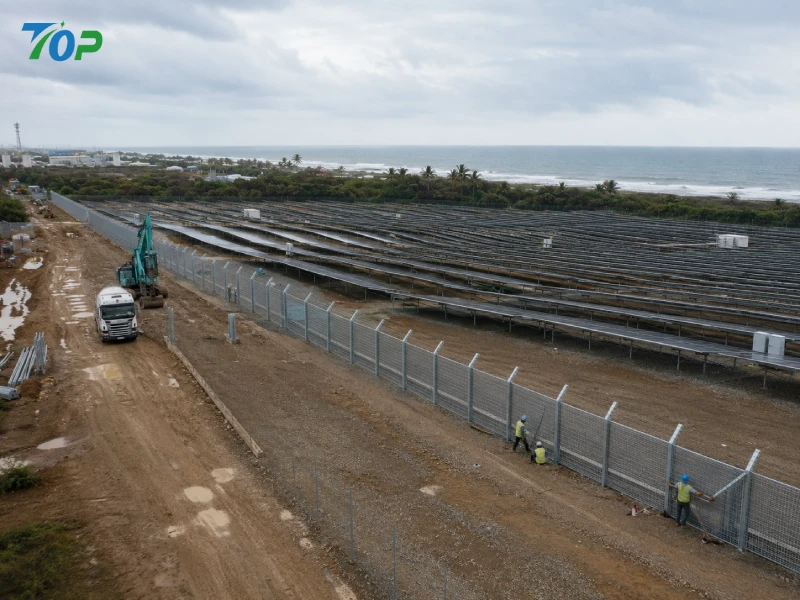
Why Solar Farm Fencing Is Becoming More Important in Modern EPC Projects
When people discuss utility-scale solar farms, the focus is usually placed on photovoltaic modules, inverters, trackers, or mounting structures. Those components obviously matter. But from an EPC execution perspective, perimeter infrastructure plays a surprisingly critical role in overall project delivery.
A poorly designed fencing system can slow down construction access, increase labor requirements, create long-term corrosion issues, and generate recurring maintenance claims after commissioning.
In remote utility-scale projects, fencing failures can even affect insurance compliance and site security certifications.
This becomes even more important in:
- Large ground-mounted solar farms
- Coastal PV installations
- Agrivoltaics projects
- Mountain or uneven terrain solar sites
- High-humidity tropical environments
- Remote desert PV plants
Unlike urban construction projects, utility-scale solar farms often cover extremely large land areas. A single project may require several kilometers of perimeter fencing. Under these conditions, even small inefficiencies in installation methods can quickly multiply into major schedule delays and labor cost overruns.
That is why EPC procurement teams are increasingly evaluating fencing systems using the same engineering logic applied to structural mounting systems:
- Installation speed
- Structural reliability
- Corrosion resistance
- Standardization
- Lifecycle maintenance cost
- Supply chain stability
The fence is no longer just a boundary line. It has become part of the project’s operational infrastructure.
What Is a Modular Solar Fencing System?
A modular solar fencing system is a pre-engineered perimeter security solution designed specifically for solar farm applications. Unlike traditional welded fencing that relies heavily on field fabrication, modular systems use standardized components manufactured in controlled factory environments.
The overall design philosophy is relatively simple:
- Reduce on-site welding
- Minimize manual cutting and adjustment
- Standardize installation procedures
- Improve corrosion protection
- Accelerate construction timelines
Most modular fence systems consist of several core components:
- Pre-assembled fence mesh panels
- Hot-dip galvanized steel posts
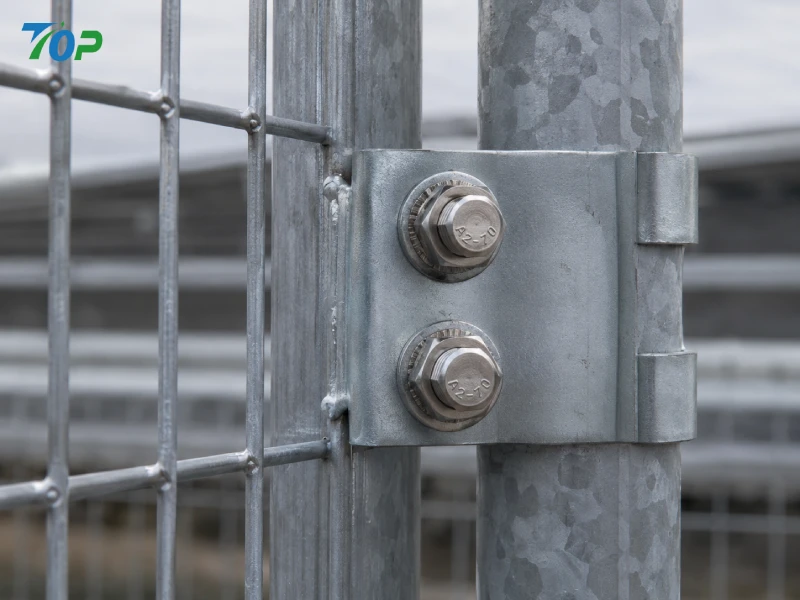
- Reinforced connection brackets
- SUS304 stainless steel fasteners
- Ground anchoring structures
- Anti-theft fastening accessories
The biggest difference between modular and conventional fencing is that modular systems are engineered around repeatability and rapid deployment.
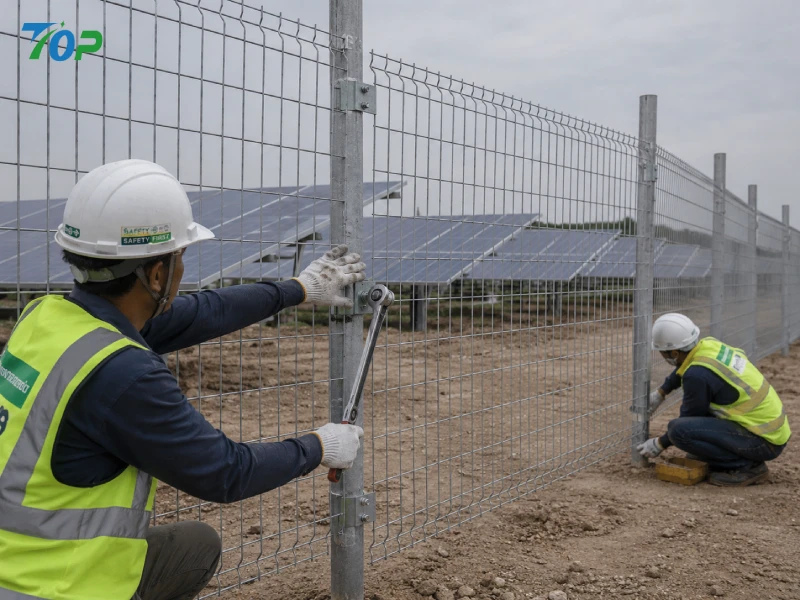
Instead of fabricating structures directly at the construction site, installers mainly perform positioning, anchoring, and bolt-based assembly operations.
For EPC contractors, this creates a much more predictable installation workflow.
Typical Materials Used in Modular Solar Fence Systems
Material selection is one of the most important factors affecting the long-term durability of a solar farm fencing system.
Most engineering-grade modular systems use:
- Q235 or Q355 galvanized steel
- Zn-Al-Mg coated steel materials
- SUS304 stainless steel bolts and fasteners
- HDG (hot-dip galvanized) structural components
For utility-scale projects located near coastal areas or humid agricultural zones, anti-corrosion performance becomes especially critical.
Traditional welded fence structures often experience coating damage during field fabrication. Once galvanized layers are compromised, rust can gradually spread from exposed areas, especially around weld joints and cut edges.
Modular systems reduce many of these risks because most surface treatments are completed before delivery, under controlled factory conditions.
Some advanced solar farm fencing systems now also use Zn-Al-Mg coating technology because of its improved corrosion resistance and self-healing properties around scratches and exposed edges.
Although initial material costs may be slightly higher, the long-term maintenance savings are often significant.
How Traditional Solar Farm Fencing Creates Problems for EPC Contractors
Traditional welded fencing methods were originally developed for general infrastructure projects, not specifically for utility-scale photovoltaic plants.
As solar projects become larger and more schedule-sensitive, many EPC companies are discovering that conventional fencing systems are no longer aligned with modern construction demands.
High Dependence on Skilled Labor
One of the biggest limitations of traditional fencing systems is their dependence on experienced welding teams.
Field welding requires:
- Skilled labor availability
- Stable weather conditions
- Additional safety management
- More construction supervision
- Longer installation timelines
In many emerging solar markets, skilled labor shortages are becoming a serious issue. EPC companies working across multiple countries often face inconsistent workmanship quality between different local subcontractors.
This inconsistency can create installation defects that are difficult to detect during early project stages.
By comparison, modular fencing systems simplify the installation process into standardized assembly procedures, reducing dependency on highly specialized welding crews.
On-Site Welding Frequently Damages Corrosion Protection
Corrosion is one of the most underestimated lifecycle risks in solar farm infrastructure.
Many traditional fence systems use galvanized steel components initially, but once field welding begins, the protective coating near the weld area can become damaged.
This creates vulnerable points where corrosion starts developing.
In humid or coastal environments, these failures may appear much earlier than expected.
EPC contractors operating in Southeast Asia often report that fence deterioration around weld joints becomes visible within only a few years if protective treatments are not properly restored after installation.
The problem becomes worse in environments exposed to:
- Salt spray
- High humidity
- Fertilizer exposure in agrivoltaics projects
- Heavy rainfall cycles
- Temperature fluctuations
Once corrosion begins spreading, maintenance costs can rise quickly, especially across very large project perimeters.
Traditional Fence Installation Is Slower Than Many EPC Teams Expect
At first glance, fencing may appear to be a relatively small part of an overall solar EPC project.
But utility-scale installations often require several thousand meters of perimeter security infrastructure.
Traditional installation workflows usually involve:
- Manual measurement
- Field cutting
- Welding operations
- Surface treatment repairs
- Repeated alignment adjustments
Each additional manual process increases the probability of delays.
In projects already operating under compressed schedules, even minor construction inefficiencies can affect:
- Commissioning timelines
- Labor mobilization costs
- Equipment rental duration
- Grid connection deadlines
- Overall EPC profitability
This is why many EPC companies now prioritize installation efficiency when selecting fencing suppliers.
Why Modular Solar Fencing Systems Are Becoming the Preferred EPC Solution
The increasing adoption of modular solar fencing systems is not simply a product trend. It reflects broader structural changes happening within utility-scale solar construction.
EPC contractors are under pressure to complete projects faster while simultaneously reducing operational risk.
Modular systems help address both objectives.
Faster Installation Significantly Improves Construction Efficiency
One of the main reasons EPC companies prefer modular fencing systems is installation speed.
Compared with traditional welded structures, modular systems can dramatically simplify construction workflows.
A typical installation process usually follows these steps:
- Post positioning
- Foundation anchoring
- Fence panel mounting
- Bolt fastening
- Final alignment inspection
Because most components arrive pre-manufactured and standardized, installers spend far less time performing manual fabrication work on-site.
This creates several practical advantages:
- Reduced labor hours
- Less dependency on welding teams
- Fewer installation errors
- Lower weather-related delays
- More predictable construction scheduling
For large utility-scale projects, the time savings can become very substantial.
In some cases, reducing fencing installation duration by even a few days can help EPC contractors avoid expensive project bottlenecks later in the construction cycle.
This is especially true when multiple infrastructure activities are happening simultaneously across the site.
Modular Systems Reduce Overall Installed Cost — Not Just Material Cost
One common mistake in infrastructure procurement is evaluating fencing solutions based only on raw material pricing.
Experienced EPC procurement teams usually look at the total installed cost instead.
That includes:
- Labor cost
- Installation speed
- Equipment usage
- Future maintenance
- Replacement efficiency
- Construction risk exposure
In many projects, a lower-priced traditional fence can actually create higher total project cost once labor and maintenance are considered.
Modular solar fencing systems often reduce:
- Installation labor demand
- Field rework frequency
- Corrosion-related maintenance
- Spare-part complexity
For EPC firms managing multiple utility-scale projects annually, standardization also improves internal operational efficiency.
Installation teams become familiar with repeatable assembly procedures, which further increases productivity over time.
That operational consistency matters more than many people initially think.
Better Corrosion Resistance Improves Long-Term Solar Farm ROI
For utility-scale solar projects, corrosion is not just a material issue. It is a long-term financial issue.
Many solar farms are designed for operational lifecycles exceeding 25 years. During that period, perimeter fencing systems remain continuously exposed to:
- Rainwater infiltration
- Salt-laden coastal air
- High UV exposure
- Agricultural chemicals
- Ground moisture
- Temperature expansion and contraction cycles
If the fencing system begins deteriorating after only several years, maintenance expenses can quickly accumulate across large project sites.
This is one reason why EPC contractors increasingly favor modular solar fencing systems using engineered anti-corrosion treatments instead of conventional field-welded structures.
Why Corrosion Happens Faster in Traditional Welded Fence Systems
Traditional fence fabrication frequently involves cutting, grinding, and welding directly at the project site.
These operations often damage the original galvanized coating protecting the steel surface.
Even when installers apply touch-up coatings after welding, the protection quality is rarely as consistent as factory-controlled galvanization processes.
Over time, moisture penetrates exposed steel areas around:
- Weld seams
- Cut edges
- Grinding zones
- Fastener interfaces
- Damaged coating regions
Once oxidation begins, corrosion can gradually spread underneath adjacent coating layers.
In tropical and coastal PV projects, this process can accelerate significantly due to constant humidity and airborne salt particles.
Several EPC maintenance teams operating in Southeast Asian coastal environments have observed that corrosion problems often first appear around manually welded joints rather than primary structural members themselves.
This is exactly where modular assembly methods provide an engineering advantage.
How Modular Fence Systems Improve Anti-Corrosion Performance
Most engineering-grade modular solar fencing systems are designed to minimize coating damage during installation.
Instead of relying heavily on field welding, components are manufactured under controlled factory conditions and connected primarily using bolt-fastening methods.
This significantly reduces the number of exposed steel areas created during construction.
High-quality systems commonly use:
- Hot-dip galvanized steel posts
- Zn-Al-Mg coated mesh panels
- SUS304 stainless steel fasteners
- Corrosion-resistant locking accessories
Among these materials, Zn-Al-Mg coatings have gained considerable attention in recent years because of their enhanced corrosion resistance characteristics.
Compared with conventional galvanized coatings, Zn-Al-Mg materials provide:
- Better edge protection
- Improved scratch resistance
- Longer salt spray performance
- Reduced red-rust formation
In some environments, their corrosion resistance can outperform ordinary hot-dip galvanization by several times, especially in coastal exposure conditions.
For EPC contractors, improved corrosion durability directly translates into:
- Lower maintenance frequency
- Reduced replacement costs
- Lower warranty risk
- Improved project asset value
This matters even more for utility-scale projects financed under long-term investment models where infrastructure reliability influences overall financial performance.
Standardized Modular Systems Simplify Maintenance and Spare-Part Management
Maintenance efficiency is another major reason why EPC companies and solar asset owners increasingly prefer modular perimeter systems.
In traditional fencing projects, component dimensions and fabrication details often vary depending on the installation crew and site conditions.
That lack of standardization creates long-term operational complications.
For example:
- Replacement parts may require custom fabrication
- Repair timelines become longer
- Inventory planning becomes inefficient
- Maintenance teams must manage inconsistent specifications
Across large utility-scale projects containing several kilometers of fencing, these inefficiencies can become surprisingly expensive over time.
Why Standardization Matters in Utility-Scale Solar Projects
Modern solar EPC execution increasingly depends on repeatable engineering systems.
This applies not only to mounting structures and electrical components, but also to perimeter infrastructure.
Modular solar fencing systems typically use standardized:
- Panel dimensions
- Post profiles
- Connection brackets
- Fastener specifications
- Anchoring methods
Because components are interchangeable, maintenance teams can replace damaged sections much faster.
Distributors and wholesalers also benefit because standardized systems reduce inventory complexity.
Instead of stocking many custom fence variations, suppliers can maintain unified product specifications suitable for multiple project types.
That operational simplicity becomes very valuable in international EPC supply chains where logistics efficiency directly affects profitability.
Lower Spare-Part Complexity Improves O&M Efficiency
Solar farm operators increasingly evaluate infrastructure systems based on lifecycle operating efficiency rather than only upfront procurement cost.
Modular fencing supports this approach because spare parts are easier to:
- Store
- Transport
- Identify
- Replace
- Standardize across multiple sites
For utility-scale projects operating in remote regions, faster maintenance response times can significantly reduce operational disruptions.
This is particularly important for:
- Government-backed solar projects
- IPP-owned utility plants
- High-security energy infrastructure
- Cross-border EPC developments
As more investors prioritize predictable operational expenditure models, maintainability has become an increasingly important infrastructure selection factor.
Structural Reliability Is Becoming a Higher Priority for EPC Contractors
In many older solar projects, perimeter fencing was treated as a relatively low-priority procurement category.
That mindset is changing.
Today, fencing failures can create much broader project consequences than many developers previously assumed.
A damaged or unstable perimeter system may lead to:
- Unauthorized site access
- Equipment theft
- Insurance disputes
- Safety compliance issues
- Operational interruptions
- Additional maintenance mobilization
For large utility-scale solar plants located in remote regions, perimeter integrity is closely connected to overall asset security strategy.
Wind Load Performance Matters More Than Before
As solar farms expand into more geographically diverse regions, fencing systems must withstand increasingly challenging environmental conditions.
These include:
- High seasonal wind loads
- Desert sandstorms
- Coastal typhoon exposure
- Heavy rainfall conditions
- Ground settlement movement
Traditional fence systems fabricated inconsistently in the field may experience:
- Weak weld quality
- Alignment instability
- Uneven load distribution
- Premature structural fatigue
By comparison, engineered modular solar fencing systems are usually designed using standardized structural calculations and controlled production tolerances.
Well-designed systems commonly include:
- Reinforced support posts
- Optimized mesh geometry
- Cross-bracing options
- Wind-resistant connection methods
- Stable foundation anchoring systems
This improves overall structural consistency across large installations.
For EPC contractors, predictable structural performance reduces after-sales risk significantly.
Engineering Documentation Is Becoming More Important During Procurement
In the past, some fencing procurement decisions were made primarily based on pricing.
Today, more EPC firms are requesting:
- Wind load calculations
- Material certification reports
- Coating thickness documentation
- Salt spray test results
- Foundation engineering recommendations
This reflects a broader industry shift toward engineering accountability and infrastructure standardization.
For manufacturers, the ability to provide technical documentation is becoming just as important as manufacturing capability itself.
Increasingly, EPC buyers want suppliers that function as engineering partners rather than simple material vendors.
Modular Fence Systems Perform Better on Uneven and Complex Terrain
Not every solar farm is built on perfectly flat ground.
Many utility-scale projects today are located in:
- Mountainous regions
- Agricultural land
- Desert environments
- Sloped terrain
- Remote undeveloped areas
Under these conditions, traditional rigid fence structures often require extensive field modification during installation.
That creates several construction problems:
- Longer installation time
- Additional cutting and welding
- Inconsistent alignment quality
- Higher labor consumption
- Greater corrosion exposure after modification
Modular solar fencing systems are generally much better suited for terrain adaptability.
Adjustable Designs Improve Terrain Compatibility
Most modular systems can accommodate moderate elevation changes through:
- Adjustable post spacing
- Flexible connection angles
- Step-style installation methods
- Terrain-following panel alignment
This reduces the need for heavy on-site fabrication adjustments.
For EPC contractors managing large solar farms across uneven landscapes, installation flexibility can produce major labor savings.
In agrivoltaics projects specifically, terrain adaptability is especially valuable because fencing often needs to integrate with:
- Livestock movement zones
- Agricultural access roads
- Irrigation layouts
- Crop management pathways
A rigid conventional fence design may interfere with ongoing agricultural operations, while modular layouts provide more installation flexibility.
Remote Project Logistics Become Easier With Modular Components
Transporting fencing materials into remote project regions is another challenge many EPC companies face.
Traditional welded fence structures can be difficult to:
- Stack efficiently
- Load into containers
- Protect during shipping
- Handle at difficult sites
Modular systems are typically engineered with logistics efficiency in mind.
Standardized panel dimensions and optimized packaging methods help improve:
- Container utilization
- Loading efficiency
- Transportation safety
- Warehouse organization
For international solar EPC projects involving overseas shipment, these logistics improvements can contribute meaningful cost savings.
More importantly, they reduce supply-chain uncertainty — something that has become increasingly important after recent global logistics disruptions.
Why More Solar Distributors and Wholesalers Prefer Modular Fence Products
Although EPC contractors remain the primary decision-makers for utility-scale fencing systems, distributors and PV infrastructure wholesalers are also playing a larger role in procurement strategy.
Their priorities are slightly different from EPC firms, but modular systems align well with both groups.
Inventory Standardization Reduces Warehouse Pressure
Traditional fencing products often involve inconsistent specifications across projects.
This creates inventory management problems such as:
- Too many SKU variations
- Low stock turnover efficiency
- Difficult replacement coordination
- Higher warehouse occupancy
By comparison, modular solar fencing systems typically use repeatable component standards that simplify inventory planning.
Distributors can stock:
- Unified panel sizes
- Standardized posts
- Compatible fastener kits
- Interchangeable accessories
That reduces operational complexity while improving supply responsiveness.
Bulk Procurement Efficiency Improves Margins
For wholesalers handling large-volume utility-scale projects, procurement efficiency directly affects profitability.
Standardized modular systems help improve:
- Container loading density
- Procurement predictability
- Supplier coordination
- Large-scale purchasing consistency
Some distributors also prefer modular systems because installation simplicity reduces the likelihood of customer complaints and after-sales disputes.
That is an important but often overlooked advantage.
In infrastructure distribution markets, reducing technical support burden can be just as valuable as reducing material cost itself.
Key Technical Factors EPC Companies Should Evaluate Before Selecting a Modular Fence Supplier
Not all modular fencing systems deliver the same engineering performance.
As demand for utility-scale solar infrastructure grows globally, the market has also seen an increase in low-cost perimeter products that prioritize pricing over long-term reliability.
For EPC contractors, selecting the wrong supplier can create serious downstream risks including:
- Installation delays
- Corrosion failures
- Structural instability
- Inconsistent component quality
- Warranty disputes
- Higher lifecycle maintenance costs
That is why experienced procurement teams usually evaluate modular solar fencing systems using both engineering and operational criteria rather than focusing only on unit pricing.
Material Quality Verification Should Never Be Overlooked
One of the first evaluation steps is confirming the actual material specifications being supplied.
Some products advertised as “galvanized” may use coating thicknesses insufficient for long-term outdoor solar applications.
For utility-scale projects, EPC firms commonly verify:
- Steel grade documentation
- Zinc coating thickness
- SUS304 fastener certification
- Material traceability records
- Corrosion resistance testing data
This is particularly important for projects located in:
- Coastal environments
- High-rainfall tropical regions
- Desert climates with large temperature swings
- Agricultural exposure zones
A fence system that performs adequately in mild inland conditions may fail much faster in aggressive environmental exposure categories.
Because solar farms are long-lifecycle assets, even relatively small material quality compromises can create major operational consequences years later.
Structural Engineering Capability Is More Important Than Marketing Claims
Some fencing suppliers focus heavily on promotional language while providing limited engineering documentation.
Professional EPC buyers usually look beyond sales brochures.
Instead, they evaluate whether suppliers can provide:
- Wind load calculations
- Foundation recommendations
- Structural analysis reports
- Connection strength data
- Installation engineering drawings
This technical support becomes especially important in utility-scale projects exposed to high wind regions or difficult soil conditions.
For example, fencing systems installed in typhoon-prone coastal areas may require:
- Deeper foundations
- Reinforced post sections
- Additional bracing structures
- Higher-strength fasteners
Without proper engineering adaptation, even a seemingly simple perimeter system can become a long-term structural liability.
That is why more EPC firms now prefer manufacturers capable of supporting project-specific engineering optimization rather than offering only standard catalog products.
Manufacturing Consistency Directly Affects Installation Efficiency
Even well-designed systems can create construction problems if manufacturing consistency is poor.
Dimensional deviations between fence panels, posts, or brackets can slow installation significantly.
Common problems caused by inconsistent production include:
- Misaligned bolt holes
- Uneven panel spacing
- Installation rework
- Increased labor consumption
- Field modification requirements
These issues become magnified across large utility-scale projects involving thousands of fencing components.
To reduce these risks, EPC procurement teams increasingly evaluate:
- Factory automation capability
- Production tolerance control
- Quality inspection procedures
- Batch consistency management
- Large-scale manufacturing capacity
Reliable manufacturing systems help ensure installation predictability, which is critical for schedule-sensitive EPC projects.
Packaging and Logistics Capability Matter More Than Many Buyers Expect
For international solar projects, logistics efficiency has become an increasingly important procurement factor.
Fencing systems are bulky infrastructure products. Poor packaging design can lead to:
- Transportation damage
- Lower container utilization
- Difficult unloading operations
- Component identification confusion
- Higher logistics costs
Well-designed modular systems are usually optimized for:
- Container loading efficiency
- Stacking stability
- Labeling clarity
- Site unloading convenience
- Protection against shipping abrasion
For large-scale overseas EPC projects, these details can significantly affect total procurement efficiency.
Some experienced project managers even consider logistics optimization an indirect form of construction risk reduction.
That may sound excessive at first, but in reality, delayed or damaged infrastructure materials can easily disrupt tightly coordinated project schedules.
Typical Applications of Modular Solar Fencing Systems
The use of modular perimeter systems is expanding across multiple categories of solar infrastructure projects.
Although utility-scale PV plants remain the primary application, modular fence systems are increasingly used in many specialized environments because of their flexibility and long-term durability.
Utility-Scale Solar Farms
Large ground-mounted PV plants remain the most common application for modular solar fencing systems.
These projects often require several kilometers of perimeter protection, making installation efficiency extremely important.
In utility-scale developments, modular systems help improve:
- Construction speed
- Perimeter security
- Long-term corrosion resistance
- Maintenance standardization
- Project scalability
As solar plants continue increasing in size globally, standardized infrastructure solutions are becoming more attractive to EPC contractors seeking predictable project execution.
Agrivoltaics Projects
Agrivoltaics introduces unique infrastructure challenges because solar systems must coexist with active agricultural operations.
In these environments, fencing may serve several functions simultaneously:
- Livestock separation
- Controlled equipment access
- Crop protection
- Security management
- Boundary control
Modular fence systems are particularly useful in agrivoltaics because they can adapt more easily to:
- Uneven farmland terrain
- Irrigation layouts
- Animal movement paths
- Agricultural machinery access routes
Additionally, corrosion resistance becomes increasingly important because agricultural environments may expose fencing materials to:
- Fertilizers
- Organic acids
- Continuous moisture
- Animal waste exposure
Under these conditions, engineered anti-corrosion systems offer clear lifecycle advantages.
Coastal and High-Humidity Solar Projects
Coastal solar farms create some of the harshest corrosion environments for steel infrastructure.
Salt spray exposure accelerates oxidation, especially around damaged coating areas and welded joints.
This is one reason why many coastal EPC projects increasingly prefer modular solar fencing systems using:
- Hot-dip galvanized structures
- Zn-Al-Mg coated steel
- SUS304 stainless steel fasteners
- Reduced field welding methods
In humid tropical regions, maintenance accessibility can also become difficult during rainy seasons.
Reducing future maintenance frequency therefore becomes an important operational advantage.
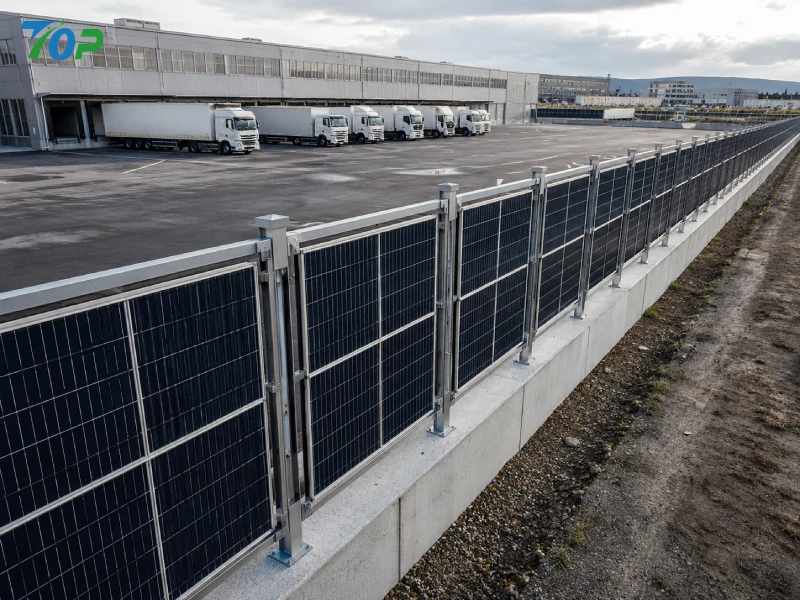
Industrial and Commercial PV Facilities
Although utility-scale projects dominate the discussion, modular fencing systems are also widely used in industrial and commercial solar applications.
These include:
- Factory PV installations
- Logistics park solar projects
- Industrial rooftop systems
- Energy storage facility protection zones
- Restricted-access infrastructure areas
In commercial environments, fencing systems are often selected not only for security performance but also for:
- Installation appearance
- Long-term maintenance simplicity
- Fast deployment during active operations
- Minimal disruption to facility workflows
Future Trends in Utility-Scale Solar Fencing Systems
The evolution of solar farm fencing closely reflects broader trends happening across the photovoltaic industry itself.
As utility-scale projects become larger, more automated, and more investment-driven, perimeter infrastructure is also becoming more standardized and technically sophisticated.
Standardization Is Becoming a Core EPC Priority
Modern utility-scale solar construction increasingly favors repeatable engineering systems.
EPC firms managing multi-country project pipelines benefit from standardized infrastructure because it improves:
- Procurement efficiency
- Construction predictability
- Installation training
- Maintenance consistency
- Inventory management
This is one reason why modular solar fencing systems are gaining momentum globally.
Instead of redesigning perimeter infrastructure for every project, EPC contractors increasingly prefer adaptable standardized platforms capable of supporting multiple site conditions.
That shift mirrors what already happened earlier with solar mounting systems and tracker structures.
Smart Security Integration Is Expanding
As solar farms become more digitally managed, perimeter security systems are gradually integrating with smart monitoring technologies.
Emerging applications include:
- Intrusion detection sensors
- Smart surveillance systems
- Remote perimeter monitoring
- Integrated access control
- IoT-based security alerts
Although fencing itself remains a physical infrastructure product, compatibility with modern security systems is becoming increasingly valuable for utility-scale energy assets.
Future modular fence systems will likely be designed with easier integration pathways for these technologies.
Advanced Anti-Corrosion Materials Will Continue Developing
Corrosion protection technology is also evolving rapidly.
Beyond traditional galvanization, newer coating systems are being adopted to improve long-term durability under aggressive environmental exposure.
Zn-Al-Mg materials in particular are attracting growing interest because they offer:
- Improved edge protection
- Enhanced scratch resistance
- Better salt spray durability
- Lower maintenance requirements
As lifecycle cost analysis becomes more important in infrastructure investment decisions, higher-performance materials are likely to see broader adoption despite slightly higher upfront costs.
For many asset owners, reducing future operational risk is worth the additional initial investment.
Conclusion
The growing adoption of modular solar fencing systems reflects a broader transformation happening across the utility-scale solar industry.
EPC contractors are under increasing pressure to deliver projects faster while simultaneously controlling long-term operational risk.
Traditional field-fabricated fencing methods often struggle to meet these evolving requirements because they introduce:
- Higher labor dependency
- Slower installation workflows
- Greater corrosion exposure
- More inconsistent construction quality
- Higher lifecycle maintenance complexity
By comparison, modular systems provide a more standardized and engineering-oriented approach to perimeter infrastructure.
For modern EPC projects, the advantages are increasingly difficult to ignore:
- Faster construction timelines
- Reduced on-site welding
- Improved corrosion resistance
- Better logistics efficiency
- Simplified maintenance management
- More predictable structural performance
As utility-scale PV plants continue expanding globally, perimeter infrastructure is no longer viewed as a secondary procurement category.
It is becoming part of the overall project reliability strategy.
That is why more EPC companies, distributors, and solar asset owners are shifting toward modular solar fencing systems designed specifically for long-term photovoltaic applications rather than relying on conventional general-purpose fencing approaches.
For manufacturers, this shift also raises the standard of competition.
Today’s market increasingly favors suppliers capable of offering:
- Engineering support
- Reliable material quality
- Scalable manufacturing capacity
- Consistent corrosion protection
- Efficient logistics solutions
- Long-term project collaboration capability
In other words, the future of solar farm fencing is no longer only about enclosing project boundaries.
It is about supporting faster, safer, and more reliable utility-scale solar development.
Frequently Asked Questions About Modular Solar Fencing Systems
Q1. Why are EPC companies shifting from traditional welded fences to modular solar fencing systems?
EPC contractors are increasingly adopting modular solar fencing systems because they improve installation efficiency, reduce labor dependency, and lower long-term maintenance risk. Traditional welded fencing often requires extensive on-site fabrication, which increases construction time and creates corrosion-prone weld points.
By comparison, modular systems use standardized bolt-connected components that simplify installation workflows and improve construction consistency across large utility-scale PV projects.
For EPC firms operating under tight commissioning schedules, faster perimeter installation can help reduce project delays and improve overall construction productivity.
Q2. What materials are typically used in engineering-grade modular solar fencing systems?
High-quality modular solar fencing systems commonly use:
- Hot-dip galvanized steel posts
- Zn-Al-Mg coated mesh panels
- SUS304 stainless steel fasteners
- Corrosion-resistant connection brackets
These materials are selected to improve corrosion resistance in harsh outdoor environments such as coastal solar farms, tropical PV projects, and agrivoltaics installations.
EPC procurement teams should verify coating thickness, material certification, and corrosion testing documentation before selecting a supplier.
Q3. How does modular fencing improve installation efficiency in utility-scale solar projects?
Modular fencing systems are designed for rapid assembly using pre-engineered components and standardized installation procedures.
Unlike traditional field-welded fencing, modular systems reduce:
- On-site welding
- Manual cutting and alignment work
- Installation errors
- Labor intensity
Most installations involve post anchoring, panel positioning, and bolt fastening, allowing EPC teams to accelerate construction progress while improving installation consistency across large project sites.
Q4. Are modular solar fencing systems suitable for coastal and high-humidity environments?
Yes. Engineering-grade modular solar fencing systems are specifically designed to perform in harsh outdoor environments including coastal utility-scale solar farms and tropical PV projects.
Systems using Zn-Al-Mg coatings, hot-dip galvanized steel, and SUS304 stainless steel fasteners provide significantly better corrosion resistance than conventional field-welded fencing structures.
Reducing field welding is especially important in coastal regions because damaged galvanized coatings near weld zones are common starting points for corrosion.
Q5. What should EPC companies evaluate when selecting a modular solar fencing supplier?
EPC contractors should evaluate suppliers based on both engineering capability and manufacturing reliability.
Key evaluation factors include:
- Material certification
- Wind load engineering support
- Corrosion resistance testing
- Production consistency
- Utility-scale project experience
- Packaging and logistics capability
Suppliers that can provide structural calculations, installation drawings, and anti-corrosion documentation are generally better suited for large utility-scale EPC projects.
Q6. Can modular solar fencing systems adapt to uneven terrain and agrivoltaics projects?
Modular fence systems are often more adaptable to uneven terrain than traditional rigid welded structures.
Adjustable panel alignment, flexible post spacing, and terrain-following installation methods allow modular systems to perform well in:
- Mountain solar farms
- Sloped utility-scale PV sites
- Agrivoltaics installations
- Remote undeveloped land
This flexibility helps reduce on-site modification work and improves installation efficiency in complex project environments.
Q7. How do modular solar fencing systems reduce long-term maintenance costs?
Modular fencing systems reduce maintenance costs through better corrosion resistance and standardized component design.
Because components are standardized, damaged sections can be replaced more quickly without custom fabrication.
In addition, anti-corrosion materials such as Zn-Al-Mg coated steel and SUS304 fasteners help reduce rust-related maintenance issues over the operational life of the solar farm.
For utility-scale PV projects with several kilometers of perimeter fencing, these maintenance savings can become significant over time.
Q8. What is the difference between modular solar fencing and traditional chain-link fencing for PV projects?
Traditional chain-link fencing is typically designed for general perimeter applications, while modular solar fencing systems are engineered specifically for utility-scale photovoltaic projects.
Modular systems usually provide:
- Faster installation
- Improved corrosion protection
- Higher structural consistency
- Better terrain adaptability
- Simplified maintenance management
For EPC contractors managing large solar infrastructure projects, modular systems often deliver better lifecycle value and lower operational risk compared with conventional chain-link fencing solutions.
Improve Utility-Scale PV Project Efficiency with Modular Solar Fencing Systems
Still evaluating how to reduce installation delays, corrosion failures, and long-term maintenance costs in utility-scale solar projects? Traditional welded fencing systems often create problems for EPC contractors, including labor-intensive installation, weld-point corrosion, inconsistent field quality, and difficult spare-part management. TOPFENCE provides engineered modular solar fencing systems designed for utility-scale PV plants, agrivoltaics projects, and coastal solar farms. Featuring hot-dip galvanized steel structures, Zn-Al-Mg anti-corrosion coating technology, SUS304 stainless steel fasteners, and fast-install bolt-connected modular designs, our systems help EPC companies improve construction efficiency, reduce lifecycle O&M costs, and enhance long-term project reliability in harsh outdoor environments.
Request Modular Solar Fencing Design, Samples & EPC PricingRelated News
- Integrated Solar Fencing: The Perfect Combination of Aesthetics, Security, and Renewable Energy
- Customized Solar Mounting Services for Extreme Climate Conditions: Engineering PV Structures for Wind, Snow, Corrosion and Terrain Challenges
- Solar Fence vs Traditional Fence: Which Delivers Better Long-Term Value for Solar Projects?
- Industrial Maintenance Walkways for Factory Roofs: Compliance Standards, Structural Safety, and Solar-Compatible EPC Design Guide
- Lightweight Solar Panels for Balcony Installations: Engineering Advantages, Structural Safety & EPC Buying Guide
- Vertical Solar in Snowy Regions: Engineering Advantages of Vertical PV Systems in Winter Conditions
Leave me a message