Aluminum vs Carbon Steel: Which Solar Mounting System Is Better for Coastal Environments?
Coastal Solar Mounting Challenges: Balancing Corrosion Risk, Installation Efficiency, and ROI
In coastal solar projects, EPC contractors and installers are under increasing pressure to balance installation efficiency, long-term reliability, and total project ROI. High humidity, salt-laden air, and extreme weather conditions accelerate material degradation, often turning what seems like a cost-effective decision into a long-term liability. Selecting the wrong material for a solar mounting system can lead to corrosion, structural failure, and rising O&M costs—directly impacting project profitability.
This article helps EPC contractors, solar installers, and PV distributors evaluate aluminum vs carbon steel solar mounting systems in coastal environments, with a focus on corrosion resistance, installation efficiency, and lifecycle cost optimization. If you are sourcing PV mounting structures for coastal regions, this guide provides a technical and commercial decision framework.
Material Selection Challenges for Coastal Solar Mounting Systems
Why Coastal Environments Are Critical for PV Mounting System Materials
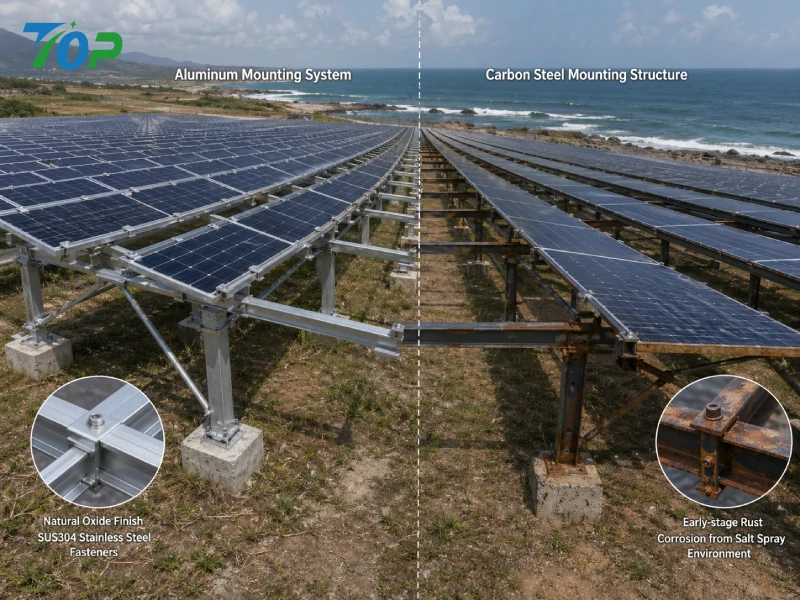
Coastal environments are among the most aggressive conditions for photovoltaic mounting structures. Unlike inland projects, coastal PV systems are continuously exposed to airborne salt particles (primarily sodium chloride), which significantly accelerate electrochemical corrosion processes.
Key environmental stress factors include:
- Salt spray exposure: Chloride ions penetrate protective coatings and initiate corrosion
- High humidity: Promotes continuous oxidation cycles on metal surfaces
- Condensation effects: Night-day temperature fluctuations create moisture accumulation
- Strong wind loads: Coastal and offshore projects face higher structural stress
- UV radiation + salt synergy: Degrades coatings faster than in dry climates
For EPC contractors, this means that standard material assumptions used in inland projects are no longer valid. The selection of PV mounting system materials must account for corrosion resistance as a primary engineering parameter—not a secondary consideration.
Common Failure Issues in Coastal Solar Mounting Structures
Improper material selection in coastal environments often leads to a range of structural and operational issues that directly affect system lifespan and performance.
- Corrosion-induced structural weakening: Reduced load-bearing capacity over time
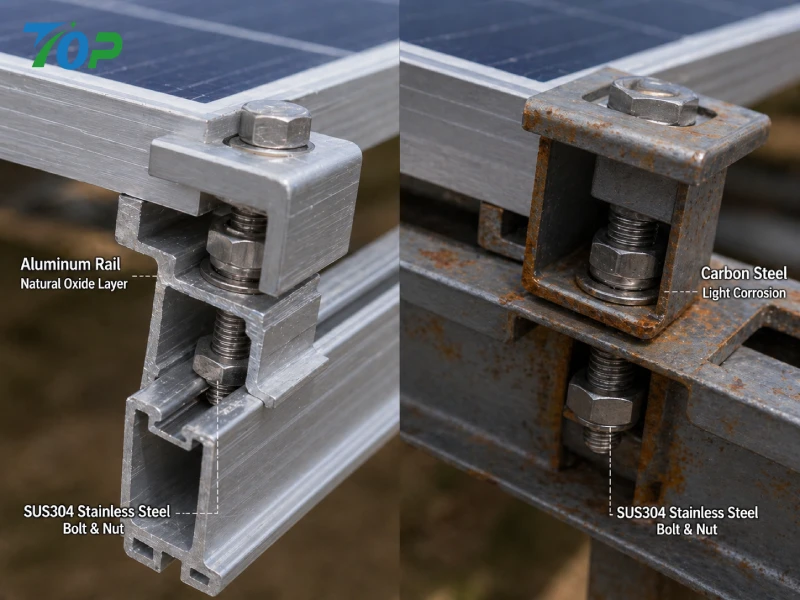
- Galvanic corrosion: Occurs when dissimilar metals (e.g., aluminum + steel) are improperly connected
- Fastener failure: Rusted bolts (non-SUS304) can loosen under dynamic loads
- Water ingress risks: Corroded mounting points increase rooftop leakage probability
- Aesthetic degradation: Rust stains reduce asset value for commercial projects
From a lifecycle perspective, these failures result in unplanned maintenance, system downtime, and increased warranty claims—all of which erode project ROI.
Why Choosing the Wrong Material Impacts ROI
The financial impact of material selection goes far beyond initial procurement cost. In coastal PV projects, corrosion-related failures can significantly shorten system lifespan and increase total cost of ownership (TCO).
Key ROI impacts include:
- Reduced system lifespan: From 25 years down to 10–15 years in severe corrosion zones
- Higher O&M costs: Frequent inspections, repainting, or component replacement
- Labor inefficiency: Heavier materials increase installation time and manpower requirements
- Logistics losses: Corrosion during storage or transport before installation
- Client dissatisfaction: Leading to reputational damage and reduced repeat business
For distributors and bulk buyers, inventory risk is also a concern. Carbon steel components stored in humid coastal warehouses may begin corroding even before deployment, reducing resale value and increasing waste.
At this stage, the key question becomes clear:
Which material—aluminum or carbon steel—offers the best balance of durability, cost efficiency, and installation performance for coastal solar mounting systems?
Aluminum vs Carbon Steel in Coastal PV Applications: Hidden Risks
Carbon Steel Solar Mounting Systems in Coastal Areas
Carbon steel has long been used in utility-scale solar mounting systems due to its high strength and relatively low upfront cost. Common grades such as Q235 and Q355 offer strong mechanical performance, making them suitable for large-span ground-mounted structures.
However, in coastal environments, carbon steel solar mounting corrosion becomes a critical concern.
Advantages of carbon steel:
- High yield strength (typically 235–355 MPa)
- Strong structural rigidity (elastic modulus ~200 GPa)
- Lower raw material cost compared to aluminum
Hidden risks in coastal applications:
- Dependence on protective coatings: Hot-dip galvanization (typically 60–100 μm) is the primary defense
- Coating degradation: Once the zinc layer is compromised, corrosion accelerates rapidly
- Edge and cut-point vulnerability: Exposed areas are highly susceptible to rust
- Maintenance requirements: Recoating or repainting may be needed during lifecycle
- Weight factor: Higher density (~7.85 g/cm³) increases transport and installation costs
In salt spray conditions, even high-quality galvanized steel may show signs of degradation within a few years if not properly maintained. This introduces long-term uncertainty for EPC contractors focused on minimizing after-sales issues.
Aluminum Solar Mounting Systems in Coastal Areas
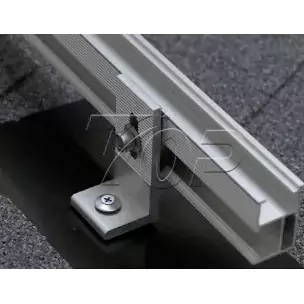
Aluminum has become increasingly popular in coastal PV projects due to its inherent corrosion resistance and lightweight properties. Alloys such as 6005-T5 are commonly used in solar mounting structures.
When evaluating aluminum vs carbon steel solar mounting systems in coastal environments, aluminum offers a fundamentally different corrosion protection mechanism.
Advantages of aluminum:
- Natural oxide layer (Al₂O₃): Provides self-healing corrosion resistance
- Lightweight: Approximately one-third the weight of steel
- Ease of installation: Reduces labor intensity and installation time
- Compatibility with rooftop systems: Lower structural load on buildings
- Minimal maintenance: No need for repainting or recoating
Potential concerns:
- Lower elastic modulus (~69 GPa): Requires optimized structural design
- Higher material cost: Compared to standard carbon steel
- Thermal expansion: Needs proper allowance in design
Despite these concerns, aluminum’s performance in high-salinity environments often results in lower lifecycle costs and improved system reliability.
This leads to the next critical step: a detailed technical comparison between the two materials, focusing on performance metrics that directly impact engineering decisions and ROI.
Aluminum vs Carbon Steel Solar Mounting Systems
Key Mechanical & Material Properties Comparison
From an engineering perspective, material selection for PV mounting structures must be evaluated across mechanical strength, corrosion resistance, weight, and long-term stability. The table below summarizes the core differences between commonly used materials in the industry.
| Parameter | Aluminum Alloy (6005-T5 / 6063-T6) | Carbon Steel (Q235 / Q355, HDG) |
|---|---|---|
| Density | ~2.70 g/cm³ | ~7.85 g/cm³ |
| Yield Strength | 160–250 MPa | 235–355 MPa |
| Elastic Modulus | ~69 GPa | ~200 GPa |
| Corrosion Resistance | Excellent (natural oxide layer) | Moderate (depends on galvanization) |
| Surface Treatment | Anodizing (≥10 μm typical) | Hot-dip galvanization (60–100 μm) |
| Weight Impact | Lightweight | Heavy |
| Maintenance Requirement | Low | Medium to High |
Although carbon steel offers higher stiffness and strength, aluminum provides a superior balance between corrosion resistance and installation efficiency—particularly in coastal solar mounting system applications.
Corrosion Resistance Performance in Salt Spray Testing
Corrosion resistance is the most critical performance metric when comparing aluminum vs carbon steel solar mounting systems in coastal environments. Standardized salt spray testing (Neutral Salt Spray, NSS per ISO 9227) provides a controlled benchmark for evaluating durability.
Typical performance benchmarks:
- Aluminum (anodized): Can withstand 1000+ hours NSS with minimal surface degradation
- Hot-dip galvanized steel (HDG): Typically shows white rust at 200–500 hours, red rust after 500–800 hours depending on coating thickness
In real-world coastal environments, these results translate into significant differences in service life:
- Aluminum systems maintain structural integrity with minimal intervention
- Steel systems rely heavily on coating integrity; once damaged, corrosion accelerates rapidly
Additionally, chloride ion penetration in coastal air can reach 10–50 mg/m²/day in severe zones, meaning that protective coatings on steel are continuously under attack. This is why carbon steel solar mounting corrosion is one of the most common causes of failure in coastal PV projects.
Installation Efficiency Comparison for EPC Contractors
Installation efficiency directly impacts EPC profitability. Labor costs, project timelines, and installation complexity all depend heavily on the weight and design of the mounting system.
Aluminum systems offer clear advantages:
- Lightweight structure: Reduces manual handling effort and fatigue
- Pre-assembled components: Rails, clamps, and connectors often come modularized
- Faster installation speed: Typically 20–30% time savings compared to steel systems
- Reduced equipment dependency: Less reliance on cranes or heavy lifting tools
In contrast, carbon steel systems present several challenges:
- Higher weight increases transportation and lifting complexity
- More on-site adjustments required due to rigid structure
- Longer installation cycles increase labor cost exposure
For large-scale EPC projects, even a 15% improvement in installation efficiency can translate into substantial cost savings and faster project delivery—directly improving ROI.
Waterproofing & Roof Compatibility (Critical for Rooftop PV Systems)
For commercial and industrial rooftop projects, waterproofing performance is often a decisive factor. Improper mounting system design can lead to long-term leakage risks, especially in coastal environments where corrosion can compromise sealing points.
Aluminum mounting systems are generally better suited for rooftop applications:
- Lower structural load: Reduces stress on roof membranes
- Better integration with waterproof clamps: Designed for minimal penetration systems
- Corrosion resistance at contact points: Maintains sealing integrity over time
Carbon steel systems, while structurally strong, introduce additional risks:
- Heavier loads increase roof stress and deformation risk
- Corrosion at penetration points can compromise sealing
- Requires more complex waterproofing treatments
For EPC contractors working on flat roofs, metal roofs, or membrane roofs, aluminum systems often provide a more reliable and lower-risk solution.
Structural Design Considerations Under High Wind Loads
One common concern when comparing aluminum and steel is structural performance under high wind conditions, especially in typhoon-prone coastal regions.
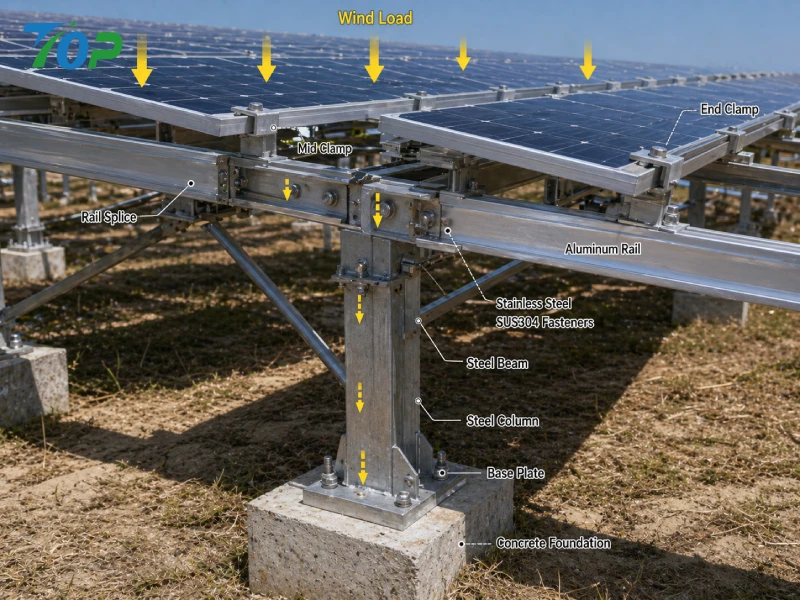
While steel has higher stiffness, aluminum systems can achieve equivalent performance through optimized engineering design:
- Use of reinforced rail profiles (larger section modulus)
- Optimized span spacing based on wind load calculations
- Integration of bracing components where required
- Compliance with international standards (e.g., AS/NZS 1170, Eurocode)
In practice, properly engineered aluminum mounting systems can meet or exceed the structural requirements of coastal PV projects, while still delivering advantages in weight and corrosion resistance.
Galvanic Corrosion Risk and Material Compatibility
A critical but often overlooked issue in coastal PV systems is galvanic corrosion, which occurs when two dissimilar metals are electrically connected in the presence of an electrolyte (such as saltwater).
Common risk scenarios:
- Aluminum rails connected with carbon steel bolts
- Steel structures in contact with stainless steel fasteners without isolation
Best practices to mitigate galvanic corrosion:
- Use SUS304 or SUS316 stainless steel fasteners
- Apply isolation pads between dissimilar metals
- Ensure proper drainage to avoid standing water
- Use compatible material pairings in system design
Failure to address galvanic corrosion can significantly accelerate material degradation—even if each individual material has good corrosion resistance on its own.
Lifecycle Cost (LCOE) Analysis: Aluminum vs Carbon Steel
For investors and project developers, the ultimate metric is not initial cost, but lifecycle cost and impact on Levelized Cost of Electricity (LCOE).
Cost comparison over a 25-year project lifecycle:
-
Aluminum mounting systems:
- Higher upfront CAPEX
- Minimal maintenance costs
- Longer service life
- Stable performance in coastal environments
-
Carbon steel mounting systems:
- Lower initial cost
- Higher maintenance and inspection costs
- Potential replacement or reinforcement expenses
- Performance degradation risk over time
In coastal applications, aluminum systems often deliver a lower LCOE due to reduced O&M costs and higher system reliability. This makes them a preferred choice for projects where long-term performance and warranty stability are critical.
At this stage, the technical comparison clearly shows that while both materials have their place, the optimal choice depends on project type, environmental severity, and investment strategy. The next step is to translate these findings into actionable material selection strategies for different coastal PV scenarios.
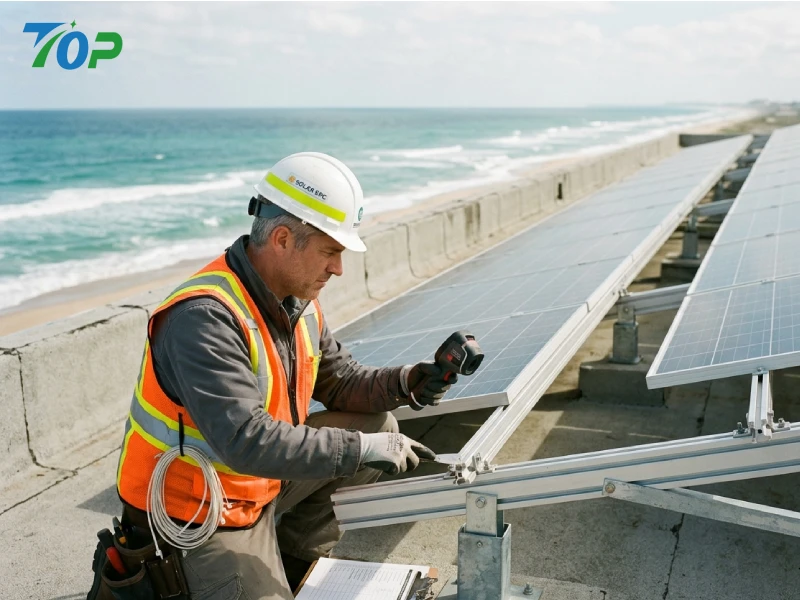
Which Solar Mounting Material Is Best for Coastal Projects?
Recommended Material Selection Based on Project Type
Based on the technical comparison above, there is no one-size-fits-all answer. The optimal choice between aluminum and carbon steel depends on project type, environmental severity, and investment priorities. However, in coastal environments, material selection should prioritize corrosion resistance, lifecycle cost stability, and installation efficiency.
Below are practical recommendations for EPC contractors and project developers:
-
Coastal Rooftop PV Projects (Commercial & Industrial):
Aluminum alloy mounting systems are strongly recommended. Their lightweight nature reduces structural load on rooftops, while excellent corrosion resistance ensures long-term waterproofing reliability and minimal maintenance. -
Coastal Ground-Mounted Utility Projects:
A hybrid approach is often the most cost-effective solution:- Main structural components: Hot-dip galvanized carbon steel
- Critical connection components: Aluminum rails + SUS304/SUS316 fasteners
-
High-Salinity / Offshore-Adjacent Projects:
Full aluminum systems or enhanced anti-corrosion steel (e.g., Zn-Al-Mg coatings) should be considered. Standard galvanized steel may not provide sufficient durability in these extreme environments.
For EPC contractors evaluating aluminum vs carbon steel solar mounting systems in coastal environments, the decision should be based on total lifecycle performance rather than initial material cost alone.
Anti-Corrosion Design Best Practices
Material selection alone is not sufficient. Effective anti-corrosion performance requires a comprehensive system-level design approach.
Key engineering best practices include:
- Use high-grade fasteners: SUS304 is standard; SUS316 is recommended for high-salinity zones
- Avoid galvanic corrosion: Apply insulation pads between dissimilar metals
- Optimize drainage design: Prevent standing water accumulation at joints
-
Surface treatment enhancement:
- Aluminum: Anodizing ≥10–15 μm
- Steel: HDG ≥80 μm or Zn-Al-Mg coating
- Seal critical interfaces: Especially for rooftop penetrations
- Allow ventilation: Reduce moisture retention in structural cavities
Implementing these measures can extend system lifespan by 5–10 years and significantly reduce maintenance frequency.
From Engineering Decision to Business Value (ROI Perspective)
For decision-makers, the key question is not just “which material is stronger,” but rather: Which solution delivers the highest return on investment over the system lifecycle?
Aluminum mounting systems typically provide:
- Lower O&M costs: Minimal corrosion-related maintenance
- Reduced installation time: Faster project completion improves cash flow
- Higher system reliability: Fewer failures and warranty claims
- Better client satisfaction: Especially for commercial rooftop projects
Carbon steel systems may still be suitable where:
- Initial CAPEX constraints are strict
- Projects are located further from direct coastal exposure
- Maintenance resources are readily available
However, in true coastal environments, the hidden costs of corrosion often outweigh initial savings. This is why many experienced EPC contractors are shifting toward aluminum-dominant solutions.
Procurement Decision Framework for EPC Contractors and Distributors
How to Evaluate Solar Mounting System Suppliers
Selecting the right supplier is as important as choosing the right material. A qualified solar mounting manufacturer should provide both product quality and engineering support.
Key evaluation criteria include:
- Material certification: 6005-T5 aluminum, Q235/Q355 steel compliance
- Fastener standards: Verified SUS304/SUS316 quality
- Third-party certification: TUV, ISO, SGS reports
- Corrosion testing data: Salt spray test reports (ISO 9227)
- Engineering capability: Ability to provide CAD drawings and расчет нагрузок
- Project experience: Proven track record in coastal installations
For distributors, additional considerations include:
- Standardized SKUs for inventory efficiency
- Global compatibility with mainstream PV modules
- Packaging and logistics optimization for bulk orders
Cost Optimization Strategies for Bulk Procurement
Beyond material selection, procurement strategy plays a critical role in project profitability.
Effective cost optimization methods include:
- Container loading optimization: Reduce freight cost per MW
- Modular system design: Minimize SKU complexity
- Pre-assembled components: Reduce on-site labor cost
- Engineering-driven optimization: Avoid overdesign while maintaining safety margins
A well-optimized procurement strategy can reduce total project cost by 5–10%, which is significant for utility-scale developments.
Professional Installation Recommendations for EPC Contractors
Even the best materials can fail if installation quality is not controlled. For coastal PV projects, installation precision directly affects long-term system performance.
Recommended best practices:
- Perform site-specific wind load calculations based on local standards
- Optimize rail spacing to balance material usage and structural safety
- Use torque-controlled fastening tools to ensure consistent bolt tension
- Inspect coating integrity before installation (especially for steel components)
- Implement waterproof sealing protocols for rooftop systems
For complex coastal projects, working with a supplier that provides engineering support can significantly reduce installation risk and improve project outcomes.
Request detailed CAD drawings and structural calculation reports tailored to your coastal project to ensure optimal system performance.
Bulk Quotation & Sample Request — Coastal Solar Mounting Systems
For EPC contractors, installers, and distributors, selecting the right partner is critical to achieving both technical reliability and commercial success.
A professional solar mounting supplier should offer:
- Customized system design for coastal environments
- Optimized material selection based on corrosion risk
- Full engineering documentation (CAD drawings, load calculations)
- Sample kits for product evaluation
- Fast and reliable bulk delivery
Contact TopFence Solar today to receive:
- Fast quotation within 24 hours
- Free technical consultation
- Customized mounting system solutions for your project
Submitting your project requirements allows our engineering team to deliver a tailored solution that maximizes durability, reduces installation cost, and improves long-term ROI.
FAQ — Coastal Solar Mounting System Material Selection
Q1. Is aluminum always better than steel in coastal PV projects?
Not necessarily. Aluminum is generally superior in corrosion resistance, but steel may still be suitable for certain ground-mounted projects when properly protected and maintained.
Q2. How long does galvanized steel last in coastal environments?
Depending on coating thickness and exposure level, hot-dip galvanized steel typically lasts 10–20 years in coastal environments. Additional coatings can extend lifespan.
Q3. What is the best fastener material for coastal solar mounting systems?
SUS304 is widely used, but SUS316 is recommended for high-salinity or offshore-adjacent environments due to its superior corrosion resistance.
Q4. Does aluminum reduce installation time?
Yes. Due to its lightweight and modular design, aluminum systems can reduce installation time by 20–30% compared to traditional steel structures.
Q5. How can galvanic corrosion be prevented?
Use compatible materials, apply insulation between dissimilar metals, and ensure proper system design to avoid electrochemical reactions.
Q6. What is the best choice for long-term ROI in coastal PV projects?
In most coastal environments, aluminum mounting systems provide better long-term ROI due to lower maintenance costs and higher durability, despite higher initial investment.
By aligning material selection, engineering design, and procurement strategy, EPC contractors and distributors can significantly improve project reliability and financial performance in coastal solar installations.
Select the Right Solar Mounting System for Coastal Projects
Coastal environments significantly accelerate corrosion and structural degradation in PV mounting systems, making material selection between aluminum and carbon steel critical for long-term ROI and system reliability.
Get Engineering Support
Related News
- The Global EPC Sourcing Checklist: Managing Lead Times and Logistics for Solar Mounting Systems
- BIPV & Commercial Rooftops: Solving Waterproofing and Structural Integrity Challenges in Urban Solar
- Navigating Solar Certifications: Why UL 2703 and International Standards Matter for Project Bankability
- Maximizing Yield with Bifacial Modules: How to Select the Optimal Tracker for Enhanced Energy Output
- Wind Load and Coastal Engineering: Ensuring Your Ground-Mounted Solar Array Survives Extreme Weather
- Aluminum vs. Galvanized Steel: Choosing the Right Solar Mounting Structure for High-Corrosivity Environments
Leave me a message