Falls are one of the fastest ways to turn a routine roof visit into a shutdown, an injury, or a liability headache. A properly planned Rooftop Guardrail isn’t just “metal around the edge”—it’s a practical system that protects people, reduces work stoppages, and makes inspections and maintenance easier across the life of the building.
In this guide, you’ll learn:
- Which guardrail style fits your roof and workflow
- How to avoid common purchasing and installation mistakes
- What to check for durability, documentation, and long-term maintenance
- How to get a smoother procurement experience (fewer surprises, fewer delays)
Article Summary
Choosing a rooftop guardrail system is ultimately about matching risk, roof conditions, and daily behavior. The “best” guardrail is the one that people will actually use, that fits the building without creating leaks or structural issues, and that stands up to wind, corrosion, and repeated access. Below, we break down the decision points you should evaluate—roof type, attachment method, materials, layout, compliance documentation, and ongoing upkeep—so you can buy once and install with confidence.
Table of Contents
- Article Outline
- The Real Customer Pain Points a Rooftop Guardrail Solves
- Common Rooftop Guardrail Types and When to Use Them
- Selection Checklist: What to Verify Before You Buy
- Layout Planning: Coverage, Access Paths, and “Human Behavior”
- Materials and Finishes: Winning the War Against Corrosion
- Installation and Handover: How to Avoid Delays and Rework
- Total Cost of Ownership: Paying Once vs. Paying Forever
- Working With a Manufacturer: What a Good Partner Provides
- FAQ
Article Outline
- Why rooftop edges create risk—and why “temporary awareness” isn’t a safety system
- Guardrail types: fixed, clamp-on, and non-penetrating options
- What to confirm before purchase: roof structure, load assumptions, wind considerations, documentation
- Designing the layout for the way people actually move on a roof
- Material choices for salty air, industrial sites, and long service life
- Installation workflow, inspection, and handover documents
- How to reduce lifetime cost: repairs, replacements, and downtime
- What to expect from a reliable manufacturer
The Real Customer Pain Points a Rooftop Guardrail Solves
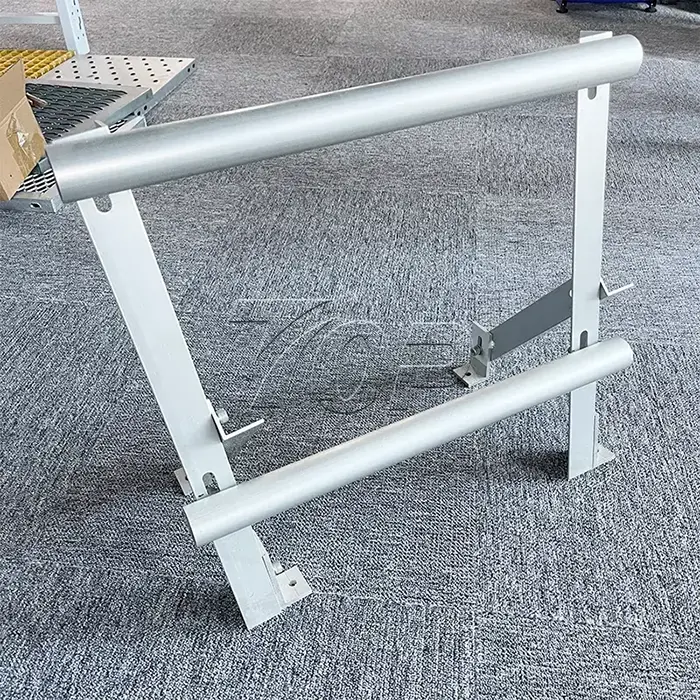
Most buyers don’t wake up excited to shop for guardrails. They buy after a near-miss, a contractor complaint, a new maintenance routine, or an audit finding. The key is understanding what problem you’re truly trying to eliminate—because the right system decision comes from the pain point, not from a catalog photo.
- Audit pressure and unclear compliance: You need a visible, consistent fall-protection boundary and the paperwork to back it up.
- Rooftop traffic is increasing: HVAC servicing, solar O&M, cleaning crews, and inspections make roofs “active work zones.”
- Leak anxiety: Many building owners avoid penetrations because they’ve been burned by water intrusion before.
- Schedule risk: If guardrails arrive late or don’t fit the roof conditions, other trades stop—and your project timeline bleeds.
- Long-term maintenance costs: Poor coating or weak joints means rust, wobble, and repeat fixes that nobody budgeted for.
Practical takeaway: A rooftop guardrail is a risk-control tool and an operations tool. If it reduces roof restrictions, keeps contractors comfortable, and prevents shutdowns, it’s doing more than “meeting a requirement.”
Common Rooftop Guardrail Types and When to Use Them
Rooftop guardrails generally fall into a few categories. The right choice depends on roof construction (concrete, metal deck, membrane), edge details (parapet or no parapet), and whether you need a temporary or long-term solution.
| Type | Best For | Pros | Watch Outs |
|---|---|---|---|
| Parapet clamp-on | Roofs with sturdy parapet walls | No roof penetration; faster install; clean aesthetics | Confirm parapet strength and dimensions; avoid damaging finishes |
| Fixed base (anchored) | Permanent protection for frequent rooftop access | High stability; clear long-term boundary; strong performance in harsh sites | Requires proper waterproofing details and structural verification |
| Non-penetrating (counterweighted) | Membrane roofs where penetrations are undesirable | Avoids roof holes; adaptable; good for retrofit scenarios | Needs correct ballast, wind assessment, and slip protection under bases |
| Portable / project-temporary | Construction phases and short-term maintenance work | Quick deployment; cost-effective for short durations | Can become “missing” over time; requires strict site control and inspections |
If you’re unsure which category fits, start with one question: Will this roof be accessed regularly for years? If yes, prioritize stability, corrosion resistance, and a layout that won’t be “worked around” by busy technicians.
Selection Checklist: What to Verify Before You Buy
Many rooftop guardrail problems don’t come from bad intentions—they come from missing inputs. Here’s what a buyer should lock down early to avoid redesigns, delays, and site arguments.
- Roof edge condition: parapet height, coping shape, edge flashing, and any fragile finishes
- Roof slope and surface: flat vs. low-slope, membrane type, and slip characteristics
- Wind exposure: coastal zones, high-rise rooftops, and open terrain may demand higher resistance
- Load path and structure: where forces go—parapet, slab, metal deck, or curb
- Access points: ladders, hatches, stairs, and where people step onto the roof
- Obstructions: HVAC units, skylights, vents, and solar arrays that shape walking paths
- Documentation needs: drawings, installation method statements, inspection checklists, and material traceability
Buyer mistake that causes the most pain:
Ordering “standard” sections without confirming parapet dimensions, corner details, and roof surface constraints—then discovering on site that clamps don’t fit, bases slip, or access doors are blocked.
Layout Planning: Coverage, Access Paths, and “Human Behavior”
A guardrail system works best when it supports how people naturally move. If technicians constantly have to open gates, step around bases, or squeeze behind equipment, they’ll eventually create shortcuts—and shortcuts are where incidents happen.
Design for predictable movement:
- Protect the perimeter where falls can occur, not just the “most obvious” edges.
- Create clear routes from access points to frequent service zones (HVAC, solar inverters, drains).
- Address roof openings such as skylights or hatches with dedicated protection, not improvised cones.
- Use appropriate gates where materials move in/out—without encouraging people to leave openings unsecured.
A strong layout reduces friction: fewer interruptions, fewer “temporary” removals, and fewer disputes between building management and contractors. In other words, safety becomes the default behavior instead of an extra task.
Materials and Finishes: Winning the War Against Corrosion
Rooftops are brutal. UV, standing water, chemical exhaust, salt air, and temperature swings all work against metal systems. Material and finish choices aren’t “nice to have”—they’re what decides whether your guardrail still looks solid in year five.
- Hot-dip galvanized steel: strong and cost-effective for many industrial and commercial roofs.
- Powder-coated systems: can improve aesthetics and add another layer of protection when properly prepared.
- Aluminum components: lightweight and corrosion resistant, helpful for easier handling and certain environments.
- Stainless steel fasteners: often worth it to reduce rust streaking and seizing over time.
If your site is coastal or highly corrosive, demand clarity on the protective system: coating thickness targets, surface preparation, and what hardware is used at joints. Weak fasteners and mixed metals can quietly become the failure point, even if the uprights look fine.
Installation and Handover: How to Avoid Delays and Rework
Installation should be predictable. If it isn’t, it usually means the project skipped one of these steps: roof verification, clear drawings, correct bill of materials, or a proper inspection checklist.
A smoother installation process typically includes:
- Site measurement confirmation: parapet thickness/height, corner conditions, and roof surface notes.
- Layout drawing approval: showing runs, corners, gates, and transitions around equipment.
- Packaging clarity: parts labeled by zone/run so installers don’t “figure it out” on the roof.
- Anchoring or ballast method clarity: no improvisation that jeopardizes waterproofing or stability.
- Handover package: installation record, inspection checklist, and maintenance guidance.
Tip from real projects: Ask the supplier to separate “edge runs” and “special areas” (gates, corners, roof openings) into clearly identified bundles. That single step can eliminate a surprising amount of rooftop confusion.
Total Cost of Ownership: Paying Once vs. Paying Forever
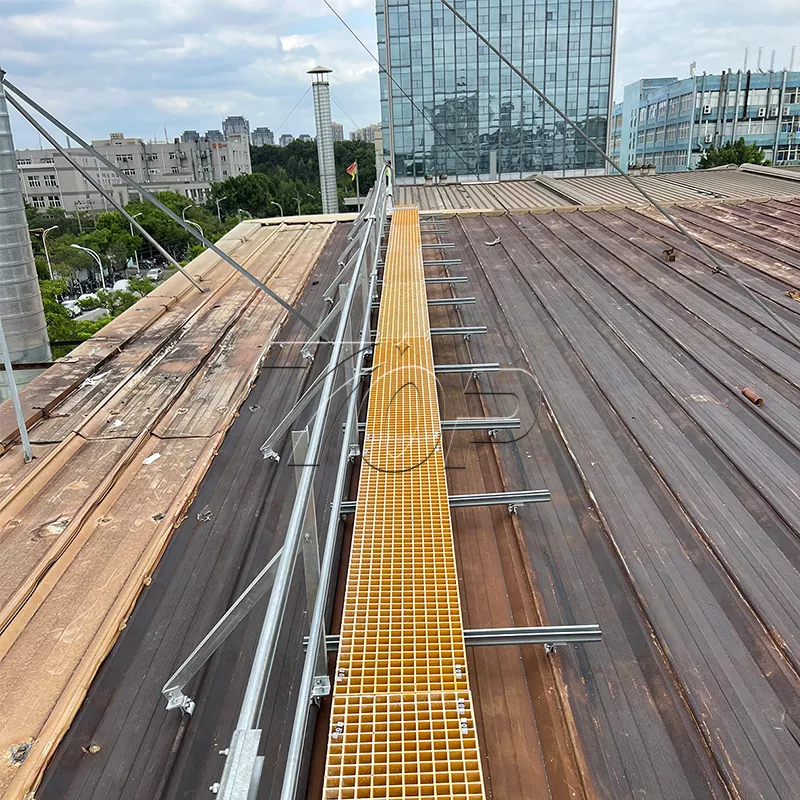
The cheapest quote can be the most expensive system if it triggers repeat maintenance, frequent replacements, or even operational limits (“Only trained staff allowed on the roof” becomes a permanent rule). A well-specified guardrail reduces those downstream costs.
- Downtime cost: delayed HVAC work can impact tenant comfort or production schedules.
- Contractor friction: complicated systems cause longer service visits and more disputes.
- Repairs and rust: poor finishes lead to repainting, part replacement, and safety doubts.
- Reconfiguration: roofs change—new equipment, added solar, new access points. Modular systems adapt better.
If your facility team uses the roof monthly (or weekly), prioritize a system that looks and feels permanent. The best guardrail is the one nobody argues with—and nobody tries to bypass.
Working With a Manufacturer: What a Good Partner Provides
Beyond the metal itself, your experience depends on the supplier’s process. A strong manufacturer helps you reduce risk before anything ships: confirming dimensions, recommending the right mounting approach, and delivering a clean handover package.
Look for these “green flags” when choosing a supplier:
- Clear drawings and a complete bill of materials that match your roof reality
- Material transparency (grade, finish system, fastener choices)
- Quality control checkpoints that reduce missing parts and fit issues
- Packaging that supports installation instead of creating rooftop sorting puzzles
- Responsive technical support when site conditions change
For organizations managing multiple sites, consistency matters. Standardizing a rooftop guardrail approach across properties simplifies training, inspections, and contractor onboarding. That’s one reason many buyers prefer working with an established manufacturer such as Xiamen Topfencesolar Co., Ltd.—a stable supply chain and repeatable specifications make operations easier over time.
Quick Procurement Checklist
- Confirm roof drawings + on-site measurements (especially parapet dimensions)
- Choose mounting approach (anchored vs. clamp-on vs. non-penetrating)
- Define coverage zones (perimeter, access paths, roof openings)
- Specify finish and fasteners for your environment
- Request drawings, installation guidance, and inspection checklist for handover
FAQ
- Do I always need a non-penetrating rooftop guardrail to prevent leaks?
- Not always. Non-penetrating systems are popular for certain membrane roofs, but well-designed anchored systems can also be watertight when installed with correct waterproofing details. The best choice depends on roof construction, warranty requirements, and how often the roof will be accessed.
- What’s the biggest reason rooftop guardrail projects get delayed?
- Missing or incorrect site inputs—especially parapet dimensions, corner details, and roof surface constraints. When these aren’t confirmed early, parts may not fit, installers improvise, and rework follows.
- How do I keep technicians from “working around” the guardrail?
- Make the safe route the easy route. Plan access paths, protect common service areas, and minimize awkward detours. A guardrail layout that respects workflow gets used. A layout that fights workflow gets bypassed.
- Is aluminum better than steel for rooftop guardrails?
- Aluminum can be excellent for corrosion resistance and ease of handling, while steel can offer strong performance and value. The “better” option depends on your environment, required durability, and whether weight matters for your roof conditions and installation method.
- What should I ask a supplier to provide besides the physical guardrail?
- Ask for layout drawings, a complete parts list, installation guidance, inspection checklist, and maintenance recommendations. These documents reduce installation mistakes and simplify long-term management.
A rooftop guardrail should remove uncertainty: for technicians, for building managers, and for anyone responsible for safety. If you’re planning a new build, upgrading an existing roof, or standardizing protection across multiple sites, the fastest path to a good outcome is a system that fits your roof, your environment, and your daily routines—without creating new problems.
Ready to make rooftop safety simple?
Share your roof type, parapet details, and the areas you want to protect—then let Xiamen Topfencesolar Co., Ltd. help you narrow down the right Rooftop Guardrail configuration for a smooth install and long service life. For drawings, recommendations, and a fast quote, contact us.