Why Choose a Solar Fence for Reliable Perimeter Security?
Article Abstract
A Solar Fence is more than a fence with a panel attached—it’s a self-powered perimeter system designed to keep people, animals, or assets where they belong, even in places where electricity is unreliable or unavailable. If you’ve dealt with long cable runs, high utility bills, repeated trespassing, livestock escapes, or “temporary fencing” that never stays temporary, this guide is built to help you solve those headaches with a clear plan.
Below you’ll find a buyer-friendly breakdown of how solar-powered fencing works, what to size and verify before you purchase, common installation mistakes to avoid, realistic maintenance expectations, and a cost/benefit view that procurement teams and property owners can actually use. You’ll also get checklists, a comparison table, and FAQs to help you move from “maybe” to “we’re ready.”
Table of Contents
- Outline
- What a Solar Fence is (and what it isn’t)
- Common pain points and how it fixes them
- Core components you should verify
- Sizing and performance expectations
- Installation checklist that prevents “mystery failures”
- Safety and responsible use
- Maintenance and lifecycle reality check
- Cost drivers and value comparison
- A simple buying checklist
- FAQ
Outline
- Define what a Solar Fence system includes and where it fits best.
- Map the real-world problems buyers face (power access, vandalism, vegetation, escapes) to practical solutions.
- Explain the key components that determine reliability and what to confirm before ordering.
- Offer sizing logic you can use in planning meetings (distance, animals, vegetation, sun exposure).
- Provide an installation checklist to reduce downtime and callbacks.
- Cover safety, upkeep, and cost drivers with a procurement-friendly table.
- Close with FAQs and next steps with Xiamen Topfencesolar Co., Ltd.
What a Solar Fence is (and what it isn’t)
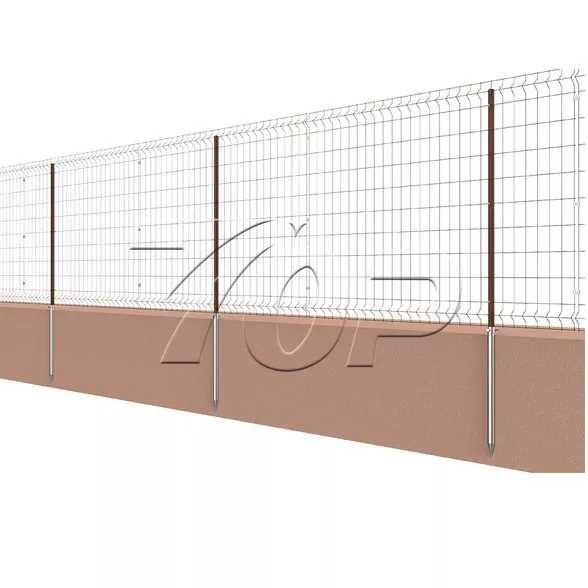
A Solar Fence is a self-powered fence system that uses solar energy to maintain a controlled electrical pulse along a fence line. The goal isn’t to “harm” anything—it’s to create a quick, memorable deterrent that encourages people and animals to keep their distance. Because the energy source is local (solar panel + battery), a solar fence is especially useful when your perimeter is far from the nearest outlet.
What it isn’t: a magic solution that ignores grounding, vegetation, or installation basics. Most “solar fence problems” are actually site problems (poor grounding), planning problems (undersized energizer), or maintenance problems (vegetation and loose connections). Get those three right, and solar fencing becomes one of the most dependable ways to protect a boundary.
Quick reality check: If your site has heavy shade all day, you may need a larger panel, better battery capacity, or an alternate power plan. Solar works brilliantly—when sunlight access is planned instead of assumed.
Common pain points and how it fixes them
Buyers usually don’t start by searching for “solar fence.” They start with a problem: repeated trespass, livestock getting out, wildlife getting in, or a perimeter that’s too expensive to power. Here’s how a Solar Fence directly targets the most common frustrations.
| Pain Point | What it looks like in real life | How a Solar Fence helps |
|---|---|---|
| Power is too far away | Long cable runs, trenching costs, frequent outages | Local power generation and storage reduces reliance on the grid |
| Perimeter breaches keep happening | Cut locks, climbed fences, casual trespassing | Creates a consistent deterrent that’s hard to “ignore” |
| Livestock escapes | Broken posts, pushed wires, animals testing weak points | Properly sized pulse discourages repeated pressure on the line |
| Wildlife pressure | Crop damage, predators near livestock, deer crossings | Targeted fence designs can reduce entry points and habitual routes |
| “It works… until it doesn’t” | Intermittent failures, random drops in performance | With correct grounding, connections, and vegetation control, output becomes stable |
Safety note: Local requirements for electric fencing can vary. Use warning signs, follow site rules, and consult a qualified installer when needed—especially for public-facing boundaries.
Core components you should verify
Reliability comes down to a few non-negotiables. If you’re comparing suppliers or preparing a purchase order, use this checklist to avoid the most expensive mistake: buying a system that’s “cheap on paper” but costly in downtime.
- Solar panel capacity: Match panel size to your sunlight conditions, seasonal changes, and expected fence load.
- Battery type and capacity: A fence that “only works at noon” usually points to undersized storage or an aging battery.
- Energizer output: Not just marketing claims—verify output specs and suitability for your fence length and vegetation.
- Grounding hardware: Ground rods, clamps, and cable quality matter more than most buyers expect.
- Conductors and insulators: Wire/tape/rope selection should fit your animals, wind, and layout (corners, gates, strain points).
- Mounting and enclosure: Weather resistance, UV stability, and tamper-resistant design reduce failure and theft risk.
Procurement tip: Ask for a recommended configuration based on your fence length, terrain, animal type, vegetation level, and sun exposure—not a one-size-fits-all kit.
Sizing and performance expectations
If you’re deciding between configurations, performance planning should start with your site realities, not a generic “maximum distance” claim. A Solar Fence that works beautifully on a clean, short perimeter may struggle on a long fence line with heavy weeds and multiple gates.
Use these planning questions to size realistically:
- How long is the fence line? Include turns, return paths, and any internal divisions.
- What are you fencing in or out? Different animals and threats require different deterrent strength and fence design.
- How “clean” is your fence line? Vegetation contact is the most common performance killer.
- How much sun does the site actually get? Consider winter angles, shade from buildings, and tree growth.
- What downtime is acceptable? If your boundary is high-risk, plan extra battery autonomy and stronger hardware.
If you’re not sure how to translate these into a concrete configuration, manufacturers like Xiamen Topfencesolar Co., Ltd. can help map your scenario to a practical system design—especially for remote or large-area perimeters.
Installation checklist that prevents “mystery failures”
A solar fence is simple in concept, but small installation shortcuts can cause big headaches. Here’s a field-tested checklist to reduce troubleshooting time and keep output steady.
- Site survey: Walk the full route and mark gates, corners, low spots, and areas with frequent vegetation growth.
- Panel placement: Choose a location with maximum sun exposure and minimal theft risk. Angle appropriately for your region.
- Solid grounding: Install ground rods correctly and keep connections tight and corrosion-resistant.
- Fence tension and strain: Reinforce corners, use proper end strainers, and avoid “loose” lines that touch posts or plants.
- Gate strategy: Use insulated gate handles and maintain continuity so the fence doesn’t become weak at the busiest point.
- Vegetation plan: Schedule trimming, mowing, or offset designs to reduce contact with weeds.
- Testing and baseline: Test voltage at multiple points and record a baseline so future drops are easy to spot.
Most common culprit: Grounding. If performance seems “random,” check grounding and vegetation contact before blaming the energizer.
Safety and responsible use
Modern electric fencing uses brief pulses intended as a deterrent, not a continuous current. Still, responsible use matters—especially for boundaries that could be approached by the public, children, or visitors unfamiliar with electric fencing.
- Use clear warning signs at regular intervals and near access points.
- Keep control equipment secured to reduce tampering and accidental contact.
- Follow local site rules for public spaces, industrial sites, and mixed-use properties.
- Train staff on safe access procedures, especially around gates and maintenance areas.
If your application is high-security or near public routes, consider a professional assessment to ensure your configuration matches the environment.
Maintenance and lifecycle reality check
One reason buyers choose a Solar Fence is low ongoing cost. That’s true—when maintenance is planned as a routine, not an emergency. The good news: the most important tasks are simple and quick.
| Task | How often | Why it matters |
|---|---|---|
| Check fence line for vegetation contact | Weekly to monthly (season-dependent) | Prevents energy loss and “weak spots” |
| Clean solar panel surface | Monthly or after storms/dust | Maintains charging efficiency |
| Inspect connections and corrosion | Quarterly | Avoids intermittent output drops |
| Battery health check / replacement plan | Annually; replace as needed | Ensures overnight and low-sun performance |
| Baseline voltage test | After installation and periodically | Makes troubleshooting fast and objective |
The lifecycle economics typically look best when you treat the system like equipment, not like a “set it and forget it” accessory. A quick monthly routine can prevent the kind of failure that costs a whole night of livestock escapes or a weekend of site vulnerability.
Cost drivers and value comparison
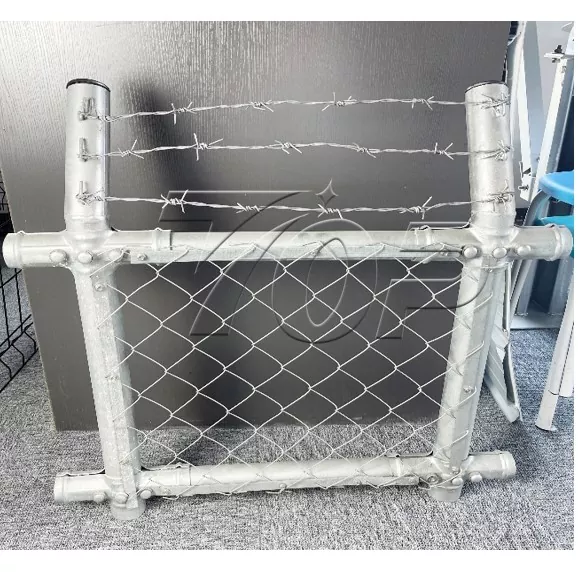
Cost is usually the final hurdle. The most useful way to think about pricing is not “cheap vs expensive,” but total cost of ownership: installation, downtime, maintenance, and the risk cost of breaches or escapes.
What drives total cost the most:
- Fence length and design complexity: corners, gates, and terrain add hardware and labor.
- Vegetation level: heavier growth often needs higher capacity or better management.
- Sun conditions: low-sun sites benefit from larger panels and battery autonomy.
- Security level: tamper-resistant enclosures and stronger materials cost more upfront but reduce risk.
| Option | Typical upfront cost profile | Common hidden costs | Best fit |
|---|---|---|---|
| Traditional powered electric fence | Moderate (if grid is close) | Trenching, wiring, outages | Sites near reliable power |
| Non-electric perimeter fence | Varies widely | Repairs, breaches, repeat trespassing | Low-risk boundaries |
| Solar Fence system | Moderate to higher (equipment-focused) | Undersizing, poor grounding, vegetation neglect | Remote, off-grid, high-risk or long perimeters |
Value lens: If powering the perimeter requires trenching, long cable runs, or repeated repairs, a Solar Fence often wins on long-term reliability and reduced disruption.
A simple buying checklist
Before you place an order, align internally on requirements so you’re not redesigning mid-project. This checklist also helps suppliers propose a configuration that actually matches your site.
- Fence purpose: keep in / keep out / both
- Target: livestock type, wildlife type, human deterrence needs
- Fence length and layout: including gates and internal divisions
- Terrain notes: slope, rocky soil, wet zones, frequent flooding areas
- Vegetation level: low / moderate / heavy and seasonal patterns
- Sun exposure: full sun / partial shade / heavy shade and winter considerations
- Expected maintenance routine: who owns trimming, inspections, and battery checks
- Risk level: theft, vandalism, and whether you need tamper-resistant mounting
If you want a supplier conversation to be productive on the first call, share the above details along with photos or a simple map. Teams like Xiamen Topfencesolar Co., Ltd. can then recommend a system that’s sized for your reality—rather than a generic kit.
FAQ
Q: Will a Solar Fence work during cloudy days or at night?
A: Yes—when the system includes adequate battery storage and the panel is sized for your sunlight conditions. Night performance depends more on battery health and fence load than on the panel itself.
Q: What causes the fence to feel “weak” even though the equipment is new?
A: The top three causes are poor grounding, vegetation touching the fence line, and loose/corroded connections. Start with those checks before replacing hardware.
Q: Can one system power a very long perimeter?
A: It can, but long fences require proper energizer sizing, strong grounding, and disciplined vegetation management. For very large sites, splitting into zones often improves stability and troubleshooting speed.
Q: Is a Solar Fence safe for animals?
A: When correctly configured, it’s designed as a deterrent—brief pulses that teach animals to respect the boundary. Always follow responsible installation practices and local requirements.
Q: What maintenance should I plan for each year?
A: Routine fence line inspection, vegetation control, periodic panel cleaning, connection checks, and a battery health plan. Many users treat it like seasonal equipment: quick, predictable upkeep instead of emergency fixes.
Q: What information should I send a manufacturer to get an accurate recommendation?
A: Fence length, layout (gates/corners), target animals or security needs, vegetation level, and sun exposure. Photos or a sketch map help the most.
Next steps
If you’re done guessing and ready to build a perimeter that stays reliable through seasons, shade changes, and day-to-day site wear, a well-sized Solar Fence system is one of the most practical upgrades you can make.
Tell Xiamen Topfencesolar Co., Ltd. your fence length, site conditions, and what you’re securing, and you’ll get a configuration that matches real operating demands—not just a generic bundle. When you’re ready, contact us to discuss your project and get a tailored recommendation for your property.
Related News
- The Global EPC Sourcing Checklist: Managing Lead Times and Logistics for Solar Mounting Systems
- BIPV & Commercial Rooftops: Solving Waterproofing and Structural Integrity Challenges in Urban Solar
- Navigating Solar Certifications: Why UL 2703 and International Standards Matter for Project Bankability
- Maximizing Yield with Bifacial Modules: How to Select the Optimal Tracker for Enhanced Energy Output
- Wind Load and Coastal Engineering: Ensuring Your Ground-Mounted Solar Array Survives Extreme Weather
- Aluminum vs. Galvanized Steel: Choosing the Right Solar Mounting Structure for High-Corrosivity Environments
Leave me a message