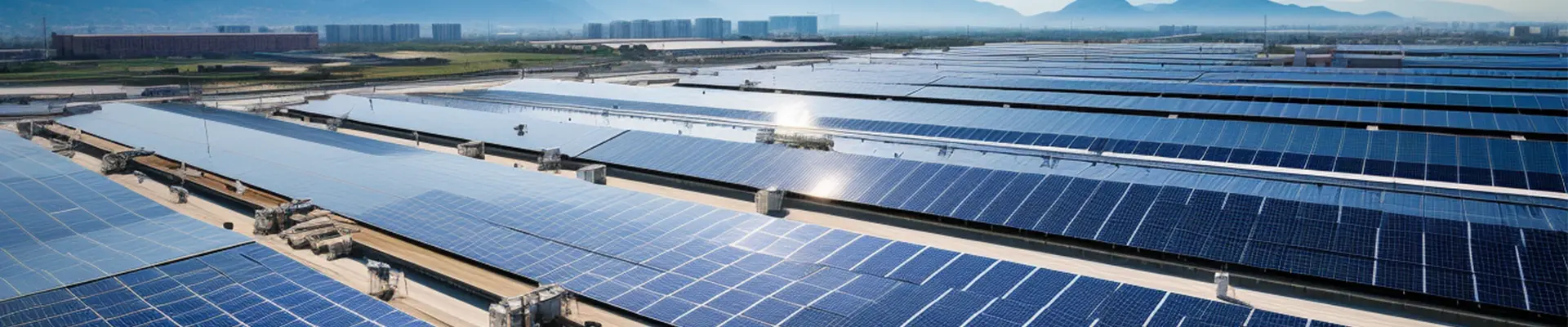
Solar Fence Trends 2026: Vertical Bifacial Technology, Global Policy Incentives, and Commercial ROI Analysis
2026 Global Solar Fence Market Whitepaper: Technical Innovations, Policy Drivers, and ROI Analysis
Solar Fence Trends 2026: The Rise of Infrastructure-Integrated Photovoltaics
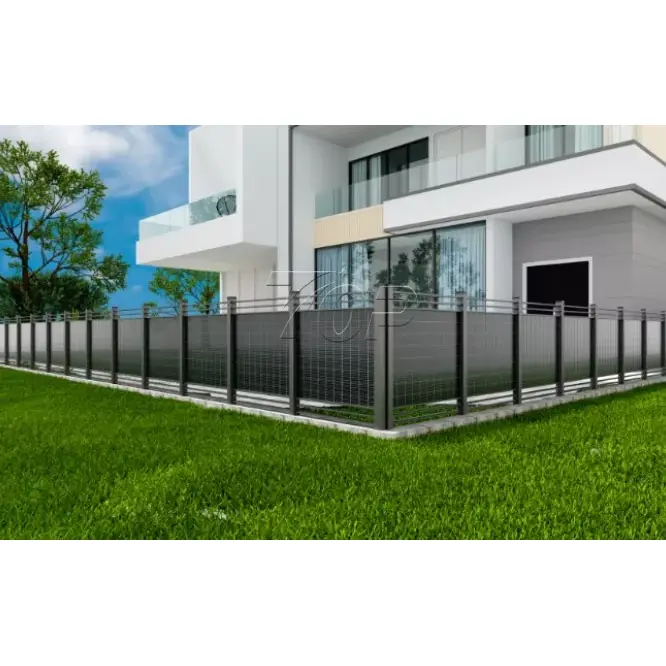
As we navigate the global energy transition, the solar fence trends 2026 point toward a singular conclusion: the dual-use of land is no longer an option, but a financial necessity.
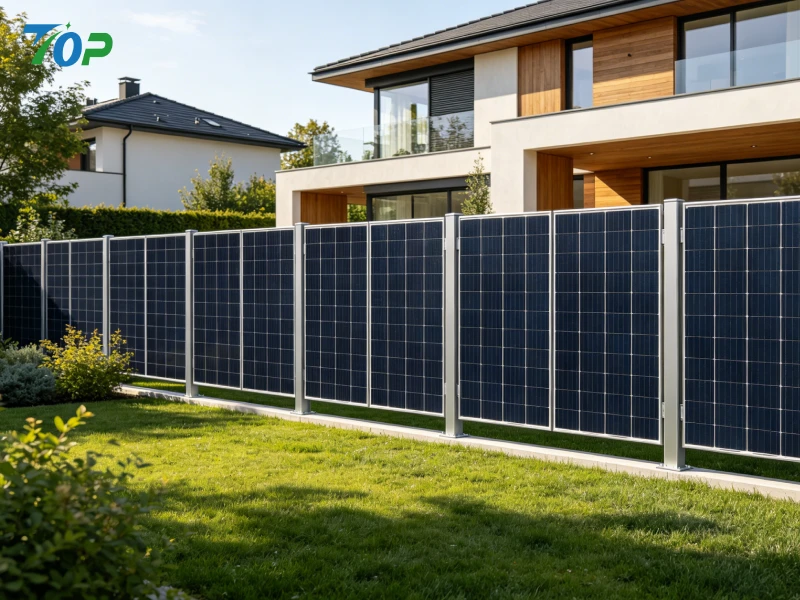
Traditional perimeter fencing, once regarded as a passive security expense, is being systematically replaced by Vertical Bifacial Solar Fencing (VBSF).
In 2026, the convergence of high-efficiency N-type TOPCon cells and advanced structural engineering has pushed solar fencing from a niche architectural statement into a core utility-scale and industrial solution.
This shift is driven by three primary factors:
- The soaring cost of industrial land
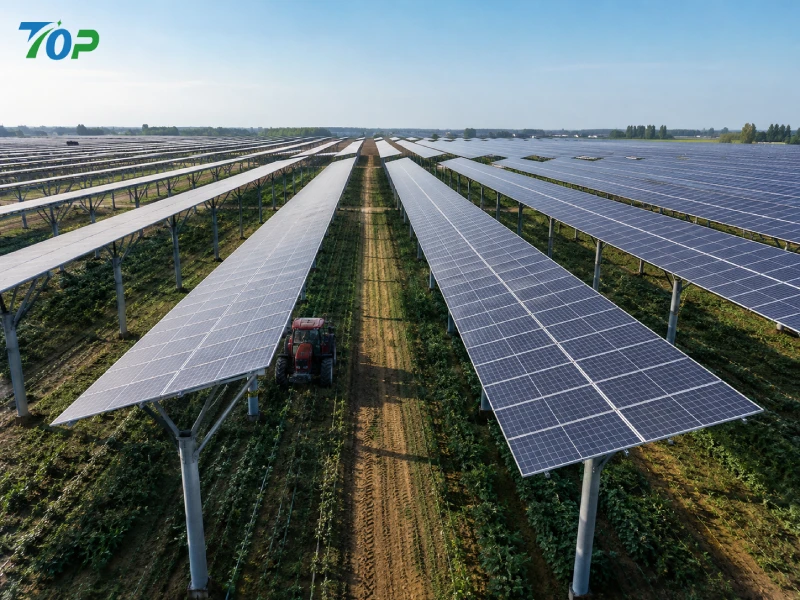
- The relaxation of "Agri-PV" zoning laws in the EU and North America
- The superior Levelized Cost of Energy (LCOE) provided by vertical orientations in high-latitude regions
Solar Fence Trends 2026 by Region: Policy Drivers, Incentives & Market Opportunities
To understand the solar fence trends 2026, one must analyze the specific geopolitical and regulatory landscapes of the world’s most active markets.
1. The European Union: Germany’s "Solarpaket I" and the Agri-PV Revolution
Europe remains the epicenter of the solar fence movement, with Germany leading the charge.
The Regulatory Catalyst
Under the updated Solarpaket I legislation, vertical solar arrays—specifically those utilized as farm boundaries or noise barriers—now qualify for higher Feed-in Tariffs (EEG) compared to traditional ground-mounted systems.
This is a strategic move to preserve arable land while meeting the EU's 2030 renewable targets.
Technical Standards
For B2B providers like Topfencesolar, compliance with DIN EN 1991 (Eurocode 1) for wind and snow loads is non-negotiable.
In 2026, German EPCs (Engineering, Procurement, and Construction) are prioritizing "biodiversity-friendly" fencing, which requires specific ground-clearance heights to allow small fauna migration.
Market Opportunity
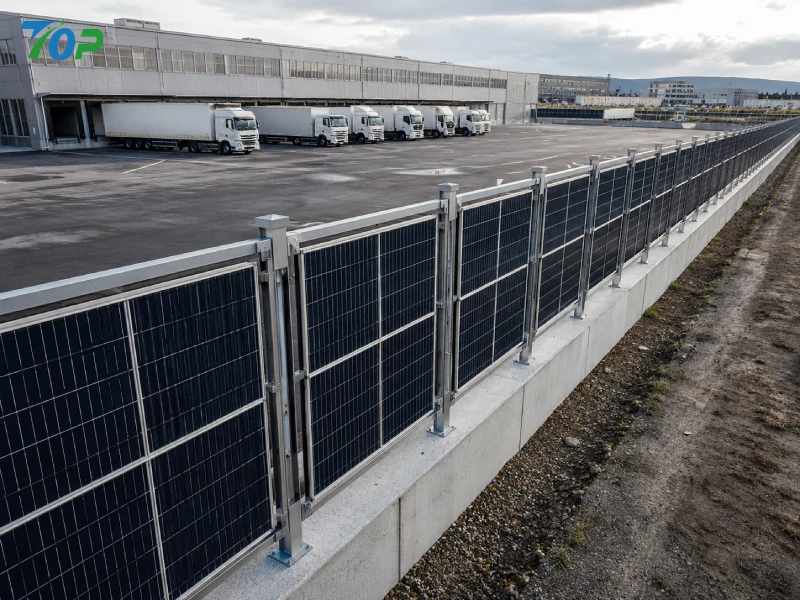
The demand is shifting from residential kits to kilometer-long industrial perimeters for logistics hubs in the Rhine-Ruhr region.
2. North America: IRA Subsidies and the Rise of "Perimeter Power"
In the United States, the solar fence trends 2026 are heavily influenced by the Inflation Reduction Act (IRA) domestic content requirements.
The Investment Tax Credit (ITC) Edge
By 2026, industrial facility owners are leveraging the 30%+ ITC to offset the cost of security upgrades.
When a perimeter fence is also a power plant, the entire structure—including the piling and security mesh—can often be categorized under energy property, significantly accelerating the ROI.
Security-First Engineering
Unlike European markets, the US market demands "Hardened Infrastructure."
This means solar fences must meet ASTM standards for forced entry while maintaining electrical integrity.
Our 2026 designs incorporate anti-climb bifacial modules that serve as both a physical deterrent and a clean energy source.
3. Asia-Pacific: Japan and South Korea’s "Zero-Carbon Rurality"
With some of the world's most mountainous terrain and highest land costs, Japan has become a pioneer in Vertical Photovoltaics (VPV).
Zoning Breakthroughs
By 2026, the Japanese Ministry of Agriculture, Forestry, and Fisheries (MAFF) has streamlined approvals for "Solar Fencing on Category 1 Farmland."
Climate Resilience
Japanese developers prioritize systems that can withstand the "Typhoon Belt" conditions.
The trend here is toward lower-profile, high-rigidity frames with specialized vibration-damping connectors to ensure a 25-year structural lifespan.
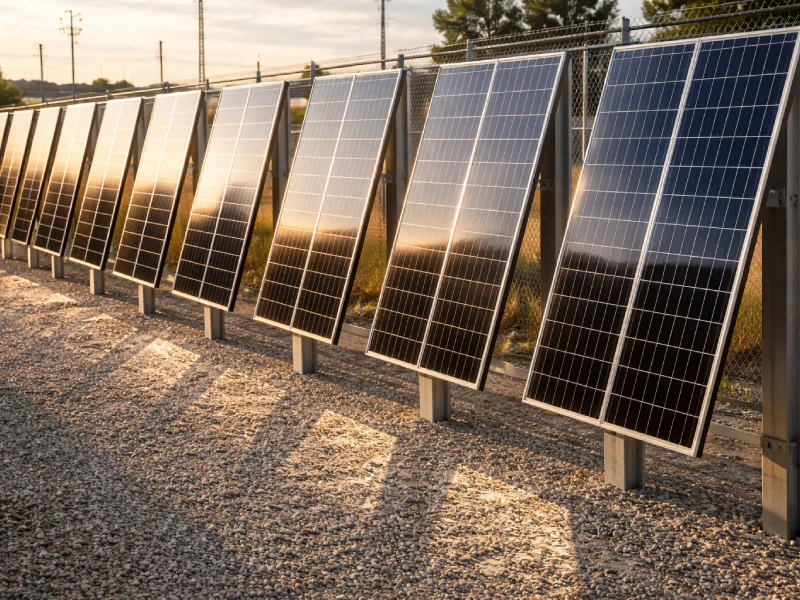
How Solar Fence Systems Work: Efficiency, Bifacial Gain & Structural Design in 2026
While traditional ground-mount systems have dominated the last decade, the solar fence trends 2026 are defined by a shift toward vertical bifurcation.
1. The "Double Peak" Generation Profile: Matching Grid Demand
Traditional south-facing arrays produce a massive energy "hump" at noon, often leading to curtailment.
East-West Vertical Orientation: A solar fence aligned North-South produces two distinct generation peaks: one at 08:00–10:00 and another at 16:00–18:00.
Economic Impact: As Time-of-Use (ToU) pricing becomes the global standard in 2026, energy generated during these "shoulder hours" is often 20–40% more valuable than mid-day energy.
2. The Albedo Effect and Bifacial Gain
The total irradiance on a vertical bifacial module consists of:
- Direct irradiance
- Diffuse irradiance
- Ground-reflected irradiance
The bifaciality factor in Topfencesolar’s 2026 modules reaches 88%.
On light-colored gravel or snow, vertical fences can achieve a Bifacial Gain of 15% to 30%.
3. Thermal Management: The Passive Cooling Advantage
Traditional panels lose 0.3% - 0.4% efficiency for every degree above 25°C.
Vertical modules benefit from unobstructed airflow on both sides, keeping the operating temperature significantly lower and resulting in a higher real-world energy harvest during hot summer months.
4. Structural Engineering: Beyond the Standard Fence
A solar fence is effectively a sail.
In 2026, B2B procurement teams are scrutinizing aero-structural integrity.
Our 2026 mounting systems utilize specialized vibration dampeners to counteract high-frequency oscillations that can lead to micro-cracking.
Systems are engineered to withstand wind speeds up to 60 m/s (approx. 134 mph), compliant with AS/NZS 1170.2 and Eurocode 1-4.
Solar Fence ROI in 2026: Cost, LCOE, Payback Period & Supply Chain Advantages
1. The Total Cost of Ownership (TCO) Comparison
| Feature | Traditional Security Fence | Topfencesolar Bifacial System (2026) |
|---|---|---|
| Initial CAPEX | Low to Medium | Medium to High |
| Operational Revenue | $0 (Pure Expense) | Active Revenue (PPA/Self-Consumption) |
| Maintenance | High (Rust/Paint) | Minimal (Rain-washed glass) |
| Asset Life | 10-15 Years | 25-30 Year Warranty |
2. The 2026 ROI Calculation Model
ROI is determined by the following factors:
- Annual energy yield multiplied by local tariff rates
- Security cost savings
- Government incentives
- Operational and maintenance costs
- Total installed capital expenditure
Case Study: A 500-meter industrial solar fence in a mid-latitude region typically reaches its breakeven point within 5.8 to 7.2 years.
3. Global Supply Chain: The "Flat-Pack" Revolution
As international shipping remains volatile, Topfencesolar has pioneered the Modular Flat-Pack Design.
- Container density increased by 35%
- Lower landed cost for EPCs worldwide
- "Click-and-Secure" mounting technology
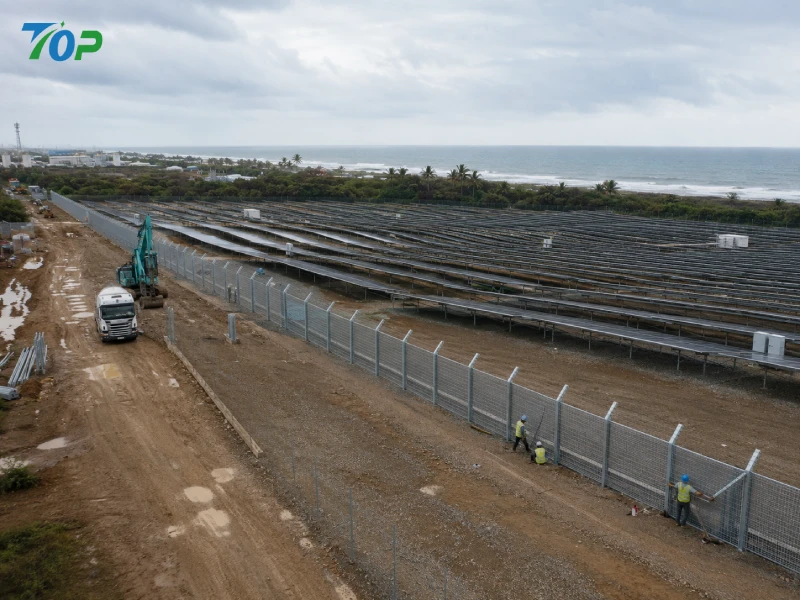
- 3-person crew can install up to 100 meters per day
- Nearly 50% labor cost reduction
4. Sustainability and ESG Compliance
- Low Carbon "Green Aluminum"
- Embodied carbon neutralized within first 6 months of operation
- 98% recyclable materials
Why Solar Fencing Is a Smart Investment in 2026: Secure, Profitable & Future-Proof
The solar fence trends 2026 demonstrate that the perimeter of the future is active, intelligent, and profitable.
Whether you are an EPC contractor in Germany or a facility manager in the United States, vertical bifacial fencing is the definitive solution for land-constrained energy production.
Topfencesolar is your strategic partner in this transition.
Our 2026 product line is engineered to exceed global standards while delivering the lowest TCO in the industry.
Take the Next Step Toward Energy Independence
- Request a Professional Wind-Load & ROI Analysis
- Download the 2026 Solar Fence Technical Whitepaper
- Schedule a Discovery Call with our Engineering Team
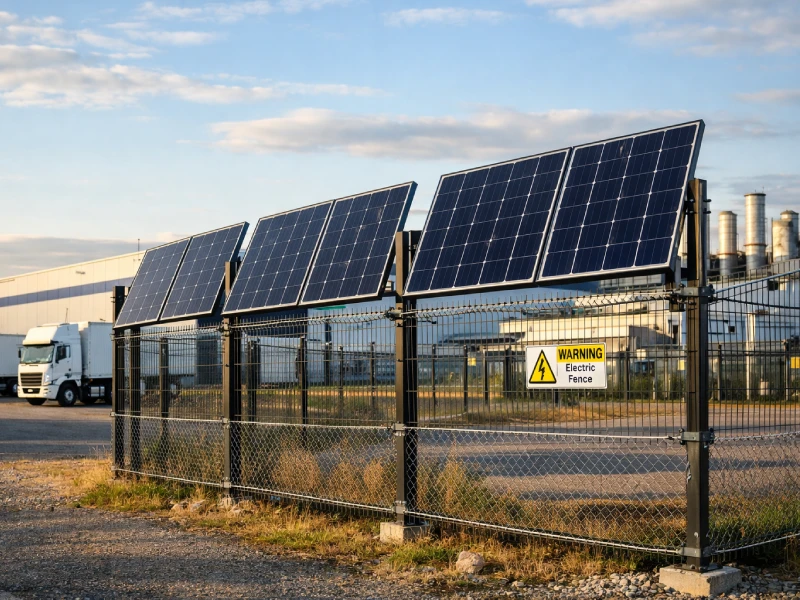
Frequently Asked Questions About Solar Fence Systems in 2026
1. What Defines the Major Solar Fence Trends in 2026?
The dominant solar fence trends in 2026 are centered around the mainstream adoption of Vertical Bifacial PV (VBPV) systems. Modern installations utilize high-efficiency N-Type TOPCon cell technology with bifaciality factors exceeding 85%.
Additionally, modular plug-and-play structural systems and integrated security enhancements—such as anti-climb module layouts and real-time monitoring—have become standard in commercial and industrial (C&I) projects. The market is shifting from experimental deployments to large-scale perimeter energy infrastructure.
2. How Does a Vertical Bifacial Solar Fence Compare in Efficiency to Traditional Tilted PV Arrays?
Although vertically installed modules have a different generation curve compared to south-facing tilted systems, bifacial capability enables dual-side light absorption.
Vertical solar fences generate two production peaks—morning and late afternoon—which better align with Time-of-Use electricity pricing.
In high-latitude, snowy, or reflective-ground regions, vertical systems can match or exceed the annual yield of traditional tilted arrays due to enhanced albedo gain, superior airflow cooling, and reduced snow and dust accumulation.
3. Do Solar Fence Installations Qualify for Government Subsidies and Tax Incentives in 2026?
Yes.
Global policy frameworks increasingly support multi-use land energy solutions.
Examples include Germany’s Solarpaket I program providing favorable Feed-in Tariffs (EEG) for vertical Agri-PV systems and the United States Inflation Reduction Act (IRA), offering 30%+ Investment Tax Credits (ITC) for integrated solar infrastructure.
Because solar fences maintain the land’s primary function (security or agriculture), permitting processes are often faster than ground-mounted PV plants.
4. What Structural and Wind Load Standards Must Solar Fence Systems Meet?
Professional solar fence systems are engineered according to international structural codes.
Typical compliance includes AS/NZS 1170.2 (Wind Actions), Eurocode 1-4 (Wind & Snow Loads), and ASTM standards for forced-entry resistance in the US market.
High-quality systems are tested to withstand wind speeds up to 60 m/s (approximately 134 mph), making them suitable for typhoon, coastal, and high-wind regions.
5. What Is the Typical ROI for a Commercial Solar Fence Project?
For commercial and industrial installations, ROI typically ranges between 5 to 8 years, depending on local electricity pricing, incentive structures, system size, and self-consumption ratio.
Since solar fencing replaces the CAPEX of traditional security fencing while generating electricity for 25+ years, the total life-cycle cost is significantly lower than conventional perimeter solutions.
6. Are Vertical Solar Fence Panels Vulnerable to Vandalism or Theft?
Modern 2026 solar fence systems are engineered with enhanced security features including double-tempered impact-resistant glass, anti-tamper fasteners, enclosed wiring channels, and real-time monitoring with fault alerts.
If a panel is disconnected or damaged, the system automatically notifies the operations team. In many cases, solar fences offer higher security standards than conventional chain-link fencing.
7. How Do Agri-PV Solar Fences Affect Crop Yield or Livestock?
Vertical Agri-PV fences have minimal ground footprint and negligible impact on crop production.
They act as windbreaks, reduce soil moisture evaporation, provide livestock shade, and allow farmers to diversify income without sacrificing arable land.
This makes vertical solar fencing one of the most practical dual-use renewable energy solutions in agricultural environments.
8. Why Are B2B Clients Increasingly Choosing Modular Solar Fence Systems?
Modular design addresses two major global challenges: high logistics costs and skilled labor shortages.
Flat-pack shipping increases container density and reduces freight expenses. On-site installation requires no welding or heavy machinery, allowing a 3-person crew to install up to 100 meters per day.
This improves deployment speed and reduces labor costs by nearly 50% compared to conventional racking systems.
Start Your Solar Fence Project with Topfencesolar
For EPC contractors, industrial facility owners, and project developers, we provide advanced solar fence solutions with vertical bifacial technology.
Get expert support on system design, wind-load analysis, and ROI optimization to maximize your project value.
Related News
- The Global EPC Sourcing Checklist: Managing Lead Times and Logistics for Solar Mounting Systems
- BIPV & Commercial Rooftops: Solving Waterproofing and Structural Integrity Challenges in Urban Solar
- Navigating Solar Certifications: Why UL 2703 and International Standards Matter for Project Bankability
- Maximizing Yield with Bifacial Modules: How to Select the Optimal Tracker for Enhanced Energy Output
- Wind Load and Coastal Engineering: Ensuring Your Ground-Mounted Solar Array Survives Extreme Weather
- Aluminum vs. Galvanized Steel: Choosing the Right Solar Mounting Structure for High-Corrosivity Environments
Leave me a message