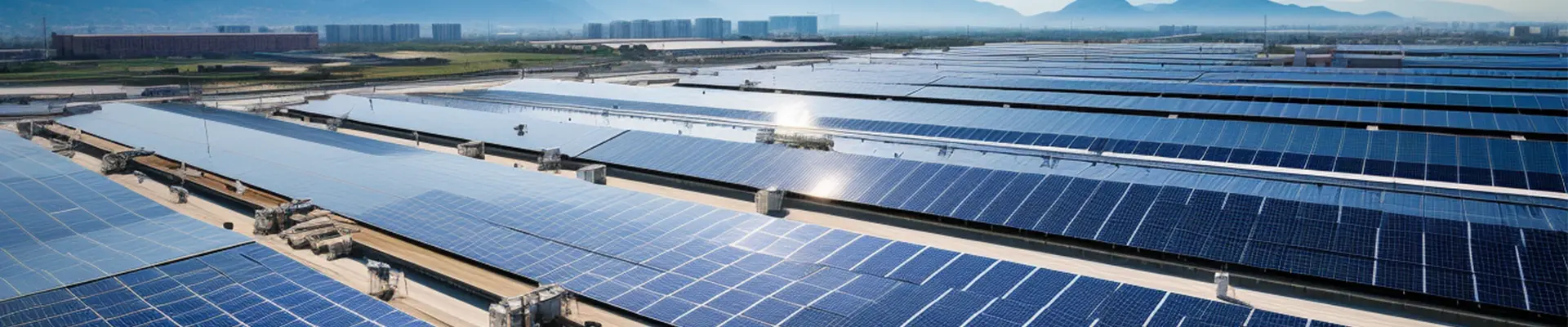
Vertical Bifacial Modules in Solar Fence Systems: A Study of Light-Guiding Performance and Energy Yield Optimization
What Is a Vertical Bifacial Solar Fence and Why It Matters for Modern EPC Projects?
As industrial facilities, logistics parks, utility operators, and commercial property owners seek more efficient ways to generate renewable energy without consuming valuable land resources, the vertical bifacial solar fence has emerged as a compelling solution. Unlike traditional photovoltaic systems that require dedicated installation areas, a vertical bifacial solar fence transforms existing perimeter infrastructure into an energy-producing asset while maintaining its primary security and boundary functions.
For EPC contractors, solar installers, and photovoltaic distributors, this dual-purpose approach creates new opportunities to maximize project value. Instead of viewing fencing as a passive expense, project developers can convert it into a long-term revenue-generating infrastructure component. At the same time, advances in bifacial module technology have significantly improved the ability of vertical systems to capture direct, diffuse, and reflected sunlight, making solar fence applications increasingly viable across a wide range of climates and operating environments.
The growing adoption of vertical bifacial photovoltaic systems is not simply driven by sustainability goals. Rising electricity costs, increasing land-use pressures, stricter carbon reduction targets, and the need for distributed energy generation are all contributing factors. As a result, EPC firms are evaluating solar fence systems not only from a structural perspective but also from an energy-yield and return-on-investment perspective.
This article explores the light-guiding performance of vertical bifacial solar fence systems, examines how irradiance is distributed across both sides of bifacial modules, and analyzes the engineering factors that influence overall power generation performance. The discussion is intended to help installers, developers, and procurement professionals better understand the technical and commercial potential of this emerging photovoltaic application.
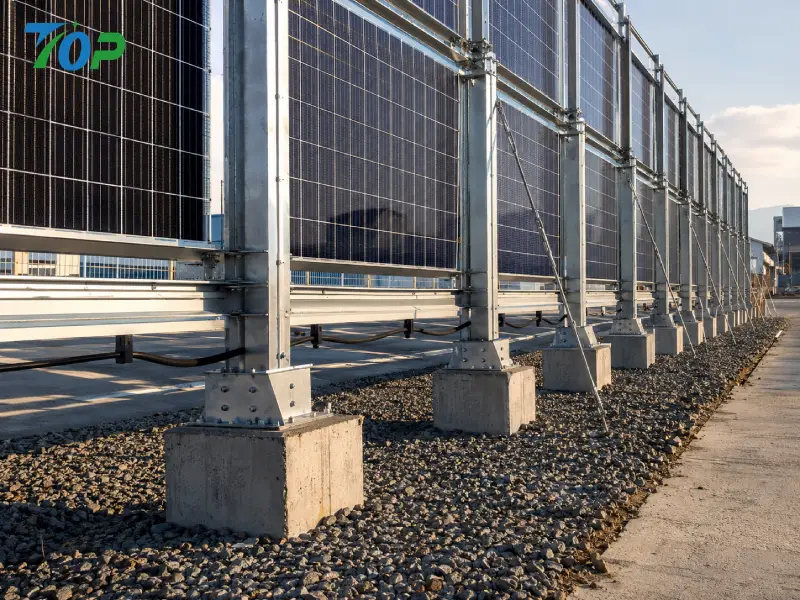
Why Are Vertical Bifacial Solar Fences Receiving Attention from EPC Contractors?
The rapid growth of solar fence projects is not occurring by chance. Several market trends are converging to make vertical photovoltaic fencing an increasingly attractive option for commercial and industrial solar development.
Land Scarcity Is Driving Dual-Use Solar Infrastructure
One of the biggest challenges facing modern photovoltaic development is land availability. Utility-scale projects often compete with agriculture, manufacturing, warehousing, transportation infrastructure, and urban expansion for suitable installation areas.
In many industrial regions, land values continue to increase, making it difficult to justify dedicating large portions of property solely to energy production. This challenge has encouraged the development of dual-use solar infrastructure solutions that combine energy generation with existing site functions.
A vertical bifacial solar fence is an excellent example of this concept. By integrating photovoltaic modules directly into perimeter fencing systems, project owners can generate electricity without sacrificing operational space. This significantly improves land-use efficiency and creates additional value from infrastructure that would otherwise produce no direct financial return.
For facilities with limited expansion opportunities, this approach can help maximize renewable energy deployment while preserving valuable land for core business activities.
Why Traditional Ground-Mounted Systems Are Not Always Suitable
Conventional ground-mounted photovoltaic systems remain highly effective in many applications. However, they are not always the ideal solution for every project.
Common limitations include:
- Insufficient available land area
- Future site expansion requirements
- High site preparation costs
- Complex permitting requirements
- Environmental restrictions
- Security concerns
- Potential conflicts with logistics operations
In industrial environments, perimeter areas often remain underutilized while occupying considerable linear space. Solar fence systems allow developers to capitalize on these areas without disrupting facility operations.
From an EPC perspective, this can simplify project implementation while opening new revenue opportunities for clients.
The Rise of Energy-Generating Security Fences
The concept of multifunctional infrastructure is becoming increasingly common across the renewable energy sector. Parking structures are being equipped with solar canopies. Building facades are incorporating photovoltaic materials. Utility corridors are supporting communications and monitoring equipment.
Solar fencing follows the same trend.
Instead of acting solely as a physical barrier, the fence becomes an active energy-producing asset. This transformation enhances infrastructure utilization and supports corporate sustainability initiatives.
For industrial property owners, the ability to combine security infrastructure with renewable energy generation can improve both operational efficiency and environmental performance metrics.
Growing Demand for Distributed Renewable Energy
Distributed energy generation is becoming increasingly important as organizations seek to reduce dependence on centralized electricity networks.
Many industrial facilities are pursuing energy strategies that include:
- On-site renewable generation
- Battery energy storage integration
- Peak demand reduction
- Carbon emissions reduction
- Energy resilience improvements
Vertical solar fence systems can contribute to these objectives by providing additional generation capacity without requiring major modifications to existing facility layouts.
Although solar fences are not intended to replace large-scale rooftop or ground-mounted systems, they can serve as a valuable complementary energy source within a broader distributed energy strategy.
What Are Vertical Bifacial Solar Fence Systems?
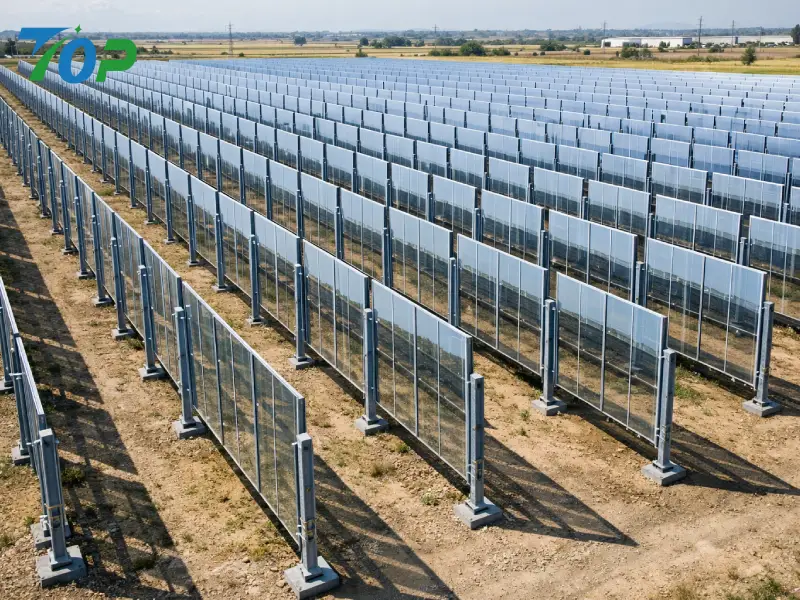
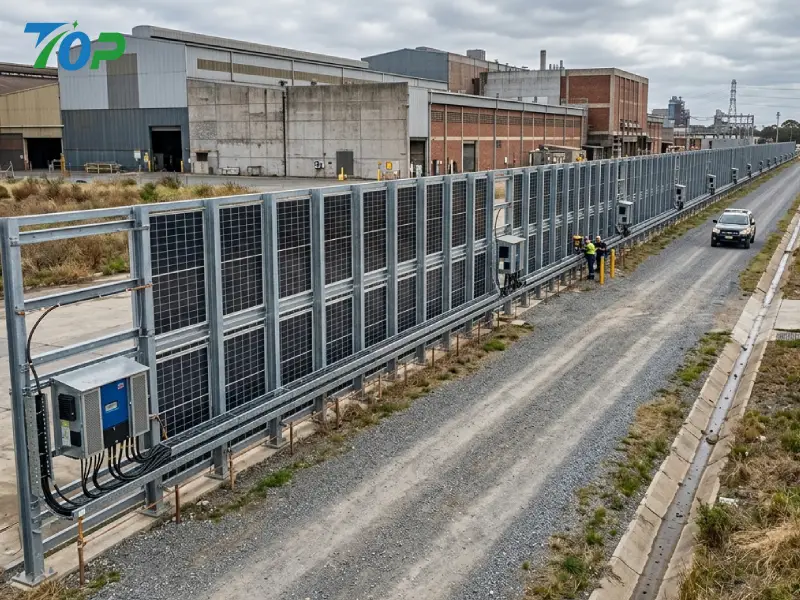
A vertical bifacial solar fence is a photovoltaic fencing solution that combines structural fencing components with bifacial solar modules capable of generating electricity from both sides of the panel.
Unlike traditional photovoltaic arrays that are tilted toward the equator to maximize direct sunlight exposure, vertical solar fence systems are installed upright. This orientation creates a unique irradiance collection profile that differs significantly from conventional solar installations.
Rather than concentrating energy production around solar noon, vertical systems often generate electricity over a broader portion of the day by capturing sunlight from eastern and western directions.
Structure of a Vertical Solar Fence System
Although configurations vary depending on project requirements, most systems include the following core components:
- Structural fence posts
- Horizontal support rails
- Bifacial photovoltaic modules
- Mounting brackets
- Fasteners and connectors
- Cable management systems
- Grounding equipment
- Electrical integration components
- Foundation systems
Each component must be designed to withstand long-term environmental exposure while maintaining both structural integrity and electrical safety.
Because solar fences serve as perimeter infrastructure, they are frequently subjected to wind loading, temperature fluctuations, precipitation, and potential physical impacts. Consequently, engineering quality becomes a critical factor in overall system reliability.
How Vertical Bifacial Modules Differ from Conventional PV Panels
The operational principles of vertical bifacial modules differ substantially from those of traditional photovoltaic systems.
Conventional modules typically rely on a front-facing surface positioned at an optimized tilt angle to maximize direct solar irradiance.
In contrast, bifacial modules are capable of generating electricity from both surfaces. This allows them to utilize multiple sources of solar radiation simultaneously.
These sources include:
- Direct sunlight
- Diffuse sky radiation
- Ground-reflected irradiance
- Reflections from nearby surfaces
Because of this capability, bifacial technology creates additional opportunities to harvest energy that would otherwise be lost in conventional monofacial installations.
Why Bifacial Technology Is Essential for Solar Fence Applications
The success of vertical solar fencing depends heavily on the performance of bifacial photovoltaic modules.
Since the modules are installed vertically, direct solar irradiance alone may not be sufficient to maximize energy production. Rear-side energy collection therefore becomes a critical contributor to overall system output.
Bifacial modules offer several advantages:
- Higher energy yield potential
- Improved utilization of reflected light
- Enhanced performance under diffuse conditions
- Better adaptation to vertical installation geometry
- Greater flexibility in project design
As bifacial cell technology continues to improve, these advantages are expected to become even more significant for future solar fence projects.
Typical Applications of Vertical Solar Fence Installations
The versatility of solar fencing makes it suitable for a wide range of commercial and industrial environments.
Common applications include:
- Industrial parks
- Manufacturing facilities
- Logistics centers
- Data centers
- Utility substations
- Transportation corridors
- Agricultural boundaries
- Commercial properties
- Water treatment facilities
- Renewable energy sites
In each of these scenarios, the objective remains consistent: convert existing perimeter infrastructure into a productive renewable energy asset.
How Vertical Bifacial Modules Capture More Usable Light Than Conventional PV Systems
To understand the power generation potential of a vertical bifacial solar fence, it is necessary to examine how solar radiation interacts with the system.
Unlike conventional photovoltaic arrays that primarily depend on direct sunlight striking a tilted surface, vertical bifacial installations are designed to utilize multiple irradiance pathways simultaneously.
This characteristic is often described as light-guiding performance, referring to the system's ability to collect and convert various forms of available solar energy.
Understanding Light-Guiding Performance
Light-guiding performance encompasses the mechanisms through which solar radiation reaches photovoltaic cells and is ultimately converted into electricity.
For vertical bifacial systems, the most important irradiance sources include:
- Direct solar irradiance
- Diffuse atmospheric irradiance
- Ground-reflected irradiance
- Reflected light from surrounding objects
The relative contribution of each source varies depending on geographical location, climate conditions, ground surface characteristics, module spacing, and installation geometry.
Understanding these relationships is essential for accurately evaluating system performance and optimizing project design.
Direct Irradiance Collection Mechanism
Direct irradiance consists of sunlight traveling directly from the sun to the photovoltaic surface without atmospheric scattering.
In traditional photovoltaic systems, direct irradiance often represents the largest contributor to annual energy production.
In a vertical configuration, direct irradiance behaves differently.
The east-facing side of the fence captures sunlight during morning hours, while the west-facing side captures sunlight during afternoon and evening periods.
This creates a broader daily production profile compared with conventional south-facing arrays.
For facilities with significant electricity consumption during operational start-up periods and late-day activities, this production pattern can provide valuable energy matching benefits.
Diffuse Irradiance Utilization
Not all solar energy reaches the Earth's surface as direct sunlight.
A significant portion is scattered by atmospheric particles, clouds, and moisture before reaching photovoltaic modules.
This scattered energy is known as diffuse irradiance.
Vertical bifacial modules often perform well under diffuse lighting conditions because both sides of the module remain exposed to the sky throughout the day.
This characteristic can be especially advantageous in:
- Cloudy climates
- Coastal regions
- Northern European markets
- Industrial areas with variable weather conditions
As a result, vertical systems may demonstrate more stable performance than expected even during periods of reduced direct sunlight.
Ground Reflection and Rear-Side Energy Collection
One of the defining advantages of bifacial photovoltaic technology is its ability to harvest reflected light.
When sunlight strikes the ground surrounding a solar fence installation, a portion of that energy is reflected upward toward the rear side of the module.
The amount of reflected irradiance depends on the reflectivity of the surface, commonly referred to as albedo.
Typical albedo values include:
- Grass: 0.15–0.25
- Soil: 0.10–0.20
- Concrete: 0.30–0.50
- Light-colored gravel: 0.30–0.45
- Snow-covered surfaces: 0.60–0.90
Higher albedo surfaces generally increase rear-side irradiance availability and can contribute to greater overall energy production.
This is one reason why site-specific environmental conditions play such an important role in vertical bifacial system performance assessments.
Why Morning and Evening Energy Production Matters
Many industrial and commercial facilities experience electricity demand peaks outside traditional solar noon production windows.
Warehouses often begin operations early in the morning. Manufacturing facilities may experience substantial start-up loads. Logistics centers frequently maintain high activity levels into the evening.
Because vertical bifacial solar fence systems generate electricity across a broader portion of the day, they may align more effectively with these consumption patterns.
This characteristic can improve on-site energy utilization rates and enhance the economic value of generated electricity.
For EPC contractors and project developers, understanding these production characteristics is essential when evaluating the overall business case for solar fence deployment.
In the next section, we will examine how bifacial gain is quantified, how irradiance is distributed around vertical photovoltaic fences, and which engineering parameters have the greatest influence on overall system performance.
Quantifying Bifacial Gain in Vertical Solar Fence Applications
One of the most important questions asked by EPC contractors and project developers is straightforward:
How much additional energy can a vertical bifacial solar fence actually produce compared with a similar monofacial system?
The answer lies in understanding bifacial gain, a key performance indicator used throughout the photovoltaic industry to evaluate the effectiveness of bifacial technology.
While marketing materials often emphasize the benefits of bifacial modules, professional project evaluation requires a more rigorous engineering approach. Actual performance depends on site conditions, module configuration, irradiance distribution, albedo characteristics, row spacing, and system design quality.
Understanding how bifacial gain is calculated—and what factors influence it—is essential for accurate energy yield prediction and project bankability assessments.
What Is Bifacial Gain?
Bifacial gain refers to the additional energy generated by a bifacial photovoltaic module compared with an equivalent monofacial module operating under the same conditions.
Because bifacial modules can convert solar irradiance reaching both the front and rear surfaces into electricity, they typically generate more energy than monofacial modules.
The magnitude of this gain varies considerably depending on environmental conditions and installation design.
For example, a vertical bifacial solar fence installed above highly reflective gravel may experience significantly greater rear-side irradiance than the same module installed over dark soil.
Similarly, systems operating in snowy climates often achieve enhanced bifacial performance because snow acts as a highly reflective surface capable of increasing rear-side irradiance exposure.
Bifacial Gain Calculation Methodology
At the project development stage, bifacial gain is commonly expressed as:
Bifacial Gain (%) = ((Bifacial Energy Yield − Monofacial Energy Yield) ÷ Monofacial Energy Yield) × 100
This calculation provides a standardized way to compare system performance across different projects and environmental conditions.
For example:
- Monofacial system annual yield: 1,000 kWh
- Bifacial system annual yield: 1,120 kWh
Result:
Bifacial Gain = 12%
From an EPC perspective, bifacial gain should never be viewed as a fixed value. Instead, it should be considered a project-specific performance variable requiring detailed modeling and validation.
Typical Bifacial Gain Ranges in Solar Fence Installations
Although every project is unique, industry experience indicates that rear-side energy contributions often vary according to surrounding surface conditions.
| Ground Surface | Typical Albedo | Potential Bifacial Gain Range |
|---|---|---|
| Dark Soil | 0.10–0.20 | 3–8% |
| Natural Grass | 0.15–0.25 | 5–12% |
| Light Gravel | 0.30–0.45 | 8–18% |
| Concrete Surface | 0.30–0.50 | 10–20% |
| Reflective Ground Treatment | 0.50+ | 15–30% |
| Snow-Covered Ground | 0.60–0.90 | 20–40%+ |
These values should be considered indicative rather than guaranteed outcomes. Accurate prediction requires project-specific simulation and field validation.
Why Bifacial Gain Matters to EPC Contractors
For EPC companies, bifacial gain directly influences:
- Annual energy production estimates
- Project internal rate of return (IRR)
- Payback period calculations
- Levelized cost of electricity (LCOE)
- Investor confidence
- Project bankability
Even a modest increase in annual energy production can significantly improve lifetime project economics, particularly in commercial and industrial applications where electricity prices remain elevated.
As module costs continue to decline, optimizing bifacial gain is becoming one of the most effective methods for increasing photovoltaic project value without substantially increasing installation footprint.
Solar Radiation Distribution Around Vertical PV Fence Systems
The energy performance of a vertical bifacial solar fence is fundamentally determined by how solar radiation is distributed around the installation environment.
Unlike conventional south-facing photovoltaic arrays that primarily collect direct solar irradiance from one direction, vertical bifacial systems interact with a much more complex irradiance field.
This complexity creates both opportunities and engineering challenges.
Understanding the Three Major Sources of Irradiance
For practical engineering purposes, solar radiation can generally be divided into three primary categories:
- Direct irradiance
- Diffuse irradiance
- Reflected irradiance
Each contributes differently to overall system performance.
Direct Irradiance
Direct irradiance originates directly from the sun without atmospheric scattering.
For vertical fence systems, direct irradiance exposure is heavily influenced by:
- Fence orientation
- Latitude
- Season
- Solar elevation angle
An east-west oriented fence typically receives morning sunlight on one side and afternoon sunlight on the opposite side.
This configuration creates a characteristic dual-peak generation profile that differs substantially from traditional photovoltaic systems.
Diffuse Irradiance
Diffuse irradiance results from atmospheric scattering processes.
Clouds, aerosols, humidity, and airborne particles all contribute to diffuse light generation.
In some climates, diffuse irradiance may account for more than one-third of annual solar resource availability.
Because both sides of a bifacial module remain exposed to the sky, vertical fence systems often utilize diffuse irradiance very effectively.
Reflected Irradiance
Reflected irradiance represents one of the most important contributors to bifacial gain.
When sunlight reaches surrounding surfaces, a portion is reflected toward the rear side of the module.
The amount of reflected energy depends largely on:
- Surface color
- Surface texture
- Ground moisture
- Vegetation coverage
- Snow accumulation
For this reason, understanding site-specific albedo characteristics is essential during project development.
Seasonal Irradiance Behavior
Solar fence performance is strongly influenced by seasonal variations in solar geometry.
Unlike tilted systems that are often optimized for annual average performance, vertical systems display unique seasonal behavior.
Summer Conditions
During summer months, the sun reaches higher elevation angles.
As a result, vertical modules receive less direct irradiance during midday periods compared with optimally tilted systems.
However, morning and afternoon collection remains strong, helping maintain balanced daily generation profiles.
Winter Conditions
Winter performance can be surprisingly competitive.
Lower solar elevation angles often improve irradiance incidence on vertical surfaces.
In snowy climates, reflected irradiance may increase substantially due to elevated surface albedo.
This is one reason why vertical bifacial systems are attracting increasing attention in northern regions.
Spring and Autumn Performance
Transitional seasons often provide favorable operating conditions for vertical systems because solar elevation angles align more effectively with module orientation.
Many simulation studies indicate that spring and autumn energy production can compare favorably with conventional photovoltaic configurations under appropriate conditions.
Comparative Energy Yield Analysis: Vertical Bifacial vs Traditional Tilted Systems
One of the most common misconceptions surrounding solar fence systems is that vertical installations are inherently less productive than tilted arrays.
The reality is considerably more nuanced.
Energy yield performance depends on the specific project objective being evaluated.
Peak Power Versus Energy Distribution
Traditional south-facing photovoltaic arrays are optimized to maximize peak power generation near solar noon.
This strategy often delivers the highest annual energy yield per installed module.
However, peak generation does not necessarily correspond with actual electricity consumption patterns.
A vertical bifacial solar fence produces electricity differently.
Instead of a single dominant midday peak, generation is distributed across morning and afternoon periods.
This broader production curve can improve self-consumption rates for many commercial and industrial facilities.
Generation Profile Comparison
| Performance Metric | Traditional Tilted PV | Vertical Bifacial Solar Fence |
|---|---|---|
| Midday Output | Very High | Moderate |
| Morning Production | Moderate | High |
| Evening Production | Moderate | High |
| Land Utilization | Requires Dedicated Area | Uses Existing Fence Line |
| Rear-Side Gain Potential | Moderate | High |
| Dual-Purpose Functionality | No | Yes |
This comparison highlights why project evaluation should focus on total economic value rather than peak power output alone.
Impact on Commercial Self-Consumption
For many industrial facilities, electricity consumption begins increasing before sunrise and remains elevated into evening hours.
Because vertical bifacial systems extend energy production beyond midday periods, they can improve alignment between generation and demand.
Higher self-consumption rates often translate directly into stronger financial performance because on-site electricity offsets retail utility prices.
Key Factors Influencing Light-Guiding Efficiency in Solar Fence Projects
The light-guiding performance of a solar fence system is influenced by numerous engineering variables.
Optimizing these variables is one of the most important responsibilities of the project design team.
Fence Orientation
Orientation remains one of the most significant performance drivers.
Most vertical bifacial installations utilize east-west alignment because it maximizes exposure to both morning and afternoon sunlight.
However, local site conditions, terrain constraints, and shading obstacles may require alternative configurations.
Module Height Above Ground
Ground clearance affects the amount of reflected irradiance reaching the rear side of the module.
Insufficient clearance may reduce rear-side exposure.
Excessive clearance may increase structural costs.
Finding the optimal balance requires detailed project-specific analysis.
Ground Surface Characteristics
The reflectivity of surrounding surfaces can substantially influence bifacial gain.
Project developers should evaluate:
- Vegetation type
- Seasonal growth patterns
- Surface coloration
- Maintenance requirements
- Long-term albedo stability
In some projects, engineered ground treatments may be justified when additional energy production offsets implementation costs.
Module Spacing and Shading
Mutual shading remains an important design consideration.
Although solar fence systems typically involve a single row of modules, nearby structures, vegetation, vehicles, and infrastructure can influence irradiance availability.
Professional shading analysis should therefore be incorporated into project planning.
Climate Conditions
Local weather patterns influence all aspects of system performance.
Important variables include:
- Annual solar resource availability
- Cloud cover frequency
- Snow accumulation
- Rainfall patterns
- Dust levels
- Atmospheric humidity
Accurate climatic data is essential for reliable energy yield forecasting.
Computational Modeling and Simulation Methods for Solar Fence Irradiance Analysis
Modern EPC contractors increasingly rely on advanced simulation software to evaluate solar fence projects before construction begins.
Because vertical bifacial systems involve complex irradiance interactions, accurate modeling is critical for performance prediction and investment decision-making.
Why Simulation Matters
Without detailed modeling, it is extremely difficult to estimate:
- Bifacial gain
- Rear-side irradiance levels
- Annual energy yield
- Shading losses
- Seasonal performance variations
Simulation allows project teams to identify design opportunities and mitigate performance risks before installation.
Common Software Platforms Used by EPC Engineers
Several software platforms are commonly used for bifacial photovoltaic analysis:
- PVsyst
- Helioscope
- SAM (System Advisor Model)
- SketchUp-based shading tools
- Ray-tracing simulation software
Each platform offers different capabilities depending on project complexity and required analysis depth.
Key Inputs Required for Accurate Modeling
Reliable simulations depend on high-quality input data.
Typical inputs include:
- Meteorological data
- Solar resource measurements
- Ground albedo values
- Module specifications
- Bifaciality coefficients
- Fence geometry
- Terrain information
- Shading obstacles
Errors in any of these inputs can significantly affect predicted energy yield results.
Field Validation and Performance Verification
While simulation tools are extremely valuable, actual field measurements remain essential.
Professional project development should include:
- Irradiance monitoring
- Energy production measurement
- Performance ratio evaluation
- Bifacial gain verification
- Long-term operational monitoring
The most successful EPC contractors combine advanced simulation capabilities with real-world performance validation to improve future project accuracy and strengthen client confidence.
In the next section, we will move into the most commercially important topics: engineering design standards, structural requirements, material selection, real-world project considerations, supplier evaluation criteria, ROI analysis, and how EPC contractors can identify a reliable solar fence manufacturing partner for long-term project success.
Engineering Design Considerations for High-Performance Vertical Bifacial Solar Fence Systems
While light-guiding performance and bifacial gain determine the theoretical energy potential of a solar fence installation, long-term project success ultimately depends on engineering execution.
For EPC contractors, a solar fence is not simply a photovoltaic project. It is simultaneously:
- A structural engineering project
- An electrical engineering project
- A security infrastructure project
- A long-term asset management project
A system that produces excellent energy yields but experiences structural failures, corrosion issues, excessive maintenance requirements, or electrical reliability problems can quickly become a financial liability.
Therefore, engineering design must be approached from a lifecycle perspective rather than focusing solely on initial installation costs.
Structural Load Requirements
Unlike rooftop systems, vertical photovoltaic fences function as freestanding structures exposed directly to environmental forces.
Wind loading is often the most critical design consideration.
Because photovoltaic modules present a large vertical surface area, wind pressure can create substantial forces on fence posts, mounting rails, foundations, and connection hardware.
Design teams should evaluate:
- Basic wind speed requirements
- Terrain exposure categories
- Local building code requirements
- Extreme weather events
- Gust loading conditions
- Dynamic vibration effects
In coastal regions, hurricane-prone areas, and open industrial sites, structural requirements may be significantly more demanding than those encountered in conventional fencing applications.
A professional engineering review should verify that the fence system can safely withstand anticipated environmental loads throughout its intended service life.
Foundation Design and Stability
Foundation performance directly affects long-term system reliability.
Even a well-designed superstructure can experience performance issues if foundation conditions are not properly evaluated.
Key considerations include:
- Soil bearing capacity
- Frost depth requirements
- Groundwater conditions
- Settlement risks
- Corrosion exposure
- Drainage characteristics
Site-specific geotechnical investigations become increasingly important for large commercial and utility-scale installations.
Failure to address subsurface conditions during the design phase can result in costly remediation work later in the project lifecycle.
Corrosion Resistance and Material Selection
Solar fence systems are expected to operate for decades while remaining exposed to rain, humidity, ultraviolet radiation, temperature fluctuations, airborne contaminants, and industrial pollutants.
Material selection therefore becomes a major determinant of long-term reliability.
Professional EPC buyers typically evaluate:
- Galvanized steel thickness
- Aluminum alloy quality
- SUS304 stainless steel components
- SUS316 stainless steel options for coastal environments
- Fastener durability
- Protective coating performance
Although lower-cost materials may reduce initial procurement expenses, lifecycle costs often increase when corrosion-related maintenance and component replacement become necessary.
For this reason, many industrial clients prioritize durability and total cost of ownership over minimum upfront investment.
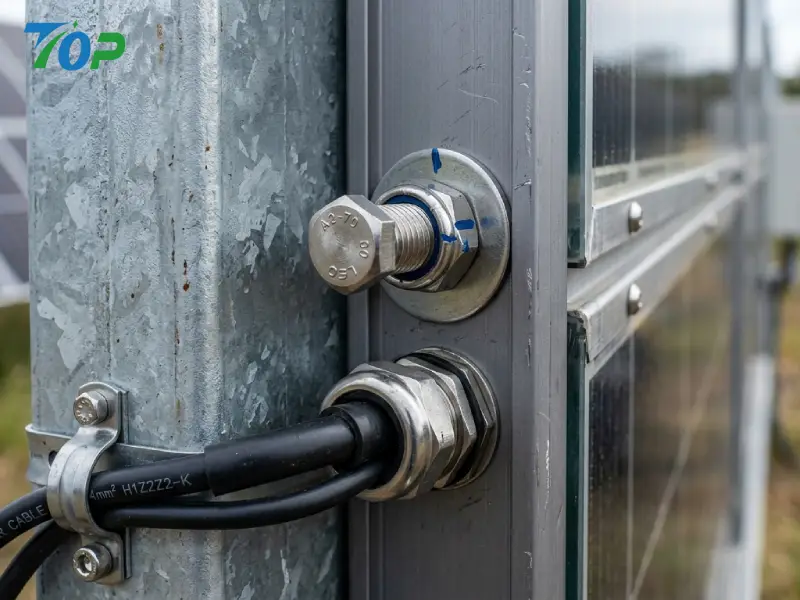
Electrical Safety and System Reliability
Electrical design should receive the same level of attention as structural engineering.
Poor cable routing, inadequate grounding, insufficient surge protection, or improper waterproofing can compromise both performance and safety.
Best practices generally include:
- UV-resistant cable management systems
- Weatherproof connectors
- Comprehensive grounding networks
- Surge protection devices
- Proper string voltage design
- Accessible maintenance pathways
Because solar fence systems are often located along accessible site boundaries, electrical safety considerations become particularly important.
Waterproofing and Environmental Protection
Long-term exposure to environmental conditions creates significant reliability challenges.
Water ingress remains one of the leading causes of electrical component degradation in photovoltaic systems.
Designers should therefore evaluate:
- Junction box protection ratings
- Cable entry sealing methods
- Drainage provisions
- Condensation management
- Connector weather resistance
- Ingress protection standards
A properly engineered waterproofing strategy can significantly reduce maintenance requirements and extend operational lifespan.
What Industry Research Reveals About Vertical Bifacial PV Performance
The growing interest in vertical bifacial photovoltaic systems is supported by a growing body of industry research.
Organizations involved in photovoltaic performance analysis have increasingly investigated how vertical configurations behave under different environmental conditions.
Although performance outcomes vary by location and project design, several consistent themes have emerged.
Improved Energy Distribution Throughout the Day
Multiple studies have demonstrated that vertical east-west bifacial configurations typically generate a broader daily production curve compared with traditional south-facing arrays.
Rather than concentrating output near solar noon, vertical systems produce stronger generation during morning and afternoon periods.
For facilities with operational demand outside midday hours, this production profile may improve energy self-consumption rates.
Enhanced Winter Performance
Research conducted in higher-latitude regions has shown that vertical systems can exhibit relatively strong winter performance.
Several factors contribute to this behavior:
- Lower solar elevation angles
- Reduced snow accumulation on modules
- Improved reflection from snow-covered surfaces
- Enhanced bifacial gain opportunities
Although annual yield remains dependent on project-specific conditions, winter performance advantages are often cited as a key benefit of vertical bifacial technology.
Reduced Soiling Losses
Dust accumulation can significantly reduce photovoltaic performance over time.
Vertical module orientation naturally limits the accumulation of dirt, leaves, and airborne particles.
In dry climates and industrial environments, this characteristic may contribute to lower cleaning requirements and reduced maintenance costs.
Lower soiling losses can further improve lifecycle project economics.
Real-World Considerations for EPC Contractors Evaluating Solar Fence Projects
Successful solar fence deployment requires balancing technical performance with practical project realities.
The most technically advanced system is not necessarily the most commercially successful if installation complexity, procurement risks, or maintenance burdens outweigh performance benefits.
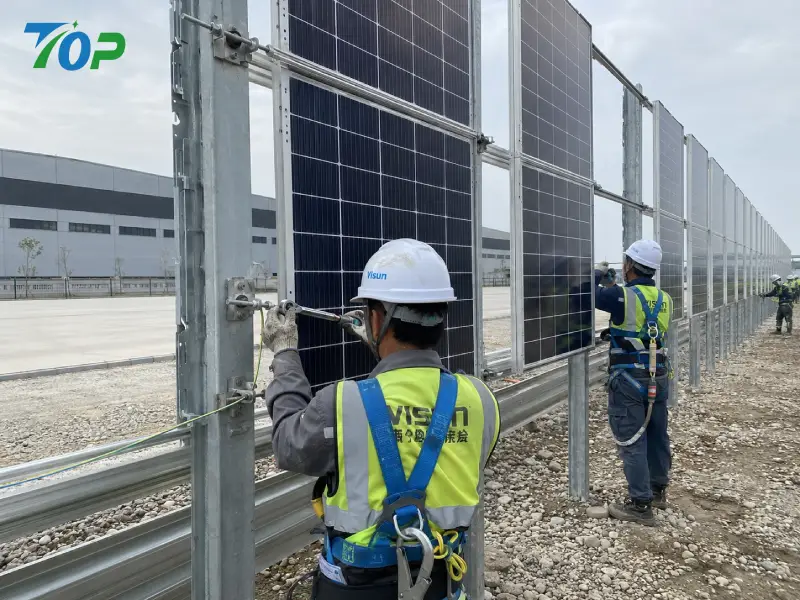
Installation Efficiency Matters
Labor costs represent a significant portion of project expenditures.
Consequently, installation efficiency can have a major impact on profitability.
EPC contractors should evaluate:
- Pre-engineered mounting systems
- Modular installation methods
- Component standardization
- Factory pre-assembly options
- Reduced field fabrication requirements
Systems designed with installation efficiency in mind can reduce labor hours, shorten project schedules, and improve overall project economics.
Inventory Compatibility and Procurement Flexibility
Distributors and procurement managers often prioritize products that simplify inventory management.
A solar fence system that accommodates multiple module sizes and configurations may provide greater flexibility for large-scale deployment.
Important considerations include:
- Module compatibility
- Hardware standardization
- Replacement part availability
- Lead time stability
- Supply chain resilience
These factors become increasingly important as project volumes grow.
Maintenance Accessibility
Maintenance requirements should be evaluated during the design phase rather than after installation.
Questions worth considering include:
- Can modules be replaced easily?
- Are electrical components readily accessible?
- Can inspections be performed efficiently?
- Is vegetation management required?
- How will future upgrades be handled?
Well-designed systems reduce operational burdens and improve long-term asset performance.
How Improved Light-Guiding Performance Impacts Project Economics
Ultimately, technical performance must translate into financial value.
For investors, facility owners, and EPC contractors, project economics often determine whether a solar fence installation proceeds from concept to implementation.
Additional Energy Yield Creates Additional Revenue
Every percentage increase in energy production contributes directly to project value.
Improved light-guiding performance can increase:
- Annual electricity generation
- Energy cost savings
- Carbon reduction benefits
- Project cash flow
Although the exact impact varies by electricity prices and project structure, higher energy yield generally improves financial returns.
Impact on Levelized Cost of Electricity (LCOE)
LCOE remains one of the most widely used metrics for evaluating photovoltaic project economics.
When additional energy production is achieved without proportionally increasing capital expenditures, the cost per kilowatt-hour generated decreases.
This improves project competitiveness and enhances investment attractiveness.
Payback Period Considerations
Commercial and industrial clients frequently evaluate projects based on expected payback periods.
Factors influencing payback include:
- Installation costs
- Electricity prices
- Energy production
- Maintenance expenses
- Financing structure
Optimizing bifacial gain and light-guiding performance can positively influence several of these variables simultaneously.
What EPC Contractors Should Expect from a Solar Fence Manufacturer
Selecting the right manufacturing partner is often just as important as selecting the right technology.
A reliable supplier should provide more than products. They should contribute engineering expertise, project support, and long-term reliability.
Engineering Support Capabilities
Professional manufacturers should be able to assist with:
- Structural calculations
- Foundation recommendations
- Wind load analysis
- Material selection guidance
- Project customization requirements
This support can significantly reduce design risk for EPC contractors.
Manufacturing Quality Standards
Quality assurance should be supported through documented manufacturing processes and recognized certification programs.
Procurement teams commonly evaluate:
- Material traceability
- Factory quality control procedures
- Mechanical testing capabilities
- Certification compliance
- Production consistency
Global Project Delivery Experience
Experience matters.
Manufacturers that have supported projects across multiple markets often possess valuable knowledge regarding:
- Regional regulations
- Environmental requirements
- Logistics planning
- Installation challenges
- Project optimization strategies
This expertise can contribute significantly to successful project execution.
How TopFenceSolar Supports Professional Solar Fence Projects
As demand for solar fencing continues to grow, EPC contractors increasingly require partners capable of delivering both engineering expertise and scalable manufacturing capacity.
TopFenceSolar focuses on providing professional solar fence solutions designed for commercial, industrial, agricultural, and infrastructure applications.
Key considerations often sought by EPC buyers include:
- Structural reliability
- Bifacial module compatibility
- Corrosion-resistant materials
- Customized project support
- Scalable production capacity
- Consistent product quality
For large-scale projects, these capabilities can help reduce procurement risks while supporting long-term system performance objectives.
Future Trends in Vertical Bifacial Solar Fence Technology
The evolution of vertical photovoltaic fencing is still in its early stages.
Several emerging developments are expected to further enhance performance and adoption rates over the coming years.
Higher-Efficiency Bifacial Cells
Continued improvements in cell architecture are expected to increase module efficiency and rear-side energy conversion capability.
This will further improve the economics of vertical installations.
Advanced Reflective Surface Engineering
Future projects may increasingly incorporate engineered ground surfaces designed to maximize reflected irradiance and bifacial gain.
Such approaches could significantly improve overall energy yield.
AI-Assisted Performance Optimization
Artificial intelligence and advanced analytics are beginning to influence photovoltaic operations and maintenance practices.
Future solar fence systems may benefit from:
- Predictive maintenance
- Performance forecasting
- Real-time monitoring
- Operational optimization
These technologies may further improve lifecycle project value.
Integration with Agrivoltaics and Distributed Energy Systems
The compatibility of solar fencing with agricultural boundaries and distributed energy infrastructure creates opportunities for broader deployment.
As land-use efficiency becomes increasingly important, multifunctional photovoltaic solutions are likely to play a growing role in future energy systems.
Conclusion
The vertical bifacial solar fence represents a significant evolution in photovoltaic infrastructure, transforming traditional perimeter fencing into a productive renewable energy asset.
Its ability to capture direct sunlight, diffuse irradiance, and reflected light from both sides of the module creates unique opportunities for energy generation that conventional fencing cannot provide.
For EPC contractors, project developers, industrial facility owners, and photovoltaic distributors, understanding light-guiding performance is essential for maximizing energy yield and project value.
Successful implementation depends on far more than module selection alone. Fence orientation, ground reflectivity, structural engineering, material durability, electrical safety, installation efficiency, and long-term maintenance considerations all influence project outcomes.
As bifacial technology continues to advance and demand for dual-use infrastructure grows, solar fence systems are expected to become an increasingly important component of distributed renewable energy development.
For organizations seeking to improve land-use efficiency while generating clean electricity, a professionally engineered vertical bifacial solar fence offers a compelling combination of functionality, sustainability, and long-term economic value.
Frequently Asked Questions About Vertical Bifacial Solar Fence Systems
Q1. Is a vertical bifacial solar fence more efficient than a traditional tilted solar system?
Not necessarily in terms of peak annual energy yield per module. However, vertical bifacial systems can offer advantages in land-use efficiency, bifacial gain, reduced soiling, improved winter performance, and broader daily generation profiles that may better align with commercial electricity consumption patterns.
Q2. How much bifacial gain can a solar fence project achieve?
Bifacial gain varies depending on site conditions, ground reflectivity, climate, module spacing, and installation design. Typical ranges may vary from approximately 5% to over 20%, with higher values possible under highly reflective conditions.
Q3. What ground surface provides the highest rear-side irradiance?
Highly reflective surfaces such as snow, light-colored gravel, reflective coatings, and certain concrete surfaces generally provide higher rear-side irradiance than dark soil or dense vegetation.
Q4. Do vertical solar fences perform better in winter?
In many higher-latitude regions, vertical systems can exhibit relatively strong winter performance due to lower solar elevation angles, reduced snow accumulation on module surfaces, and increased reflected irradiance from snow-covered ground.
Q5. What is the best orientation for a vertical bifacial solar fence?
East-west orientation is commonly preferred because it allows both sides of the bifacial module to capture sunlight during different portions of the day, creating a balanced generation profile.
Q6. Are solar fence systems suitable for industrial facilities?
Yes. Industrial parks, logistics centers, manufacturing facilities, substations, data centers, and infrastructure projects are among the most common applications due to their extensive perimeter boundaries and energy consumption requirements.
Q7. What certifications should a professional solar fence system have?
Certification requirements vary by market, but buyers often evaluate compliance with relevant structural, electrical, corrosion resistance, and photovoltaic industry standards applicable to their region.
Q8. How can EPC contractors maximize bifacial gain in a solar fence project?
Optimization strategies include selecting appropriate orientation, maximizing exposure to reflected irradiance, managing shading, evaluating ground albedo characteristics, utilizing accurate simulation tools, and implementing high-quality engineering design practices throughout the project lifecycle.
Vertical Bifacial Solar Fence — Turn Your Perimeter into a Power Generation Asset
Looking to improve land-use efficiency with a vertical bifacial solar fence? Traditional PV systems require valuable ground space, while fence-integrated solar structures allow EPC contractors and industrial operators to generate clean energy directly from site boundaries. With optimized bifacial gain, wind-resistant structural design, and corrosion-proof materials, TOPFENCE solar fence systems help reduce LCOE, improve ROI, and maximize distributed energy output for industrial parks, logistics centers, and commercial facilities.
Request Solar Fence Engineering Proposal & Project Quotation
Related News
- Why Agrivoltaics Is the Best Solution to Land-Use Conflicts
- Integrated Solar Fencing: The Perfect Combination of Aesthetics, Security, and Renewable Energy
- Customized Solar Mounting Services for Extreme Climate Conditions: Engineering PV Structures for Wind, Snow, Corrosion and Terrain Challenges
- Solar Fence vs Traditional Fence: Which Delivers Better Long-Term Value for Solar Projects?
- Industrial Maintenance Walkways for Factory Roofs: Compliance Standards, Structural Safety, and Solar-Compatible EPC Design Guide
- Lightweight Solar Panels for Balcony Installations: Engineering Advantages, Structural Safety & EPC Buying Guide
Leave me a message