How to Calculate the ROI of a Balcony PV System: An Engineering-Level Guide for EPC Contractors and Solar Installers
How Balcony Solar Mounting Systems Impact PV ROI and Long-Term Profitability
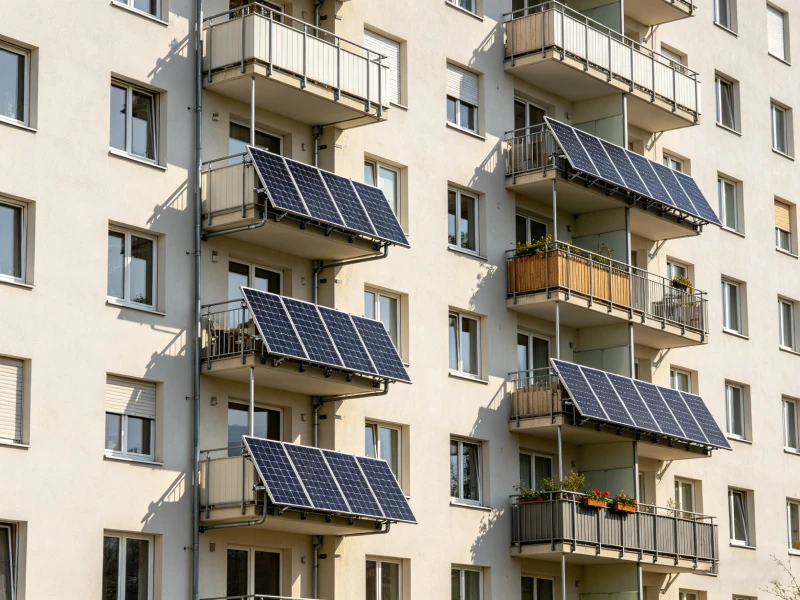
As urban electricity prices continue to rise and distributed renewable energy adoption accelerates across Europe and Asia, balcony PV systems are rapidly becoming one of the fastest-growing segments in the residential solar industry. For EPC contractors, solar installers, and photovoltaic distributors, understanding how to calculate the ROI of a balcony PV system is no longer just a financial exercise — it is a critical factor in project bidding, procurement strategy, customer conversion, and long-term profitability.
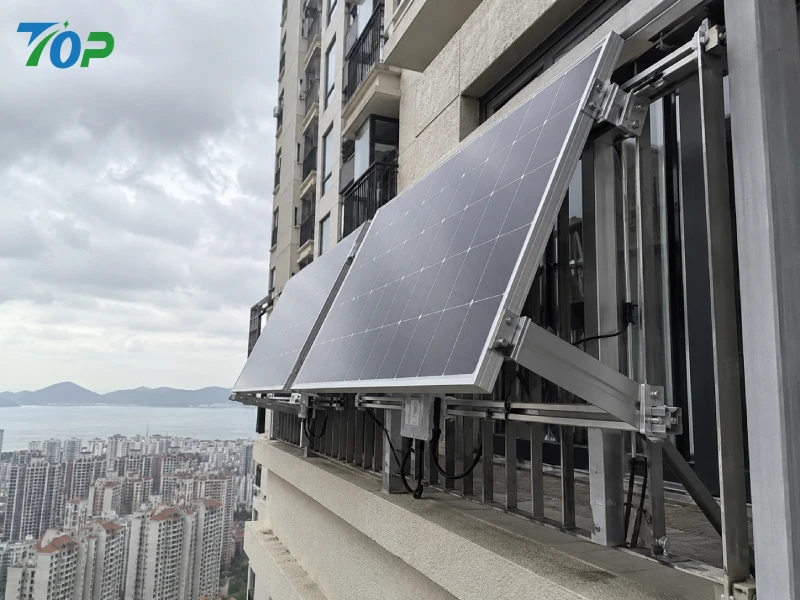
Unlike conventional rooftop solar projects, balcony solar installations operate under unique engineering constraints. Limited mounting space, higher wind exposure on high-rise buildings, waterproofing sensitivity, and structural load limitations all directly influence system lifespan and financial return. In many projects, the difference between a profitable installation and a costly after-sales liability is determined not by the PV module itself, but by the quality of the balcony solar mounting system.
For professional installers and EPC companies, ROI calculations must go beyond basic energy production estimates. A truly accurate investment evaluation requires consideration of installation efficiency, structural reliability, corrosion resistance, lifecycle maintenance cost, and mounting system durability. This is especially important in modern urban environments where poor waterproofing or structural instability can lead to expensive repair claims and reduced customer satisfaction.
This engineering-level guide explains how to calculate the ROI of a balcony PV system step by step. It also explores the hidden variables that many solar companies overlook, including structural engineering quality, material selection, installation labor optimization, and long-term operational stability. Whether you are an EPC contractor evaluating project feasibility or a solar distributor seeking reliable mounting solutions, this article provides a comprehensive framework for maximizing balcony solar investment performance.
Why ROI Has Become the Core Decision Metric in Balcony Solar Projects
The global solar industry is entering a new phase where investment efficiency matters as much as energy generation capacity. In dense urban environments where rooftop space is limited, balcony PV systems are emerging as a practical distributed energy solution for apartments, commercial buildings, hotels, and mixed-use developments.
However, unlike large utility-scale solar farms, balcony solar systems must achieve profitability within constrained installation conditions. Every component — from solar modules to mounting brackets — directly affects return on investment.
Rising Electricity Costs Are Reshaping Urban Solar Economics
In many countries, residential electricity prices have increased significantly over the past several years due to energy supply instability, inflation, and grid modernization costs. Urban consumers are now actively searching for localized renewable energy solutions that can reduce dependency on utility providers.
This trend has accelerated the adoption of balcony PV systems because they offer several advantages:
- Lower initial investment compared to rooftop solar systems
- Faster installation cycles
- Suitable for apartments and rental properties
- Immediate self-consumption benefits
- Flexible modular expansion potential
For EPC contractors, this growing market creates significant business opportunities. However, increasing competition also means project profitability depends heavily on accurate ROI analysis and engineering reliability.
Why EPC Contractors Focus on ROI Instead of Module Price Alone
One of the biggest mistakes inexperienced buyers make is evaluating balcony solar projects based only on PV module pricing. In reality, total lifecycle profitability depends on a much broader set of engineering variables.
Professional EPC contractors understand that long-term ROI is influenced by:
- Installation labor efficiency
- Structural durability
- Wind resistance performance
- Corrosion protection
- Waterproof reliability
- Maintenance frequency
- Warranty risk exposure
- Supply chain consistency
A cheaper mounting system may reduce initial procurement cost by a small percentage, but if it increases installation time or creates waterproofing failures, the overall project ROI can decline dramatically.
This is why engineering-grade balcony solar mounting systems have become increasingly important for professional solar companies focused on scalable, high-margin installations.
The Hidden Cost of Poor Balcony Solar Mounting Design
Many balcony PV project failures originate from structural system weaknesses rather than photovoltaic components. In urban installations, balcony structures face unique environmental stresses including:
- High wind uplift on elevated floors
- Dynamic vibration loads
- Rainwater exposure
- Thermal expansion and contraction
- Salt corrosion in coastal regions
- Limited structural anchoring points
If the balcony solar mounting system lacks proper engineering validation, several costly problems may occur:
- Loose mounting brackets
- Panel vibration noise
- Balcony leakage claims
- Structural deformation
- Corrosion-related failures
- Increased maintenance visits
For EPC contractors, these issues directly reduce project profitability because after-sales service costs can quickly eliminate expected returns.
As a result, modern ROI analysis must include both financial calculations and engineering risk assessment.
What Does ROI Mean in a Balcony PV System?
ROI, or Return on Investment, measures how effectively a balcony PV system generates financial returns relative to its total installation cost. In practical terms, it determines how long it takes for the energy savings produced by the solar system to recover the initial investment and begin generating profit.
For solar installers and EPC contractors, ROI analysis serves several purposes:
- Evaluating project feasibility
- Supporting customer sales presentations
- Comparing different mounting system solutions
- Optimizing engineering design
- Reducing investment risk
- Improving procurement decisions
ROI Formula for Balcony Solar Systems
The standard ROI formula used in balcony PV projects is:
ROI = (Total Lifetime Savings − Total System Cost) ÷ Total System Cost × 100%
This formula calculates the percentage return generated over the operational lifespan of the solar system.
For example:
- Total system investment: $3,000
- Total lifetime electricity savings: $9,000
- Net profit: $6,000
The resulting ROI would be:
ROI = ($9,000 − $3,000) ÷ $3,000 × 100% = 200%
This means the balcony PV system generates twice the value of the original investment during its operating lifecycle.
Difference Between ROI, Payback Period, and IRR
Although many people use ROI and payback period interchangeably, they represent different financial concepts.
ROI (Return on Investment)
Measures total profitability over the system lifecycle.
Payback Period
Measures how many years are required to recover the initial investment cost.
IRR (Internal Rate of Return)
Measures annualized investment efficiency and is commonly used for large-scale commercial solar projects.
For residential balcony PV systems, most customers focus primarily on payback period because it provides a simpler understanding of investment recovery speed.
However, EPC contractors and commercial investors often prefer deeper lifecycle ROI analysis because it better reflects long-term profitability and engineering reliability.
Typical ROI Expectations for Balcony Solar Projects in 2026
The average ROI of a balcony PV system depends heavily on regional electricity prices, solar irradiation levels, and system quality.
In high-electricity-cost markets such as Germany, Italy, Australia, and parts of Southeast Asia, balcony PV systems can often achieve:
- Payback periods between 3–7 years
- Lifecycle ROI exceeding 150%
- Strong self-consumption savings performance
However, achieving these returns requires optimized engineering design. Poor-quality mounting structures, inefficient installation processes, or non-certified components can significantly reduce financial performance.
This is why professional EPC contractors increasingly prioritize certified balcony solar mounting systems that combine:
- Fast installation
- Structural reliability
- Long-term corrosion resistance
- Waterproof safety
- Reduced maintenance requirements
Core Factors That Determine Balcony PV ROI
To accurately calculate the ROI of a balcony PV system, EPC contractors must evaluate both direct and indirect cost variables. Many simplified online calculators only consider module output and electricity prices, but real-world profitability depends on a much more comprehensive engineering assessment.
In professional solar projects, the key ROI drivers can be divided into five major categories:
- Initial system investment
- Energy generation efficiency
- Installation labor cost
- Maintenance and lifecycle expenses
- Structural system reliability
Understanding these variables allows installers and distributors to improve project profitability while reducing long-term operational risk.
Initial Balcony Solar System Cost Breakdown
The initial investment of a balcony PV system typically includes several components:
- Solar panels
- Micro inverters
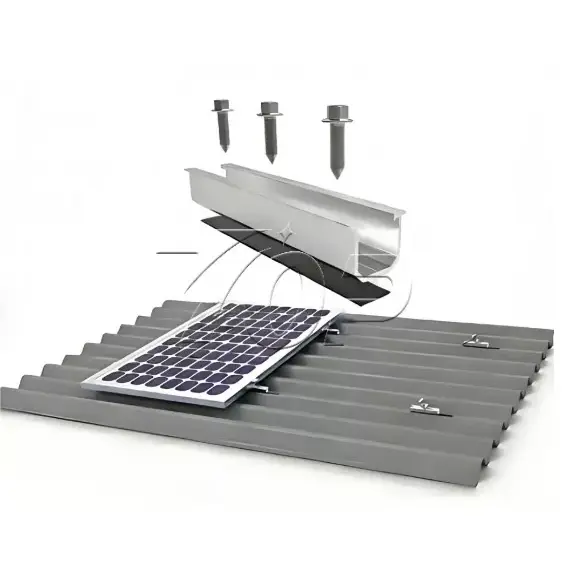
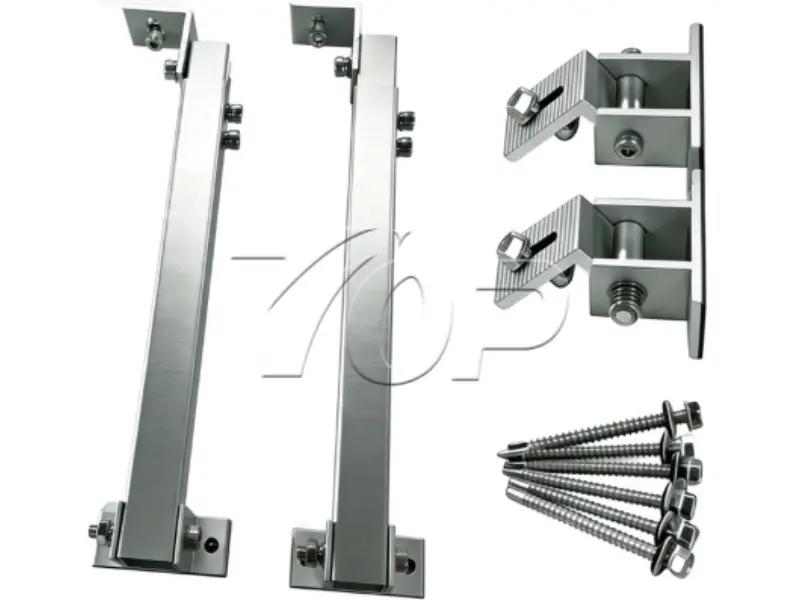
- Balcony solar mounting system
- Electrical accessories
- Cabling and connectors
- Installation labor
- Permitting and compliance costs
Among these categories, mounting systems and labor costs are often underestimated during ROI calculations.
In reality, installation complexity has a direct effect on EPC profitability. A poorly designed mounting structure may increase installation time by several hours per project, significantly increasing labor expenses across large deployment volumes.
This is why many professional contractors now prioritize pre-assembled balcony solar mounting systems that reduce onsite installation steps and improve workflow efficiency.
Balcony Solar Mounting System Quality and Its Direct Impact on ROI
In professional balcony PV projects, the mounting structure is not simply a supporting accessory — it is one of the most critical determinants of long-term return on investment. While solar modules generate electricity, the mounting system determines whether the project can maintain stable performance, structural safety, and low maintenance costs throughout its operational lifecycle.
For EPC contractors and solar distributors, selecting an engineering-grade balcony solar mounting system directly affects:
- Installation speed and labor efficiency
- Wind resistance and structural stability
- Waterproof reliability
- Corrosion resistance lifespan
- Maintenance frequency
- Customer satisfaction and warranty exposure
- Long-term profitability
A low-cost mounting structure may initially appear attractive during procurement evaluation, but over time, structural instability and maintenance risks often generate hidden costs that significantly reduce ROI.
Why Structural Engineering Matters in Balcony PV Projects
Unlike ground-mounted solar systems, balcony PV installations operate under highly constrained structural conditions. Installers must work within limited mounting space while ensuring sufficient resistance against environmental loads.
Modern balcony solar systems are frequently installed on:
- Apartment railings
- Concrete balcony slabs
- Metal guardrails
- Vertical façade structures
- Small rooftop terraces
Each installation environment presents unique engineering challenges related to load transfer, anchor positioning, and vibration resistance.
Professional EPC contractors understand that structural instability can lead to severe operational problems, including:
- Module displacement during high winds
- Fastener loosening caused by vibration
- Excessive rail deformation
- Water infiltration around fixing points
- Noise generation from structural movement
- Accelerated metal fatigue
These failures do not only increase repair costs — they also damage customer trust and reduce long-term business opportunities for installers and distributors.
Wind Load Resistance and Structural Stability
Wind uplift is one of the most underestimated risks in balcony PV installations. High-rise buildings experience significantly stronger wind pressure compared to ground-level structures, especially near coastal regions or open urban corridors.
A properly engineered balcony solar mounting system must safely transfer wind loads from photovoltaic modules into the supporting structure through a controlled mechanical load path.
Key structural design considerations include:
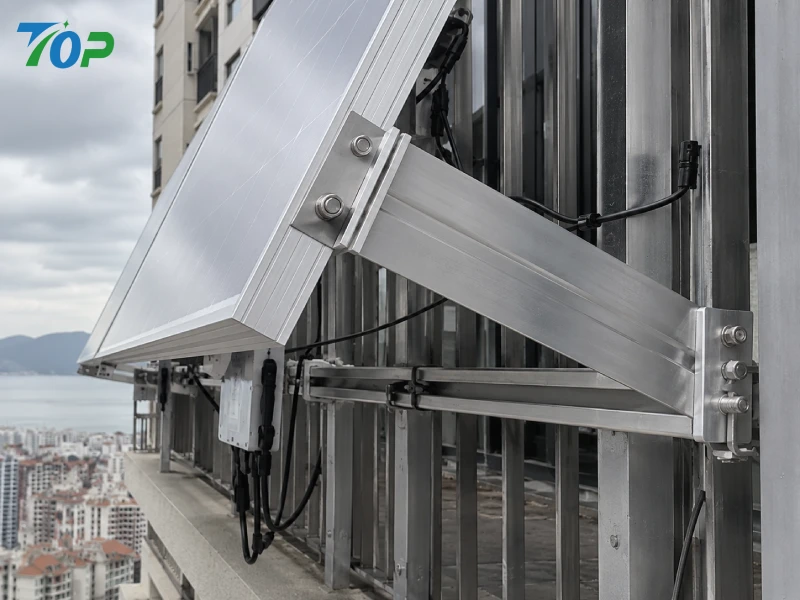
- Triangular reinforcement geometry
- Rail torsional rigidity
- Anti-slip fastening systems
- Mechanical anchoring strength
- Dynamic vibration resistance
- Thermal expansion compensation
Professional mounting systems typically undergo wind tunnel simulations and structural load testing to verify long-term reliability under extreme weather conditions.
For EPC contractors, using certified structural systems significantly reduces project risk because it minimizes the probability of post-installation failures and insurance disputes.
Corrosion Resistance and Lifecycle Profitability
Corrosion is another major factor affecting the ROI of a balcony PV system, particularly in coastal cities and humid climates.
Balcony structures are continuously exposed to:
- Rainwater
- Condensation
- Salt-laden air
- Temperature fluctuations
- Air pollution
- UV radiation
If low-quality metals are used in mounting components, corrosion can rapidly weaken structural integrity and increase maintenance frequency.
This is why professional-grade balcony solar mounting systems typically use:
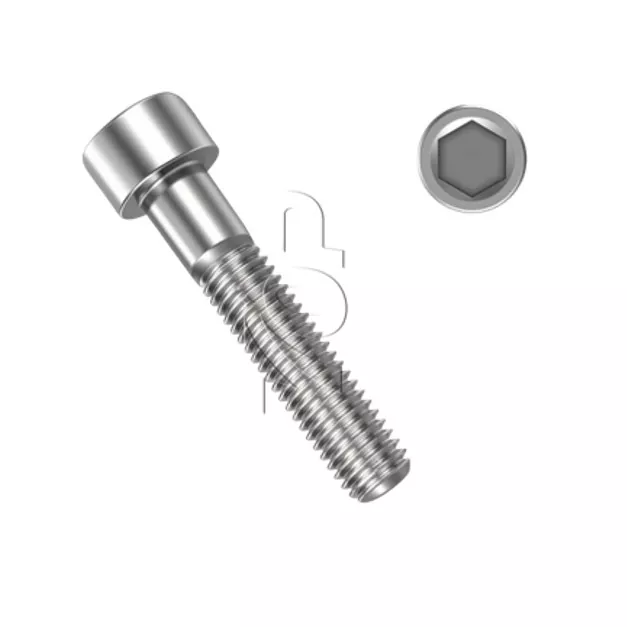
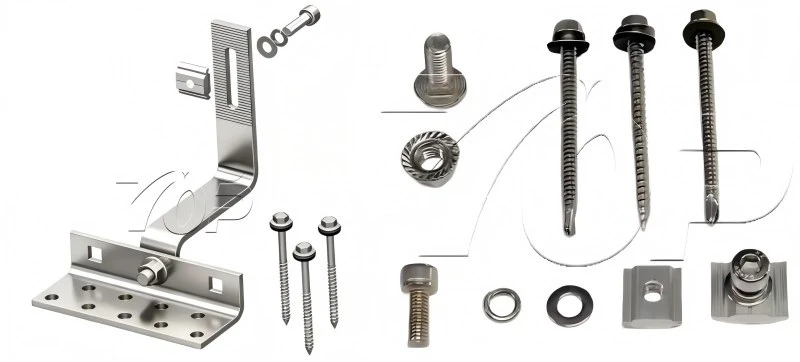
- SUS304 stainless steel fasteners
- AL6005-T5 anodized aluminum rails
- Anti-corrosion surface treatments
- Galvanic isolation technologies
SUS304 stainless steel offers excellent resistance against rust and oxidation, making it highly suitable for long-term outdoor photovoltaic applications.
Meanwhile, AL6005-T5 aluminum rails provide an optimal balance between:
- High structural strength
- Lightweight handling
- Corrosion resistance
- Thermal stability
- Installation convenience
For EPC companies, these material advantages translate directly into improved ROI because they reduce lifecycle maintenance expenses and extend system service life.
Why Waterproof Reliability Is Critical for EPC Profitability
Waterproof failures are among the most expensive after-sales issues in balcony solar projects.
Unlike conventional rooftop installations, balcony PV systems are often installed near residential living spaces where even minor water leakage can lead to:
- Interior wall damage
- Floor deterioration
- Electrical safety risks
- Customer disputes
- Legal liabilities
- Reputation damage
As a result, professional installers increasingly prioritize non-penetrating balcony solar mounting systems that minimize structural intrusion while maintaining installation stability.
Modern engineering solutions often include:
- EPDM waterproof isolation pads
- Non-penetrating clamp structures
- Pressure-distributed fastening systems
- Drainage-optimized rail geometry
- Water channel management design
Although these technologies may slightly increase initial procurement costs, they dramatically reduce long-term liability exposure and maintenance expenses.
From an ROI perspective, preventing a single waterproof failure can often offset the additional cost of a premium mounting system.
How to Calculate Balcony PV Energy Production
Energy generation is the core revenue source of any balcony PV system. Without accurate production forecasting, ROI calculations become unreliable and may lead to unrealistic customer expectations.
For professional EPC contractors, accurate energy yield analysis is essential for:
- Project feasibility evaluation
- Customer proposal development
- System sizing optimization
- Investment return forecasting
- Performance guarantee planning
Balcony PV Annual Output Formula
The most common formula used for estimating annual balcony PV energy production is:
E = P × H × PR
Where:
- E = Annual energy generation (kWh)
- P = Installed system power capacity (kW)
- H = Annual peak sun hours
- PR = Performance ratio
This formula provides a practical estimation framework for residential and commercial balcony solar systems.
Understanding Performance Ratio (PR)
Performance Ratio is one of the most important variables in solar energy forecasting because it reflects real-world operational efficiency.
No photovoltaic system converts solar energy into electricity at perfect efficiency. Several losses occur during operation, including:
- Inverter conversion losses
- Temperature-related efficiency reduction
- Cable resistance losses
- Dust accumulation
- Shading effects
- Ventilation limitations
Most professional balcony PV systems operate with a performance ratio between 0.75 and 0.90 depending on system quality and installation conditions.
Higher-quality balcony solar mounting systems can indirectly improve PR by enhancing:
- Panel ventilation airflow
- Structural stability
- Optimal tilt positioning
- Long-term alignment consistency
This demonstrates why engineering design has a direct influence on both technical performance and financial ROI.
Key Variables Affecting Balcony Solar Energy Yield
Unlike open-field solar farms, balcony PV systems operate within highly constrained urban environments. Energy production is therefore strongly affected by local installation conditions.
Balcony Orientation
South-facing installations generally achieve the highest production in the northern hemisphere, while east-west orientations may reduce total output.
Tilt Angle Optimization
Balcony railing systems often limit tilt flexibility. Engineering-grade mounting systems with adjustable angles can improve annual energy production significantly.
Urban Shading
Nearby buildings, trees, balconies, and façade structures frequently create intermittent shading that reduces system efficiency.
Ventilation Efficiency
Poor airflow behind PV modules increases operating temperature and reduces power output. Elevated mounting structures typically improve thermal dissipation.
Module Soiling
Urban pollution and dust accumulation can gradually reduce photovoltaic performance if maintenance schedules are neglected.
Real Engineering Constraints in Balcony PV Projects
Professional EPC contractors understand that balcony PV installations are rarely ideal from an engineering perspective.
Several practical limitations must be addressed during project design:
- Limited structural load capacity
- Restricted fixing locations
- Irregular balcony geometry
- Building code compliance requirements
- Wind exposure variability
- Electrical routing constraints
These challenges make mounting system flexibility extremely important.
Modern balcony solar mounting systems designed for EPC applications often feature:
- Adjustable tilt mechanisms
- Modular rail configurations
- Universal clamp compatibility
- Pre-assembled structural components
- Lightweight installation architecture
These engineering improvements help installers maximize energy generation while minimizing labor complexity and installation time.
Electricity Savings Calculation for Balcony Solar ROI
Once annual energy production has been estimated, the next step in ROI analysis is calculating electricity cost savings.
For most balcony PV systems, self-consumption represents the primary economic benefit. Instead of purchasing electricity from the utility grid, the user directly consumes solar-generated energy during daytime operation.
As electricity prices continue to rise globally, this self-consumption model has become one of the strongest drivers behind balcony solar adoption.
How Local Electricity Prices Affect ROI
Electricity tariffs vary dramatically between countries and regions, making local utility pricing one of the most important variables in balcony PV profitability calculations.
In regions with high residential electricity prices, balcony PV systems typically achieve:
- Faster payback periods
- Higher lifecycle ROI
- Stronger investment attractiveness
Markets with time-of-use electricity pricing structures can create even greater savings opportunities because solar generation often aligns with peak daytime energy costs.
For EPC contractors, understanding regional tariff structures is essential for producing accurate investment proposals and improving customer conversion rates.
Annual Electricity Savings Formula
After estimating annual energy production and identifying local electricity pricing, EPC contractors can calculate the direct annual savings generated by a balcony PV system.
The standard calculation formula is:
S = E × C
Where:
- S = Annual electricity savings
- E = Annual solar energy generation (kWh)
- C = Local electricity price per kWh
For example:
- Annual solar production: 2,400 kWh
- Local electricity price: $0.30/kWh
The estimated annual savings would be:
2,400 × 0.30 = $720 per year
Over a 20-year operational lifespan, this balcony PV system could theoretically generate:
$720 × 20 = $14,400 in electricity savings
However, real-world ROI calculations should also account for:
- Electricity price inflation
- Module degradation rates
- Maintenance costs
- Inverter replacement cycles
- System downtime risk
This is why professional EPC contractors increasingly perform lifecycle-based investment analysis instead of relying on simplified payback estimates.
Net Metering vs Self-Consumption Models
The financial performance of a balcony PV system depends heavily on how solar electricity is utilized.
Self-Consumption Model
In this model, generated solar electricity is consumed directly by the user during operation.
This approach is highly common in balcony PV systems because:
- System size is relatively small
- Users primarily aim to reduce household consumption
- Urban apartments often lack large export capacity
- Regulatory requirements are simpler
Self-consumption generally delivers the strongest ROI because it offsets high retail electricity prices directly.
Net Metering Model
In some markets, excess solar electricity can be exported to the utility grid in exchange for financial credits.
However, many countries are gradually reducing net metering incentives, making self-consumption optimization increasingly important for long-term profitability.
As a result, EPC contractors now focus heavily on:
- Load matching optimization
- Smart micro-inverter systems
- Real-time energy monitoring
- Battery-ready balcony solar solutions
These technologies help improve energy utilization efficiency and maximize return on investment.
Engineering-Level Factors Most EPC Contractors Ignore in ROI Calculations
Many ROI calculations fail because they focus only on equipment pricing while ignoring operational engineering realities.
In large-scale EPC deployment projects, hidden costs often determine actual profitability more than the initial procurement budget.
Professional installers increasingly understand that installation efficiency, structural reliability, and maintenance reduction are major profit drivers.
Installation Time Directly Impacts EPC Margins
Labor cost is one of the fastest-growing expenses in the global solar industry.
In balcony PV projects, installation complexity can vary dramatically depending on mounting system design.
Traditional mounting systems often require:
- On-site cutting
- Complex alignment adjustments
- Multiple fastening steps
- Custom drilling operations
- Manual rail modification
These processes increase:
- Installation hours
- Labor costs
- Human error probability
- Project scheduling delays
Modern engineering-grade balcony solar mounting systems solve these problems through:
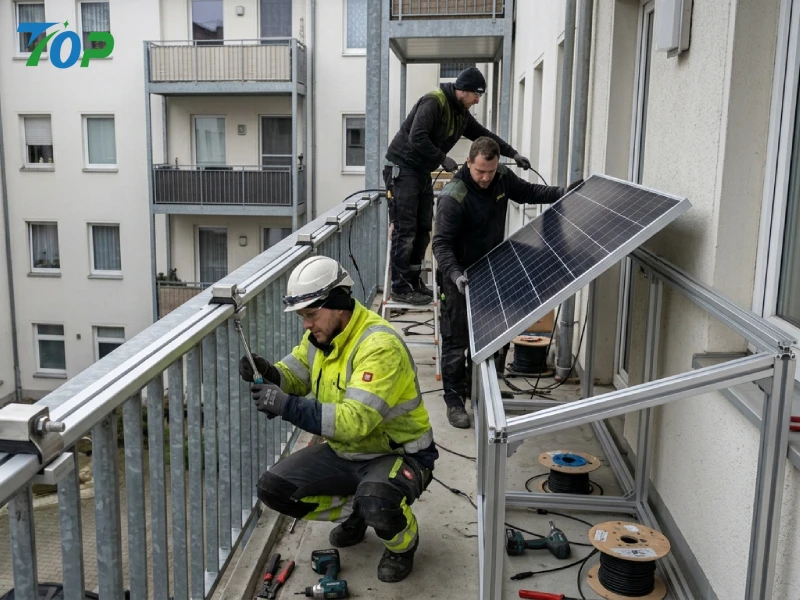
- Pre-assembled structural kits
- Quick-lock clamp systems
- Universal rail compatibility
- Modular installation architecture
- Integrated adjustment mechanisms
For EPC contractors managing multiple installations simultaneously, reducing installation time by even one hour per project can significantly improve annual profitability.
Structural Reliability Reduces After-Sales Service Costs
After-sales maintenance is one of the largest hidden threats to balcony PV ROI.
Every additional service visit reduces project margin and increases operational pressure on EPC companies.
Poor-quality balcony solar mounting systems frequently create problems such as:
- Loose fasteners
- Panel displacement
- Water leakage complaints
- Rail corrosion
- Wind vibration noise
- Electrical cable instability
These issues are particularly damaging because balcony solar systems are highly visible to residential customers. Even minor structural problems can negatively affect customer satisfaction and online reputation.
Engineering-grade structural systems reduce these risks through:
- Certified wind-load testing
- High-strength aluminum rail systems
- SUS304 stainless steel fastening hardware
- Corrosion-resistant surface treatment
- Thermal expansion compensation design
Long-term structural stability directly improves ROI because it lowers maintenance frequency and extends operational lifespan.
Standardized Mounting Systems Improve Distributor Efficiency
For solar distributors and wholesalers, ROI is not limited to end-user energy savings. Operational efficiency within the supply chain is equally important.
Non-standardized mounting systems create several inventory management challenges:
- High SKU complexity
- Difficult stock forecasting
- Increased warehouse pressure
- Procurement inefficiency
- Installation compatibility issues
Modern balcony solar mounting systems designed for B2B distribution prioritize:
- Universal component compatibility
- Modular structural design
- Cross-project adaptability
- Reduced inventory variation
- Simplified logistics management
These advantages improve distributor operational efficiency while reducing inventory-related financial risk.
Step-by-Step Balcony PV ROI Calculation Example
To better understand how professional ROI analysis works in real projects, let us examine a practical balcony PV system example commonly used in urban residential installations.
Example Project Assumptions
- System size: 2 kW balcony PV system
- Installation type: High-rise apartment balcony
- Location: Urban residential environment
- Electricity price: $0.28/kWh
- Average annual solar irradiation: 1,300 peak sun hours
- Performance ratio: 0.82
- System lifespan: 20 years
Total Investment Cost Breakdown
| Component | Estimated Cost |
|---|---|
| PV Modules | $1,000 |
| Micro Inverters | $500 |
| Balcony Solar Mounting System | $650 |
| Electrical Components | $250 |
| Installation Labor | $600 |
| Total Investment | $3,000 |
Annual Energy Production Calculation
Using the standard formula:
E = P × H × PR
Substituting the project values:
2 × 1,300 × 0.82 = 2,132 kWh/year
The estimated annual energy generation is approximately 2,132 kWh.
Annual Electricity Savings Estimation
Using the electricity savings formula:
2,132 × 0.28 = $597/year
Estimated annual savings are approximately $597.
Payback Period Calculation
The simple payback formula is:
Payback Period = Total Investment ÷ Annual Savings
Substituting the values:
$3,000 ÷ $597 ≈ 5 years
This means the balcony PV system can recover its initial investment in approximately five years.
Considering a typical operational lifespan of 20 years, the remaining 15 years represent net financial gain for the customer.
Common ROI Calculation Mistakes in Balcony Solar Projects
Overestimating Solar Irradiance
Many simplified ROI calculations use ideal solar radiation values that do not reflect real urban installation conditions.
High-rise shading, balcony orientation limitations, and weather variability can significantly reduce actual production performance.
Ignoring Structural Risks
Cheap mounting systems may initially reduce procurement cost, but structural instability often generates:
- Maintenance expenses
- Replacement costs
- Waterproof repair liabilities
- Customer dissatisfaction
These hidden costs reduce true long-term ROI.
Using Non-Certified Balcony Solar Mounting Systems
Non-certified structures may lack:
- Wind-load validation
- Material quality consistency
- Corrosion testing
- Structural engineering documentation
For EPC contractors, these deficiencies increase project risk significantly.
How TopFenceSolar Improves ROI Stability for EPC Contractors
As balcony PV adoption continues to grow globally, EPC contractors increasingly require mounting system suppliers capable of delivering not only competitive pricing, but also engineering reliability, installation efficiency, and long-term structural stability.
TopFenceSolar focuses on providing engineering-grade balcony solar mounting systems designed specifically for professional B2B applications.
Engineering-Grade Structural Design
TopFenceSolar balcony solar mounting systems are designed to improve:
- Wind resistance performance
- Structural load distribution
- Installation flexibility
- Long-term operational stability
These engineering advantages help reduce maintenance risk and improve lifecycle ROI.
Industrial-Grade Material Standards
TopFenceSolar prioritizes high-quality structural materials including:
- SUS304 stainless steel fasteners
- AL6005-T5 anodized aluminum rails
- Corrosion-resistant surface treatments
- High-strength modular connection systems
These material standards improve durability and reduce long-term structural degradation.
Faster Installation for EPC Efficiency
TopFenceSolar mounting systems are optimized for installation efficiency through:
- Pre-assembled structural components
- Universal clamp compatibility
- Simplified installation workflows
- Reduced onsite adjustment requirements
For EPC contractors, this helps lower labor costs while improving project scalability.
Reliable Supply Chain Support for Distributors
For distributors and wholesalers, supply chain stability is critical for long-term business growth.
TopFenceSolar supports B2B customers through:
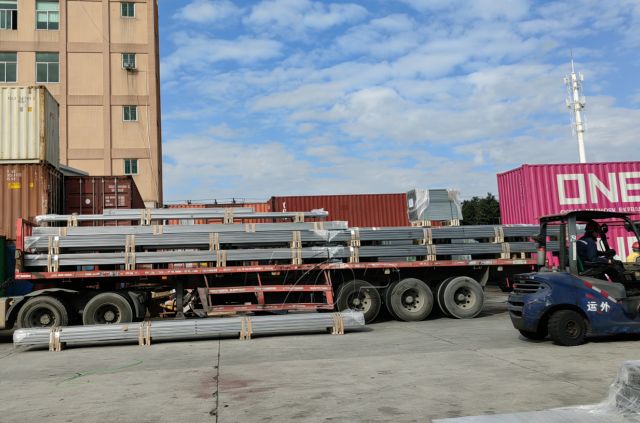
- Stable production capacity
- OEM and ODM customization
- Consistent material quality
- Bulk procurement support
- International logistics coordination
Future Trends in Balcony PV ROI Optimization
Smart Micro-Inverter Integration
Module-level optimization technologies are improving energy harvesting efficiency and enabling more accurate performance monitoring.
AI-Based Energy Management
Artificial intelligence is increasingly used to optimize self-consumption behavior and improve household energy scheduling.
Lightweight Structural Engineering
Future balcony solar mounting systems will continue evolving toward:
- Lighter structural materials
- Higher installation efficiency
- Greater modular flexibility
- Improved urban compatibility
Conclusion: Balcony PV ROI Depends on Both Energy Output and Structural Engineering
Calculating the ROI of a balcony PV system requires much more than estimating electricity production. Real long-term profitability depends equally on structural engineering quality, installation efficiency, corrosion resistance, waterproof reliability, and maintenance reduction.
For professional EPC contractors and solar distributors, choosing the right balcony solar mounting system is one of the most important investment decisions in the entire project lifecycle.
Engineering-grade structural systems help improve:
- Installation speed
- Lifecycle durability
- Customer satisfaction
- Operational safety
- Long-term ROI stability
As distributed solar adoption continues to accelerate globally, balcony PV systems will play an increasingly important role in urban renewable energy infrastructure.
Companies capable of combining high-performance photovoltaic technology with reliable structural engineering will be best positioned to deliver sustainable long-term value.
TopFenceSolar remains committed to supporting EPC contractors, installers, and distributors with durable, installation-efficient, engineering-grade balcony solar mounting solutions designed for long-term investment reliability and superior project ROI.
Improve Balcony PV ROI with Engineering-Grade Mounting Systems
Still evaluating how to maximize balcony PV ROI in urban solar projects? Poor structural stability, corrosion failures, waterproof risks, and inefficient installation processes can significantly reduce long-term profitability for EPC contractors and distributors. TOPFENCE provides engineered balcony solar mounting systems designed for high-rise residential environments, featuring SUS304 stainless steel components, AL6005-T5 anodized aluminum rails, wind-resistant structural design, and fast-install modular configurations. Reduce lifecycle maintenance costs, improve installation efficiency, and deliver more reliable long-term ROI for distributed balcony photovoltaic projects.
Request Balcony PV Mounting Design, Samples & EPC Pricing
Frequently Asked Questions About Balcony PV ROI and Mounting Systems
Q1: What is considered a good ROI for a balcony PV system in urban residential projects?
A good balcony PV ROI typically depends on electricity prices, installation cost, system lifespan, and structural reliability. In high-electricity-cost regions such as Europe and parts of Asia, professionally designed balcony PV systems can often achieve payback periods between 3–7 years and lifecycle ROI exceeding 150%. For EPC contractors, ROI improves significantly when using engineering-grade balcony solar mounting systems that reduce installation labor time, maintenance frequency, and waterproofing risks.
Q2: How does the balcony solar mounting system affect long-term ROI?
The balcony solar mounting system directly impacts structural stability, wind resistance, waterproof reliability, corrosion protection, and installation efficiency. Poor-quality mounting structures may initially reduce procurement cost but often increase lifecycle maintenance expenses and warranty risks. High-quality systems using SUS304 stainless steel fasteners and AL6005-T5 aluminum rails help EPC contractors improve long-term project profitability by reducing structural failures and after-sales service costs.
Q3: What are the biggest engineering risks in balcony PV installations?
The most critical engineering risks include wind uplift loads, balcony waterproof leakage, corrosion in coastal environments, structural vibration, and improper load transfer. High-rise balcony PV systems are exposed to stronger wind pressure than many conventional rooftop systems, making structural engineering especially important. EPC contractors should prioritize certified mounting systems with tested load-bearing capacity and non-penetrating waterproof designs.
Q4: Why are SUS304 stainless steel and AL6005-T5 aluminum commonly used in balcony solar mounting systems?
SUS304 stainless steel provides excellent corrosion resistance and long-term fastening reliability in outdoor environments, especially in humid or coastal cities. AL6005-T5 anodized aluminum rails combine lightweight handling, high structural strength, and excellent anti-corrosion performance. These materials improve system durability while reducing long-term maintenance costs, making them highly suitable for balcony photovoltaic applications focused on stable ROI and low lifecycle risk.
Q5: How can EPC contractors reduce installation time in balcony PV projects?
EPC contractors can improve installation efficiency by using modular balcony solar mounting systems with pre-assembled components, universal clamp compatibility, and adjustable rail configurations. Fast-install structural systems reduce onsite cutting, alignment adjustments, and manual drilling operations. Lower installation complexity not only reduces labor cost but also improves project scalability and overall EPC profitability.
Q6: Are non-penetrating balcony solar mounting systems better for waterproof reliability?
Yes. Non-penetrating balcony mounting systems are widely preferred in residential urban projects because they minimize structural intrusion and reduce the risk of water leakage. Modern systems often use railing clamp fixation combined with EPDM waterproof isolation pads to maintain waterproof integrity while ensuring structural stability. This is particularly important for EPC contractors seeking to reduce warranty claims and long-term maintenance liabilities.
Q7: What factors most commonly reduce balcony PV system ROI?
Common ROI reduction factors include unrealistic energy production assumptions, poor balcony orientation, urban shading, low-quality mounting materials, corrosion-related failures, and inefficient installation processes. Many projects also underestimate lifecycle maintenance costs. Accurate ROI analysis should include both energy-generation performance and structural engineering reliability to avoid unexpected operational expenses.
Q8: What should distributors and procurement managers look for when sourcing balcony solar mounting systems?
Distributors and procurement managers should prioritize certified structural systems with proven wind-load resistance, corrosion-resistant materials, modular compatibility, and scalable production capacity. Important evaluation criteria include SUS304 hardware quality, aluminum rail specifications, installation efficiency, OEM/ODM support, and supply chain stability. Standardized mounting systems also help reduce inventory complexity and improve operational efficiency for large-scale B2B distribution.
Related News
- The Global EPC Sourcing Checklist: Managing Lead Times and Logistics for Solar Mounting Systems
- BIPV & Commercial Rooftops: Solving Waterproofing and Structural Integrity Challenges in Urban Solar
- Navigating Solar Certifications: Why UL 2703 and International Standards Matter for Project Bankability
- Maximizing Yield with Bifacial Modules: How to Select the Optimal Tracker for Enhanced Energy Output
- Wind Load and Coastal Engineering: Ensuring Your Ground-Mounted Solar Array Survives Extreme Weather
- Aluminum vs. Galvanized Steel: Choosing the Right Solar Mounting Structure for High-Corrosivity Environments
Leave me a message